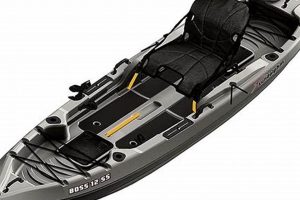
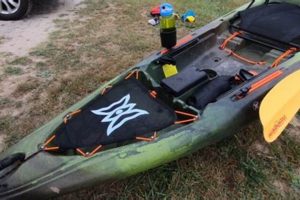
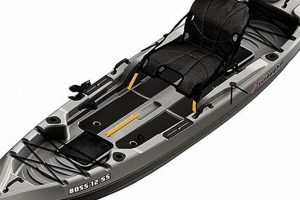
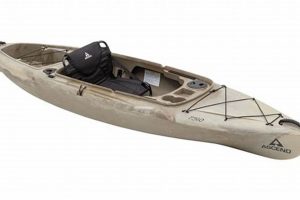
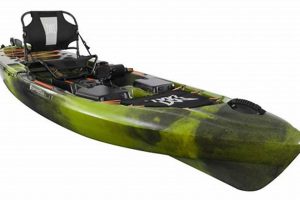
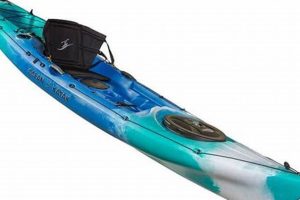
Discounted pricing on kayaks designed for above-deck seating, commonly called “sit-on-top” kayaks, presents an attractive opportunity for consumers. These vessels are characterized by an open cockpit, allowing paddlers greater freedom of movement and simplifying entry and exit. This style is particularly popular for recreational use in warm climates, fishing, and activities involving frequent water entry and exit.
Affordability increases access to this popular watersport. The stability and ease of use inherent in these kayak designs make them ideal for beginners and families. Historically, sit-on-top kayaks evolved from surfboards and other simple watercraft, becoming increasingly specialized for diverse activities. Their open design enhances safety in certain situations, facilitating quick egress in the event of a capsize. Lower price points encourage broader participation in paddling sports, contributing to a healthier and more active lifestyle for many individuals.
The following sections will explore various aspects of acquiring a discounted sit-on-top kayak, including factors influencing price, selection considerations based on intended use, and tips for identifying reputable retailers.
Tips for Acquiring Discounted Sit-On-Top Kayaks
Acquiring a sit-on-top kayak at a reduced price requires careful consideration of several factors. Informed decision-making ensures a suitable vessel is obtained at the best possible value.
Tip 1: Research Different Manufacturers and Models: Understanding the features, build quality, and intended use of various models is crucial. Comparing specifications enables informed choices aligned with individual paddling needs.
Tip 2: Consider the Kayak’s Intended Use: Fishing kayaks often feature specialized rod holders and storage, while recreational models prioritize comfort and stability. Matching the kayak’s design to its intended purpose enhances user satisfaction.
Tip 3: Compare Prices Across Multiple Retailers: Diligent price comparison helps identify the most competitive offers. Checking both online and brick-and-mortar stores expands the range of potential savings.
Tip 4: Look for Seasonal Sales and Clearance Events: Retailers often offer significant discounts during specific times of the year. Capitalizing on these opportunities can yield substantial savings.
Tip 5: Inspect Kayaks Thoroughly Before Purchase: Even discounted kayaks should be free from defects. Careful inspection, including checking for cracks, dents, and proper hardware functionality, is essential.
Tip 6: Factor in Additional Costs: Essential accessories such as paddles, life vests, and storage solutions represent additional expenses. Budgeting for these items ensures preparedness for on-the-water activities.
Tip 7: Inquire About Warranty and Return Policies: Understanding warranty coverage and return options provides recourse in case of defects or dissatisfaction. Clarifying these terms before purchase protects the consumer’s investment.
Tip 8: Consider Used Kayaks: Reputable sellers of used equipment can offer significant cost savings. Careful inspection and inquiries about the kayak’s history are recommended.
By adhering to these guidelines, consumers can maximize their chances of finding a high-quality sit-on-top kayak at a discounted price, opening up opportunities for enjoyable and affordable paddling experiences.
The concluding section will summarize the key advantages of leveraging discounted pricing and reiterate the importance of informed purchasing decisions.
1. Discounted Prices

Discounted prices serve as a primary driver for consumers seeking sit-on-top kayaks. Reduced costs expand market access, enabling a wider range of individuals to participate in paddling activities. This affordability factor often influences purchasing decisions, particularly for recreational users or those new to the sport. For example, seasonal sales or clearance events can significantly lower the financial barrier to entry, making kayak ownership a more attainable goal. This price sensitivity can also incentivize experienced kayakers to upgrade their equipment or acquire specialized models, such as those designed for fishing or extended touring.
The availability of discounted kayaks often correlates with specific periods, such as end-of-season clearances or holiday promotions. Manufacturers and retailers may also offer discounts on older models to make way for newer inventory. Understanding these cyclical price fluctuations allows prospective buyers to strategically time their purchases for maximum savings. Furthermore, comparing prices across multiple vendors, both online and in physical stores, can reveal significant variations in cost for comparable models. This comparative shopping approach empowers consumers to make informed choices and secure the best possible value.
Recognizing the influence of discounted pricing on consumer behavior provides valuable insight into market dynamics. While price remains a crucial factor, balancing cost considerations with factors like quality, features, and intended use ensures a satisfactory long-term investment. Careful evaluation of both price and performance characteristics ultimately leads to a more informed and rewarding purchasing experience.
2. Open Cockpit Design

The open cockpit design inherent in sit-on-top kayaks distinguishes them from traditional closed-cockpit vessels. This structural characteristic significantly influences functionality, accessibility, and overall user experience. Understanding the implications of the open cockpit is crucial when considering a sit-on-top kayak purchase, particularly during sales events where discounted prices may incentivize impulse buying.
- Enhanced Stability and Self-Bailing:
The open design contributes to increased stability, particularly beneficial for beginners or those paddling in choppy conditions. The self-bailing feature, facilitated by scupper holes that drain water from the cockpit, further enhances stability and prevents water accumulation. This makes them suitable for activities involving frequent immersion, such as fishing or recreational paddling in warm climates.
- Ease of Entry and Exit:
The unobstructed cockpit allows for easy entry and exit, simplifying transitions into and out of the water. This feature is advantageous for individuals with mobility limitations, children, and anyone who prefers a less restrictive paddling experience. It also proves valuable in situations requiring rapid egress, such as capsizing.
- Increased Freedom of Movement and Comfort:
The open cockpit provides greater freedom of movement than traditional kayaks, allowing paddlers to shift positions, stretch, and even stand up with relative ease. This increased mobility enhances comfort, particularly during longer paddling excursions. It also facilitates activities like fishing, photography, or simply enjoying the surrounding environment.
- Storage and Gear Accessibility:
While open cockpits may seem less secure for storage, many sit-on-top models incorporate strategically placed tank wells, bungee cords, and recessed storage areas. These features offer convenient access to essential gear and equipment while maintaining a streamlined profile. However, items stored in an open cockpit are exposed to the elements, requiring waterproof storage solutions for sensitive items.
The open cockpit design, while offering numerous advantages, also presents certain considerations. Exposure to the elements necessitates appropriate clothing and sun protection. Securing gear effectively becomes more critical. However, the benefits of stability, ease of access, and freedom of movement often outweigh these considerations, making sit-on-top kayaks a popular choice for diverse paddling activities. Sales events present an opportune time to acquire these versatile vessels at reduced prices, further enhancing their appeal to both novice and experienced paddlers.
3. Enhanced Stability

Enhanced stability represents a critical factor influencing the popularity and suitability of sit-on-top kayaks, especially for those seeking discounted options during sales events. This characteristic contributes significantly to user confidence and overall paddling experience, particularly for beginners or individuals navigating challenging water conditions. Understanding the elements contributing to enhanced stability informs purchasing decisions and promotes safer, more enjoyable kayaking experiences.
- Center of Gravity and Hull Design:
Sit-on-top kayaks generally possess a wider beam (width) and a lower center of gravity compared to traditional sit-inside kayaks. This design characteristic enhances primary stability, referring to the initial resistance to tipping. A wider hull provides a larger base of support, making it less likely to capsize with sudden movements. The lower center of gravity, resulting from the paddler’s seated position above the waterline, further contributes to this inherent stability. Discounted pricing on these inherently stable platforms makes them more accessible to a broader audience.
- Self-Bailing Scupper Holes:
Scupper holes, strategically placed in the cockpit floor, allow water to drain automatically, preventing accumulation and maintaining buoyancy. This self-bailing feature is particularly beneficial in rough conditions or when the kayak is subjected to splashing or wave action. By preventing waterlogged cockpits, scupper holes enhance both primary and secondary stability (the ability to recover from a near capsize). This feature, standard in sit-on-top models, adds value to discounted purchases.
- Ease of Recovery from a Capsize:
While capsizing is less likely due to the inherent stability of sit-on-top kayaks, the open cockpit design facilitates easier recovery. If a capsize does occur, re-entry is typically simpler than with a sit-inside kayak. This ease of recovery enhances perceived safety and encourages participation, especially for novice paddlers exploring discounted options during a sale. The open design allows for quick re-boarding without the need for complex maneuvers or specialized equipment.
- Suitability for Varied Water Conditions:
The combined effect of these stability-enhancing features makes sit-on-top kayaks suitable for a range of water conditions, from calm lakes and rivers to moderately choppy coastal waters. This versatility, coupled with discounted pricing, makes them attractive to individuals seeking a single kayak for diverse paddling environments. While not designed for extreme whitewater, their inherent stability enables them to handle moderate waves and currents with relative ease.
The enhanced stability of sit-on-top kayaks, often available at discounted prices during sales, contributes significantly to their appeal for both recreational and specialized uses. This stability-focused design fosters confidence, encourages participation, and promotes a safer and more enjoyable on-the-water experience. Considering this crucial factor during a kayak sale empowers consumers to make informed choices aligned with their skill level and intended paddling environments.
4. Ease of Entry and Exit

The ease of entry and exit offered by sit-on-top kayaks represents a significant advantage, often highlighted during sales promotions. This characteristic directly influences user experience and broadens the appeal of these kayaks to diverse demographics, including those with physical limitations, older individuals, and children. The open cockpit design eliminates the need for maneuvering into a confined space, simplifying both embarking and disembarking. This ease of access contributes to a more comfortable and less intimidating paddling experience, particularly for beginners. Consider, for example, a scenario involving a family outing. Sit-on-top kayaks facilitate effortless transitions into and out of the water, allowing for spontaneous swimming breaks, exploration of shallow areas, or simply enjoying the aquatic environment without the constraint of a traditional cockpit.
This inherent accessibility also extends to situations requiring rapid egress. In the event of a capsize, the open design allows for immediate self-recovery without the need for complex maneuvers or specialized training. This enhanced safety aspect holds particular relevance for those paddling in open water or less predictable conditions. Further emphasizing practical application, individuals with mobility limitations can benefit significantly from the ease of entry and exit offered by sit-on-top kayaks. The absence of a confined cockpit eliminates a potential barrier to participation, enabling a wider range of individuals to enjoy paddling activities. This inclusivity factor expands market reach and underscores the importance of this design feature.
In summary, the ease of entry and exit associated with sit-on-top kayaks directly contributes to their user-friendly nature and broad appeal. This feature enhances safety, promotes inclusivity, and simplifies the overall paddling experience. Highlighting this characteristic during sales events effectively communicates the advantages of sit-on-top kayaks to potential buyers and reinforces their suitability for diverse user groups and paddling scenarios. This practical advantage, often overlooked in technical specifications, can be a decisive factor in purchasing decisions, particularly for families, beginners, or those prioritizing comfort and accessibility.
5. Variety of Models
The availability of diverse models within the sit-on-top kayak category significantly influences purchasing decisions, particularly during sales events. Understanding the range of options available allows consumers to select a kayak aligned with specific needs and preferences. This variety caters to a broad spectrum of paddling activities, from recreational use to specialized pursuits like fishing or touring. Sales often present an opportunity to acquire higher-spec models at reduced prices, further emphasizing the importance of understanding model variations.
- Hull Design and Length:
Hull design directly impacts performance characteristics such as speed, stability, and maneuverability. Shorter hulls offer enhanced maneuverability, ideal for navigating tight spaces or recreational paddling in calm waters. Longer hulls provide greater speed and tracking efficiency, suited for touring or open-water paddling. Sales events often feature a variety of hull designs at discounted prices, allowing consumers to select a model optimized for their intended use. For example, a shorter, wider hull might be preferred for fishing in calm lakes, while a longer, narrower hull would be better suited for coastal exploration.
- Features and Accessories:
Sit-on-top kayaks offer diverse features and accessories catering to specific activities. Fishing kayaks, for instance, often include rod holders, tackle storage, and anchor trolleys. Recreational models may prioritize comfort features like adjustable seats, padded backrests, and cup holders. Sales periods provide opportunities to acquire models with desirable features at reduced costs. Consider a fishing enthusiast seeking a kayak equipped with rod holders and a live well. A sale might present the opportunity to acquire a fully equipped fishing kayak at a price comparable to a basic recreational model.
- Weight Capacity and Size:
Kayaks are designed to accommodate varying weight capacities and paddler sizes. Selecting a kayak with appropriate weight capacity ensures stability and optimal performance. Sales events often include a range of sizes, allowing individuals of different statures and weights to find suitable models at discounted prices. A smaller, lighter kayak might be ideal for a child or petite paddler, while a larger, higher-capacity model would be necessary for a larger adult carrying additional gear.
- Price Points and Materials:
Sit-on-top kayaks are available at various price points, influenced by factors like materials, features, and brand reputation. Entry-level models, often constructed from durable polyethylene, offer affordability, while higher-end kayaks may utilize lighter, more performance-oriented materials like fiberglass or composite construction. Sales events often create opportunities to acquire premium models at significantly reduced prices, making them more accessible to budget-conscious consumers. For instance, a sale might offer a fiberglass kayak, typically more expensive, at a price comparable to a standard polyethylene model.
The variety of models available within the sit-on-top kayak category, often further diversified during sales events, empowers consumers to make informed purchasing decisions. Considering factors such as hull design, features, weight capacity, materials, and price points allows individuals to select a kayak that precisely aligns with their individual needs, paddling style, and budget. Leveraging sales effectively requires understanding these variations and capitalizing on opportunities to acquire desirable models at reduced costs.
6. Recreational and Fishing Use
The connection between recreational and fishing use and discounted sit-on-top kayaks hinges on the inherent suitability of these vessels for both activities. The stability, open design, and ease of customization make them versatile platforms for diverse on-the-water experiences. Sales events targeting these user groups frequently highlight these advantages, driving demand and increasing accessibility.
Recreational users benefit from the stability and ease of use inherent in sit-on-top kayaks. The open cockpit allows for comfortable seating, easy entry and exit, and freedom of movement. This design also simplifies re-entry after a swim, a common occurrence in recreational paddling. Fishing, similarly, benefits from the open design. Anglers require stability for casting and reeling, and the open cockpit allows for easy access to tackle boxes and other equipment. Many sit-on-top kayaks designed specifically for fishing include features like rod holders, fish finders, and live wells. Discounted pricing during sales makes these specialized features more attainable, contributing to increased adoption among fishing enthusiasts. For example, a family seeking a stable, user-friendly kayak for leisurely paddling might find a discounted recreational model perfectly suited to their needs. Similarly, an angler searching for a stable fishing platform with specialized features could find a discounted fishing kayak offering excellent value.
Understanding the dual applicability of sit-on-top kayaks for both recreational and fishing use provides valuable context during sales events. Recognizing the targeted design features and inherent advantages for each activity empowers consumers to make informed decisions based on individual needs and preferences. This targeted approach maximizes the benefits of discounted pricing, facilitating increased participation in both recreational paddling and fishing from sit-on-top kayaks. The convergence of these distinct yet complementary uses underscores the versatility of these vessels and contributes to their sustained popularity within the broader kayaking market.
7. Warm-weather Suitability
The inherent design features of sit-on-top kayaks contribute significantly to their suitability for warm-weather paddling. This correlation often influences purchasing decisions, particularly during sales events where discounted pricing aligns with seasonal demand. Understanding the factors contributing to this warm-weather suitability provides valuable context for consumers evaluating kayak options.
- Self-Bailing Design:
Scupper holes, standard in sit-on-top kayaks, allow water to drain continuously from the cockpit. This self-bailing feature prevents water accumulation from rain, splashes, or wave action, maintaining buoyancy and enhancing stability. In warm weather, this design also prevents the paddler from sitting in a pool of warm, stagnant water, enhancing comfort and hygiene. During sales events, this inherent advantage often resonates with buyers anticipating warm-weather paddling activities.
- Open Cockpit and Ventilation:
The open cockpit design promotes airflow and ventilation, reducing heat buildup and enhancing comfort in warm temperatures. Unlike enclosed cockpits, sit-on-top kayaks allow for greater air circulation, preventing overheating and maintaining a comfortable paddling experience. This characteristic becomes particularly advantageous during summer sales, when consumers prioritize comfort and breathability for warm-weather excursions.
- Ease of Water Entry and Exit:
The unobstructed cockpit of a sit-on-top kayak facilitates easy entry and exit, allowing paddlers to quickly cool off in the water during warm weather. This convenient access to the water enhances enjoyment and provides opportunities for swimming, snorkeling, or simply refreshing dips. This feature often aligns with the recreational focus of many warm-weather kayaking activities, making discounted sit-on-top kayaks appealing during sales.
- Simplified Clothing Requirements:
Warm weather paddling often involves minimal clothing, and the open design of sit-on-top kayaks accommodates this preference. Paddlers can comfortably wear swimwear or lightweight clothing without the constraint of a spray skirt or other specialized gear often required for sit-inside kayaks. This simplified approach to attire aligns with the casual nature of warm-weather paddling, and discounted pricing during sales further incentivizes participation.
The convergence of these features positions sit-on-top kayaks as ideal platforms for warm-weather paddling. Sales events targeting this seasonality often emphasize these advantages, attracting consumers seeking comfortable, versatile, and affordable options for recreational water activities. The inherent suitability of these kayaks for warm climates, coupled with discounted pricing, contributes to their popularity and reinforces their value proposition within the broader kayaking market.
Frequently Asked Questions Regarding Discounted Sit-On-Top Kayaks
This section addresses common inquiries regarding the acquisition of sit-on-top kayaks during sales events. Clarity regarding these points facilitates informed purchasing decisions and ensures customer satisfaction.
Question 1: Are discounted sit-on-top kayaks of lower quality?
Discounted pricing does not necessarily indicate compromised quality. Sales often involve clearance of previous-year models, overstocked inventory, or promotional pricing strategies. Evaluating manufacturer reputation and specific kayak features remains essential regardless of price.
Question 2: What factors should be considered when choosing a sit-on-top kayak on sale?
Key considerations include intended use (recreational, fishing, touring), paddler weight and size, desired features (rod holders, storage compartments), hull design (stability, maneuverability), and material (durability, weight). Aligning these factors with individual needs ensures a suitable purchase.
Question 3: How to identify reputable retailers offering discounted kayaks?
Researching established retailers specializing in watersports equipment is recommended. Checking online reviews and verifying warranty information can further validate retailer credibility. Prioritizing established businesses with positive customer feedback mitigates potential risks.
Question 4: Are warranties applicable to discounted kayaks?
Warranty coverage typically applies to discounted kayaks, though specific terms may vary. Confirming warranty details with the retailer before purchase ensures clarity regarding coverage for potential defects or manufacturing issues.
Question 5: What accessories are essential for sit-on-top kayaking?
Essential accessories include a properly fitted personal flotation device (PFD), a paddle appropriate for paddler height and kayak width, and a waterproof storage container for essential items like phones and wallets. Additional accessories might include a dry bag, bilge pump, and paddle leash.
Question 6: Can sit-on-top kayaks be used in cold water?
While primarily associated with warm-weather use, sit-on-top kayaks can be used in colder conditions with appropriate precautions. Wearing proper cold-water gear, such as a wetsuit or drysuit, is crucial for safety and comfort. However, the open design inherently increases exposure to cold water and air.
Careful consideration of these frequently asked questions, coupled with thorough product research, ensures informed purchasing decisions. Prioritizing individual needs and validating retailer reputation maximizes the benefits of acquiring a discounted sit-on-top kayak.
The subsequent section will offer concluding remarks on leveraging sales opportunities effectively and enjoying the benefits of sit-on-top kayaking.
Conclusion
Exploring the topic of discounted sit-on-top kayaks reveals several key considerations. Price reductions offer enhanced accessibility to a versatile watercraft suitable for diverse activities, from recreational paddling to fishing expeditions. Understanding design features, such as the open cockpit and self-bailing system, clarifies advantages related to stability, ease of entry and exit, and warm-weather suitability. Awareness of model variations, encompassing hull design, features, and materials, empowers informed selection aligned with individual needs and preferences. Careful evaluation of retailer reputation and warranty coverage ensures a satisfactory purchasing experience.
Discounted pricing presents an opportune gateway to kayak ownership, fostering increased participation in paddling sports and outdoor recreation. Diligent research, coupled with a clear understanding of individual requirements, transforms a potential purchase into a fulfilling investment in an enriching lifestyle. The prospect of exploring waterways from the unique vantage point of a sit-on-top kayak becomes increasingly attainable through informed navigation of available options and strategic leveraging of sales opportunities.