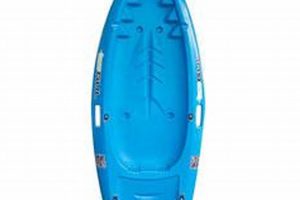
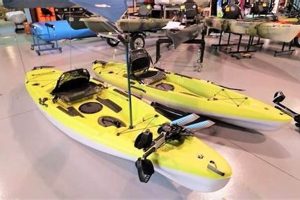
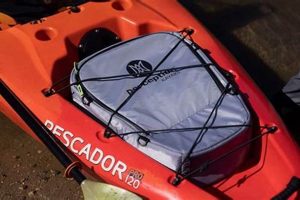
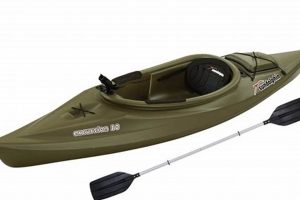
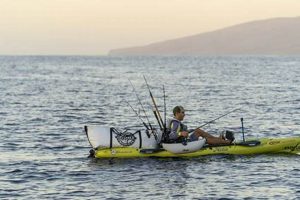
This type of watercraft combines the maneuverability of a kayak with the speed and power of a motorized personal watercraft. A compact, internal propulsion system allows for hands-free fishing and access to shallow or weedy areas often inaccessible to traditional motorboats. These vessels typically feature specialized seating, rod holders, and other amenities designed specifically for anglers.
The integration of propulsion offers significant advantages for fishing enthusiasts. Increased speed reduces travel time to fishing grounds, while the shallow draft permits exploration of otherwise unreachable areas. The hands-free operation provided by the motorized system allows anglers to focus entirely on fishing. This innovation represents a notable advancement in fishing technology, merging the portability and stealth of a kayak with the efficiency of a motorboat.
The subsequent sections will delve into specific aspects of these powered kayaks, including various propulsion systems, key features, popular models, and important safety considerations for operation.
Tips for Powered Kayak Fishing
Careful planning and preparation contribute significantly to a successful and enjoyable powered kayak fishing experience. The following tips provide valuable guidance for maximizing efficiency and safety on the water.
Tip 1: Research Regulations: Regulations regarding motorized vessels vary by location. Thorough research and adherence to local laws are crucial before launching.
Tip 2: Plan Your Route: Prior planning ensures efficient use of time on the water. Mapping routes and identifying potential fishing spots beforehand allows for a more focused fishing experience.
Tip 3: Conduct Pre-Trip Inspections: A comprehensive check of the vessel, including the propulsion system, battery life, and safety equipment, should be performed before every outing. This minimizes the risk of unexpected issues on the water.
Tip 4: Pack Essential Gear: Appropriate fishing gear, safety equipment (including a personal flotation device), and necessary tools should be readily accessible. A checklist can ensure essential items are not overlooked.
Tip 5: Understand Weather Conditions: Checking weather forecasts prior to departure is essential. Avoid venturing out in adverse conditions that could compromise safety.
Tip 6: Practice Launching and Maneuvering: Gaining familiarity with the vessel’s handling characteristics in a controlled environment before venturing into open water enhances safety and control.
Tip 7: Respect Wildlife and the Environment: Adhering to Leave No Trace principles ensures the preservation of natural habitats for future generations.
By following these guidelines, anglers can improve their chances of a productive and safe fishing experience while contributing to the responsible enjoyment of the natural environment.
The following section will offer a comprehensive conclusion, summarizing key takeaways and highlighting the overall benefits of this evolving fishing platform.
1. Motorized Propulsion
Motorized propulsion systems represent a defining feature of jet fishing kayaks, distinguishing them from traditional paddle-powered kayaks. This technology significantly impacts performance, enabling anglers to cover greater distances, access challenging locations, and conserve energy for fishing. Understanding the nuances of these systems is crucial for informed decision-making and optimal utilization.
- Types of Motors:
Jet propulsion systems utilize an impeller to draw water in and expel it with force, creating thrust. Electric motors, powered by rechargeable batteries, offer quiet operation and environmental friendliness. Gas-powered motors provide greater range and power but require more maintenance and generate noise.
- Power and Speed:
Motor power directly influences speed and the ability to navigate currents or wind. Higher horsepower motors enable faster travel and better performance in challenging conditions. The specific power requirements depend on intended usage and fishing locations.
- Maneuverability and Control:
Jet propulsion systems offer excellent maneuverability, particularly in shallow water and tight spaces. Directional control is typically achieved through a rudder or steering mechanism, allowing for precise navigation. Understanding the responsiveness and control characteristics of a given system is essential for safe and effective operation.
- Maintenance and Care:
Regular maintenance ensures optimal performance and longevity of the propulsion system. This includes routine inspections, cleaning, and occasional part replacements. Proper care practices vary depending on the motor type (electric or gas) and manufacturer recommendations.
The choice of motorized propulsion system significantly impacts the overall fishing experience. Careful consideration of factors like power, maneuverability, maintenance requirements, and environmental impact helps ensure the selected system aligns with individual fishing needs and preferences. Matching the propulsion system to specific fishing environments and target species enhances efficiency and enjoyment on the water.
2. Enhanced Fishability

Enhanced fishability represents a core advantage of jet fishing kayaks, distinguishing them from conventional kayaks and even some motorized boats. This advantage arises from a combination of design features and functionalities specifically tailored to improve the angling experience. Understanding these contributing factors is crucial for appreciating the value proposition of these specialized vessels.
- Hands-Free Operation:
The integration of motorized propulsion eliminates the need for paddling, freeing the angler’s hands for casting, retrieving lines, and handling fish. This is particularly beneficial in situations requiring precise lure presentation or quick reaction times, such as topwater fishing or drift fishing in currents. This hands-free operation allows for a more focused and efficient fishing approach.
- Specialized Features and Accessories:
Jet fishing kayaks frequently incorporate features designed specifically for anglers, including rod holders, tackle storage compartments, fish finders, and anchor trolleys. These integrated features streamline the fishing process and contribute to a more organized and productive experience. The availability of such specialized equipment enhances versatility and adaptability to different fishing styles.
- Stability and Accessibility:
The inherent stability of kayaks, further enhanced by design considerations in fishing-specific models, provides a secure platform for casting and reeling. This stability is particularly advantageous in rougher waters or when fighting larger fish. Moreover, the compact size and shallow draft of these kayaks grant access to shallow or vegetated areas often inaccessible to larger boats, expanding the range of fishable waters.
- Stealth and Approach:
While motorized, jet fishing kayaks generally operate more quietly than traditional outboard motors, minimizing disturbance to fish and allowing for a stealthier approach. This is particularly important in clear, shallow waters where fish are easily spooked. This quiet operation increases the likelihood of successful catches, especially in pressured fishing environments.
The convergence of these factorshands-free operation, specialized features, stability, accessibility, and stealthculminates in a significantly enhanced fishing experience. Jet fishing kayaks offer anglers a unique blend of mobility, versatility, and focused functionality, optimizing the potential for successful and enjoyable fishing trips. This enhanced fishability represents a key driver in the growing popularity of these specialized watercraft.
3. Shallow Water Access

Shallow water access represents a significant advantage conferred by jet fishing kayaks. Unlike propeller-driven boats, which require a certain depth to avoid damage or entanglement, jet propulsion systems operate effectively in very shallow water. This capability expands fishing opportunities considerably, permitting access to areas teeming with fish often inaccessible to larger vessels. These shallow-water zones frequently serve as nurseries for various species and offer rich feeding grounds, making them prime targets for anglers. For example, shallow flats, backwater creeks, and protected coves often harbor sought-after game fish yet remain unreachable by traditional motorboats. Jet propulsion kayaks effectively bridge this gap, granting access to otherwise unexploited fishing territories.
This capability is particularly valuable in specific fishing scenarios. Sight fishing in shallow, clear water becomes significantly more effective with the maneuverability and shallow draft offered by jet kayaks. Similarly, pursuing species that inhabit shallow, weedy areas, such as bass or pike, becomes far more feasible. Furthermore, the minimal disturbance caused by jet propulsion in shallow environments minimizes disruption to the ecosystem and reduces the likelihood of spooking fish. This advantage translates directly to increased fishing success. The practical implications of this access extend beyond mere convenience; it opens new avenues for targeting specific species and exploring diverse fishing environments, contributing to a richer and more rewarding angling experience.
In summary, the shallow water access provided by jet fishing kayaks significantly expands fishing possibilities. This advantage stems directly from the jet propulsion system’s ability to operate effectively in minimal depths. The practical implications are substantial, enhancing fishing success in specific environments and broadening the scope of angling opportunities. Navigating extremely shallow water, however, requires caution and awareness to avoid grounding or damage to the environment. This capability, when employed responsibly, represents a significant advancement in fishing technology and opens exciting new frontiers for anglers.
4. Increased Maneuverability
Increased maneuverability represents a defining characteristic of jet fishing kayaks, directly linked to the utilization of jet propulsion. Unlike kayaks reliant on paddles or propeller-driven boats restricted by a fixed shaft and rudder, jet-powered kayaks offer exceptional control and responsiveness. The absence of submerged appendages, such as propellers or skegs, allows for navigation in extremely shallow water and complex environments, including areas with dense vegetation or submerged obstacles. The directional thrust of the jet stream, easily controlled by the operator, enables precise adjustments to position and direction, facilitating quick turns and intricate maneuvers. This agility proves invaluable in dynamic fishing situations, such as pursuing fish around structure or navigating tight waterways.
Consider a scenario where an angler targets fish holding near submerged logs or rocks. A traditional kayak requires significant paddling effort and precise blade work to navigate such obstacles, potentially spooking the fish. A propeller-driven boat risks propeller entanglement or damage. The jet fishing kayak, however, effortlessly maneuvers through these complex environments, allowing the angler to maintain a strategic position and present lures effectively. Similarly, in swiftly flowing rivers, the immediate responsiveness of the jet drive allows for precise adjustments to maintain position and control drift, crucial for successful river fishing. This level of control translates directly into increased fishing efficiency and opportunities.
In summary, the enhanced maneuverability of jet fishing kayaks stems directly from the unique properties of jet propulsion. The absence of external propulsion elements and the directional control of the jet stream contribute to exceptional agility in various aquatic environments. This characteristic has significant practical implications, enabling anglers to access difficult-to-reach areas, maintain precise positioning, and react quickly to changing fishing conditions. While the initial cost of jet kayaks might be higher than traditional options, the enhanced maneuverability significantly expands fishing potential, justifying the investment for many anglers seeking to maximize their on-the-water effectiveness.
5. Hands-Free Operation
Hands-free operation represents a significant advantage of jet fishing kayaks, directly impacting fishing efficiency and overall experience. Unburdened from paddling, anglers gain the freedom to focus entirely on the fishing process, from casting and retrieving lines to handling fish and adjusting tackle. This capability significantly enhances fishing performance and enjoyment, particularly in situations demanding precise control and quick reactions.
- Enhanced Lure Control:
Hands-free operation allows for precise manipulation of fishing lures, crucial for techniques like twitching, jerkbaiting, and topwater presentations. Maintaining optimal lure action and reacting quickly to strikes becomes significantly easier without the need to manage a paddle. This enhanced control often translates to increased strike rates and successful hooksets.
- Improved Fish Fighting Capability:
When battling a hooked fish, having both hands available provides greater leverage and control. This is especially crucial when handling larger, more powerful fish, allowing for more effective maneuvering and reducing the risk of line breakage or lost fish. The ability to quickly adjust rod position and pressure significantly improves the chances of landing trophy catches.
- Streamlined Tackle Management:
From changing lures and adjusting drag settings to tying knots and re-rigging, hands-free operation simplifies tackle management. This efficiency becomes particularly valuable in dynamic fishing situations where quick adjustments are essential. Having both hands readily available minimizes downtime and maximizes time spent fishing.
- Increased Safety and Situational Awareness:
In challenging conditions, such as strong currents or windy weather, hands-free operation allows anglers to maintain better control of the kayak and react more effectively to unexpected situations. This enhanced stability and responsiveness contribute significantly to overall safety on the water. Furthermore, having both hands available facilitates essential safety procedures, such as deploying an anchor or retrieving safety equipment.
In conclusion, hands-free operation, facilitated by the jet propulsion system, significantly enhances the fishing experience offered by jet fishing kayaks. The advantages extend beyond mere convenience, impacting core aspects of fishing performance, from lure presentation and fish fighting to tackle management and safety. This capability represents a key differentiator for jet fishing kayaks, contributing significantly to their growing popularity among anglers seeking to maximize their on-the-water efficiency and enjoyment.
Frequently Asked Questions
This section addresses common inquiries regarding jet fishing kayaks, providing concise and informative responses to facilitate informed decision-making and promote a comprehensive understanding of these specialized vessels.
Question 1: What are the primary advantages of a jet fishing kayak over a traditional kayak or small fishing boat?
Jet fishing kayaks offer a unique combination of advantages. Compared to traditional kayaks, they provide effortless propulsion, allowing anglers to cover greater distances and access challenging locations without physical exertion. Compared to small fishing boats, they offer superior maneuverability in shallow water and tight spaces, along with enhanced stealth and reduced environmental impact.
Question 2: How does jet propulsion work in a kayak?
Jet propulsion utilizes an impeller to draw water into a housing and then expel it forcefully through a nozzle, creating thrust. This system eliminates the need for exposed propellers, enabling operation in very shallow water and reducing the risk of entanglement in vegetation or debris.
Question 3: What are the different types of motors available for jet fishing kayaks?
Jet fishing kayaks commonly utilize either electric motors or gas-powered motors. Electric motors offer quiet operation and environmental friendliness, while gas motors provide extended range and higher power output.
Question 4: What factors should be considered when choosing between an electric and a gas-powered jet fishing kayak?
Key considerations include desired range, fishing environment, noise sensitivity, maintenance requirements, and budget. Electric motors are suitable for shorter trips in calm waters where quiet operation is desired, while gas motors are better suited for longer journeys and challenging conditions.
Question 5: Are jet fishing kayaks suitable for saltwater environments?
Yes, many jet fishing kayaks are designed for both freshwater and saltwater use. However, proper care and maintenance, including thorough rinsing after saltwater exposure, are crucial for longevity and preventing corrosion.
Question 6: What safety precautions should be taken when operating a jet fishing kayak?
Essential safety precautions include wearing a personal flotation device, carrying appropriate safety equipment (such as a whistle, flares, and a first-aid kit), checking weather conditions before departure, and informing someone of the planned fishing route and estimated return time.
Understanding these key aspects of jet fishing kayaks empowers potential users to make informed decisions and fully appreciate the unique capabilities of these specialized vessels.
The following section delves into specific models and manufacturers, offering a comparative overview of available options and their respective features.
Conclusion
This exploration of powered personal watercraft designed for angling has highlighted key features contributing to their increasing popularity. The fusion of kayak maneuverability with motorized propulsion systems offers anglers distinct advantages, including enhanced access to shallow waters, increased range, and hands-free fishing. Specialized features like rod holders, integrated fish finders, and ample storage further optimize these vessels for angling pursuits. The discussion encompassed various propulsion systems, emphasizing the importance of selecting the appropriate motor type based on individual fishing needs and environmental considerations. Safety precautions and responsible operation remain paramount for maximizing enjoyment and minimizing environmental impact.
The evolution of fishing technology continues to refine the angling experience. Powered kayaks represent a significant step in this progression, offering a compelling blend of versatility, efficiency, and accessibility. As technological advancements persist, further refinements and innovations within this specialized segment of the fishing industry are anticipated, promising continued enhancement of the angling experience for enthusiasts seeking to explore new waters and pursue their passion with increased effectiveness.