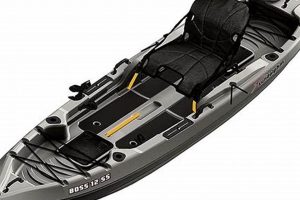
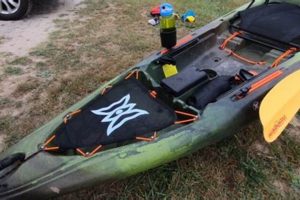
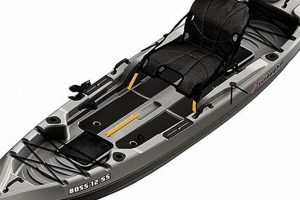
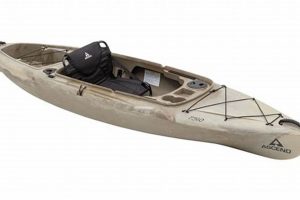
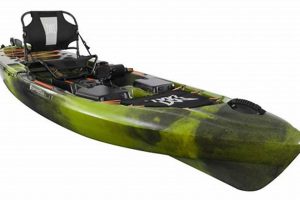
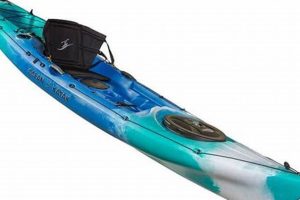
A kayak designed for fishing typically features a sit-on-top design for enhanced stability and ease of entry and exit. These vessels often include specialized features such as rod holders, storage compartments for tackle and gear, and potentially a higher weight capacity to accommodate anglers and their equipment. A ten-foot length is a common size, offering a balance of maneuverability and tracking performance suitable for various fishing environments.
This style of kayak provides anglers with a stable and accessible platform for fishing in diverse locations, from calm lakes and rivers to coastal waters. The open design allows for greater freedom of movement and easier casting, while the specialized features enhance the overall fishing experience. The popularity of this type of kayak has grown steadily as more individuals discover the joys and accessibility of kayak fishing. This growth reflects a broader trend toward human-powered watercraft and a desire for closer interaction with nature.
Further exploration of specific kayak features, fishing techniques, safety considerations, and recommended locations will provide a more comprehensive understanding of the advantages and enjoyment offered by this popular fishing platform.
Tips for Kayak Fishing
Proper preparation and technique enhance safety and success while fishing from a kayak. The following tips provide valuable guidance for anglers of all experience levels.
Tip 1: Stability is Paramount: Prioritize stability when selecting a kayak. Wider hulls generally offer greater stability than narrower designs. Testing kayak stability before venturing into open water is highly recommended.
Tip 2: Essential Safety Gear: Always wear a personal flotation device (PFD). Carry a whistle, signaling mirror, and a waterproof communication device. Inform someone of planned fishing locations and estimated return times.
Tip 3: Balanced Loading: Distribute weight evenly within the kayak to maintain stability. Secure gear to prevent shifting during movement. Keep frequently used items within easy reach.
Tip 4: Paddle and Rod Management: Utilize a paddle leash to prevent loss. Employ rod holders to secure fishing rods while paddling or landing fish. Practice paddle strokes appropriate for maneuvering and maintaining position in various water conditions.
Tip 5: Weather Awareness: Check weather forecasts before embarking on a fishing trip. Avoid fishing in strong winds, lightning storms, or other hazardous conditions. Be prepared to return to shore quickly if conditions deteriorate.
Tip 6: Respect Wildlife and the Environment: Observe local fishing regulations. Practice catch-and-release whenever possible. Properly dispose of fishing line and other waste materials. Minimize disturbance to wildlife and their habitats.
Tip 7: Practice Makes Perfect: Gain experience in calm, shallow water before venturing into more challenging environments. Practice entering and exiting the kayak, paddling techniques, and casting from a seated position.
Adherence to these guidelines promotes a safe and enjoyable kayak fishing experience. Careful preparation and mindful practices contribute significantly to successful outings and the preservation of natural resources.
By incorporating these tips into one’s fishing practices, anglers can confidently enjoy the unique and rewarding experience of kayak fishing while prioritizing safety and environmental responsibility.
1. Stability

Stability is a paramount consideration in kayak fishing, particularly in a 10-foot sit-on-top model. It directly impacts angler safety, casting effectiveness, and overall fishing experience. A stable platform allows for comfortable fishing, reduces the risk of capsizing, and facilitates various fishing techniques. Understanding the factors influencing stability is crucial for informed kayak selection and safe operation.
- Hull Design:
Wider, flatter hulls generally provide greater initial stability, making them suitable for calmer waters and less experienced paddlers. A wider hull resists tipping, providing a more secure feeling platform, especially when casting or reeling. However, this stability often comes at the cost of reduced maneuverability and tracking performance. Some 10-foot fishing kayaks incorporate design features like pontoon-style hulls or outriggers for enhanced stability.
- Center of Gravity:
A lower center of gravity enhances stability. Keeping weight low and centered within the kayak minimizes the risk of tipping. Proper distribution of gear and maintaining a balanced posture contribute significantly to overall stability. Anglers should be mindful of weight distribution and avoid sudden movements that could shift the center of gravity.
- Water Conditions:
Calm water conditions naturally contribute to kayak stability. Wind, waves, and currents can significantly impact stability, requiring increased vigilance and potentially specialized paddling techniques. Anglers should assess water conditions carefully before launching and adjust their fishing location and techniques accordingly.
- Angler Behavior:
Smooth, controlled movements are essential for maintaining stability. Avoid sudden, jerky motions, particularly when casting or retrieving fish. Understanding how body movements affect the kayak’s balance is crucial for maintaining a stable platform. Practicing in calm water can improve an angler’s awareness of their impact on kayak stability.
Careful consideration of these interconnected factors ensures a stable and enjoyable fishing experience. Selecting a kayak with appropriate stability characteristics for the intended fishing environment and angler experience level is crucial. Understanding the principles of balance and weight distribution further enhances stability and promotes safe kayak operation.
2. Maneuverability

Maneuverability in a 10-foot sit-on-top fishing kayak significantly impacts an angler’s ability to navigate various water conditions and access desired fishing spots. It dictates how easily the kayak responds to paddle strokes, changes direction, and handles currents or wind. This characteristic is intertwined with hull design, length, and water conditions. Shorter kayaks generally offer greater maneuverability than longer ones, allowing for quicker turns and easier navigation in tight spaces, such as shallow creeks or areas with dense vegetation. However, shorter lengths can sometimes sacrifice tracking performance, making them less efficient for paddling longer distances in open water. A 10-foot length represents a compromise, offering reasonable maneuverability while maintaining acceptable tracking. The hull design also plays a crucial role. A kayak with a more rounded or rockered hull tends to turn more easily but may track less efficiently in a straight line. A flatter hull, conversely, may track better but require more effort to turn. Understanding the interplay of these factors allows for informed kayak selection based on intended fishing environments.
Consider navigating a narrow, winding creek. A highly maneuverable kayak allows an angler to easily negotiate tight bends and avoid obstacles. Conversely, a less maneuverable kayak might require significant effort and multiple paddle strokes to achieve the same result, potentially hindering access to prime fishing locations. Similarly, in windy conditions, a maneuverable kayak enables quicker adjustments to maintain position and avoid drifting off course. This responsiveness is crucial for techniques like drift fishing or maintaining position near structure. The degree of maneuverability required depends on the specific fishing environment. Rivers and creeks necessitate higher maneuverability, while open lakes or coastal areas prioritize tracking performance for efficient paddling over long distances. Matching kayak maneuverability to the anticipated fishing conditions enhances overall fishing effectiveness and enjoyment.
Selecting a 10-foot sit-on-top fishing kayak requires careful consideration of maneuverability alongside other essential factors like stability and storage capacity. Understanding how hull design, length, and intended fishing environment influence maneuverability empowers anglers to choose a kayak optimized for their specific needs. This informed decision contributes significantly to a successful and enjoyable fishing experience, enabling efficient navigation and access to diverse fishing locations. Balancing maneuverability with other performance characteristics ultimately determines the kayak’s suitability for specific fishing styles and environments.
3. Storage Capacity
Storage capacity is a critical factor in evaluating a 10-foot sit-on-top fishing kayak. Adequate storage directly impacts the angler’s ability to carry essential gear, including tackle boxes, rods, safety equipment, and personal items. Insufficient storage can limit fishing effectiveness, necessitate multiple trips, or compromise safety by forcing anglers to overload the kayak. Conversely, well-designed storage enhances organization, accessibility, and overall fishing enjoyment. A 10-foot kayak typically offers various storage options, including dedicated compartments, tank wells, and bungee systems. Understanding the types, location, and accessibility of storage compartments allows anglers to make informed decisions based on individual needs and fishing styles.
Consider a scenario where an angler plans a multi-day fishing trip. Ample storage capacity is essential for carrying food, water, camping gear, and multiple sets of fishing equipment. Without sufficient storage, the angler might be forced to leave essential items behind, compromising safety or comfort. Alternatively, an angler focused on a specific technique, such as fly fishing, might require specialized storage solutions for fly boxes, lines, and other related gear. In this case, the presence and design of dedicated compartments for these items become crucial selection criteria. The location and accessibility of storage also influence fishing efficiency. Easy access to frequently used items, such as lures or pliers, minimizes disruption during fishing. Well-placed storage compartments allow anglers to retrieve gear quickly and efficiently, maintaining focus on the fishing activity.
Effective storage solutions contribute significantly to a successful and organized fishing experience. Evaluating storage capacity in a 10-foot sit-on-top fishing kayak requires careful consideration of individual fishing styles, trip duration, and gear requirements. Prioritizing storage capacity, accessibility, and organization ensures anglers can carry essential equipment comfortably and efficiently, maximizing their time on the water and enhancing overall fishing enjoyment. The balance between storage capacity and other kayak characteristics, such as stability and maneuverability, ultimately determines the vessel’s suitability for specific fishing needs and environments.
4. Comfort and Ergonomics
Comfort and ergonomics are essential considerations for anglers using a 10-foot sit-on-top fishing kayak, especially during extended trips. A comfortable and ergonomically sound kayak reduces fatigue, enhances fishing enjoyment, and helps prevent potential physical strain or discomfort. These factors influence an angler’s ability to maintain focus and effectively fish for extended periods. Key elements contributing to comfort and ergonomics include seat design, adjustability, paddling posture, and the overall layout of the kayak.
- Seat Design and Adjustability:
A well-designed seat provides crucial support and cushioning, reducing pressure points and promoting proper posture. Adjustable features, such as backrest angle and seat height, allow customization for individual body types and preferences. A comfortable seat significantly impacts long-term comfort and reduces fatigue during extended fishing trips. High-quality padding and breathable materials contribute to comfort, particularly in warm weather.
- Footrest Positioning and Adjustability:
Proper footrest placement allows for efficient paddling and contributes to overall body posture. Adjustable footrests accommodate different leg lengths and paddling styles. Correct foot positioning enhances leverage and reduces strain on leg muscles, promoting efficient energy transfer during paddling and enhancing stability. Secure and easily adjustable footrests contribute to a comfortable and efficient paddling experience.
- Paddle Ergonomics and Length:
Paddle length and blade shape influence paddling efficiency and comfort. A properly sized paddle reduces strain on arm and shoulder muscles. Ergonomically designed grips and shafts further enhance comfort and reduce fatigue during extended paddling sessions. Choosing a paddle appropriate for the angler’s height and paddling style is essential for efficient and comfortable paddling.
- Deck Layout and Accessibility:
A well-designed deck layout promotes efficient organization and easy access to essential gear. Strategically placed rod holders, storage compartments, and accessory mounts minimize reaching and bending, reducing strain and enhancing fishing efficiency. A clutter-free deck enhances safety and allows anglers to focus on fishing rather than searching for gear.
Prioritizing comfort and ergonomics in a 10-foot sit-on-top fishing kayak significantly enhances the overall fishing experience. A comfortable and ergonomically sound kayak enables anglers to fish longer, reduces fatigue, and minimizes the risk of physical strain. Careful consideration of seat design, adjustability, footrest positioning, paddle ergonomics, and deck layout ensures a comfortable and enjoyable fishing experience, allowing anglers to focus on their passion rather than physical discomfort.
5. Fishing Features

Specialized fishing features distinguish a fishing kayak from recreational models, significantly impacting angling effectiveness and enjoyment. These features, integral to a 10-foot sit-on-top fishing kayak’s design, cater specifically to the needs of anglers. Rod holders, strategically placed throughout the kayak, secure rods while paddling, allowing hands-free operation and preventing rod loss. Tackle storage compartments provide organized storage for lures, lines, and other essential gear, ensuring quick access and minimizing clutter. Integrated mounting points accommodate fish finders, GPS units, and other electronics, enhancing navigation and fish-finding capabilities. These features contribute directly to a more efficient and productive fishing experience. Consider an angler trolling multiple lines. Rod holders become crucial for managing multiple rods simultaneously, preventing tangling and facilitating quick responses to strikes. Similarly, readily accessible tackle storage allows for efficient lure changes, maximizing fishing time and responsiveness to changing conditions. The presence and design of these features are key differentiators in evaluating fishing kayaks.
The integration of these specialized features exemplifies the purposeful design of a fishing kayak. Consider a scenario where an angler hooks a large fish. Having a readily accessible landing net, secured within a designated storage area, can be the difference between landing the fish and losing it. Similarly, strategically placed rod holders prevent rods from being pulled overboard during a strong fight. These seemingly small details enhance the overall fishing experience and contribute to angler success. Further, specialized features like anchor trolleys enable precise boat control in current, crucial for techniques like drift fishing or maintaining position near structure. The availability and quality of these features directly impact fishing effectiveness and contribute to a more organized, efficient, and enjoyable experience.
Ultimately, the efficacy of a 10-foot sit-on-top fishing kayak hinges upon the thoughtful integration and execution of these specialized fishing features. These features, more than mere add-ons, represent a core aspect of the kayak’s design and purpose. Their presence, placement, and quality directly influence fishing success and overall user experience. Careful consideration of these features during kayak selection is paramount for anglers seeking to maximize their time on the water and optimize fishing effectiveness. The integration of these features transforms a basic kayak into a specialized fishing platform, enhancing both functionality and enjoyment.
6. Durability and Material
Durability and material selection are paramount considerations when evaluating a 10-foot sit-on-top fishing kayak. These factors directly influence the kayak’s lifespan, resistance to damage, and overall performance in various environments. Kayaks are subjected to diverse stressors, including UV exposure, impacts with rocks or submerged objects, and abrasion from transport and storage. Selecting a kayak constructed from durable materials ensures long-term performance and minimizes the risk of costly repairs or replacements.
- Polyethylene (PE) Plastic:
High-density polyethylene (HDPE) is a common material due to its impact resistance, UV stability, and affordability. HDPE kayaks can withstand considerable abuse, making them suitable for diverse fishing environments. Rotational molding, a common manufacturing process for HDPE kayaks, creates a seamless, one-piece hull with uniform thickness, enhancing durability. However, HDPE kayaks can be heavier than those constructed from other materials. The thickness of the HDPE directly impacts durability; thicker hulls offer greater resistance to punctures and impacts, but at the cost of increased weight.
- Thermoformed ABS Plastic:
Acrylonitrile butadiene styrene (ABS) plastic offers higher rigidity and lighter weight compared to HDPE. Thermoforming allows for precise shaping and layering of different materials, potentially enhancing performance characteristics. ABS kayaks are often more expensive than HDPE models but offer advantages in terms of weight and stiffness. This material is often used in higher-end recreational and touring kayaks.
- Composite Materials (Fiberglass, Carbon Fiber, Kevlar):
Composite materials provide exceptional strength, stiffness, and light weight. Kayaks constructed from these materials offer superior performance in terms of speed and efficiency. However, composite kayaks are typically more expensive and require greater care to prevent damage. While offering performance advantages, composite construction may be less resistant to impacts compared to robust plastics, requiring careful handling and transport.
- UV Resistance and Degradation:
Prolonged exposure to ultraviolet (UV) radiation from sunlight can degrade kayak materials, leading to discoloration, brittleness, and reduced strength. UV-resistant additives in plastics and protective coatings on composite materials mitigate this degradation. Regularly rinsing the kayak after use and storing it out of direct sunlight prolongs its lifespan. Choosing a kayak specifically designed for UV resistance is crucial, especially in regions with intense sunlight.
The selection of durable materials directly impacts the long-term performance and value of a 10-foot sit-on-top fishing kayak. Understanding the properties and characteristics of different construction materials enables informed decision-making. Balancing durability, weight, cost, and performance characteristics ensures the chosen kayak meets the specific needs of the angler and withstands the rigors of diverse fishing environments. Choosing a kayak built from high-quality, durable materials contributes to a long-lasting and reliable fishing platform, maximizing the return on investment and ensuring years of enjoyable use.
Frequently Asked Questions
Addressing common inquiries regarding 10-foot sit-on-top fishing kayaks provides clarity for prospective buyers and enhances understanding of key considerations.
Question 1: What advantages does a 10-foot length offer for a fishing kayak?
A 10-foot length offers a balance between maneuverability and tracking performance. This size is generally suitable for a variety of fishing environments, from smaller rivers and lakes to open coastal waters. It provides adequate stability while remaining relatively easy to transport and store.
Question 2: How does one determine the appropriate weight capacity for a fishing kayak?
Weight capacity should accommodate the combined weight of the angler, fishing gear, and any potential catch. Exceeding the specified weight capacity compromises stability and performance. Selecting a kayak with ample weight capacity ensures safe and efficient operation.
Question 3: What are essential safety considerations for kayak fishing?
Wearing a personal flotation device (PFD) is paramount. Carrying a whistle, signaling mirror, and waterproof communication device enhances safety. Checking weather forecasts and informing someone of fishing plans are crucial precautions.
Question 4: How does one transport a 10-foot kayak?
Roof racks designed for kayaks are a common transport method. Securing the kayak properly with straps prevents shifting during transit. Some kayaks are compatible with trailers or can be transported in the bed of a truck with appropriate padding and tie-downs. Adhering to manufacturer recommendations for transport ensures safety and prevents damage.
Question 5: What maintenance is required for a fishing kayak?
Rinsing the kayak with fresh water after each use removes salt, sand, and other debris. Regular inspection for damage and prompt repairs prevent further deterioration. Proper storage out of direct sunlight prolongs the lifespan of the kayak materials.
Question 6: How does one choose between different hull designs for a fishing kayak?
Hull design influences stability, maneuverability, and tracking performance. Wider, flatter hulls prioritize stability, while more rounded or rockered hulls enhance maneuverability. Selecting a hull design suited to the intended fishing environment and angler experience level is essential.
Careful consideration of these frequently asked questions empowers informed decision-making and contributes to a safe and enjoyable kayak fishing experience. Understanding the nuances of kayak selection, operation, and maintenance ensures optimal performance and long-term satisfaction.
Exploring further resources, such as specialized kayak fishing guides and online forums, provides additional insights and connects anglers with a supportive community.
Conclusion
A 10-foot sit-on-top fishing kayak represents a versatile platform for anglers seeking a balance of stability, maneuverability, and specialized features. Careful consideration of hull design, storage capacity, comfort, fishing-specific features, durability, and material selection ensures optimal performance and enjoyment on the water. Understanding these interconnected factors empowers informed purchasing decisions aligned with individual angler needs and fishing styles.
The increasing popularity of kayak fishing reflects a growing appreciation for human-powered watercraft and a desire for closer interaction with nature. As anglers continue to explore diverse waterways, the 10-foot sit-on-top fishing kayak remains a compelling option, offering a unique and accessible pathway to angling adventures.