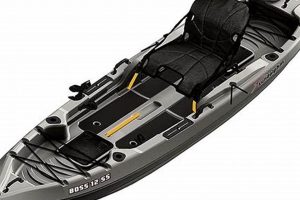
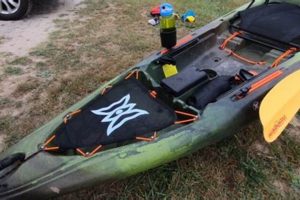
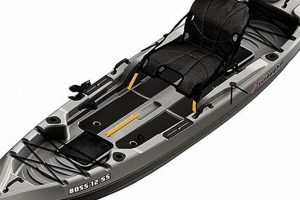
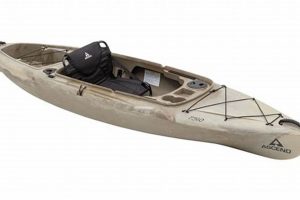
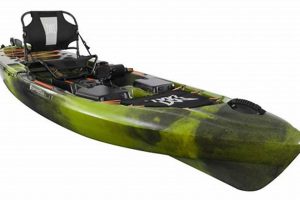
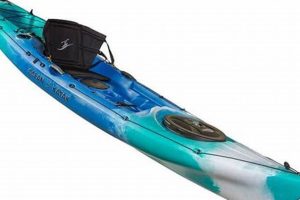
This particular vessel represents a popular choice for anglers seeking versatility and stability on the water. It combines the features of a sit-on-top kayak with the option for stand-up fishing, offering enhanced visibility and casting range. The twelve-foot length provides a balance of maneuverability and tracking performance suitable for various water conditions, from calm lakes to slow-moving rivers.
The combination of stability, fishability, and portability makes this type of watercraft attractive to both novice and experienced anglers. Its design allows for hands-free fishing and incorporates features like rod holders, tackle storage, and often a standing platform. This evolution in kayak design reflects the growing demand for specialized fishing platforms that cater to the needs of modern anglers.
The following sections will delve deeper into specific aspects of this type of watercraft, exploring its design features, performance characteristics, and suitability for various fishing environments.
Tips for Utilizing a Sit-On/Stand-Up Fishing Kayak
Optimizing the use of this specialized watercraft involves understanding its features and employing appropriate techniques. The following tips offer guidance for enhanced performance and safety on the water.
Tip 1: Weight Distribution and Balance: Proper weight distribution is crucial for stability, especially when standing. Gear should be evenly distributed and secured to prevent shifting. Practice entering and exiting the standing position in calm, shallow water before venturing into deeper or more challenging conditions.
Tip 2: Paddle Selection and Technique: Choosing the correct paddle length is essential for efficient paddling. A proper paddling technique minimizes fatigue and maximizes propulsion. Consider a kayak-specific paddle with a drip guard to reduce water dripping onto the deck.
Tip 3: Utilizing the Standing Platform: The standing platform is designed for stability while fishing. However, it’s advisable to maintain a low center of gravity and avoid sudden movements, especially in windy or choppy conditions.
Tip 4: Safety Gear and Precautions: Wearing a personal flotation device (PFD) is paramount for safety. Carrying a whistle, signaling device, and basic safety kit is also recommended. Checking weather conditions before embarking on a fishing trip is essential.
Tip 5: Anchor and Drift Control: Utilizing an anchor or drift sock can help maintain position in currents or wind. Understanding anchor deployment and retrieval techniques is crucial for effective control and safety.
Tip 6: Fish Handling and Landing Techniques: Landing larger fish from a kayak requires careful technique to maintain balance and prevent capsizing. Using a net and keeping the fish close to the kayak during landing minimizes stress on both the angler and the fish.
Tip 7: Regular Maintenance and Care: Rinsing the kayak with fresh water after each use and storing it properly prolongs its lifespan. Regularly inspecting and maintaining all hardware and accessories ensures optimal performance and safety.
By adhering to these guidelines, anglers can maximize the benefits of this versatile fishing platform while prioritizing safety and responsible use.
This information provides a foundational understanding for effectively utilizing this specialized watercraft. The subsequent conclusion will summarize key takeaways and offer further considerations for potential users.
1. Stability

Stability is a critical factor influencing the performance and safety of any kayak, especially one designed for fishing, and particularly relevant for models permitting stand-up casting like the Sun Dolphin Boss 12′. A stable platform allows anglers to focus on fishing rather than constantly correcting balance, ultimately enhancing the overall experience. Several factors contribute to the stability of this specific kayak.
- Hull Design:
The Boss 12′ typically features a pontoon-style hull or a wide, flat bottom design. This broader base increases stability by displacing more water and lowering the center of gravity. The wider hull provides a more stable platform, especially beneficial when standing to cast or reel in a fish. This stability contributes to angler confidence and reduces the risk of capsizing.
- Weight Capacity:
A higher weight capacity generally correlates with increased stability. The Boss 12′ boasts a substantial weight capacity, allowing anglers to carry necessary gear, including tackle boxes, coolers, and fishing equipment, without compromising stability. This generous capacity ensures the vessel remains stable even when fully loaded.
- Standing Platform:
Many models of the Boss 12′ incorporate a designated standing platform. This platform often features a textured, non-slip surface to enhance grip and stability. The platform’s strategic placement within the kayak’s structure contributes to overall balance while standing, enabling anglers to sight fish and cast with greater accuracy.
- Center of Gravity:
Maintaining a low center of gravity is essential for kayak stability. Proper weight distribution within the kayak plays a significant role. Distributing weight evenly and storing heavier items lower in the hull enhances stability. Understanding and managing weight distribution allows anglers to optimize balance and minimize the risk of tipping.
The combined effect of these design elements contributes significantly to the Boss 12’s stability, making it suitable for various fishing styles and conditions. This stability provides a secure and confident platform, particularly advantageous for stand-up fishing, which demands greater balance and control. Consequently, anglers can enjoy a more comfortable and productive fishing experience.
2. Maneuverability

Maneuverability is a crucial aspect of kayak performance, particularly for fishing kayaks that require precise positioning and navigation through various water conditions. The ability to easily navigate tight spots, change direction quickly, and maintain control in currents or wind significantly impacts fishing success. This section examines the maneuverability of the Sun Dolphin Boss 12′ sit-on/stand-up fishing kayak, considering factors influencing its performance in different environments.
- Hull Length and Shape:
The Boss 12’s twelve-foot length offers a balance between tracking and maneuverability. While longer kayaks generally track straighter, the moderate length of this model allows for reasonable turning performance. The hull shape, often featuring a shallow V-hull or flat bottom, contributes to its maneuverability, allowing for easier turning and pivoting. This balance makes it suitable for navigating both open water and tighter areas like vegetated shorelines.
- Width and Stability:
The kayak’s width, while contributing to stability, can slightly hinder maneuverability. Wider kayaks generally turn slower than narrower ones. However, the Boss 12’s design aims to balance stability and maneuverability, allowing anglers to maintain a stable platform while retaining reasonable turning capabilities. This balance is particularly important for stand-up fishing, where stability is paramount.
- Rudder or Skeg System:
Some models of the Boss 12′ may include a rudder or skeg system. A rudder assists in directional control, particularly helpful in windy conditions or when paddling against currents. A skeg enhances tracking performance in straight lines, reducing the need for constant course correction. These features, when present, improve the kayak’s overall maneuverability and control.
- Water Conditions:
Maneuverability is also influenced by prevailing water conditions. Calm, flat water allows for optimal turning performance, while wind, currents, and waves can impact maneuverability. The Boss 12’s design, with its balance of stability and tracking, performs adequately in various conditions, although strong winds or fast currents may require increased effort to maintain desired direction.
The maneuverability of the Sun Dolphin Boss 12′, while influenced by factors like its width and length, provides a balance suitable for diverse fishing environments. Its design aims to facilitate both straight-line tracking and efficient turning, allowing anglers to effectively navigate and position themselves for optimal fishing success. This combination of stability and maneuverability is a key feature of this particular fishing kayak model.
3. Fishing Features
Specialized features distinguish fishing kayaks from recreational models. These features enhance angling efficiency and overall experience. The Sun Dolphin Boss 12′ sit-on/stand-up fishing kayak incorporates several such features designed to cater specifically to the needs of anglers.
- Rod Holders:
Multiple flush-mounted and adjustable rod holders allow anglers to keep rods readily accessible while paddling or preparing tackle. These holders secure rods, preventing loss or damage, and free up hands for other tasks. The Boss 12′ typically includes several rod holders strategically placed for convenient access and varied fishing techniques, such as trolling or still fishing.
- Tackle Storage:
Dedicated storage compartments, often including a dry storage hatch and smaller compartments for tackle boxes and gear, keep essential items organized and protected. Dry storage safeguards sensitive items like electronics and wallets from water damage. The Boss 12′ typically offers ample storage for tackle, bait, and other fishing necessities.
- Standing Platform:
The integrated standing platform provides a stable surface for sight fishing and casting, offering a significant advantage over traditional sit-in kayaks. The platform allows for better visibility and increased casting range, contributing to fishing success. The Boss 12’s standing platform is designed for stability and ease of use, enhancing the stand-up fishing experience.
- Paddle Holder/Rest:
A designated area to secure the paddle while fishing keeps it within easy reach and prevents it from drifting away. This simple feature ensures the paddle remains accessible without interfering with fishing activities. The paddle holder or rest on the Boss 12′ contributes to a clutter-free deck, allowing anglers to focus on fishing.
These integrated fishing features contribute to the Boss 12’s appeal as a specialized fishing platform. The thoughtful design and inclusion of angler-specific features enhance functionality and overall fishing experience. These features allow anglers to focus on fishing, maximizing efficiency and enjoyment on the water.
4. Portability

Portability significantly influences the practical usability of a fishing kayak. Transporting a kayak to and from various fishing locations requires consideration of its weight, dimensions, and available carrying options. The Sun Dolphin Boss 12′ sit-on/stand-up fishing kayak, while offering features beneficial for fishing, presents certain portability challenges due to its size and weight. Its twelve-foot length and typical weight of around 70-80 pounds necessitate appropriate transportation methods. A roof rack or trailer is often required for vehicle transport, adding to logistical considerations. Carrying the kayak manually, even short distances, can be challenging, especially for individuals without assistance. While some models incorporate molded carrying handles, the overall size and weight remain factors impacting portability. For example, accessing remote fishing locations or navigating areas with limited parking requires careful planning and potentially specialized carrying equipment, such as a kayak cart.
Several strategies can mitigate portability challenges. Utilizing a kayak cart significantly reduces the physical strain of manual transport. Selecting launch sites with accessible ramps or docks minimizes carrying distances. Investing in lightweight roof rack systems or purpose-built kayak trailers streamlines vehicle transport. Understanding the kayak’s dimensions and weight facilitates informed decisions regarding transportation logistics. Furthermore, collapsible or inflatable kayaks offer increased portability, though they often compromise on features specific to fishing. The choice between portability and fishing functionality depends on individual angler needs and preferences. For example, anglers frequently fishing from easily accessible locations may prioritize fishing-specific features over ultimate portability. Conversely, anglers requiring frequent transport over longer distances or challenging terrain may prioritize portability and consider lighter-weight or more compact kayak options.
Portability directly impacts the practical use and overall enjoyment of a fishing kayak. Balancing portability with desired features requires careful consideration of individual needs and fishing environments. While the Sun Dolphin Boss 12′ offers desirable fishing features, its inherent size and weight present portability challenges. Implementing appropriate transportation strategies, such as using kayak carts or specialized trailers, significantly mitigates these challenges and expands accessibility to diverse fishing locations. Ultimately, understanding the portability limitations and implementing effective solutions allows anglers to maximize the benefits of this fishing platform while minimizing logistical constraints.
5. Durability
Durability is a critical factor influencing the lifespan and overall value of a fishing kayak. The ability to withstand regular use, exposure to various environmental conditions, and occasional impacts directly affects long-term performance and enjoyment. This section explores the durability of the Sun Dolphin Boss 12′ sit-on/stand-up fishing kayak, examining the materials used in its construction and their impact on its ability to resist wear and tear.
- Construction Material:
The Boss 12′ typically utilizes high-density polyethylene (HDPE) for its hull construction. HDPE offers a balance of durability, impact resistance, and UV resistance, making it suitable for various water conditions and outdoor exposure. This material provides reasonable protection against abrasion, punctures, and general wear from regular use. For example, HDPE can withstand minor impacts with rocks or submerged debris without sustaining significant damage. This robust construction contributes to the kayak’s longevity and suitability for diverse fishing environments.
- UV Resistance:
Prolonged exposure to sunlight can degrade certain plastics, leading to brittleness and cracking. HDPE’s inherent UV resistance protects the kayak’s hull from the damaging effects of the sun, prolonging its lifespan and maintaining structural integrity. This resistance is particularly important for kayaks frequently used in sunny climates. Regularly rinsing the kayak and storing it out of direct sunlight when not in use further enhances UV protection.
- Impact Resistance:
Fishing kayaks often encounter impacts from rocks, logs, or other obstacles in the water. HDPE’s impact resistance helps the Boss 12′ withstand minor collisions without sustaining significant structural damage. This durability is essential for navigating various water environments, including rocky shorelines and shallow rivers. While HDPE offers good impact resistance, avoiding significant impacts whenever possible helps maintain the kayak’s structural integrity over time.
- Hardware and Fittings:
The durability of a kayak also depends on the quality of its hardware and fittings, such as handles, latches, and rod holders. Corrosion-resistant materials, like stainless steel or marine-grade plastics, ensure these components withstand exposure to water and saltwater environments. Regular inspection and maintenance of these components are essential for preserving their functionality and preventing premature failure. For instance, rinsing the kayak with fresh water after each use helps remove salt and other corrosive substances, prolonging the lifespan of hardware and fittings.
The Sun Dolphin Boss 12′ fishing kayak demonstrates reasonable durability due to its HDPE construction and use of corrosion-resistant hardware. While regular maintenance and care further enhance longevity, the inherent material properties contribute significantly to its ability to withstand the rigors of regular fishing use. This durability makes the Boss 12′ a suitable investment for anglers seeking a reliable and long-lasting fishing platform. Understanding the factors influencing its durability allows owners to make informed decisions regarding care and maintenance practices, maximizing the kayak’s lifespan and ensuring years of enjoyable fishing experiences.
Frequently Asked Questions
This section addresses common inquiries regarding the Sun Dolphin Boss 12′ sit-on/stand-up fishing kayak, providing concise and informative responses to facilitate informed decision-making for prospective buyers and current owners.
Question 1: What is the maximum weight capacity?
The maximum weight capacity typically ranges from 400 to 500 pounds, depending on the specific model year and configuration. Consulting the manufacturer’s specifications for the particular model in question provides precise weight capacity information.
Question 2: Is this kayak suitable for ocean use?
While primarily designed for calmer waters such as lakes and slow-moving rivers, the Boss 12′ can handle protected bays and estuaries. Open ocean use is generally discouraged due to potential challenges with wind, waves, and currents. Careful consideration of weather and water conditions is paramount before venturing into coastal environments.
Question 3: How difficult is it to stand up and fish?
The standing platform provides enhanced stability, but practice is recommended before attempting to stand in open water. Starting in calm, shallow water allows individuals to develop balance and confidence before transitioning to more challenging conditions. Proper weight distribution and smooth movements contribute significantly to stable stand-up fishing.
Question 4: What type of paddle is recommended?
A kayak-specific paddle with a length appropriate for the paddler’s height and the kayak’s width is recommended. Consulting a paddle sizing chart or seeking expert advice ensures optimal paddle selection for efficient and comfortable paddling. Consider a paddle with drip guards to minimize water dripping onto the deck.
Question 5: How should this kayak be stored?
Storing the kayak out of direct sunlight, preferably in a covered area or on a rack designed for kayaks, helps prevent UV damage and prolongs its lifespan. Rinsing the kayak with fresh water after each use removes salt, dirt, and other debris that can contribute to deterioration. Proper storage practices contribute significantly to maintaining the kayak’s condition and appearance.
Question 6: What maintenance is required?
Regular maintenance includes rinsing the kayak after each use, inspecting and lubricating moving parts, and checking for any signs of wear or damage. Periodically cleaning and conditioning the hull helps protect it from UV degradation and maintain its appearance. Addressing any damage promptly prevents further deterioration and ensures continued safe and enjoyable use.
These responses offer clarification on key aspects of the Sun Dolphin Boss 12′ sit-on/stand-up fishing kayak. Consulting the owner’s manual or contacting the manufacturer directly provides additional information specific to individual models and configurations.
The following section delves into user experiences and reviews, providing real-world perspectives on the performance and practical use of this popular fishing kayak.
Conclusion
This exploration of the Sun Dolphin Boss 12′ sit-on/stand-up fishing kayak encompassed key aspects of its design, features, and performance. Stability and specialized fishing features like rod holders and a standing platform enhance angling opportunities. Maneuverability considerations, influenced by hull design and water conditions, inform navigation strategies. Portability challenges, inherent in its size and weight, necessitate strategic transport solutions. Durability, linked to construction materials and maintenance practices, impacts long-term value and performance. Understanding these elements allows for informed evaluation of this kayak’s suitability for individual angler needs and preferences.
The Sun Dolphin Boss 12′ presents a compelling option for anglers seeking a stable and feature-rich fishing platform. Careful consideration of its characteristics, alongside individual fishing styles and target environments, facilitates informed purchase decisions and responsible use. Continued exploration of kayak fishing advancements promises further innovation in design and functionality, enhancing angling experiences and promoting engagement with the natural world.