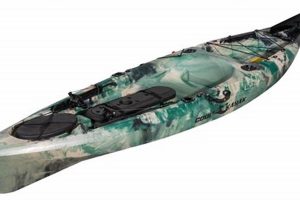
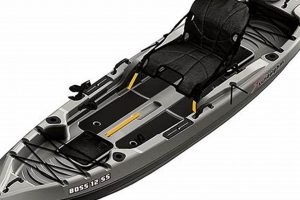
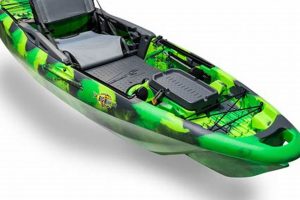
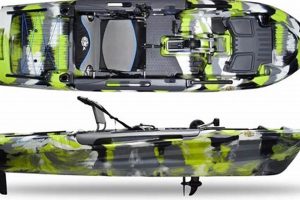
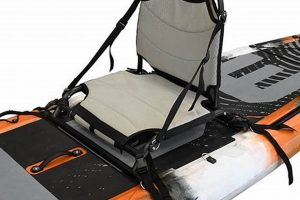
Specialized watercraft designed for anglers and hunters offer enhanced stability, stealth, and storage capacity compared to recreational kayaks. These vessels typically feature camouflage patterns, rod holders, specialized storage compartments for gear and game, and often anchor trolleys or stake-out systems for maintaining position in currents or shallow water. For example, a wider beam and flatter hull provide a stable platform ideal for casting fishing lines or taking aim with a bow and arrow.
The advantages of such specialized vessels contribute significantly to a successful and enjoyable outdoor experience. Enhanced stability minimizes disturbances that could frighten game, while ample storage accommodates essential equipment and harvested game. Historical context reveals the evolution of these craft from traditional dugout canoes and kayaks used for sustenance hunting and fishing to the modern, purpose-built designs incorporating advanced materials and technologies. This progression reflects the enduring human connection to nature and the pursuit of resourceful practices.
This article will further explore the key features, materials, and design considerations relevant to selecting appropriate watercraft for these activities. Topics covered will include hull design variations, propulsion methods, safety precautions, and the legal regulations surrounding their use.
Tips for Selecting and Using Specialized Kayaks
Choosing and utilizing appropriate watercraft significantly impacts the success and safety of hunting and fishing excursions. The following tips offer guidance for informed decision-making and responsible practices.
Tip 1: Consider Stability: Wider, flatter hulls offer increased stability, essential for casting lines and taking shots, but may compromise maneuverability in narrow waterways. Consider the primary environment and activity when evaluating hull designs.
Tip 2: Prioritize Storage: Adequate storage is crucial for gear, safety equipment, and harvested game. Evaluate storage capacity and accessibility based on anticipated needs and regulations.
Tip 3: Evaluate Propulsion Options: Paddle kayaks offer silent propulsion beneficial for stealth, while pedal-driven or motorized versions provide hands-free operation and faster transit. Choose based on physical capabilities, fishing style, and local regulations.
Tip 4: Camouflage and Concealment: Select camouflage patterns appropriate for the intended environment to minimize visibility and maximize hunting effectiveness. Consider additional concealment techniques, such as vegetation blinds.
Tip 5: Safety First: Always wear a personal flotation device (PFD) and carry essential safety equipment, including a whistle, signaling devices, and a first-aid kit. Inform someone of planned routes and estimated return times.
Tip 6: Respect Wildlife and Regulations: Adhere to all local hunting and fishing regulations, including licensing, catch limits, and permitted hunting zones. Practice ethical harvesting and minimize environmental impact.
Tip 7: Practice and Preparation: Become proficient in maneuvering and handling the chosen kayak before venturing into challenging waters or hunting situations. Practice self-rescue techniques and familiarize oneself with emergency procedures.
By adhering to these guidelines, individuals can enhance safety, maximize efficiency, and foster responsible engagement with the natural environment while pursuing these activities.
This concludes the practical guidance section. The following sections will delve into specific kayak models and further elaborate on advanced techniques for successful outings.
1. Stability

Stability represents a critical design element in kayaks intended for hunting and fishing. A stable platform is essential for accurate casting, safe firearm handling, and retrieving harvested game. Instability can lead to accidental capsizing, equipment loss, and potentially dangerous situations, especially in challenging weather or when handling larger catches. A stable hull allows anglers to stand and cast, offering a wider field of vision and improved leverage. Hunters benefit from a stable platform for taking accurate shots, particularly in situations requiring quick reactions. For example, the broader beam and flatter hull design of specialized fishing kayaks contribute significantly to stability compared to recreational kayak models designed for speed and maneuverability in calmer waters.
Various factors contribute to kayak stability, including hull design, width, length, and weight distribution. Wider, flatter hulls generally offer greater primary stability (initial resistance to tipping), beneficial for calm water conditions. Longer kayaks with a pronounced keel provide improved secondary stability (resistance to capsizing once tilted), which is advantageous in rougher waters. Weight distribution within the kayak also influences stability; proper loading and balancing of gear and game are essential for maintaining equilibrium. Specialized kayaks often feature design elements such as outriggers or pontoons that further enhance stability, allowing for activities like standing casting in open water. Understanding the interplay of these factors allows for informed selection based on individual needs and anticipated conditions.
Prioritizing stability in kayak selection is crucial for maximizing safety and effectiveness while hunting or fishing. Choosing a kayak with appropriate stability characteristics for the intended environment and activity directly impacts performance and reduces the risk of accidents. While enhanced stability can sometimes compromise maneuverability, particularly in confined spaces, the benefits for anglers and hunters, particularly when engaging with larger game or operating in challenging conditions, outweigh the trade-offs. The ability to maintain balance and a secure platform contributes significantly to a successful and enjoyable experience.
2. Storage Capacity
Storage capacity is a critical factor in hunting and fishing kayaks, directly impacting the practicality and success of these specialized pursuits. Adequate storage facilitates transport of essential gear, including rods, reels, tackle boxes, safety equipment, and harvested game. Insufficient storage can limit the duration of outings, compromise safety by restricting access to essential items, and reduce overall efficiency. For example, a kayak angler targeting large saltwater species requires ample storage for rods, reels, tackle, and potentially large catches, whereas a hunter pursuing waterfowl needs space for decoys, blinds, and retrieved game. The capacity to securely and efficiently store equipment directly influences the success and enjoyment of these activities.
Specialized kayaks often incorporate dedicated storage compartments designed for specific gear, enhancing organization and accessibility. These compartments may include rod holders, tackle storage trays, dry hatches for sensitive electronics, and larger cargo wells for bulky items like game bags or coolers. Strategic placement of storage compartments within the kayak optimizes weight distribution and balance, contributing to stability and maneuverability. Furthermore, secure storage protects equipment from water damage and loss, preserving valuable investments and ensuring preparedness for various situations. Consider, for instance, a kayak angler navigating through dense vegetation; readily accessible storage for a landing net prevents fumbling and potential loss of a hooked fish. Similarly, secure storage of ammunition in a waterproof compartment is crucial for hunters in wet environments.
Understanding the importance of storage capacity and utilizing efficient storage solutions allows for better planning and execution of hunting and fishing trips. Evaluating storage needs based on intended activities, target species, and environmental conditions is crucial for selecting an appropriate kayak. Efficient organization and utilization of available storage space maximizes efficiency and contributes to a safer and more productive experience. While maximizing storage capacity can sometimes affect other performance characteristics, like speed or maneuverability, the practicality and convenience offered by ample storage are essential for successful and enjoyable outings.
3. Propulsion
Propulsion systems significantly influence the effectiveness and suitability of kayaks designed for hunting and fishing. The choice of propulsion directly impacts maneuverability, stealth, range, and overall efficiency in diverse aquatic environments. Paddle propulsion, the traditional method, offers advantages in stealth and affordability, allowing for quiet movement through shallow waters and tight vegetation, minimizing disturbance to wildlife. This approach is particularly beneficial for stalking fish in clear streams or approaching waterfowl in marshland. However, paddling can be physically demanding over long distances or against strong currents, limiting range and potentially impacting accuracy when casting or shooting.
Pedal-powered kayaks provide hands-free operation, enabling anglers to focus on fishing techniques and hunters to maintain weapon readiness. This system offers increased speed and range compared to paddling, allowing for covering larger areas and accessing more remote locations. While pedal drives can be less stealthy than paddles due to gear noise, the efficiency gains can outweigh this drawback, particularly in open water or when trolling. Motorized kayaks offer the greatest speed and range, enabling rapid transit across large bodies of water and access to distant fishing grounds or hunting areas. However, the noise and potential environmental impact of motors necessitate careful consideration of local regulations and ethical implications. For instance, motorized kayaks might be ideal for accessing remote coastal areas for saltwater fishing but unsuitable for quiet freshwater environments where stealth is paramount.
Selecting the appropriate propulsion system requires careful consideration of the intended environment, target species, and personal preferences. Evaluating factors such as physical capabilities, required range, desired stealth level, and budgetary constraints informs effective decision-making. Understanding the advantages and disadvantages of each propulsion method allows for optimizing kayak performance and maximizing the chances of a successful and enjoyable hunting or fishing experience. Careful consideration of propulsion contributes directly to responsible and efficient engagement with the natural environment.
4. Camouflage
Camouflage plays a crucial role in the effectiveness of hunting and fishing kayaks by minimizing visibility and enhancing the user’s ability to blend seamlessly with the surrounding environment. This concealment is essential for approaching wildlife undisturbed, increasing the likelihood of successful hunting or fishing endeavors. The selection and application of camouflage patterns and techniques directly impact the overall success of these specialized pursuits.
- Pattern Selection
Choosing appropriate camouflage patterns depends significantly on the specific environment. Kayaks intended for use in marshland or heavily vegetated areas benefit from patterns incorporating greens, browns, and reeds, mimicking the natural surroundings. Conversely, kayaks used in open water or rocky environments might utilize patterns featuring blues, grays, and mottled textures. Effective camouflage patterns disrupt the kayak’s visual outline, making it less conspicuous to wildlife. For instance, a kayak with a digital camouflage pattern designed for open water environments may use pixelated blues and grays to break up its silhouette against the sky and water.
- Material Considerations
The material of the kayak itself can influence camouflage effectiveness. Matte finishes minimize reflections and glare, reducing visibility, particularly in sunny conditions. Some kayaks incorporate specialized camouflage coatings designed to absorb light and further reduce reflectivity. Conversely, highly polished or brightly colored kayaks can easily alert wildlife, compromising stealth and reducing hunting or fishing success. For example, a matte-finished kayak in a woodland camouflage pattern absorbs light and blends seamlessly with the surrounding foliage, whereas a glossy kayak, even with a camouflage pattern, might reflect sunlight and alert nearby animals.
- Supplemental Camouflage
Beyond the kayak’s inherent camouflage, hunters and anglers often utilize additional camouflage techniques. This can include attaching natural vegetation, such as reeds or branches, to the kayak’s exterior to further break up its outline and blend it with the surroundings. Wearing camouflage clothing that matches the kayak and environment enhances overall concealment. For instance, a hunter in a marsh might attach local grasses to their kayak and wear camouflage clothing in a marsh pattern to create a cohesive, concealed profile.
- Adaptability and Variability
Environmental conditions can change rapidly, influencing the effectiveness of camouflage. Hunters and anglers should consider the variability of light, weather, and vegetation when selecting camouflage strategies. Adapting to changing conditions might involve adding or removing vegetation from the kayak or adjusting clothing choices to maintain optimal concealment. For example, a hunter transitioning from a shaded area to a sunlit area might remove some attached vegetation to avoid creating a dark silhouette against the brighter background.
Effective camouflage is an integral aspect of successful hunting and fishing from specialized kayaks. By carefully considering pattern selection, material properties, supplemental camouflage techniques, and adaptability to changing environmental conditions, hunters and anglers can significantly enhance their stealth and improve their chances of a successful outing. The ability to blend seamlessly with the environment increases opportunities for close encounters with wildlife, contributing to a more rewarding and ethical experience.
5. Maneuverability

Maneuverability represents a crucial performance characteristic in kayaks designed for hunting and fishing, directly influencing access to prime locations and the ability to navigate diverse aquatic environments effectively. Restricted maneuverability can limit access to shallow water, dense vegetation, and narrow waterways where target species often reside. Conversely, enhanced maneuverability allows for precise positioning in currents, efficient navigation through obstacles, and quick adjustments to changing conditions, ultimately contributing to a more successful and rewarding experience.
- Hull Design and Turning Radius
Hull design significantly impacts maneuverability. Shorter kayaks with a wider turning radius offer enhanced agility in tight spaces, allowing for quick turns and precise adjustments in confined areas like creeks or mangrove forests. Longer kayaks, while offering better tracking in open water, may struggle in confined spaces. For example, a shorter, wider kayak with a flatter hull excels in navigating shallow, winding streams where maneuverability is paramount, whereas a longer, narrower kayak designed for open-water paddling may struggle to navigate tight turns and obstacles effectively.
- Water Conditions and Propulsion
Maneuverability requirements vary depending on the specific water conditions encountered. In calm, open water, tracking and speed may be prioritized over turning radius. However, in rivers with strong currents or areas with dense vegetation, a highly maneuverable kayak is essential for navigating safely and efficiently. Propulsion type also influences maneuverability. Paddle kayaks offer greater control and precision in tight spaces compared to pedal or motor-driven kayaks. For instance, a paddle kayak provides superior maneuverability when navigating through a swift-flowing river with submerged obstacles, whereas a pedal-drive kayak might struggle to make quick adjustments in such conditions.
- Weight Capacity and Stability Influence
The weight capacity of a kayak, influenced by its size and design, can affect maneuverability. Heavily loaded kayaks, especially those approaching their maximum capacity, may exhibit reduced responsiveness and require more effort to turn or maneuver. Similarly, stability plays a role; kayaks designed for maximum stability, often featuring wider hulls, might sacrifice some maneuverability in exchange for a more stable platform. Consider a kayak fully loaded with hunting gear; its maneuverability will be reduced compared to when it is unloaded, requiring more effort and anticipation when navigating challenging terrain.
- Tracking and Directional Control
Tracking refers to a kayak’s ability to maintain a straight course, while directional control encompasses the responsiveness to steering inputs. Efficient tracking minimizes the need for constant corrective strokes, conserving energy and improving efficiency, particularly in open water. Responsive directional control allows for quick adjustments and precise navigation around obstacles or changes in current. For example, a kayak with excellent tracking and responsive directional control allows an angler to maintain position in a flowing river while focusing on fishing, whereas a kayak with poor tracking requires constant adjustments to maintain the desired position.
The interplay of these factors highlights the significance of maneuverability in hunting and fishing kayaks. Selecting a kayak with appropriate maneuverability characteristics based on anticipated environmental conditions and activity requirements directly impacts the overall effectiveness and enjoyment of the experience. Balancing maneuverability with other performance characteristics, such as stability and storage capacity, requires careful consideration and prioritization based on individual needs and preferences. A kayaks maneuverability significantly contributes to its suitability for specific hunting and fishing scenarios, ultimately influencing the ability to access target areas and engage successfully with the environment.
6. Safety Features

Safety features in hunting and fishing kayaks are paramount due to the inherent risks associated with these activities. Operating in diverse aquatic environments, often in remote locations and potentially challenging weather conditions, necessitates prioritizing safety measures. These features are integral to mitigating risks and ensuring user well-being, impacting both short-term safety and long-term confidence on the water. For example, high visibility features like reflective deck rigging or bright hull colors enhance visibility in low-light conditions or during search and rescue operations, potentially preventing collisions with other vessels or aiding in locating a capsized kayak. Similarly, integrated safety equipment like paddle leashes or emergency flotation devices provides immediate support in critical situations, reducing the risk of equipment loss or drowning.
Specific safety features contribute significantly to mitigating various risks encountered while hunting and fishing from kayaks. Stable hull designs, including wider beams and flatter bottoms, enhance stability and reduce the likelihood of capsizing, especially when casting, retrieving gear, or handling harvested game. Secure storage compartments protect essential equipment from water damage and loss, ensuring access to communication devices, first-aid kits, and other safety gear when needed. Furthermore, features like anchor trolleys or stake-out systems allow for maintaining position in currents or shallow water, reducing the risk of drifting into hazardous areas or losing fishing spots. Consider a scenario where an angler hooks a large fish in strong currents; an anchor trolley allows for maintaining a stable position and effectively fighting the fish, minimizing the risk of capsizing or line breakage. Similarly, a hunter navigating shallow, marshy waters benefits from a stable kayak platform and secure storage for firearms and ammunition, mitigating risks associated with instability or accidental discharge.
Understanding the importance of safety features and incorporating them into kayak selection and usage significantly enhances preparedness and mitigates risks associated with hunting and fishing. Prioritizing features like high visibility elements, secure storage, stable hull designs, and specialized safety equipment contributes directly to a safer and more enjoyable experience. While some safety features may add cost or slightly impact performance characteristics like speed or maneuverability, the benefits in terms of risk reduction and enhanced confidence on the water far outweigh any perceived trade-offs. Integrating safety considerations into every aspect of kayak hunting and fishing, from equipment selection to trip planning and execution, fosters a culture of responsible engagement with the natural environment and promotes long-term well-being for all participants.
Frequently Asked Questions
This section addresses common inquiries regarding specialized kayaks designed for hunting and fishing, offering concise and informative responses to clarify key aspects and address potential concerns.
Question 1: What are the key differences between kayaks designed specifically for hunting and fishing and recreational kayaks?
Specialized kayaks prioritize stability, storage, and specialized features like rod holders and camouflage, whereas recreational kayaks emphasize speed, maneuverability, and comfort for general paddling.
Question 2: How does hull design influence stability and performance in different water conditions?
Wider, flatter hulls offer enhanced stability for activities like casting and shooting, while longer, narrower hulls provide better tracking and speed in open water. Specific hull designs cater to different water conditions and activity requirements.
Question 3: What propulsion methods are available for hunting and fishing kayaks, and how do they impact performance and stealth?
Propulsion options include paddles, pedals, and motors. Paddles offer stealth but require physical exertion, pedals provide hands-free operation but may generate some noise, and motors offer speed and range but can be less stealthy and environmentally impactful.
Question 4: How important is camouflage for hunting and fishing kayaks, and what factors influence camouflage effectiveness?
Camouflage minimizes visibility, enhancing hunting and fishing success. Effectiveness depends on pattern selection, material properties, supplemental camouflage techniques, and adaptability to changing environmental conditions.
Question 5: What safety features should be considered when selecting a hunting or fishing kayak?
Essential safety features include stable hull designs, secure storage for safety equipment, high-visibility elements, and specialized features like paddle leashes and emergency flotation devices.
Question 6: What are the typical weight capacities of hunting and fishing kayaks, and how does weight capacity influence performance and stability?
Weight capacities vary depending on kayak size and design, typically ranging from 300 to 600 pounds. Exceeding weight capacity compromises stability and performance. Selecting an appropriate weight capacity based on anticipated loads is crucial.
Understanding these key aspects facilitates informed decision-making when selecting and using specialized kayaks for hunting and fishing, contributing to a safer, more efficient, and ultimately more rewarding experience on the water.
The following section will provide detailed reviews of specific kayak models suitable for these activities, offering further guidance for selecting the optimal watercraft based on individual needs and preferences.
Hunting and Fishing Kayaks
Specialized kayaks designed for hunting and fishing represent a significant advancement in optimizing these outdoor pursuits. This exploration has highlighted the crucial interplay of stability, storage, propulsion, camouflage, maneuverability, and safety features in maximizing effectiveness and ensuring user well-being. Careful consideration of these factors, coupled with an understanding of individual needs and environmental conditions, empowers informed decision-making and contributes to responsible engagement with the natural world.
The evolution of specialized watercraft reflects the enduring human pursuit of connection with nature and the development of resourceful practices. As technology continues to advance and design innovations emerge, these specialized kayaks will undoubtedly play an increasingly important role in facilitating safe, efficient, and ethical hunting and fishing experiences, fostering a deeper appreciation for the delicate balance of aquatic ecosystems.