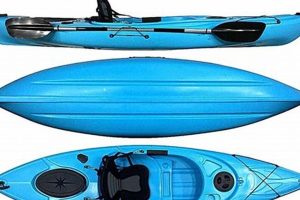
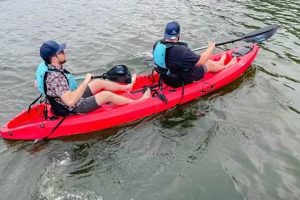
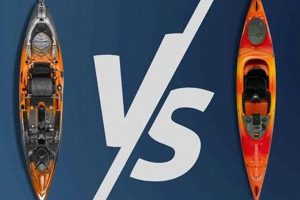
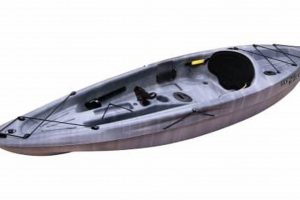
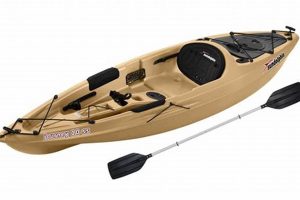
These specialized watercraft are characterized by an open-deck design, providing anglers with enhanced stability, mobility, and ease of access to the water. This style contrasts with traditional sit-inside kayaks, offering a different experience and advantages for specific fishing situations.
The self-bailing design and elevated seating position contribute to a dryer and more comfortable experience, particularly in warmer climates or when navigating shallow, vegetated waters. This configuration also facilitates easier casting and reeling, crucial for successful angling. Historically, simpler versions of these vessels have been used for centuries by indigenous cultures for fishing and transportation, but modern materials and designs have significantly expanded their capabilities and popularity for recreational and sport fishing.
Further exploration will address key features, advantages and disadvantages compared to other fishing kayak styles, selection criteria based on fishing type and environment, and essential gear for a successful and enjoyable experience.
Tips for Utilizing Open-Deck Fishing Kayaks
Careful consideration of several factors contributes to a successful and safe fishing experience from these specialized vessels. Attention to these key elements will enhance both comfort and effectiveness on the water.
Tip 1: Stability Assessment: Prioritize inherent stability, especially for anglers new to this style of watercraft. Wider hulls generally offer greater stability than narrower designs.
Tip 2: Propulsion Selection: Choose a propulsion system appropriate for the intended fishing environment and personal preference. Options include paddle power, pedal drives, and electric motors. Each offers advantages and disadvantages regarding speed, maneuverability, and effort.
Tip 3: Gear Organization and Accessibility: Effective organization of rods, tackle, and other essential gear is paramount. Utilize readily available storage compartments and consider after-market accessories designed for efficient access and secure storage.
Tip 4: Safety Considerations: Always prioritize safety by wearing a personal flotation device (PFD) and carrying essential safety equipment, including a whistle, signaling device, and first-aid kit. Inform someone of the intended fishing location and estimated return time.
Tip 5: Anchor Selection and Deployment: Choose an anchor system appropriate for the target fishing environment. Consider factors such as bottom composition, current, and wind conditions when selecting and deploying the anchor.
Tip 6: Weather Awareness: Monitor weather forecasts prior to departure and throughout the fishing trip. Be prepared to adjust plans or return to shore if conditions deteriorate.
Tip 7: Respect for the Environment: Practice Leave No Trace principles. Pack out all trash, avoid disturbing wildlife, and respect sensitive aquatic habitats.
Adhering to these guidelines will significantly contribute to a safer, more productive, and enjoyable fishing experience. Proper preparation and mindful practices are essential for maximizing the unique advantages these vessels offer.
Further discussion will address specific techniques for various fishing styles and environments.
1. Stability

Stability is a critical factor influencing the performance and safety of these specialized watercraft. The inherent design characteristics significantly impact stability, affecting angler comfort and fishing effectiveness. Wider hulls generally provide a more stable platform, especially in rough conditions or when standing to cast. Hull design features, including chines, rocker, and length, also contribute to overall stability. A lower center of gravity enhances stability, reducing the likelihood of capsizing. Proper weight distribution within the vessel further optimizes stability. For example, distributing gear evenly and avoiding excessive weight at either end contribute to a balanced and stable platform. Understanding these principles allows anglers to select and utilize these kayaks effectively, maximizing safety and performance.
The connection between stability and effective angling cannot be overstated. A stable platform allows anglers to focus on fishing techniques rather than constantly adjusting balance. This is particularly crucial in challenging conditions such as strong currents, wind, or waves. Standing for casting, sight fishing, or landing fish requires a stable platform to maintain balance and avoid accidental entry into the water. The ability to confidently move around the vessel without compromising stability enhances fishing efficiency and safety. Considering stability alongside other factors like maneuverability and storage capacity enables anglers to select the most appropriate vessel for their specific needs and fishing style.
Prioritizing stability contributes significantly to both safety and fishing success. Anglers should carefully consider hull design, weight capacity, and personal comfort levels when selecting a kayak. Understanding the factors influencing stability empowers anglers to make informed decisions and enjoy a more confident and productive fishing experience. Ultimately, a stable platform is essential for maximizing the advantages offered by these specialized vessels.
2. Maneuverability

Maneuverability plays a crucial role in the effectiveness of fishing sit-on-top kayaks. The ability to navigate tight spaces, change direction swiftly, and position the vessel accurately significantly impacts fishing success. Several factors influence maneuverability, including hull design, length, and propulsion system. Shorter kayaks generally offer greater maneuverability in confined areas such as shallow creeks, mangrove tunnels, and rocky shorelines. Longer kayaks, while offering greater speed and tracking ability in open water, may be less nimble in tight spaces. Hull design features, such as rocker and chines, also affect turning performance. Kayaks with a higher rocker (more upward curve at the bow and stern) tend to turn more easily, while those with pronounced chines (sharp edges along the hull) offer enhanced tracking but may require more effort to turn.
The choice of propulsion system significantly influences maneuverability. Paddle-powered kayaks offer excellent control and responsiveness, allowing for precise adjustments and quick turns. Pedal-driven systems provide hands-free propulsion, enabling anglers to focus on fishing while maintaining control over the vessel’s movement. Electric motors offer increased speed and range but may sacrifice some maneuverability in tight quarters. Consider a shallow-water fishing scenario where navigating through dense vegetation is essential for reaching prime fishing spots. A shorter, paddle-powered kayak with a moderate rocker would likely offer the greatest maneuverability in this environment, enabling anglers to navigate effectively and access areas inaccessible to larger, less agile vessels. Conversely, in open-water environments targeting pelagic species, a longer, faster kayak with a pedal drive or electric motor might be more suitable.
Understanding the relationship between maneuverability and the intended fishing environment is essential for selecting the most appropriate kayak. Consider factors such as the type of water being fished, the presence of obstacles, and the need for speed versus precise control. Matching kayak characteristics to the specific fishing application optimizes performance and enhances the overall experience. A highly maneuverable kayak enhances fishing effectiveness by enabling precise boat positioning, efficient navigation through complex environments, and rapid response to changing fishing conditions. This ability to control the vessel’s movement ultimately translates into a more successful and enjoyable fishing experience.
3. Accessibility

Accessibility in the context of these specialized watercraft refers to the ease with which anglers can enter, exit, and move around on the vessel. This characteristic significantly influences the overall fishing experience, particularly for individuals with mobility limitations or those seeking greater convenience and freedom of movement on the water. The open-deck design contributes significantly to enhanced accessibility compared to traditional sit-inside kayaks.
- Entering and Exiting:
The open deck allows for easy entry and exit from the kayak, even from shallow water or from a dock. This eliminates the need to squeeze into a confined cockpit, simplifying access for individuals of varying physical abilities. The elevated seating position further facilitates entry and exit.
- Onboard Movement:
The open design provides greater freedom of movement on the kayak, allowing anglers to easily shift positions, stand up for casting or sight fishing, and retrieve dropped items. This enhanced mobility contributes to a more comfortable and efficient fishing experience. Anglers can reposition themselves quickly to adjust to changing fishing conditions or target fish in different locations.
- Re-entry after Water Entry:
Should an angler inadvertently enter the water, the open design allows for simple re-entry, a key safety consideration. This self-bailing feature further enhances safety by quickly removing any water that enters the hull. The relatively high seating position also aids in reboarding.
- Adaptability for Diverse Needs:
The accessible nature of these kayaks makes them suitable for anglers of varying ages and physical abilities. Modifications, such as specialized seating systems or adaptive paddling equipment, can further enhance accessibility for individuals with specific needs. This inclusivity expands the opportunities for recreational and sport fishing.
The inherent accessibility of these kayaks contributes significantly to their popularity and versatility. The ease of entry and exit, freedom of movement, and simplified water re-entry enhance both safety and fishing effectiveness. These features make open-deck kayaks suitable for a wide range of anglers, regardless of experience or physical limitations, promoting greater inclusivity and enjoyment on the water.
4. Storage Capacity

Storage capacity is a critical factor influencing the practicality and effectiveness of fishing sit-on-top kayaks. Adequate storage enables anglers to carry essential gear, including tackle boxes, rods, safety equipment, and personal items, contributing significantly to a successful and enjoyable fishing experience. The variety of storage options available influences organization and accessibility, impacting overall fishing efficiency.
- Built-in Compartments:
Many fishing kayaks feature integrated storage compartments, including hatches, tank wells, and dry storage areas. These compartments offer protected storage for sensitive items like electronics, wallets, and phones, safeguarding them from water and the elements. Recessed compartments maintain a low center of gravity, contributing to kayak stability.
- Bungee Systems:
Deck rigging and bungee systems provide readily accessible storage for frequently used items like paddles, rods, and landing nets. These systems secure gear on the deck, preventing loss while keeping essential tools within easy reach. The flexibility of bungee systems accommodates a variety of items and sizes.
- Aftermarket Accessories:
A wide range of aftermarket accessories further expands storage options. These include crates, gear bags, and specialized mounts for rod holders, fish finders, and other equipment. Such accessories allow anglers to customize their kayaks to suit specific fishing styles and preferences. Modular systems enable flexibility in gear configuration.
- Weight Capacity Considerations:
Understanding the kayak’s weight capacity is crucial for safe and efficient operation. Exceeding the weight limit compromises stability and performance. Anglers should carefully consider the combined weight of their gear, personal items, and themselves when selecting a kayak. Proper weight distribution within the kayak optimizes stability and maneuverability.
Efficient storage solutions contribute significantly to a productive and enjoyable fishing experience. Organized storage facilitates quick access to essential gear, minimizing distractions and maximizing fishing time. Prioritizing storage needs during kayak selection ensures sufficient capacity and accessibility, enabling anglers to focus on their fishing techniques and enhance their overall success on the water. Proper utilization of storage features, including built-in compartments, bungee systems, and aftermarket accessories, contributes to a streamlined and efficient fishing experience from a sit-on-top kayak.
5. Customization Options
Customization options represent a significant advantage of fishing sit-on-top kayaks, enabling anglers to tailor their vessels to specific needs and fishing styles. This adaptability enhances fishing effectiveness and overall enjoyment on the water. The modular nature of many sit-on-top kayaks allows for the addition of various accessories, transforming a basic platform into a highly specialized fishing machine. This customization potential distinguishes sit-on-top kayaks from other fishing platforms, contributing to their increasing popularity.
Several key areas benefit from customization. Rod holders, strategically placed for easy access and efficient trolling, significantly improve fishing ergonomics. Fish finder mounts and transducer scupper holes facilitate electronic integration, enhancing fish-finding capabilities. Anchor trolley systems enable controlled anchoring and drifting, crucial for specific fishing techniques. Gear tracks and mounting plates provide attachment points for customized storage solutions, optimizing organization and accessibility. For example, an angler targeting bass in a river system might configure their kayak with rod holders near the cockpit for easy casting, an anchor trolley for maintaining position in current, and a fish finder mount for locating structure and fish. Conversely, an angler pursuing offshore species might prioritize rod holders for trolling, a GPS mount for navigation, and larger storage compartments for tackle and safety gear. The ability to tailor the kayak to the specific fishing scenario enhances efficiency and overall success.
Understanding the range of customization options available empowers anglers to optimize their kayaks for specific fishing styles and environments. This adaptability contributes to a more personalized and effective fishing experience. While customization enhances functionality, careful consideration of weight capacity and balance remains crucial for maintaining stability and performance. Proper installation and secure mounting of accessories ensures safety and prevents equipment failure. Strategic customization based on individual needs and fishing goals maximizes the inherent versatility of fishing sit-on-top kayaks.
Frequently Asked Questions
This section addresses common inquiries regarding fishing sit-on-top kayaks, providing concise and informative responses to facilitate informed decision-making and enhance understanding of these specialized vessels.
Question 1: Are these kayaks suitable for beginners?
Generally, yes, due to their inherent stability and ease of use. Wider models offer enhanced stability for novice paddlers. However, practicing basic paddling techniques and safety procedures is always recommended before venturing into open water.
Question 2: What are the advantages of these kayaks compared to sit-inside kayaks for fishing?
Key advantages include superior stability, easier entry and exit, better maneuverability in shallow water, and self-bailing capabilities, making them ideal for warmer climates and challenging fishing environments.
Question 3: How stable are they in rough water conditions?
Stability varies depending on design factors like hull width and length. Wider kayaks generally offer better stability. However, no kayak is entirely immune to capsizing. Always prioritize safety by wearing a PFD and avoiding excessively challenging conditions.
Question 4: What type of fishing is best suited for these kayaks?
Their versatility suits various fishing styles, including inshore, offshore, and freshwater fishing. Specific features and configurations optimize performance for techniques like casting, trolling, and still-fishing.
Question 5: What essential gear is recommended for a fishing trip?
Essential gear includes a PFD, paddle or propulsion system, appropriate fishing rods and reels, tackle, safety equipment (whistle, signaling device), and suitable clothing. Additional accessories, such as rod holders and fish finders, enhance fishing effectiveness.
Question 6: How is storage managed on these kayaks?
Storage solutions vary by model and include integrated compartments, deck rigging, and bungee systems. Aftermarket accessories like crates and gear bags further expand storage capacity. Weight capacity and distribution should be considered to maintain stability.
Careful consideration of individual needs, fishing style, and target environment should guide kayak selection and configuration. Prioritizing safety and adhering to recommended practices ensure an enjoyable and productive fishing experience.
The following section delves into specific techniques and considerations for various fishing environments and target species.
Conclusion
Exploration of these specialized watercraft reveals distinct advantages for anglers. Key attributes include enhanced stability, maneuverability, and accessibility compared to traditional sit-inside kayaks. The open-deck design facilitates ease of entry and exit, simplifies water re-entry, and allows for greater freedom of movement onboard. Customization options, including rod holders, fish finders, and specialized storage solutions, further enhance versatility and fishing effectiveness. Careful consideration of factors like hull design, propulsion system, and storage capacity ensures optimal performance based on individual fishing styles and target environments. Understanding these elements empowers anglers to make informed decisions regarding kayak selection and configuration.
The adaptability and specialized features of these kayaks contribute significantly to a more productive and enjoyable fishing experience. Continued innovation in design and materials promises further advancements in performance and functionality. Ultimately, selecting the appropriate vessel and adhering to safe practices unlocks the full potential of these kayaks, fostering greater success and enjoyment on the water.