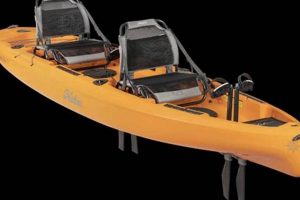
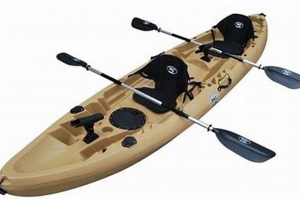
A small, human-powered watercraft designed for angling, often brightly colored for visibility and safety, can be a valuable tool for the sport. Such vessels are typically constructed from durable, lightweight materials like polyethylene or composites, and feature specialized design elements like rod holders, storage compartments, and comfortable seating. An example would be a compact, sit-on-top model with a vibrant hue, ideal for navigating shallow waters and offering easy access to fishing gear.
The vibrant color enhances visibility in various water conditions, contributing to angler safety. Compact and maneuverable designs allow access to secluded fishing spots, improving the chances of a successful catch. These specialized watercraft have evolved alongside the sport of fishing, transitioning from basic canoes and rowboats to purpose-built designs that prioritize stability, comfort, and functionality. The increasing popularity reflects a growing demand for efficient and enjoyable angling experiences.
This discussion will delve into various aspects of these specialized watercraft, including design variations, material selection, essential features, safety considerations, and popular fishing techniques adaptable to this type of vessel.
Tips for Effective Kayak Fishing
Optimizing angling experiences from small, human-powered watercraft requires careful consideration of several factors. These tips offer guidance for enhancing safety and improving fishing success.
Tip 1: Prioritize Stability: Vessel stability is paramount. Consider wider, flatter-hulled designs for enhanced balance, especially in challenging conditions or when standing to cast. Regular practice improves balance and control.
Tip 2: Choose Appropriate Paddles: Paddle selection impacts efficiency and comfort. Opt for lightweight, appropriately sized paddles for reduced fatigue and improved maneuverability. Consider a paddle leash to prevent loss.
Tip 3: Organize Gear Strategically: Efficient gear organization is crucial in limited space. Utilize storage compartments and consider mounting systems for rods, tackle boxes, and other essentials. Keep essential safety equipment readily accessible.
Tip 4: Dress for the Environment: Appropriate attire enhances comfort and safety. Dress in layers to adapt to changing weather conditions and consider waterproof gear. Bright clothing increases visibility.
Tip 5: Plan Fishing Locations Carefully: Research potential fishing spots and consider factors like water depth, currents, and potential hazards. Check weather forecasts before embarking and inform someone of the intended location and return time.
Tip 6: Master Kayak Control: Practice maneuvering the vessel effectively in various conditions. Understanding basic paddling strokes and turning techniques is essential for efficient navigation and accessing desired fishing areas.
Tip 7: Respect Wildlife and the Environment: Practice responsible angling, adhering to catch-and-release guidelines where applicable. Minimize environmental impact by properly disposing of waste and avoiding disturbing natural habitats.
By adhering to these guidelines, anglers can significantly enhance their safety and enjoyment on the water, leading to more productive and rewarding fishing experiences.
These tips provide a foundation for successful kayak angling. The following section will explore specific techniques for various fish species and water conditions.
1. Visibility (Safety)

A primary safety consideration for any small watercraft is visibility. In the context of a fishing kayak, enhanced visibility significantly reduces the risk of collisions with other vessels, especially in congested waterways or low-light conditions. The bright yellow hue contributes directly to this enhanced visibility, acting as a crucial safety feature.
- Reduced Collision Risk
Bright colors like yellow stand out against the backdrop of water, vegetation, and shoreline. This increased contrast allows other boaters to detect the kayak more easily from a distance, providing them ample time to adjust their course and avoid potential collisions. A brightly colored vessel is particularly crucial in low-light situations, such as dawn, dusk, or foggy conditions.
- Enhanced Search and Rescue
In the unfortunate event of a capsize or other emergency, a highly visible kayak significantly aids search and rescue efforts. The vibrant yellow color makes the kayak easier to spot from the air or from other vessels, expediting the location and retrieval of the kayaker. This can be a life-saving factor in critical situations.
- Improved Visibility in Varied Water Conditions
Whether in clear open water, murky rivers, or choppy seas, a yellow kayak maintains a high degree of visibility. This consistency across diverse environments ensures that the kayak remains noticeable, minimizing the risk of accidents regardless of the water conditions.
- Visual Identification and Communication
A brightly colored kayak can assist in visual identification and communication. For example, in a group kayaking excursion, distinct kayak colors allow for easy tracking of individual members. The high visibility can also be helpful for signaling to other boaters or individuals on shore.
The inherent high visibility offered by a yellow fishing kayak contributes significantly to overall safety on the water. By increasing detectability and aiding in potential rescue scenarios, this color choice becomes a crucial element for responsible kayaking practices. Choosing a bright color is a simple yet effective strategy for mitigating risks and ensuring a safer, more enjoyable fishing experience.
2. Stability (Design)
Stability, a critical performance attribute of a fishing kayak, is directly influenced by design elements. A stable platform is essential for casting, reeling, and landing fish, particularly in challenging conditions. Design features impacting stability include hull shape, width, and length. Wider, flatter hulls generally offer greater initial stability, resisting tipping, while longer, narrower hulls provide better secondary stability, recovering more readily from leaning. A fishing kayak’s design prioritizes stability to accommodate angling activities, recognizing the dynamic movements inherent in the sport.
Consider two hypothetical yellow fishing kayaks: Kayak A, short and wide, and Kayak B, long and narrow. Kayak A offers excellent initial stability, ideal for calm lakes or slow-moving rivers, allowing anglers to stand and cast with confidence. However, it may feel less stable in choppy conditions. Kayak B, designed for open water or faster currents, sacrifices some initial stability for superior tracking and speed, proving more stable in rougher water due to its ability to ride over waves rather than tip easily. The choice between these designs depends on the intended fishing environment and angler preferences. Understanding the relationship between design and stability empowers informed decisions, maximizing both safety and fishing effectiveness.
The interplay between stability and design in a fishing kayak directly impacts performance and safety. Selecting a design appropriate for the intended fishing environment is paramount. While color does not directly influence stability, the visibility offered by a yellow hull enhances safety by making the kayak more easily discernible to other boaters, especially in conditions where stability might be compromised. Therefore, the combination of a well-designed, stable platform and high visibility contributes to a safer and more productive angling experience.
3. Material (Durability)
Material selection significantly influences the durability and longevity of a yellow fishing kayak. Common materials include high-density polyethylene (HDPE), linear low-density polyethylene (LLDPE), and various composites. HDPE, known for its impact resistance and UV stability, offers excellent durability at a lower cost. LLDPE, slightly more flexible, provides better resistance to punctures and abrasion. Composites, utilizing materials like fiberglass or carbon fiber, offer superior strength and lighter weight but come at a premium price. The choice of material dictates resistance to impacts, abrasion, UV degradation, and other environmental factors. For instance, a kayak constructed from HDPE might better withstand rocky riverbeds, while an LLDPE kayak could be more suitable for navigating areas with submerged debris. A composite kayak, though lighter and more efficient to paddle, demands greater care to prevent scratches and impacts. The intended usage environment strongly influences the optimal material choice.
Durability translates directly to long-term value and safety. A kayak constructed from robust, UV-resistant materials withstands years of exposure to sunlight and water without significant degradation, reducing the risk of cracks or leaks that compromise structural integrity and safety. The ability to withstand impacts and abrasion minimizes damage from collisions with rocks, logs, or other obstacles encountered during fishing excursions. Consider a scenario where a kayak strikes a submerged rock: an HDPE kayak might sustain a minor scratch, while a less durable material could suffer a significant crack, jeopardizing the angler’s safety. Investing in a kayak constructed from durable materials ensures a reliable and long-lasting vessel, enhancing safety and reducing the need for frequent repairs or replacements.
Understanding the relationship between material and durability is crucial for informed decision-making. While the color itself does not affect durability, the inherent visibility of a yellow fishing kayak, combined with the longevity provided by durable materials, contributes to long-term safety and enjoyment. Choosing a kayak constructed from robust materials appropriate for the intended environment ensures a reliable vessel capable of withstanding the rigors of fishing expeditions for years to come. This understanding empowers anglers to make informed choices, maximizing the return on their investment and ensuring safe and rewarding fishing experiences.
4. Storage (Capacity)

Storage capacity is a critical consideration in fishing kayak selection. Effective organization and accessibility of fishing gear directly impact angling efficiency and enjoyment. Ample storage facilitates carrying essential equipment, including rods, reels, tackle boxes, safety gear, and personal items, enabling anglers to focus on fishing rather than managing gear. Different storage solutions cater to diverse needs and fishing styles.
- Dedicated Rod Holders
Purpose-built rod holders secure fishing rods, preventing loss or damage during transport and allowing quick access when fish strike. Flush-mounted rod holders offer a streamlined profile, minimizing interference while paddling, while adjustable rod holders provide flexibility for different rod lengths and fishing techniques. For example, trolling requires readily accessible rods, while bottom fishing benefits from secure storage during drift. The number and type of rod holders influence the kayak’s versatility for various fishing styles.
- Internal Storage Compartments
Watertight hatches provide secure storage for sensitive items like electronics, wallets, and keys, protecting them from water damage. Larger compartments accommodate tackle boxes, extra clothing, and other essential gear. Hatches located near the angler’s seat offer convenient access without requiring significant movement. For example, a spacious hatch behind the seat can store a large tackle box, while a smaller hatch near the footwell might hold a first-aid kit. The size, location, and accessibility of internal storage influence organization and efficiency on the water.
- External Storage Options (e.g. Bungee Cords, Tank Wells)
External storage areas, often secured with bungee cords or located within tank wells, offer readily accessible storage for frequently used items like pliers, cutters, and extra lines. These areas provide quick access to essential gear without requiring opening hatches. For example, a tank well in front of the angler can hold a small tackle box or a landing net, while bungee cords behind the seat might secure a dry bag containing extra clothing. The strategic use of external storage enhances efficiency and minimizes disruption during fishing.
- Weight Capacity and Distribution
Weight capacity dictates the total load the kayak can safely carry, including angler weight, gear, and any potential catch. Evenly distributing weight within the kayak enhances stability and performance. Exceeding the weight capacity compromises stability and increases the risk of capsizing. Understanding weight capacity and distribution is critical for safety and efficient paddling. For example, overloading the rear of the kayak can make it difficult to steer, while uneven weight distribution can lead to instability, especially in challenging conditions. Proper weight management contributes to a safer and more enjoyable fishing experience.
Adequate storage capacity is essential for a productive and enjoyable fishing kayak experience. The strategic arrangement and accessibility of storage compartments enhance organization and efficiency on the water, allowing anglers to focus on fishing. While the color of the kayak does not directly impact storage capacity, the visibility provided by a yellow hull enhances safety during transport and retrieval of gear, particularly in low-light or crowded areas. Selecting a kayak with appropriate storage solutions aligned with individual fishing styles and needs contributes to a more rewarding and efficient angling experience.
5. Maneuverability (Performance)

Maneuverability significantly influences a fishing kayak’s performance and effectiveness. The ability to navigate efficiently through various water conditions, access tight fishing spots, and position the kayak optimally for casting and retrieving directly impacts fishing success. Several factors, including hull design, length, and water conditions, contribute to a kayak’s maneuverability.
- Hull Design (Tracking vs. Turning)
Hull design dictates the balance between tracking (moving in a straight line) and turning responsiveness. Longer, narrower hulls excel at tracking, maintaining course efficiently in open water or currents. Shorter, wider hulls prioritize turning responsiveness, allowing for quick directional changes in confined areas like creeks or mangrove forests. A kayak designed for river fishing requires greater maneuverability for navigating tight bends and obstacles compared to one designed for open-water trolling, highlighting the importance of hull design in optimizing performance for specific fishing environments.
- Length (Impact on Turning Radius)
Kayak length directly influences the turning radius. Shorter kayaks turn more quickly and require less effort to maneuver, while longer kayaks have a wider turning radius, sacrificing agility for speed and stability in open water. A shorter kayak might excel in navigating narrow, winding streams where sharp turns are frequent, while a longer kayak might be preferred for covering greater distances in larger lakes or coastal areas. Choosing the appropriate length depends on the anticipated fishing environment and individual paddling preferences.
- Water Conditions (Influence on Control)
Water conditions, including current, wind, and waves, significantly impact kayak maneuverability. Strong currents or winds can challenge directional control, requiring more effort to maintain the desired course. In choppy conditions, shorter kayaks might be more susceptible to being pushed off course, while longer kayaks tend to track better through waves. Adapting paddling techniques to prevailing conditions enhances control and maneuverability. For instance, using a rudder or skeg can improve tracking in windy conditions, while employing corrective strokes helps maintain course in currents.
- Relationship with Kayak Weight and Paddler Skill
Kayak weight and paddler skill also play a role in maneuverability. Lighter kayaks require less effort to turn and accelerate, enhancing responsiveness. Experienced paddlers with refined techniques can maneuver kayaks more efficiently, maximizing performance regardless of hull design or water conditions. Regular practice and understanding of various paddling strokes improve control and maneuverability, allowing anglers to position themselves effectively for optimal fishing success. For example, a skilled paddler can use edging techniques to enhance turning performance or utilize bracing strokes to maintain stability in challenging conditions.
Maneuverability is a key performance attribute in a fishing kayak, significantly impacting the angler’s ability to access desired fishing locations and position the kayak effectively. While the color of the kayak does not directly influence maneuverability, the visibility of a yellow hull contributes to safety, especially in challenging conditions that demand precise maneuvering. Understanding the interplay of factors influencing maneuverability empowers informed decision-making, allowing anglers to select a kayak optimized for their specific needs and fishing environment, ultimately enhancing both safety and fishing success.
6. Features (Fishing-Specific)

Specialized features distinguish fishing kayaks from recreational models, enhancing angling effectiveness and overall experience. These features directly impact functionality, efficiency, and safety on the water. Consider the interconnectedness of these features with the typical bright yellow hull frequently chosen for fishing kayaks.
- Rod Holders:
Securely holding fishing rods while paddling or trolling is crucial. Rod holders, strategically positioned for easy access and casting, prevent rod loss and minimize line tangling. Integrating rod holders into the bright yellow kayak’s design streamlines the fishing process, allowing anglers to react quickly to strikes. For example, adjustable rod holders accommodate various fishing techniques, from trolling to bottom fishing, enhancing versatility.
- Tackle Storage:
Efficient tackle organization is paramount for successful angling. Dedicated compartments within the kayak, designed to accommodate tackle boxes, tools, and other accessories, maintain order and accessibility. Dry storage protects sensitive items from water damage. Integrating ample, well-organized tackle storage into the yellow kayak’s design minimizes time spent searching for equipment, maximizing fishing time. For example, watertight compartments safeguard electronics and essential gear from splashes and unexpected submersion, crucial aspects of safe and successful fishing trips. This integration also contributes to the overall stability of the vessel by allowing for proper weight distribution.
- Anchor Trolleys:
Maintaining position in currents or wind is often crucial for effective fishing. Anchor trolleys allow controlled anchoring from the cockpit, enabling adjustments to position without disrupting fishing. This feature, when coupled with the high visibility of the yellow kayak, enhances safety by allowing anglers to remain stationary and visible to other boaters in challenging conditions. For example, an angler can easily adjust the anchor position to hold the kayak in a specific current seam or along a weed bed, optimizing fishing effectiveness.
- Footrests/Rudders:
Comfortable and adjustable footrests or rudders provide crucial leverage for paddling and maneuvering, especially in demanding conditions. These features contribute to stability and control, impacting the anglers ability to maintain position and navigate efficiently. Properly positioned footrests, coupled with a rudder system, enhance the angler’s control over the yellow kayak, enabling precise adjustments in position and direction, particularly crucial in windy or current-prone areas. This level of control enhances safety by allowing for quick corrections and maneuvering in dynamic environments.
- Fish Finders and Electronics Mounts:
Integrating electronics like fish finders enhances fishing effectiveness by providing real-time information about water depth, fish location, and bottom structure. Dedicated mounts secure these devices within easy reach and view, facilitating quick interpretation of data. The stable platform of a fishing kayak, often yellow for visibility, provides a suitable mounting point for electronics, maximizing their utility. For example, a fish finder mounted on the deck of a yellow kayak provides crucial information for locating fish and identifying suitable fishing spots, directly contributing to fishing success.
These fishing-specific features, integrated thoughtfully into the design of a yellow fishing kayak, elevate the angling experience from basic paddling to a specialized pursuit. They enhance efficiency, improve safety, and directly contribute to fishing success. The combination of these features and the inherent visibility of the yellow hull creates a purpose-built platform optimized for angling, offering a practical and enjoyable experience on the water.
The confluence of specialized features and high-visibility design in a yellow fishing kayak represents a culmination of practical considerations for enhancing safety and maximizing angling effectiveness. These features, while individually important, work synergistically to create a comprehensive platform that caters specifically to the needs of anglers. Understanding the purpose and effective utilization of these features empowers informed decision-making and elevates the overall fishing experience. Addressing potential challenges, such as proper weight distribution with added features and ensuring compatibility of electronics mounts, further refines the selection and usage process, ultimately leading to safer, more productive, and more enjoyable fishing excursions. The thoughtful integration of these features distinguishes a dedicated fishing kayak from a general-purpose recreational vessel, solidifying its role as a specialized tool for angling enthusiasts.
Frequently Asked Questions
Addressing common inquiries regarding small, brightly colored fishing watercraft clarifies key aspects of selection, usage, and maintenance.
Question 1: Does the yellow color affect the kayak’s performance beyond visibility?
Color itself does not impact hydrodynamic performance. The primary benefit of yellow is enhanced visibility, contributing to safety. Performance characteristics are determined by hull design, length, and material.
Question 2: Are these specialized kayaks suitable for beginners?
Many designs cater specifically to beginners, prioritizing stability and ease of use. Selecting a wider, shorter hull enhances initial stability. Practice in calm water is recommended before venturing into more challenging conditions.
Question 3: How does one choose the appropriate size kayak?
Size selection depends on angler weight, intended use, and storage capacity needs. Manufacturers provide weight capacity guidelines. Longer kayaks offer better tracking and speed, while shorter kayaks prioritize maneuverability. Consider intended fishing locations and anticipated gear storage requirements.
Question 4: What essential safety equipment should accompany a kayak fishing trip?
Essential safety equipment includes a personal flotation device (PFD), a whistle, a visual distress signal, and a first-aid kit. A communication device, such as a waterproof cell phone or VHF radio, is highly recommended. Navigation lights are required for low-light conditions. Check local regulations for specific safety equipment requirements.
Question 5: How does one maintain a fishing kayak?
Regular rinsing with fresh water after each use prevents salt and dirt buildup. Periodic inspection for damage, including cracks, scratches, and loose fittings, is essential. UV protectant spray helps maintain the color and prevents material degradation from sun exposure. Proper storage, away from direct sunlight and extreme temperatures, extends the kayak’s lifespan.
Question 6: What are the advantages of a fishing kayak over other small fishing boats?
Fishing kayaks offer advantages in affordability, portability, and access to shallow or confined waters. They provide a stealthier approach for certain fishing scenarios and offer an engaging, physically active angling experience. Consider individual fishing preferences and access requirements when comparing kayaks to other small fishing vessels.
Addressing these common questions provides a foundation for informed decisions regarding kayak selection, usage, and maintenance. A thorough understanding of these aspects ensures a safe, enjoyable, and productive fishing experience.
The following section will explore specific techniques and strategies for effective kayak fishing.
Conclusion
This exploration has highlighted the multifaceted nature of the yellow fishing kayak, emphasizing its role as a specialized tool for angling. From the enhanced visibility provided by the vibrant yellow hue, contributing significantly to on-the-water safety, to the carefully considered design elements that prioritize stability and maneuverability, each aspect contributes to the overall effectiveness and enjoyment of the angling experience. Material selection, storage capacity, and the integration of fishing-specific features further refine the design, transforming a simple watercraft into a purpose-built platform optimized for angling pursuits. The analysis of these individual components underscores the thoughtful consideration given to the design and functionality of these specialized vessels.
The yellow fishing kayak represents a convergence of design, functionality, and safety considerations, purpose-built for enhancing the angling experience. Careful consideration of these factors empowers informed decision-making, enabling anglers to select the optimal vessel for their specific needs and fishing environment. As angling techniques evolve and technology advances, continued innovation in kayak design promises further enhancements to both performance and safety, ensuring the enduring appeal of this specialized watercraft for anglers seeking a closer connection with the water and the pursuit of their quarry.