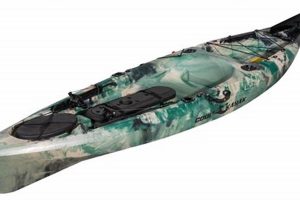
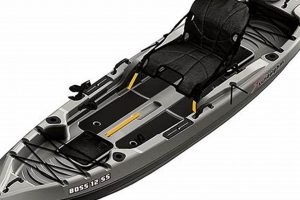
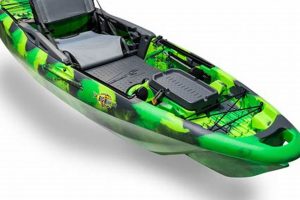
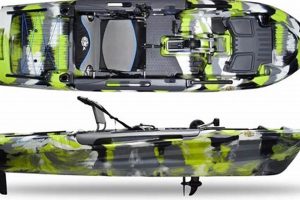
Stability is a paramount concern for anglers, especially in challenging conditions. A kayak with exceptional beam width offers a more stable platform for casting, reeling, and landing fish, reducing the likelihood of capsizing. This enhanced stability also allows for greater freedom of movement and the ability to stand while fishing, improving sightlines and casting range. For individuals with larger builds or those carrying substantial gear, a wider hull provides increased load capacity and a more comfortable fishing experience.
The pursuit of stability in kayak design has led to significant innovations in hull shapes and materials. Wider kayaks emerged as a response to the demand for a more secure and adaptable fishing platform. This design priority contributes to increased angler confidence, enabling them to venture further into various water bodies and focus on their fishing techniques rather than maintaining balance. The increasing popularity of kayak fishing has further fueled the development of wider and more stable designs, catering to diverse angling needs and skill levels.
Factors influencing the choice of a fishing kayak extend beyond beam width, encompassing hull design, length, propulsion systems, and integrated features. The subsequent sections will delve deeper into these critical aspects, providing prospective buyers with the knowledge necessary to select the ideal kayak for their individual fishing style and preferences.
Tips for Choosing a Stable Fishing Kayak
Selecting a fishing kayak optimized for stability requires careful consideration of several key factors. These tips offer guidance for making informed decisions based on individual needs and preferences.
Tip 1: Prioritize Stability over Speed: While speed can be advantageous, stability is paramount, especially for fishing. A wider kayak inherently offers better stability than a narrower one.
Tip 2: Consider Body Type and Gear: Anglers with larger builds or those planning to carry substantial gear should opt for kayaks with higher weight capacities and wider hulls.
Tip 3: Evaluate Hull Design: Different hull designs offer varying degrees of stability. Flat-bottom hulls provide excellent primary stability (initial stability), while pontoon-style hulls offer exceptional secondary stability (resistance to tipping).
Tip 4: Test Before You Buy: Whenever possible, test different kayak models on the water to assess their stability firsthand. This allows anglers to gauge how comfortable and confident they feel on each kayak.
Tip 5: Factor in Water Conditions: Consider the typical water conditions where the kayak will be used. Calm lakes and rivers may allow for narrower kayaks, while open ocean or rough waters necessitate greater stability.
Tip 6: Examine Seating Position and Adjustability: A lower center of gravity enhances stability. Look for kayaks with adjustable seating positions to customize comfort and balance.
Tip 7: Consider Outriggers or Stabilizers: For added stability, consider using outriggers or stabilizers, especially if fishing in challenging conditions or standing frequently.
By considering these factors, anglers can select a kayak that provides the optimal balance of stability, performance, and comfort, ultimately enhancing their fishing experience.
The following section will explore additional features and accessories that contribute to a safe and enjoyable fishing kayak experience.
1. Stability

Stability represents a critical factor in fishing kayak selection, directly influencing angler safety and fishing efficacy. A wider hull inherently provides greater stability compared to a narrower design. This principle stems from increased buoyancy and a lower center of gravity, reducing the likelihood of capsizing, especially during activities like casting, fighting fish, or encountering unexpected waves or currents. Consider, for example, an angler standing to cast in a narrow kayak versus a wider one; the broader platform significantly minimizes the risk of tipping. This enhanced stability allows for more confident movement and contributes to a more enjoyable and productive fishing experience. Wider kayaks also generally exhibit superior initial (primary) and secondary stability. Primary stability refers to the kayak’s resistance to tipping when stationary, while secondary stability dictates how difficult it is to capsize once tilted. The increased beam width of these kayaks contributes significantly to both, offering anglers greater peace of mind on the water.
The pursuit of stability, however, necessitates careful consideration of trade-offs. While increased width enhances stability, it can also affect maneuverability. Wider kayaks may prove less agile in narrow waterways or swift currents. Additionally, a wider profile presents greater surface area to wind, potentially impacting tracking and making paddling more challenging in windy conditions. For instance, a wide kayak designed for calm lakes might prove cumbersome in a fast-flowing river. Therefore, selecting a kayak with the appropriate width requires balancing stability requirements with anticipated water conditions and fishing styles.
Understanding the relationship between stability and width empowers anglers to make informed decisions. Choosing a kayak with sufficient width for intended activities and prevailing conditions maximizes both safety and fishing performance. While the “widest” option available might not always be the best choice, prioritizing stability significantly enhances the overall fishing experience. Furthermore, features like hull design and seating position contribute to overall stability and should be considered in conjunction with width. By carefully evaluating these factors, anglers can select a kayak optimized for their specific needs, ensuring a secure and enjoyable time on the water.
2. Comfort

Comfort plays a crucial role in the overall fishing kayak experience. Extended periods on the water necessitate a comfortable platform to minimize fatigue and maximize enjoyment. The width of a fishing kayak directly influences comfort, particularly for anglers with larger builds or those requiring additional space for gear. Understanding the relationship between width and comfort is essential for selecting a kayak suitable for individual needs and preferences.
- Seating Space and Adjustability
Wider kayaks generally offer more spacious seating areas, allowing for greater freedom of movement and reducing cramped conditions. Ample space facilitates adjustments in seating position, promoting better posture and reducing strain on the back and legs. For example, an angler with a larger frame might find a wider kayak significantly more comfortable than a narrower model during long fishing trips. Adjustable seating systems further enhance comfort by allowing customization based on individual preferences and fishing styles. Features like adjustable backrests, footrests, and thigh braces contribute to a personalized and ergonomic seating experience.
- Gear Storage and Accessibility
The increased width of fishing kayaks often translates to more deck space and storage capacity. This additional space allows for convenient storage of fishing gear, tackle boxes, and other essential items, keeping them within easy reach. Organized and accessible gear storage reduces clutter and enhances efficiency on the water. For instance, a wider kayak might accommodate larger tackle boxes or even a dedicated cooler for storing fish or refreshments. This added convenience allows anglers to focus on fishing rather than managing gear in a confined space.
- Stability and Reduced Fatigue
The enhanced stability provided by wider kayaks contributes to comfort by reducing the effort required to maintain balance. This reduced effort minimizes fatigue, particularly in challenging conditions such as choppy water or strong currents. A stable platform allows anglers to relax and focus on fishing without constantly adjusting their position to maintain equilibrium. This enhanced stability is especially beneficial for anglers who prefer to stand while fishing, providing a more secure and comfortable platform for casting and reeling.
- Platform for Standing and Fishing
Wider kayaks provide a more stable platform for standing and fishing, which can significantly enhance comfort and sightlines. The added width reduces the likelihood of tipping, allowing anglers to stand confidently while casting, reeling, and landing fish. This improved stability contributes to a more comfortable and enjoyable fishing experience, especially for techniques that benefit from an elevated perspective. For example, sight fishing in shallow water is often easier and more effective when standing.
The width of a fishing kayak significantly impacts comfort by influencing seating space, gear storage, stability, and the ability to stand and fish. While wider kayaks generally offer increased comfort, they may also sacrifice maneuverability in tight spaces or windy conditions. Therefore, selecting the ideal kayak requires careful consideration of individual needs, fishing styles, and anticipated water conditions. Balancing comfort with performance ensures an enjoyable and productive fishing experience.
3. Capacity

Capacity, often measured in pounds, represents a crucial factor influencing fishing kayak selection. A kayak’s capacity dictates the maximum weight it can safely carry, encompassing the combined weight of the angler, gear, and any potential catch. Width plays a significant role in determining capacity; wider kayaks generally possess higher weight limits due to their increased volume and buoyancy. This relationship between width and capacity is particularly relevant to anglers carrying substantial gear, larger individuals, or those anticipating sizable catches.
Consider two kayaks of similar length but differing widths. The wider kayak displaces more water, creating greater buoyancy and allowing it to support heavier loads. This increased capacity proves advantageous for anglers transporting extensive fishing gear, including tackle boxes, rods, coolers, and electronic equipment. Furthermore, a higher weight capacity accommodates individuals with larger builds, ensuring safe and stable performance on the water. For example, an angler planning extended expeditions with camping gear requires a kayak with significantly greater capacity than someone fishing for a few hours on a local lake. Understanding the impact of width on capacity allows anglers to select a kayak appropriate for their specific needs and anticipated loads.
Selecting a kayak with adequate capacity is crucial for both safety and performance. Exceeding a kayak’s weight limit compromises stability, increases the risk of capsizing, and can negatively impact maneuverability. Furthermore, overloading a kayak can submerge the scupper holes, potentially leading to water intrusion and further stability issues. Conversely, choosing a kayak with excessive capacity for one’s needs can result in a larger, heavier, and less maneuverable vessel. Therefore, careful consideration of anticipated loads and individual requirements is essential for selecting a kayak with the optimal balance of capacity and performance.
4. Standability
Standability, the ability to stand comfortably and securely while fishing, represents a significant advantage for anglers. It enhances sight-fishing, improves casting range and accuracy, and facilitates various fishing techniques. In the context of the widest fishing kayaks on the market, standability becomes a key differentiator, directly influenced by the kayak’s width and stability. Wider kayaks offer a more stable platform for standing, contributing to angler confidence and fishing effectiveness.
- Stability and Balance
A wider hull provides a larger base of support, significantly enhancing stability and reducing the risk of tipping while standing. This increased stability allows anglers to shift weight and make casting motions without compromising balance. For instance, an angler standing to sight-fish for bonefish in shallow flats benefits greatly from the stability offered by a wider kayak. The wider platform allows for subtle weight shifts and adjustments without compromising balance, increasing the likelihood of a successful hookup. This enhanced stability contributes directly to angling success and overall enjoyment.
- Deck Space and Layout
Wider kayaks typically feature more deck space, facilitating comfortable standing and movement. A spacious deck allows anglers to position their feet effectively for balance and provides ample room for gear and accessories. For example, a wider kayak with a flat deck provides sufficient space to install a stand-assist bar or to position gear strategically for easy access while standing. This optimized layout improves ergonomics and efficiency, reducing fatigue and maximizing fishing time.
- Hull Design and Center of Gravity
Specific hull designs, such as flat-bottom or pontoon hulls, contribute to improved standability. These designs maximize stability and minimize rocking motions, providing a secure platform for standing. The lower center of gravity inherent in wider kayaks further enhances stability. For instance, a kayak with a tunnel hull, while offering excellent stability, may have a higher center of gravity, potentially making standing more challenging. Conversely, a wider flat-bottom hull provides a lower center of gravity and a broader base, promoting secure and comfortable standing.
- Weight Capacity and Distribution
The increased weight capacity of wider kayaks accommodates heavier anglers and gear, maintaining stability while standing. Proper weight distribution is crucial for maintaining balance; wider kayaks offer more space for distributing weight evenly, further enhancing stability. Consider an angler carrying a heavy tackle box and cooler; a wider kayak allows for strategic placement of these items to optimize weight distribution and maintain balance while standing. This careful management of weight contributes significantly to stability and safety.
Standability in fishing kayaks, significantly influenced by width, enhances angling versatility and effectiveness. Wider kayaks offering increased stability, deck space, and optimized hull designs provide a more secure and comfortable platform for standing and fishing. While maneuverability might be slightly reduced in certain conditions, the advantages of enhanced standability contribute significantly to a more successful and enjoyable fishing experience, particularly in scenarios where an elevated perspective and increased casting range are beneficial. Selecting a kayak that prioritizes standability empowers anglers to employ diverse fishing techniques and maximize their time on the water.
5. Wind Resistance
Wind resistance presents a significant consideration in kayak fishing, particularly for wider hull designs. Increased surface area exposed to wind results in greater susceptibility to wind drift and reduced paddling efficiency. This factor becomes especially relevant in open water or windy conditions. A wider kayak, while offering advantages in stability and capacity, experiences greater force from wind compared to a narrower model. This increased wind resistance can make paddling more challenging, requiring greater effort to maintain course and speed. For instance, paddling a wide kayak into a strong headwind can be significantly more strenuous than paddling a narrower kayak under the same conditions. Consequently, anglers prioritizing maneuverability in windy environments may find wider kayaks less suitable.
Several factors influence the degree of wind resistance experienced. Hull shape plays a crucial role; kayaks with higher profiles present a larger surface area to the wind, increasing resistance. Additionally, wind direction relative to the kayak’s orientation significantly impacts performance. A headwind creates the greatest resistance, while a tailwind can aid propulsion. Crosswinds can cause the kayak to veer off course, requiring corrective strokes to maintain desired direction. For example, a wide kayak with a flat deck and high sides will experience greater wind resistance than a kayak with a rounded hull and lower profile. Understanding these dynamics allows anglers to anticipate and mitigate the effects of wind resistance.
Mitigating wind resistance involves various strategies. Lowering one’s profile on the kayak reduces the exposed surface area, minimizing wind impact. Using a rudder or skeg can improve tracking and reduce the need for corrective strokes in crosswinds. Selecting sheltered fishing locations or avoiding open water during windy periods can further minimize challenges. Additionally, specialized paddling techniques, such as using low-angle strokes, minimize wind resistance and improve efficiency. Ultimately, understanding the relationship between kayak width, wind resistance, and prevailing conditions is crucial for informed decision-making. Balancing stability and capacity with maneuverability and wind performance ensures a safe and productive fishing experience.
6. Maneuverability
Maneuverability, the ease with which a kayak can be turned and controlled, represents a critical performance characteristic, particularly in fishing scenarios. Wider kayaks, while offering enhanced stability and capacity, often exhibit reduced maneuverability compared to narrower designs. This trade-off stems from the increased water resistance and inertia associated with a wider hull. Consider navigating a narrow, winding creek or river; a wider kayak might require more effort and space to turn effectively, potentially hindering access to prime fishing spots. Conversely, a narrower kayak navigates tight spaces with greater agility, allowing anglers to explore shallows, maneuver around obstacles, and access hard-to-reach areas. The relationship between width and maneuverability presents a crucial consideration for anglers selecting a fishing kayak.
Several factors influence kayak maneuverability beyond width. Hull design plays a significant role; kayaks with shorter lengths and more pronounced rocker (curvature of the hull from bow to stern) generally turn more easily. Additionally, water conditions and paddling technique impact maneuverability. Strong currents or windy conditions can exacerbate the challenges of maneuvering a wider kayak. Skilled paddling techniques, such as sweep strokes and rudder usage, can improve maneuverability regardless of kayak width. For example, a skilled angler can maneuver a wider kayak effectively in challenging conditions through precise paddle strokes and rudder adjustments, compensating for the inherent reduced agility. Understanding these factors empowers anglers to make informed decisions based on their fishing environment and skill level.
Balancing maneuverability with other desired characteristics, such as stability and capacity, requires careful consideration. Anglers prioritizing stability for open-water fishing or requiring ample storage for gear may accept reduced maneuverability as a trade-off. Conversely, anglers fishing in narrow rivers or creeks prioritize maneuverability for navigating tight spaces and accessing secluded fishing spots. The “widest fishing kayak on the market” might not be the most maneuverable, necessitating a balanced approach to kayak selection based on individual needs and fishing environments. Understanding the dynamic relationship between width, maneuverability, and other performance characteristics allows anglers to choose a kayak optimized for their specific fishing style and intended use. This informed approach maximizes both on-the-water efficiency and overall fishing enjoyment.
Frequently Asked Questions about Wider Fishing Kayaks
This section addresses common inquiries regarding wider fishing kayaks, providing concise and informative responses to aid decision-making.
Question 1: Do wider kayaks compromise speed and tracking?
Wider kayaks generally exhibit slightly lower top speeds compared to narrower designs due to increased water resistance. Tracking (ability to maintain a straight line) can also be affected, especially in windy conditions. However, proper paddling technique and the use of a rudder or skeg can effectively mitigate these factors.
Question 2: Are wider kayaks more difficult to transport?
Due to their increased width, these kayaks might require larger vehicle roof racks or trailers for transport. Careful measurement and appropriate transport equipment selection are essential. Some wider kayaks are also heavier, requiring additional assistance for loading and unloading.
Question 3: How does width impact paddling effort?
Wider kayaks can require slightly more paddling effort, particularly in challenging conditions like strong currents or headwinds. However, this effort is often offset by the increased stability and load-carrying capacity they offer.
Question 4: Are wider kayaks suitable for all fishing environments?
While wider kayaks excel in calm lakes and slow-moving rivers, their maneuverability might be limited in narrow creeks or fast-flowing water. Consider typical fishing environments when selecting kayak width.
Question 5: How does width influence the kayak’s draft (depth below the waterline)?
Wider kayaks tend to have a slightly deeper draft than narrower models due to their increased volume and displacement. This characteristic should be considered when navigating shallow water or areas with submerged obstacles.
Question 6: Does increased width affect the kayak’s price?
Wider kayaks sometimes command slightly higher prices due to the increased material and manufacturing complexity associated with larger hulls. However, pricing also depends on features, materials, and brand.
Careful consideration of these factors helps potential buyers assess the advantages and disadvantages of wider kayaks relative to their individual needs and preferences. Prioritizing stability and capacity often necessitates accepting potential trade-offs in speed and maneuverability. Informed decision-making ensures selection of the optimal kayak for a safe and enjoyable fishing experience.
The next section will explore specific models of wider fishing kayaks available on the market.
Widest Fishing Kayak on the Market
The pursuit of the widest fishing kayak on the market often centers on the prioritization of stability and capacity. This exploration has highlighted the inherent advantages and potential trade-offs associated with increased width in kayak design. Wider hulls provide enhanced stability, accommodating larger anglers and substantial gear loads, while also offering a more stable platform for standing and fishing. However, maneuverability and wind resistance require careful consideration, particularly in challenging environments. Balancing these factors remains crucial for selecting a kayak optimized for individual needs and intended fishing locations.
Ultimately, the “widest” designation does not inherently equate to the “best.” Informed selection requires a thorough assessment of individual priorities, fishing styles, and anticipated water conditions. Careful evaluation of width alongside other critical factors like hull design, length, and features ensures a safe, comfortable, and productive fishing experience. The optimal kayak empowers anglers to confidently explore diverse waterways and pursue their passion with enhanced stability and peace of mind.