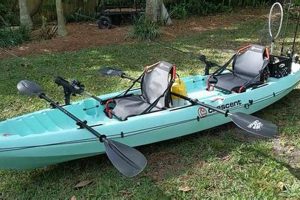
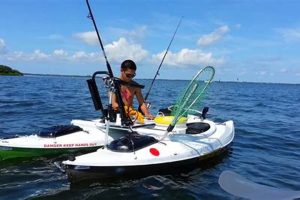
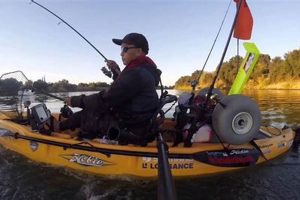
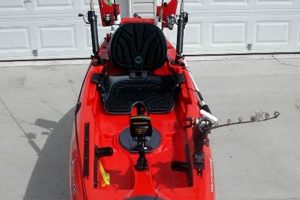
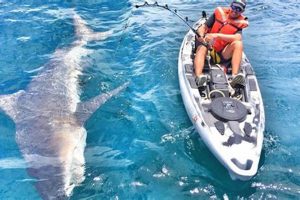
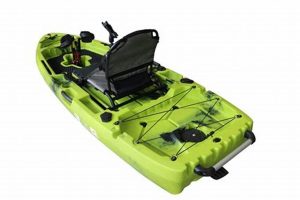
Kayak stability, particularly for fishing, is determined by hull design. Wider, flatter hulls offer primary stability, resisting initial tipping, which is crucial for casting and reeling. Longer kayaks with a pronounced keel provide secondary stability, useful in rougher waters and when leaning for a catch. A “pontoon” style hull with two separate chambers offers exceptional stability, even supporting standing. Selecting a kayak prioritizing stability ensures a safe and enjoyable fishing experience.
A stable fishing platform enables anglers to focus on the sport, not balancing. This is especially vital in situations requiring intricate maneuvers, such as landing a fish or navigating challenging currents. Historically, fishing kayaks prioritized stability over speed, mirroring traditional fishing boat design. Advancements in hull design now offer a balance of stability and maneuverability, catering to diverse fishing styles and conditions.
The subsequent sections will delve deeper into the factors influencing kayak stability, including hull shape, length, width, and material. Further exploration will address the specific needs of different fishing styles, from stillwater angling to offshore adventures. Understanding these elements is essential for selecting the optimal kayak for a safe and successful fishing experience.
Tips for Choosing a Stable Fishing Kayak
Selecting a kayak optimized for stability enhances fishing safety and enjoyment. The following tips offer guidance in choosing the right vessel.
Tip 1: Prioritize Hull Design: Consider a wider, flatter hull, a pontoon-style hull, or a longer kayak with a pronounced keel for optimal stability. Each design offers unique stability characteristics suitable for various fishing environments.
Tip 2: Evaluate Capacity: Ensure the kayak’s weight capacity accommodates the angler, fishing gear, and potential catch. Exceeding the capacity compromises stability and safety.
Tip 3: Consider Water Conditions: Calm lakes and rivers allow for shorter, wider kayaks. Ocean or rough water environments necessitate longer kayaks with enhanced secondary stability.
Tip 4: Test Before Purchase: If possible, demo different kayak models to assess their stability firsthand. This allows anglers to experience how each kayak handles in realistic conditions.
Tip 5: Factor in Seating Position: A lower center of gravity enhances stability. Consider kayaks with adjustable seats to personalize the seating position for optimal balance.
Tip 6: Consider Outriggers for Added Stability: Outriggers provide additional support, significantly enhancing stability, particularly for standing while fishing.
Tip 7: Think About Intended Fishing Style: Sit-on-top kayaks generally offer greater stability compared to sit-inside models, especially beneficial for activities like fly fishing.
By considering these factors, anglers can select a kayak that prioritizes stability, ensuring a safe and enjoyable fishing experience. A stable platform allows for focused fishing, enhancing overall success and enjoyment on the water.
A final assessment of personal preferences and specific fishing needs will contribute to a fully informed decision, maximizing both safety and fishing performance.
1. Hull Design

Hull design is arguably the most crucial factor influencing fishing kayak stability. Different hull shapes offer varying degrees of primary and secondary stability, impacting performance in diverse water conditions. Understanding these variations is essential for selecting a kayak suited to specific fishing needs.
- Flat Bottom Hull
Flat bottom hulls provide exceptional primary stability, making them ideal for calm waters and activities requiring frequent movement, such as casting and retrieving. They are, however, less stable in rougher conditions and more susceptible to wind drift. This design excels in sheltered areas like ponds, lakes, and slow-moving rivers, offering a stable platform for stationary fishing techniques.
- Pontoon Hull
Pontoon hulls, characterized by two separate chambers, deliver exceptional stability, even allowing for stand-up fishing. This design sacrifices maneuverability for stability, making it suitable for calm water environments where maximum stability is prioritized. Anglers frequently choose pontoon hulls for activities requiring standing, such as fly fishing or sight casting.
- V-Shaped Hull
V-shaped hulls offer excellent tracking and speed but compromise primary stability. They are better suited for paddling longer distances and handling rougher water conditions, but require more balance and experience. This design is generally less preferred for fishing, especially in situations requiring frequent movement or casting.
- Rounded/Curved Hull
Rounded or curved hulls offer a balance of stability and maneuverability. They perform well in moderate conditions and provide a comfortable paddling experience. This versatile design suits anglers seeking a compromise between stability and performance, suitable for a range of fishing environments.
The choice of hull design directly impacts the overall fishing experience. Prioritizing stability necessitates considering the intended fishing environment, fishing style, and individual balance capabilities. Selecting the appropriate hull design contributes significantly to a safe, stable, and enjoyable fishing experience. Understanding these variations allows anglers to choose a kayak optimized for their specific needs, maximizing both performance and safety on the water.
2. Width

Width is a critical determinant of kayak stability, directly influencing both initial stability and overall fishing experience. Wider kayaks generally offer enhanced stability, especially beneficial for activities requiring movement and balance, such as casting, reeling, and landing fish. Understanding the relationship between width and stability is essential for selecting the appropriate kayak for individual needs and fishing styles.
- Initial Stability
A wider hull significantly improves initial stability, the resistance to tipping when the kayak is at rest. This is crucial for maintaining balance while performing tasks like casting, changing lures, or reaching for gear. A wider kayak provides a more stable platform, reducing the likelihood of capsizing and enhancing overall confidence on the water. For example, a kayak 36 inches wide will offer significantly more initial stability than a kayak 30 inches wide.
- Impact on Maneuverability
While increased width enhances stability, it can also impact maneuverability. Wider kayaks tend to be slower and less responsive to paddling input. This trade-off must be considered, especially when fishing in areas requiring precise maneuvering, such as narrow streams or rivers with strong currents. Anglers prioritizing maneuverability might opt for a slightly narrower kayak, accepting a minor decrease in stability for enhanced agility.
- Considerations for Different Fishing Styles
Different fishing styles may benefit from varying kayak widths. Stillwater angling, where stability is paramount, often favors wider kayaks, allowing anglers to stand and cast with confidence. Conversely, kayak anglers targeting moving water might prefer a slightly narrower profile for improved maneuverability. The optimal width depends on the specific fishing environment and techniques employed.
- Weight Capacity and Width
Weight capacity and width are often correlated. Wider kayaks generally have a higher weight capacity, accommodating heavier anglers, gear, and potential catches. This increased capacity further contributes to stability by lowering the center of gravity. Anglers carrying substantial gear or larger catches should prioritize kayaks with both ample width and weight capacity for optimal stability.
The width of a fishing kayak is a fundamental factor influencing stability and overall performance. Balancing stability with maneuverability requires careful consideration of individual needs, fishing style, and the intended fishing environment. Prioritizing stability often necessitates a wider hull, enhancing balance and confidence on the water. However, the trade-off in maneuverability must be considered, particularly for anglers fishing in dynamic environments. Ultimately, selecting the appropriate width contributes significantly to a safe, enjoyable, and productive fishing experience.
3. Length

Length significantly influences a fishing kayak’s performance, particularly its tracking and stability. Longer kayaks generally track straighter and offer enhanced secondary stabilityresistance to tipping when leaning or encountering waves. Shorter kayaks, conversely, offer greater maneuverability but sacrifice some stability and tracking ability. Understanding this interplay between length, stability, and maneuverability is crucial for selecting the optimal kayak for specific fishing environments and styles.
Consider a 12-foot kayak compared to a 10-foot kayak. The 12-foot kayak will track straighter and maintain its course more effectively, particularly in windy conditions or moving water. This enhanced tracking contributes to stability by reducing the kayak’s tendency to turn unexpectedly. Furthermore, the longer kayak will exhibit greater secondary stability, resisting tipping when leaning to one side for a catch or when encountering waves or boat wake. The shorter kayak, while more easily maneuvered in tight spaces, may feel less stable and more susceptible to wind and waves.
The optimal kayak length depends on the intended fishing environment and individual preferences. Calm lakes and ponds allow for shorter kayaks prioritizing maneuverability. Open water, rivers, or coastal areas, however, often necessitate longer kayaks for enhanced tracking and secondary stability. Balancing stability with maneuverability is essential for a safe and effective fishing experience. Choosing the appropriate length requires careful consideration of the anticipated fishing conditions and personal paddling style. Selecting the correct length ensures both efficient paddling and a stable platform for fishing activities.
4. Weight Capacity

Weight capacity significantly influences kayak stability, impacting both performance and safety. Exceeding the manufacturer’s specified weight limit compromises stability, increasing the risk of capsizing. This limit encompasses the combined weight of the angler, gear, and any potential catch. Understanding the relationship between weight capacity and stability is crucial for selecting a kayak appropriate for individual needs and intended use.
A kayak operating within its specified weight capacity maintains optimal stability and performance. The designated weight limit ensures the hull sits at the correct level in the water, maximizing stability characteristics. Exceeding this limit submerges the hull further, reducing freeboard and increasing susceptibility to swamping or capsizing. For example, a kayak with a 350-pound weight capacity carrying 400 pounds will sit lower in the water, significantly compromising its stability. Conversely, a kayak with ample weight capacity for its load will perform as designed, offering a stable and predictable platform. This is particularly crucial when fishing, as the added weight of gear and potential catches must be factored into the overall weight calculation.
Selecting a kayak with appropriate weight capacity is essential for maintaining stability and ensuring a safe fishing experience. Careful consideration of individual weight, gear requirements, and anticipated catch size is paramount. Opting for a kayak with a higher weight capacity than immediately necessary provides a margin of safety and accommodates potential increases in gear or catch weight. This proactive approach to weight management maximizes stability, enhances performance, and prioritizes safety on the water.
5. Sitting Position

Sitting position significantly influences fishing kayak stability. A lower center of gravity enhances stability, while a higher center of gravity increases susceptibility to tipping. Understanding how sitting position affects balance is crucial for maintaining stability and maximizing fishing performance. The following facets explore this relationship in detail.
- Seat Height
Seat height directly impacts the center of gravity. Lower seats promote stability by lowering the center of gravity, while higher seats, offering better visibility, can compromise stability. Kayaks with adjustable seat heights allow anglers to customize their position for optimal balance and comfort. Choosing the appropriate seat height depends on individual preferences, fishing style, and water conditions. Lower seat heights are generally preferred in rougher waters or when engaging in activities requiring greater stability.
- Seat Back Angle
Seat back angle affects weight distribution and balance. A more reclined seat back can shift the center of gravity rearward, potentially impacting stability. Upright seating positions generally offer greater control and stability, particularly in dynamic conditions. Adjustable seat backs allow anglers to fine-tune their position for optimal comfort and balance, accommodating different fishing styles and personal preferences. An upright seat back is often preferred for active fishing techniques requiring frequent movement.
- Center of Gravity and Body Posture
Maintaining a centered and balanced body posture is essential for kayak stability. Leaning too far to one side elevates the center of gravity, increasing the risk of capsizing. Practicing proper posture and weight distribution enhances stability, particularly during activities like casting and retrieving. Keeping weight centered within the kayak’s hull promotes balance and minimizes the likelihood of tipping. Maintaining a low center of gravity by bending at the knees when reaching or leaning is crucial for preserving stability in dynamic situations.
- Impact of Kayak Design on Sitting Position
Kayak design influences the available sitting positions and their impact on stability. Wider kayaks generally offer more stable seating platforms, allowing for greater freedom of movement without compromising balance. Kayaks with defined footwells and thigh braces further enhance stability by providing secure contact points, allowing anglers to brace themselves against the kayak for improved control and balance. These design features contribute significantly to overall stability, particularly in challenging conditions. Choosing a kayak design that complements individual body type and fishing style enhances both comfort and stability on the water.
Understanding the relationship between sitting position and kayak stability is crucial for maximizing fishing performance and safety. A lower center of gravity, achieved through appropriate seat height, seat back angle, and body posture, significantly enhances stability. Selecting a kayak design that promotes a stable and comfortable sitting position further contributes to overall balance and control, allowing anglers to focus on fishing rather than maintaining equilibrium. Consideration of these factors ensures a safe and enjoyable fishing experience, regardless of water conditions or fishing style.
Frequently Asked Questions about Stable Fishing Kayaks
This section addresses common inquiries regarding kayak stability, providing concise and informative responses to facilitate informed decision-making.
Question 1: Does kayak length affect stability?
Length contributes primarily to tracking and secondary stability resistance to tipping when leaning or encountering waves. Longer kayaks excel in these areas, while shorter kayaks offer enhanced maneuverability.
Question 2: How does hull design impact stability?
Hull design significantly influences stability. Wider, flatter hulls provide excellent initial stability. Pontoon hulls offer exceptional stability, often allowing for standing. V-shaped hulls prioritize speed and tracking over primary stability.
Question 3: What is the most stable hull design for a fishing kayak?
Generally, pontoon hulls and wide, flat-bottomed hulls offer the greatest stability for fishing kayaks, particularly in calm water conditions. However, the “most stable” depends on individual needs and the intended fishing environment.
Question 4: How does weight capacity relate to stability?
Exceeding a kayak’s weight capacity significantly compromises stability. Selecting a kayak with ample weight capacity for the angler, gear, and potential catch is crucial for maintaining balance and safety.
Question 5: Can a stable fishing kayak still be maneuverable?
While prioritizing stability often involves some trade-off in maneuverability, designs exist that balance both attributes. Shorter kayaks with wider hulls can offer reasonable stability while remaining relatively maneuverable.
Question 6: What features should one look for in a stable fishing kayak?
Key features contributing to stability include a wide hull, a flat or pontoon-style bottom, a lower center of gravity, and ample weight capacity. Other features, such as outriggers, can further enhance stability.
Understanding these aspects of kayak stability allows for informed selection, ensuring a safe and enjoyable fishing experience. Prioritizing stability contributes significantly to angler confidence and overall fishing success.
The next section will delve into specific kayak recommendations categorized by fishing style and environment.
Conclusion
Determining the most stable fishing kayak requires careful consideration of several interconnected factors. Hull design, width, length, weight capacity, and sitting position all play crucial roles in overall stability. Wider, flatter hulls, and pontoon designs generally offer the highest initial stability, while longer kayaks provide better tracking and secondary stability. Matching kayak specifications to individual weight, gear, and intended fishing environment is paramount for maximizing stability and safety. No single “most stable” kayak exists; the optimal choice depends on individual needs and intended use.
Prioritizing stability in kayak selection contributes significantly to angler safety and fishing success. A stable platform allows anglers to focus on the task at hand, enhancing both enjoyment and effectiveness on the water. Continued advancements in kayak design promise further refinements in stability and performance, offering anglers even greater choices for a secure and productive fishing experience.