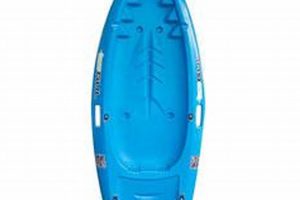
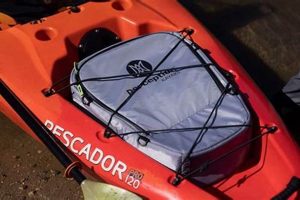
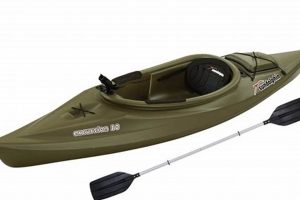
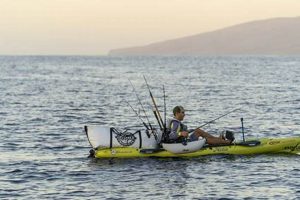
A retail giant offers a specific brand of fishing kayak known for its durability. This combination of retailer, manufacturer, and product type signifies a readily available and potentially budget-friendly option for recreational anglers. An example would be a sit-on-top model constructed from high-density polyethylene, equipped with features like rod holders, paddle rests, and storage compartments.
Affordable access to watersports is a key benefit of this retail approach. The availability of these products at a major retailer democratizes the sport of kayak fishing, making it more accessible to a wider range of individuals. This accessibility fosters outdoor recreation and can contribute to the growth of the fishing community. Historically, specialized sporting goods were less accessible, often requiring dedicated retailers and potentially higher prices. The modern retail landscape simplifies acquisition, enabling more people to participate.
This accessibility prompts further discussion on topics like choosing the right kayak features, essential fishing gear, basic kayak fishing techniques, and popular fishing locations. Understanding these aspects can enhance the experience and promote responsible enjoyment of the sport.
Tips for Kayak Fishing
Proper preparation and technique enhance safety and enjoyment on the water. The following tips offer guidance for a successful outing.
Tip 1: Check Local Regulations. Research permits, licensing requirements, and specific area regulations before embarking on any fishing trip. Awareness of local rules ensures a legal and ethical experience.
Tip 2: Prioritize Safety Gear. A personal flotation device (PFD) is essential. Carry a whistle for signaling, and consider a first-aid kit and communication device for emergencies. Weather conditions can change rapidly, so check forecasts beforehand.
Tip 3: Plan Your Route. Familiarize oneself with the chosen waterway, including potential hazards, access points, and emergency landing areas. Share this plan with someone onshore.
Tip 4: Organize Essential Gear. Keep fishing rods, tackle, and other necessary equipment readily accessible but securely stowed. Proper organization minimizes clutter and maximizes efficiency on the water.
Tip 5: Practice Basic Paddling Techniques. Mastering fundamental paddle strokes ensures efficient maneuvering and conserves energy. Practice in calm waters before venturing into more challenging conditions.
Tip 6: Respect the Environment. Adhere to “leave no trace” principles by properly disposing of waste and minimizing disturbance to wildlife and their habitats. Responsible angling preserves natural resources for future generations.
Tip 7: Learn Basic Kayak Fishing Techniques. Understanding how to cast, retrieve, and land fish from a kayak requires specific adaptations from shore fishing. Research and practice appropriate techniques for a safe and successful experience.
Careful planning and responsible practices contribute to a safe, enjoyable, and productive fishing experience from a kayak. These preparatory steps pave the way for success on the water.
By incorporating these tips, anglers can maximize their time on the water and enjoy the sport responsibly. Following these guidelines promotes a positive experience for all.
1. Retailer

Walmart’s role as the retailer significantly influences the market positioning and consumer perception of the Lifetime fishing kayak. Understanding this retail context is crucial for evaluating the product’s accessibility, affordability, and overall market impact.
- Distribution and Availability
Walmart’s extensive network of physical stores and online marketplace makes the Lifetime fishing kayak readily accessible to a broad consumer base. This widespread availability reduces barriers to entry for individuals interested in kayak fishing, eliminating the need to seek specialized retailers. For instance, a consumer in a rural area might find the kayak locally at a Walmart, whereas other specialized brands might only be available online or in distant urban centers.
- Pricing and Affordability
Walmart’s emphasis on competitive pricing typically positions the Lifetime fishing kayak at a lower price point compared to similar offerings through other retail channels. This affordability factor contributes to the product’s appeal, particularly for budget-conscious consumers or those new to the sport. The lower cost could be the deciding factor between choosing kayak fishing over other recreational activities.
- Brand Perception and Consumer Trust
Walmart’s established reputation as a mass-market retailer influences consumer perception of the Lifetime kayak. While some consumers may associate Walmart with affordability and convenience, others might perceive a trade-off in quality or specialization. This association can impact purchasing decisions, depending on individual priorities and expectations. A consumer prioritizing value might see Walmart’s offering as a practical choice, while someone seeking premium features might opt for a specialized retailer.
- Returns and Warranty Support
Walmart’s standardized return policies and warranty procedures provide consumers with a familiar framework for addressing potential issues with the Lifetime kayak. This established process can simplify after-sales support, increasing consumer confidence in the purchase. The ease of returns and readily available support contribute to a sense of security for buyers.
These interconnected facets demonstrate how Walmart’s retail practices directly influence the accessibility, affordability, and consumer perception of the Lifetime fishing kayak. This retail context is integral to understanding the product’s market position and its impact on the broader landscape of recreational fishing. Ultimately, the choice to purchase a Lifetime fishing kayak at Walmart reflects a complex interplay of individual needs, brand perception, and the convenience and affordability associated with this retail giant.
2. Brand

The “Lifetime” brand plays a pivotal role in the overall perception and market positioning of the Walmart Lifetime fishing kayak. “Lifetime,” in this context, functions as more than a simple brand name; it implies durability and longevity, key considerations for consumers investing in outdoor recreational equipment. This branding strategy directly influences consumer expectations regarding the kayak’s lifespan and resistance to wear and tear. For example, a consumer might choose a Lifetime kayak over a less-established brand based on the perceived promise of extended product life, influencing their purchasing decision. This perceived durability can be a significant differentiator in a competitive market.
The association between “Lifetime” and durability creates a value proposition. Consumers often associate a longer lifespan with greater value for money. This perception can justify the purchase price, especially for budget-conscious buyers. For instance, a family planning frequent fishing trips might perceive the Lifetime kayak as a cost-effective option due to its anticipated durability, reducing the need for frequent replacements. This perceived long-term value can be a powerful marketing tool. However, it is important to note that “Lifetime” does not necessarily guarantee a literal lifetime of use. Factors such as usage, maintenance, and storage conditions significantly impact the product’s longevity.
The “Lifetime” brand, within the context of “Walmart Lifetime fishing kayak,” represents a strategic branding choice designed to convey durability and value. While this association significantly influences consumer perception and purchasing decisions, its crucial for consumers to understand that practical longevity depends on various factors beyond the brand name. Evaluating product specifications, materials, and user reviews alongside the brand promise provides a more comprehensive understanding of expected product lifespan and overall value. This informed approach empowers consumers to make well-considered purchases aligned with their individual needs and expectations.
3. Product

Within the context of “Walmart Lifetime fishing kayak,” “kayak” specifies the core product category and distinguishes it from other watercraft. Understanding the kayak’s features, design, and suitability for fishing is crucial for evaluating the overall offering. The “kayak” component dictates the fundamental user experience, influencing stability, maneuverability, and overall functionality on the water.
- Hull Design and Stability
Kayak hull design directly impacts stability, a critical factor for fishing. Wider, flatter hulls generally offer greater primary stability (initial resistance to tipping), making them suitable for calmer waters and stationary fishing. Narrower, more V-shaped hulls provide better secondary stability (resistance to capsizing after initial tipping), enhancing performance in rougher conditions or when paddling longer distances. A Lifetime fishing kayak at Walmart might feature a wider, flatter hull to prioritize stability for anglers.
- Sit-On-Top vs. Sit-Inside
Sit-on-top kayaks offer greater accessibility and ease of entry/exit, making them popular for recreational fishing. Sit-inside kayaks provide better protection from the elements and a lower center of gravity, enhancing paddling efficiency. The choice between these designs often depends on anticipated fishing conditions and personal preferences. Walmart’s offerings might focus on sit-on-top models due to their broader appeal for recreational use.
- Features for Fishing
Fishing-specific kayaks often incorporate features like rod holders, paddle parks, storage compartments, and anchor trolleys. These specialized features enhance angler convenience and efficiency on the water. A Walmart Lifetime fishing kayak might include several of these features to cater specifically to anglers’ needs, differentiating it from standard recreational kayaks.
- Material and Durability
Kayak construction materials affect durability, weight, and performance. High-density polyethylene (HDPE) is common for its durability and affordability, while lighter materials like fiberglass or composites offer performance advantages but often come at a higher cost. The choice of material impacts the kayak’s lifespan and handling characteristics. A Lifetime kayak offered at Walmart likely utilizes HDPE to balance durability and cost-effectiveness.
These factors demonstrate how the “kayak” component significantly influences the overall functionality and suitability of a “Walmart Lifetime fishing kayak” for its intended purpose. Considering these aspects empowers consumers to make informed decisions based on individual needs and preferences. Balancing factors such as stability, features, and materials helps determine the optimal kayak for various fishing environments and user skill levels. Ultimately, understanding the “kayak” aspects clarifies the core value proposition within the broader context of the retail offering.
4. Activity
Fishing, within the context of Walmart Lifetime fishing kayak, defines the intended purpose and influences the product’s design and features. This activity-specific focus distinguishes the kayak from recreational paddling or other watersports, highlighting its adaptation for angling. Understanding the interplay between the activity and the product reveals how design choices cater to the unique needs of kayak anglers.
- Stability and Maneuverability
Fishing often requires stationary positioning or slow, controlled movements. A fishing kayak prioritizes stability over speed, allowing anglers to cast, retrieve, and land fish without compromising balance. For example, a wider, flatter hull enhances stability for casting and reeling, while a shorter length improves maneuverability in tight fishing spots. The Lifetime fishing kayak sold at Walmart likely incorporates these design considerations to enhance on-the-water performance for anglers.
- Specialized Features and Accessories
Fishing kayaks often include features like rod holders, tackle storage, and anchor trolleys. These additions cater specifically to angling needs, maximizing efficiency and convenience on the water. For instance, integrated rod holders secure fishing rods while paddling or preparing bait, while dedicated storage compartments keep tackle organized and accessible. The presence of such features on a Walmart Lifetime fishing kayak differentiates it from a standard recreational model, highlighting its specialization for angling.
- Comfort and Ergonomics
Extended periods on the water require a comfortable seating arrangement. Fishing kayaks often prioritize adjustable seating positions and supportive backrests to minimize fatigue during long fishing trips. An angler might appreciate adjustable footrests and a high-backed seat on a Lifetime fishing kayak, allowing for customized comfort during extended hours on the water. This focus on ergonomics distinguishes fishing kayaks from those designed for shorter recreational paddling sessions.
- Transportation and Portability
Kayak fishing often involves transporting the kayak to and from launch sites. Considerations like weight, size, and ease of loading/unloading influence the practicality of the kayak for fishing excursions. An angler might choose a lighter, more compact Lifetime kayak from Walmart for easier transport on a car roof rack or in a truck bed. This focus on portability underscores the practical considerations related to transporting fishing-specific kayaks.
These facets demonstrate how “fishing,” as the intended activity, shapes the design, features, and overall utility of the Walmart Lifetime fishing kayak. This alignment between activity and product characteristics enhances the angling experience, making it more convenient, efficient, and enjoyable. Understanding this interconnectedness allows consumers to select kayaks tailored to their specific fishing needs and preferences, ultimately enhancing their time on the water. The availability of such specialized products at a mass retailer like Walmart further underscores the growing popularity and accessibility of kayak fishing as a recreational activity.
5. Durability
The “Lifetime” in “Walmart Lifetime fishing kayak” carries a significant implication of durability. This branding strategy connects the product with an extended lifespan, a crucial factor for outdoor recreational equipment subjected to varied environmental conditions and potential impacts. This implied durability influences consumer perception and purchasing decisions, suggesting a product resistant to wear and tear and offering long-term value. Cause and effect come into play: the “Lifetime” branding leads consumers to expect a product that withstands regular use over an extended period. For example, an angler purchasing this kayak might anticipate its resilience against sun exposure, water submersion, and minor collisions, justifying the purchase based on projected longevity. Failure to meet this implied durability can lead to consumer dissatisfaction and damage brand reputation.
Durability is essential for several reasons. A durable kayak reduces the need for frequent replacements, representing a cost-effective investment for consumers. Furthermore, a robust construction enhances safety on the water, minimizing the risk of structural failure in challenging conditions. Consider a scenario where an angler encounters rough water or submerged debris; a durable kayak provides a greater margin of safety compared to a less robust alternative. The practical significance of this understanding lies in aligning consumer expectations with realistic product performance. While “Lifetime” implies extended longevity, practical durability depends on factors like proper usage, maintenance, and storage. Understanding these factors allows consumers to maximize the kayak’s lifespan and realize the full value of their investment.
The implied durability associated with the “Lifetime” brand in “Walmart Lifetime fishing kayak” represents a key marketing element influencing consumer perception and purchasing behavior. While the branding suggests an extended lifespan, practical durability relies on a combination of product construction, user care, and environmental factors. Recognizing this interplay allows for informed decisions regarding product selection, maintenance, and realistic expectations of product lifespan. This understanding ultimately contributes to a more satisfactory ownership experience and fosters a balanced perspective on the relationship between branding, product performance, and long-term value.
Frequently Asked Questions
This section addresses common inquiries regarding the Walmart Lifetime fishing kayak, providing concise and informative responses to facilitate informed purchasing decisions and enhance user experience.
Question 1: What is the weight capacity of a typical Walmart Lifetime fishing kayak?
Weight capacity varies depending on the specific model. Consult product specifications for precise figures, but typical capacities range from 250 to 500 pounds.
Question 2: Does the Walmart Lifetime fishing kayak include a paddle?
Paddle inclusion varies by model. Some packages include a basic paddle, while others require separate purchase. Verify package contents before purchase to avoid unexpected costs.
Question 3: What materials are used in the construction of a Lifetime fishing kayak sold at Walmart?
Most Lifetime kayaks utilize high-density polyethylene (HDPE) for its durability and affordability. Specific material compositions might vary slightly depending on the model.
Question 4: What is the warranty offered on a Walmart Lifetime fishing kayak?
Warranty terms vary depending on the specific model. Consult the product documentation or the manufacturer’s website for detailed warranty information pertaining to the selected kayak.
Question 5: Are Walmart Lifetime fishing kayaks suitable for ocean use?
While generally designed for calmer waters, some models might handle moderate ocean conditions. However, always prioritize safety and adhere to manufacturer recommendations regarding appropriate water conditions for each specific model.
Question 6: How difficult is it to transport a Walmart Lifetime fishing kayak?
Transportation ease depends on the kayak’s size and weight, as well as available transport methods. Roof racks, trailers, or truck beds are common solutions. Consider the kayak’s dimensions and weight relative to available transport options before purchase.
Careful consideration of these frequently asked questions helps ensure appropriate kayak selection and promotes a positive ownership experience. Understanding product specifications, warranty information, and usage recommendations fosters realistic expectations and supports informed purchasing decisions.
Further information regarding specific models, features, and accessories can often be found on the manufacturer’s website or through contacting Walmart customer service directly. These resources provide additional support and guidance throughout the decision-making and ownership process.
Conclusion
Analysis of the “Walmart Lifetime fishing kayak” reveals a confluence of factors influencing its market presence and consumer appeal. Accessibility through a major retailer, combined with the “Lifetime” brand’s implied durability and a focus on fishing-specific features, creates a value proposition for a broad consumer base. Understanding the interplay between retailer, brand, product, intended activity, and implied durability provides a comprehensive perspective on this offering. Considerations such as kayak design, materials, included accessories, and warranty terms contribute to informed purchasing decisions. Addressing common inquiries regarding weight capacity, transport, and suitable water conditions further empowers consumers to align product selection with individual needs and expectations.
The convergence of these elements positions the “Walmart Lifetime fishing kayak” as a significant product within the recreational fishing landscape. Its accessibility and affordability potentially broaden participation in kayak fishing, introducing a wider audience to the sport. Careful consideration of individual needs, product specifications, and responsible usage practices ultimately contribute to a positive and rewarding experience on the water. Continued innovation in kayak design and retail strategies will likely shape the future of kayak fishing, influencing accessibility, affordability, and overall user experience.