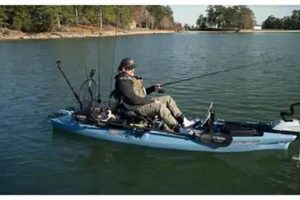
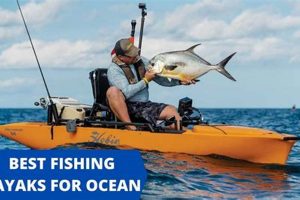
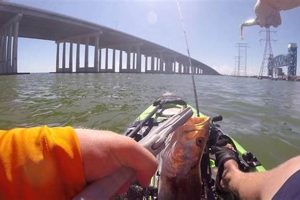
This activity involves angling from a kayak launched directly from the shoreline. It provides access to nearshore fishing grounds, including reefs, kelp forests, and sandbars, that are often difficult to reach from shore or larger vessels. Launching from the beach offers a unique perspective and an intimate connection with the coastal environment.
The accessibility and affordability of this approach contribute significantly to its popularity. Compared to owning or chartering a larger boat, kayaks represent a lower-cost entry point into offshore angling. Additionally, launching from the beach eliminates the need for boat ramps and trailers, expanding fishing opportunities to a wider range of locations. Historically, small, human-powered watercraft have been utilized for fishing in coastal regions for centuries. Modern kayak designs, equipped with specialized fishing features, have elevated this tradition, making it a more effective and enjoyable pastime.
The following sections will delve deeper into essential aspects of this pursuit, covering topics such as kayak selection, safety considerations, recommended gear, and effective fishing techniques.
Tips for Successful Coastal Kayak Angling
Careful planning and preparation are essential for a safe and productive fishing experience from a kayak launched directly from the beach. The following tips offer guidance for maximizing success and minimizing potential risks.
Tip 1: Check Weather and Tide Conditions: Prior to launching, consult marine forecasts for wind speed, wave height, and tidal currents. Avoid venturing out in strong winds, rough seas, or rapidly changing tides. Ideal conditions include calm waters and minimal swell.
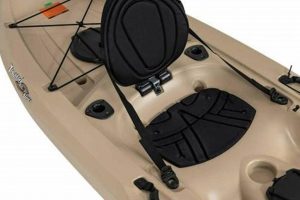
Tip 2: Choose the Right Kayak: Select a kayak designed for stability and suitable for fishing. Sit-on-top kayaks offer greater maneuverability and ease of re-entry in the event of a capsize. Consider models with built-in rod holders and storage compartments.
Tip 3: Utilize Appropriate Safety Gear: Always wear a personal flotation device (PFD). Carry a whistle, signaling mirror, and VHF radio for communication in emergencies. A leash connecting the paddle to the kayak prevents loss in rough conditions.
Tip 4: Plan Your Launch and Landing: Identify a beach area with a gentle slope and minimal obstacles. Time the launch and landing to coincide with calmer wave sets. Be mindful of currents and potential hazards.
Tip 5: Pack Essential Fishing Equipment: Choose tackle and lures appropriate for the target species. Carry a variety of hooks, weights, and lines to adapt to changing conditions. A landing net and pliers are essential for handling fish safely.
Tip 6: Practice Proper Kayak Handling: Learn basic paddling techniques and practice maneuvering in calm water before venturing into more challenging conditions. Understanding how to control the kayak in wind and waves is crucial for safety and effective fishing.
Tip 7: Respect Wildlife and the Environment: Adhere to local fishing regulations and practice catch-and-release whenever possible. Dispose of fishing line and other waste responsibly. Minimize disturbance to marine life and their habitats.
Adhering to these guidelines will significantly enhance safety and contribute to a more productive and enjoyable experience. Proper preparation and careful execution are crucial for maximizing success in this exciting angling pursuit.
This foundation of knowledge provides a solid base for exploring more advanced techniques and strategies, which will be addressed in the concluding sections of this article.
1. Kayak Selection

Appropriate kayak selection is paramount for successful and safe angling excursions launched directly from the beach. The chosen vessel must be capable of handling the specific challenges of navigating surf zones, transporting fishing gear, and providing a stable platform for casting and reeling. Careful consideration of various kayak characteristics ensures a suitable match for the demands of this activity.
- Hull Design and Stability:
Wider, flatter hulls generally offer greater stability, particularly important in surf conditions and when fighting fish. Shorter kayaks provide maneuverability in tighter areas, while longer kayaks track better in open water. Specialized fishing kayaks often feature a sit-on-top design, facilitating water drainage and re-entry after a capsize. A stable hull contributes significantly to angler confidence and safety. For example, a wide, flat-bottomed kayak is preferable for beginners navigating surf zones, while a longer, V-hulled kayak suits experienced anglers seeking speed and efficiency in calmer waters.
- Weight Capacity and Storage:
Sufficient weight capacity is essential to accommodate the combined weight of the angler, fishing gear, and potential catch. Ample storage space is crucial for tackle boxes, rods, safety equipment, and other essentials. Dedicated storage compartments designed for fishing gear, such as rod holders and tackle storage, enhance organization and accessibility. Adequate capacity ensures safe handling and efficient gear management.
- Propulsion Systems:
Paddle kayaks offer a traditional and affordable method of propulsion, providing excellent exercise and control. Pedal-powered kayaks allow hands-free fishing and faster speeds, particularly advantageous when covering longer distances or trolling. Evaluating propulsion systems based on individual physical capabilities and fishing style is essential. A pedal drive system offers advantages for trolling or covering large areas, while a traditional paddle provides greater maneuverability in shallow water or tight spaces.
- Material and Durability:
Kayak construction materials influence durability, weight, and performance. Polyethylene kayaks are generally durable and affordable, while composite materials offer lighter weight and improved performance but may require more careful handling. Selecting a material appropriate for the intended usage and storage conditions ensures longevity and minimizes maintenance. For frequent use in rocky or abrasive environments, a highly durable polyethylene kayak is recommended. A lighter composite construction may be preferred for easier transport and enhanced performance.
Choosing the right kayak profoundly impacts the overall experience. Careful consideration of these factors ensures a safe, comfortable, and productive outing. The interplay between stability, capacity, propulsion, and durability directly influences fishing success. A well-chosen vessel enhances not only safety and performance but also the overall enjoyment of the experience. Investing time in selecting the appropriate kayak contributes significantly to maximizing the potential of each excursion.
2. Launch Techniques

Effective launch techniques are crucial for a safe and efficient start to any kayak fishing trip originating from the beach. Proper execution minimizes the risk of capsizing in the surf zone and ensures a smooth transition into deeper water. These techniques vary depending on surf conditions and kayak type, highlighting the importance of adapting the approach to the specific environment.
- Assessing Surf Conditions:
Before launching, careful observation of wave patterns, sets, and lulls is essential. Identifying suitable gaps between wave sets minimizes the risk of being broadsided or capsized during entry. Understanding how waves break and reform allows for strategic timing and positioning of the kayak during launch. For instance, observing wave frequency and height helps determine the optimal moment for entering the water and paddling beyond the break zone. Neglecting this assessment can lead to difficulties maneuvering through the surf and potential equipment damage or personal injury.
- Positioning and Entry:
Positioning the kayak perpendicular to the shoreline, facing the oncoming waves, minimizes the impact of breaking waves. Entering the water swiftly and decisively, maintaining forward momentum, helps penetrate the surf zone efficiently. Maintaining a low center of gravity and a firm grip on the paddle enhances stability. For example, entering the water during a lull and paddling aggressively through smaller waves prevents the kayak from being pushed back ashore.
- Navigating the Surf Zone:
Once in the water, paddling with strong, consistent strokes maintains momentum and control. Angling the kayak slightly into oncoming waves deflects their force and prevents capsizing. Maintaining awareness of surrounding wave action and adjusting paddling technique as needed are crucial for safe passage through the surf zone. For instance, bracing with the paddle on the face of a wave provides stability and prevents capsizing. Quick and decisive reactions are crucial for maintaining control in dynamic surf conditions.
- Deep Water Transition:
Upon reaching calmer water beyond the break zone, transitioning to a relaxed paddling rhythm conserves energy for fishing. Taking a moment to assess the surrounding environment, locate fishing spots, and prepare gear allows for a seamless transition into the fishing phase of the excursion. This pause provides an opportunity to organize tackle, adjust seating, and prepare for a productive fishing experience.
Mastering these launch techniques is essential for any angler venturing into coastal waters from the beach. Proficiency in these skills not only enhances safety but also contributes to a more efficient and enjoyable fishing experience. The ability to launch confidently and effectively allows anglers to focus on the primary objective: pursuing their target species in the nearshore environment. This foundation of safe launching practices lays the groundwork for a successful and rewarding day on the water.
3. Safety Equipment
Safety equipment plays a vital role in mitigating risks inherent in kayak fishing launched directly from the beach. The coastal environment presents specific hazards, including changing weather conditions, surf zone navigation, and potential interactions with marine vessels. Appropriate safety gear enhances angler preparedness and response capabilities in emergencies. The connection between safety equipment and this activity is fundamental to ensuring a positive outcome in unforeseen circumstances. For example, a personal flotation device (PFD) is crucial in the event of a capsize, providing buoyancy and increasing visibility in the water. A VHF radio enables communication with emergency services or other vessels in case of distress or unforeseen circumstances. Carrying a first-aid kit allows for immediate treatment of minor injuries, while a signaling device, such as a whistle or mirror, aids in attracting attention if assistance is required. These items contribute significantly to angler safety and preparedness.
Practical application of this understanding involves carrying essential safety equipment on every excursion, ensuring it is readily accessible and in proper working order. Regularly inspecting and maintaining equipment, such as checking PFD inflation mechanisms and radio battery life, ensures functionality when needed. Understanding how to use each piece of equipment effectively is paramount. Practicing emergency procedures, such as self-rescue techniques and radio communication protocols, enhances preparedness and response capabilities. Furthermore, informing someone of the planned fishing location and estimated return time adds another layer of safety. This information can be crucial for search and rescue efforts in case of an overdue return.
In summary, the significance of safety equipment in kayak fishing launched from the beach cannot be overstated. The dynamic coastal environment presents inherent risks, and proper preparation is crucial for mitigating those risks. Carrying and maintaining essential safety gear, understanding its proper use, and practicing emergency procedures contribute significantly to angler safety. This proactive approach empowers anglers to enjoy the sport responsibly and minimizes potential negative outcomes in unforeseen circumstances. Prioritizing safety enhances the overall experience and allows for a more focused and enjoyable pursuit of this challenging and rewarding activity.
4. Fishing Gear

Specialized fishing gear significantly impacts the success and enjoyment of kayak fishing launched from the beach. Equipment choices directly influence an angler’s ability to target specific species, effectively present lures or bait, and manage fish in the dynamic nearshore environment. The interplay between fishing gear and the unique challenges of this fishing style is crucial. For example, shorter rods, typically between six and seven feet in length, are preferable for maneuverability within the confines of a kayak. Longer rods, while advantageous for casting distance from shore, can be cumbersome and difficult to manage in a kayak’s limited space. Similarly, selecting a spinning reel with a sealed drag system protects against saltwater intrusion, extending the reel’s lifespan and ensuring smooth operation. A conventional reel, while suitable for other fishing applications, may be more susceptible to saltwater damage in the splash-prone environment of a kayak. These choices reflect the practical considerations specific to kayak fishing launched directly from the beach.
Further emphasizing this connection, tackle selection plays a pivotal role in targeting desired species and adapting to varying conditions. Using braided fishing line, with its low stretch and high sensitivity, allows anglers to detect subtle bites and effectively set hooks, even in deeper water or strong currents. Monofilament line, while suitable for other fishing styles, may lack the sensitivity required for successful hooksets in the challenging nearshore environment. Similarly, lure choices should consider the target species and prevailing conditions. Topwater lures, effective for attracting predatory fish near the surface, might prove less effective in deeper water or during periods of low light. Weighted jigs or soft plastic lures, designed to sink and mimic the movement of bottom-dwelling prey, are often more productive in these situations. Understanding these nuances and tailoring tackle accordingly is crucial for maximizing success. An angler targeting flounder in a sandy bottom environment might employ a Carolina rig with a live or artificial bait, while an angler pursuing mackerel near the surface would opt for a fast-retrieving spoon or topwater plug. These examples illustrate the importance of matching gear to the specific fishing scenario.
In conclusion, fishing gear selection is integral to successful kayak fishing launched from the beach. Rod length, reel type, line choice, and lure selection each contribute to an angler’s ability to effectively target specific species and adapt to varying conditions. Understanding these connections and making informed equipment choices based on practical considerations significantly enhances the overall experience. The right gear not only improves fishing success but also contributes to angler safety and comfort, enabling a more focused and enjoyable pursuit in the dynamic coastal environment. Addressing these considerations beforehand prepares anglers to tackle the challenges and rewards of this increasingly popular fishing style.
5. Location Scouting

Effective location scouting is paramount for successful kayak fishing launched from the beach. Identifying productive fishing grounds beforehand significantly increases the likelihood of encountering target species. Understanding how specific locations influence fish behavior and distribution is crucial for maximizing angling opportunities. This pre-fishing reconnaissance contributes directly to a more focused and efficient fishing experience. Neglecting this crucial step can lead to unproductive outings and missed opportunities.
- Nearshore Structures:
Nearshore structures, such as reefs, rock piles, and kelp forests, provide habitat and foraging opportunities for a variety of fish species. Locating these structures using nautical charts, online mapping tools, or local knowledge enhances the probability of finding fish. For example, a submerged reef marked on a nautical chart might indicate a potential hotspot for rockfish or lingcod. Similarly, kelp beds often attract baitfish and the larger predators that feed on them. Understanding these relationships allows anglers to target specific locations with greater precision.
- Bathymetric Changes:
Variations in water depth create distinct zones that attract different species. Drop-offs, channels, and holes often concentrate fish, as these areas offer both shelter and access to prey. Identifying these bathymetric changes through contour maps or sonar readings allows anglers to focus efforts in areas likely to hold fish. For instance, a sudden drop-off from a shallow sand flat to a deeper channel might hold halibut or other bottom-dwelling species. Understanding how depth influences fish distribution improves the efficiency of searching for productive fishing grounds.
- Currents and Tides:
Currents and tides significantly influence fish behavior and movement. Tidal flows bring nutrients and baitfish, attracting larger predators. Understanding tidal patterns and their impact on specific locations helps predict fish movement and optimize fishing strategies. Fishing near inlets or channels during a strong incoming tide, for example, can increase the chances of encountering species moving into shallower waters to feed. Conversely, fishing near these same locations during an outgoing tide might prove less productive, as fish may have moved back into deeper water. Utilizing tide charts and current predictions enhances angling success.
- Beach Access and Safety:
Evaluating beach access points considers factors such as parking availability, beach slope, and potential obstacles. Choosing a launch site with easy access and a safe entry/exit point simplifies the logistics of the fishing trip. Additionally, identifying potential hazards, such as rip currents or submerged rocks, enhances safety and minimizes risks. For example, launching from a beach with a steep slope and strong shore break presents greater challenges than launching from a sheltered cove with a gentle slope. Prioritizing safety and convenience when selecting a launch location contributes to a more enjoyable and productive fishing experience.
In summary, effective location scouting optimizes fishing success when kayak fishing from the beach. By understanding the interplay between nearshore structures, bathymetric changes, currents and tides, and beach access, anglers can significantly enhance their chances of encountering target species. This preparation allows for a more focused and efficient approach, transforming a potentially unproductive outing into a rewarding fishing experience. Investing time in pre-fishing reconnaissance pays dividends in terms of both catch rates and overall enjoyment. The combination of these factors contributes to a more informed and strategic approach to kayak fishing from the beach, maximizing the potential for success in this demanding yet rewarding angling pursuit.
6. Tidal Awareness
Tidal awareness is essential for safe and successful kayak fishing launched from the beach. Tides, driven by the gravitational forces of the moon and sun, significantly influence water levels, currents, and fish behavior in the nearshore environment. Understanding tidal cycles and their effects is crucial for navigating safely, optimizing fishing strategies, and maximizing catch rates. Failing to account for tidal influences can lead to hazardous situations, unproductive fishing trips, and a diminished overall experience. For example, launching a kayak during an outgoing tide can result in being swept further offshore than intended, especially in areas with strong tidal currents. Conversely, launching during an incoming tide might lead to difficulties returning to shore if the kayak becomes grounded in shallow water as the tide recedes. Comprehending tidal flow is crucial for planning safe and efficient launch and retrieval strategies.
Tidal fluctuations also directly impact fish behavior and feeding patterns. Many species concentrate in areas with moving water, using tidal currents to ambush prey or conserve energy while foraging. Anglers aware of these patterns can position themselves strategically to intercept fish moving with the tide. For instance, fishing near inlets or channels during an incoming tide increases the likelihood of encountering species moving into shallower waters to feed. Similarly, fishing near structures, such as rock piles or reefs, during periods of peak tidal flow can concentrate fish and improve catch rates. Understanding how tides influence fish behavior allows anglers to optimize lure presentations and fishing techniques accordingly. Employing a drift fishing technique, where bait or lures are carried by the current along a likely fish-holding structure, can be highly effective during periods of strong tidal flow. Conversely, during slack tide, when tidal currents are minimal, switching to a bottom fishing technique might be more productive. Adapting fishing strategies to prevailing tidal conditions is a key element of successful kayak fishing launched from the beach.
In summary, tidal awareness represents a critical component of successful and safe kayak fishing launched from the beach. Understanding tidal cycles, currents, and their influence on fish behavior allows anglers to make informed decisions regarding launch timing, location selection, and fishing strategies. This knowledge enhances safety, optimizes fishing efforts, and contributes significantly to a more rewarding experience. Failing to consider tidal influences can lead to hazardous situations and diminished fishing success. Tidal awareness is therefore an essential skill for any angler venturing into the dynamic coastal environment from a kayak. Integrating this understanding into pre-fishing planning and on-the-water decision-making is integral to maximizing the potential of each kayak fishing excursion.
Frequently Asked Questions
This section addresses common inquiries regarding kayak fishing launched directly from the beach. The responses provide concise yet comprehensive information to clarify potential uncertainties and enhance understanding of this specialized angling pursuit.
Question 1: What type of kayak is best suited for fishing from the beach?
Sit-on-top kayaks are generally recommended due to their self-bailing design and ease of re-entry in the event of a capsize. Wider, more stable hulls are preferable for navigating surf zones, while longer kayaks offer better tracking in open water. Specialized fishing kayaks often feature built-in rod holders and storage compartments.
Question 2: What essential safety gear is required?
Essential safety equipment includes a personal flotation device (PFD), a whistle, a signaling mirror, a VHF radio, and a first-aid kit. A leash connecting the paddle to the kayak prevents loss in rough conditions. A bilge pump and paddle float can assist in recovery from a capsize.
Question 3: How does one choose an appropriate launch location?
Launch locations should be selected based on factors such as beach slope, surf conditions, and potential hazards. Areas with gentle slopes and minimal obstacles are ideal. Consulting tide charts and local knowledge can help identify suitable launch sites and avoid areas with strong currents or rip tides.
Question 4: What fishing gear is recommended for beginners?
Beginners should start with a medium-action spinning rod and reel combo spooled with braided fishing line. A selection of versatile lures, such as jigs, soft plastics, and topwater plugs, allows for targeting a variety of species. A basic tackle box containing hooks, weights, swivels, and pliers completes the essential gear list.
Question 5: How do tides and currents affect kayak fishing from the beach?
Tides and currents significantly influence fish behavior and movement. Incoming tides often bring baitfish closer to shore, attracting larger predators. Outgoing tides can create strong currents, requiring careful navigation. Consulting tide charts and understanding local current patterns are essential for planning a safe and productive fishing trip.
Question 6: What are some common mistakes to avoid?
Common mistakes include launching in unsafe conditions, overloading the kayak, neglecting essential safety gear, and failing to consider tidal influences. Adequate preparation, careful planning, and continuous awareness of the surrounding environment are crucial for a safe and enjoyable experience.
These responses provide a foundational understanding of key aspects related to kayak fishing launched directly from the beach. Further research and practical experience enhance proficiency and contribute to safer and more successful fishing excursions.
The following section offers concluding remarks and summarizes key takeaways for embarking on this unique angling adventure.
Conclusion
Kayak fishing off the beach offers a unique and rewarding angling experience, providing access to nearshore environments often inaccessible from shore or larger vessels. Success and safety in this pursuit depend heavily on careful preparation and execution. Key considerations include selecting an appropriate kayak, understanding launch techniques, prioritizing safety equipment, utilizing effective fishing gear, scouting productive locations, and recognizing tidal influences. Each element contributes significantly to maximizing fishing opportunities while minimizing inherent risks. Mastery of these core components allows anglers to confidently navigate the dynamic coastal environment and target desired species.
The information presented herein provides a comprehensive foundation for embarking on this specialized form of angling. Continued learning, practical experience, and unwavering respect for the marine environment will further enhance proficiency and contribute to safe and successful kayak fishing excursions off the beach. The potential for rewarding experiences awaits those willing to embrace the challenges and rewards of this unique pursuit.