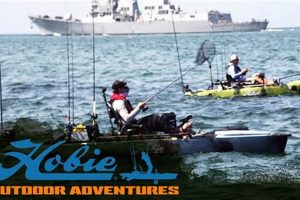
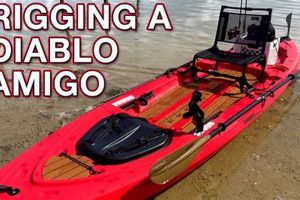
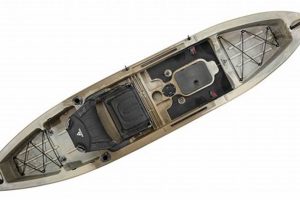
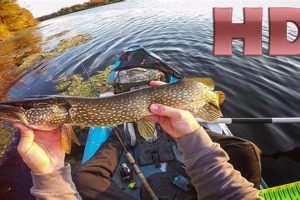
This specific type of small watercraft is designed for angling in lakes and rivers. Its compact size, typically around ten feet in length, offers maneuverability ideal for navigating shallow waters and confined spaces, while the specialized design incorporates features such as rod holders, storage compartments, and often a comfortable seat for extended fishing trips. These vessels are frequently constructed from durable, lightweight materials like polyethylene or composite plastics.
Small, maneuverable fishing vessels offer significant advantages to anglers seeking access to hard-to-reach fishing spots. Their portability makes them easy to transport and launch, eliminating the need for boat ramps or trailers in many cases. This accessibility opens up opportunities for a more intimate and immersive fishing experience, allowing anglers to explore secluded coves, shallow tributaries, and other areas larger boats can’t access. The stability and specialized design of these kayaks also contribute to a comfortable and efficient fishing platform.
This exploration of compact fishing watercraft will further examine the various materials used in their construction, popular design features, and the benefits they offer to both novice and experienced anglers. Further topics will include essential safety considerations, appropriate gear selection, and techniques for effective kayak fishing.
Tips for Utilizing Compact Fishing Kayaks
Effective use of a compact fishing kayak requires an understanding of specific techniques and considerations to maximize both safety and angling success. The following tips offer guidance for optimizing the fishing experience from these specialized vessels.
Tip 1: Weight Distribution and Balance: Proper weight distribution is crucial for stability. Gear should be evenly distributed throughout the kayak, keeping heavier items low and centered. Practice entering and exiting the kayak in shallow water to understand its balance points.
Tip 2: Paddle Selection and Technique: Choose a paddle appropriate for the kayak’s width and the user’s height. Efficient paddling techniques minimize fatigue and maximize maneuverability. Consider a double-bladed paddle for versatility.
Tip 3: Essential Safety Gear: Always wear a personal flotation device (PFD). Carry a whistle, signaling device, and a waterproof bag for essential electronics. Inform someone of the fishing location and estimated return time.
Tip 4: Anchor and Drift Control: Utilize a lightweight anchor or drift sock to maintain position in currents or wind. Understanding water flow and wind direction is crucial for effective drift fishing.
Tip 5: Fishing Gear Organization: Keep fishing gear organized and readily accessible. Rod holders, tackle boxes, and gear leashes prevent equipment loss and optimize fishing efficiency.
Tip 6: Navigation and Trip Planning: Plan fishing routes in advance, considering water conditions, weather forecasts, and potential hazards. Carry a map or GPS device and be aware of local regulations.
Tip 7: Respecting the Environment: Practice Leave No Trace principles. Pack out all trash, avoid disturbing wildlife, and minimize impact on the natural environment.
By adhering to these guidelines, anglers can enhance their safety, improve fishing success, and contribute to the preservation of natural resources. Proper preparation and mindful practices are key to a rewarding and responsible kayaking experience.
These tips provide a foundation for successful and safe kayak fishing. Further exploration of specific techniques and advanced considerations will enhance proficiency and enjoyment of this specialized angling approach.
1. Compact and Lightweight Design

The compact and lightweight design of a typical ten-foot fishing kayak directly influences its portability and maneuverability, crucial factors for accessing and navigating diverse waterways. Reduced length and weight enable easier transport, often eliminating the need for trailers and allowing access to remote or difficult-to-reach fishing spots. This design characteristic also contributes to increased maneuverability, enabling navigation through shallow waters, narrow channels, and areas dense with vegetation or other obstacles larger vessels cannot access. The resulting enhanced agility provides a distinct advantage when targeting specific fish habitats or responding to changing water conditions. For example, a smaller, lighter kayak can be easily portaged around shallow rapids or fallen trees, opening up access to otherwise inaccessible stretches of river.
This design principle offers practical advantages beyond mere accessibility. The decreased weight often translates to increased responsiveness to paddling input, requiring less effort to maneuver and control the kayak’s movement. This efficiency can be particularly beneficial in challenging conditions such as strong currents or windy environments. Furthermore, the compact size often simplifies storage, requiring less space than larger kayaks or traditional boats. This can be a significant factor for individuals with limited storage capacity. The lighter weight also simplifies launching and landing, reducing the physical strain associated with handling larger, heavier watercraft.
The relationship between compact, lightweight design and fishing kayak functionality is integral to its overall utility. This design approach maximizes access to diverse fishing environments while minimizing logistical challenges associated with transport and storage. The resulting increase in maneuverability and responsiveness provides anglers with a distinct advantage, enabling efficient navigation and precise control within a variety of aquatic environments. While stability considerations remain important, proper weight distribution and paddling technique can mitigate potential drawbacks, maximizing the benefits of a compact, lightweight fishing kayak.
2. Stability and Maneuverability

Stability and maneuverability represent critical performance characteristics of a ten-foot fishing kayak, directly influencing angling effectiveness and overall user experience. Stability, the resistance to capsizing or tipping, is paramount for casting, reeling, and landing fish, especially in dynamic water conditions. Maneuverability, the ability to change direction and navigate efficiently, is essential for accessing tight spots, following fish movements, and adapting to changing currents or wind. The interplay between these two attributes is crucial. A kayak optimized solely for stability might be sluggish and unresponsive, while a kayak designed solely for maneuverability might compromise stability, increasing the risk of capsize. The ideal design balances both, providing a platform stable enough for angling activities yet agile enough for precise navigation.
Consider a scenario where an angler encounters a submerged log or rock in a narrow stream. A stable and maneuverable kayak allows the angler to navigate around the obstacle smoothly and efficiently, maintaining balance and avoiding a potential collision or capsize. Conversely, a less maneuverable kayak might require awkward paddling adjustments or even necessitate exiting the kayak to navigate the obstruction. Similarly, when battling a strong fish, a stable platform is crucial for maintaining control and preventing the kayak from being pulled off course. The ability to quickly adjust position and follow the fish’s movements, facilitated by maneuverability, increases the chances of a successful landing. In both scenarios, the combined attributes of stability and maneuverability contribute significantly to a positive fishing experience. Practical considerations, such as hull design, weight distribution, and seating position, influence both stability and maneuverability. Wider hulls generally offer greater initial stability but sacrifice maneuverability, while narrower hulls enhance agility at the expense of some primary stability. Careful weight distribution, keeping the center of gravity low, enhances both stability and maneuverability. Seating position also influences these factors; a lower seat typically enhances stability.
Understanding the relationship between stability and maneuverability is essential for selecting and effectively utilizing a ten-foot fishing kayak. Balancing these attributes optimizes performance in various fishing scenarios, contributing to angler safety, efficiency, and overall success. Considering specific fishing environments and individual preferences helps determine the optimal balance between stability and maneuverability for a given application. Further analysis of hull design, material selection, and other design features can further refine this understanding, enabling informed decisions and enhancing on-the-water performance.
3. Fishing-Specific Features
Specialized features distinguish fishing kayaks from recreational models, enhancing angler efficiency and overall experience. These features are integral to the design of a tamarack 10-foot fishing kayak, optimizing its functionality for angling activities. An examination of key features provides insight into the practical advantages they offer.
- Rod Holders:
Integrated rod holders secure fishing rods, freeing hands for paddling, baiting hooks, or landing fish. Multiple rod holders, common on fishing kayaks, allow anglers to employ various fishing techniques simultaneously. Flush-mounted rod holders minimize interference with paddling, while adjustable rod holders accommodate different rod lengths and angling styles. Securely stowing rods prevents loss or damage during navigation through challenging environments, such as tight spaces or areas with overhanging branches.
- Storage Compartments:
Dedicated storage compartments provide organized and accessible storage for tackle boxes, fishing gear, and personal items. Dry storage compartments protect sensitive electronics and other items from water damage. Larger compartments accommodate bulky items like tackle bags or extra clothing, while smaller compartments are ideal for organizing lures, hooks, and other small accessories. Efficient storage solutions contribute to a clutter-free deck, maximizing fishing space and enhancing safety.
- Anchor Trolley System:
An anchor trolley system allows controlled deployment and retrieval of an anchor from various points along the kayak. This feature enables precise positioning in current or wind, optimizing fishing presentations and maintaining desired location. The ability to adjust anchor position quickly adapts to changing conditions or fishing strategies. Effective anchor control enhances fishing efficiency by keeping the kayak stationary in targeted areas.
- Paddle Holders/Leashes:
Paddle holders or leashes secure the paddle when not in use, preventing loss and minimizing interference during fishing. Securely stowing the paddle allows for unimpeded casting and reeling, and prevents accidental paddle drift when fighting a fish. Paddle leashes provide an additional level of security in rough conditions. Paddle management features contribute to an organized and efficient fishing environment.
These specialized features integrated into a tamarack 10-foot fishing kayak significantly enhance its functionality and usability as a dedicated fishing platform. Rod holders, storage compartments, anchor trolley systems, and paddle management features optimize angling efficiency, improve organization, and contribute to angler safety and comfort. The thoughtful inclusion of these features distinguishes fishing kayaks from recreational models, equipping anglers with the necessary tools for a successful and enjoyable fishing experience. Examining additional features, such as adjustable seating, footrests, and specialized hull designs, further clarifies the comprehensive approach to design and functionality in dedicated fishing kayaks.
4. Durability and Material
Durability and material selection are paramount considerations in the construction of a tamarack 10-foot fishing kayak, directly impacting its longevity, performance, and overall value. The chosen materials must withstand the rigors of on-water use, including exposure to UV radiation, abrasion, impacts, and varying water temperatures. Understanding the properties of common kayak construction materials provides insights into their respective advantages and disadvantages in relation to durability.
- Polyethylene (PE):
High-density polyethylene (HDPE) is a common material for rotational molded kayaks, offering excellent impact resistance and durability. HDPE kayaks are known for their ability to withstand bumps and scrapes against rocks, logs, and other obstacles encountered in various aquatic environments. This robustness makes them suitable for navigating challenging waterways, including shallow rivers and rocky shorelines. While HDPE kayaks are highly durable, they can be heavier than kayaks constructed from other materials. The manufacturing process also limits design complexity compared to composite construction.
- Composite Materials (Fiberglass, Carbon Fiber, Kevlar):
Composite materials offer a higher strength-to-weight ratio compared to polyethylene, resulting in lighter and more responsive kayaks. Fiberglass, carbon fiber, and Kevlar, often used in combination, provide excellent stiffness and durability. Composite kayaks generally offer superior performance in terms of speed and maneuverability. However, they are typically more expensive than polyethylene kayaks and can be more susceptible to damage from impacts, requiring careful handling and maintenance. Repairing composite damage can also be more complex and costly.
- Thermoformed ABS:
Thermoformed ABS (acrylonitrile butadiene styrene) offers a balance between durability and weight. This process involves heating a sheet of ABS plastic and molding it over a mold, resulting in a kayak with good rigidity and impact resistance. ABS kayaks are often lighter than rotomolded polyethylene kayaks but not as light as high-end composites. They offer a good compromise between performance and durability, often at a more affordable price point than composites.
- UV Resistance and Degradation:
Regardless of the chosen material, UV resistance is a crucial factor for kayak longevity. Prolonged exposure to sunlight can degrade the material, leading to fading, cracking, and reduced structural integrity. Manufacturers often incorporate UV inhibitors into the material to mitigate these effects. Proper storage, such as covering the kayak when not in use, further protects against UV degradation. Regular inspection for signs of UV damage, such as fading or surface cracking, is essential for preventative maintenance.
The chosen construction material directly influences the durability and performance of a tamarack 10-foot fishing kayak. Understanding the properties of each material, including its strengths and weaknesses, allows informed decisions based on individual needs and intended usage. Considering factors such as fishing environment, transport and storage considerations, and budget constraints guides the selection process. Balancing durability, weight, performance characteristics, and cost ultimately determines the optimal material for a given application. Examining manufacturing processes, such as rotational molding and thermoforming, provides further insight into the relationship between material and construction techniques, and their impact on the final product’s characteristics.
5. Portability and Transport

Portability and ease of transport are defining characteristics of a tamarack 10-foot fishing kayak, significantly influencing its accessibility and overall usability. Unlike larger vessels requiring trailers and specialized launch facilities, the compact size and relatively light weight of this kayak type facilitate transport using readily available methods. This portability expands access to diverse fishing locations, including remote ponds, small lakes, and secluded river stretches often inaccessible to larger watercraft. Understanding the transport options and considerations associated with this kayak type enhances its practical value for anglers seeking diverse fishing experiences.
- Vehicle Transportation:
Transporting a 10-foot kayak typically requires roof racks or truck bed systems. Roof racks, readily available for most vehicles, provide a secure platform for carrying the kayak. Foam blocks or specialized kayak cradles protect the hull during transit. Truck bed transport, utilizing tie-down straps and protective padding, offers another viable option. Proper securing methods are crucial for preventing damage and ensuring safe transport. Selecting the appropriate transport method depends on vehicle type and individual preferences. For instance, a smaller car might necessitate roof rack transport, while a pickup truck offers the convenience of bed transport.
- Short-Distance Carrying:
The relatively light weight of a 10-foot kayak allows for short-distance carrying, enabling access to launch points inaccessible by vehicle. Integrated carrying handles or molded grips facilitate comfortable carrying. Some kayaks incorporate scupper holes that can be used as carrying points. While manageable for short distances, longer portages might require specialized kayak carts or trolleys to minimize physical strain. This portability expands fishing opportunities to areas beyond vehicle access, such as small ponds, hidden coves, or upstream river sections. Consider, for example, carrying a kayak across a short stretch of land to access a secluded lake otherwise unreachable by car.
- Storage Considerations:
Compact size simplifies storage options for a 10-foot kayak compared to larger vessels. Garage storage, utilizing wall mounts or ceiling hoists, maximizes space utilization. Outdoor storage, employing specialized kayak covers, protects against UV damage and weather exposure. Even apartment dwellers can often accommodate a 10-foot kayak using vertical storage solutions. Efficient storage options contribute to the kayak’s overall practicality and minimize storage space requirements. For example, a wall-mounted kayak storage system in a garage frees up valuable floor space.
- Travel and Expedition Considerations:
The portability of a 10-foot kayak extends its utility beyond local fishing trips, enabling transport for fishing expeditions or travel to distant fishing destinations. Airline travel, requiring specialized packaging and adherence to airline regulations, can facilitate fishing adventures in remote locations. Transporting the kayak within a larger vehicle, such as an SUV or van, expands exploration possibilities during road trips. The ability to transport the kayak facilitates fishing experiences in diverse environments, extending its value beyond local waterways. Consider, for instance, transporting a kayak to a remote wilderness area for an extended fishing expedition.
The inherent portability of a tamarack 10-foot fishing kayak enhances its appeal for anglers seeking access to diverse and sometimes challenging-to-reach fishing locations. The various transport and storage options, coupled with its manageable weight and size, expand its utility beyond that of larger, less portable watercraft. This ease of transport contributes significantly to the kayak’s overall versatility and facilitates a broader range of fishing experiences, from quick local trips to extended expeditions in remote locations. By understanding the nuances of transport and storage considerations, anglers can maximize the benefits of this kayak’s portability and unlock its full potential for exploring diverse aquatic environments.
Frequently Asked Questions
This section addresses common inquiries regarding ten-foot fishing kayaks, providing concise and informative responses to aid informed decision-making.
Question 1: What is the typical weight capacity of a ten-foot fishing kayak?
Weight capacity varies by model and manufacturer, but typically ranges from 250 to 350 pounds. Exceeding the specified weight capacity can compromise stability and safety.
Question 2: Are ten-foot fishing kayaks suitable for ocean use?
While some models may handle calm coastal waters or protected bays, ten-foot kayaks are generally better suited for lakes, rivers, and ponds. Ocean use requires careful consideration of weather conditions and watercraft stability.
Question 3: What essential safety gear should accompany kayak anglers?
Essential safety gear includes a personal flotation device (PFD), a whistle, a signaling device (such as a mirror or flare), and a waterproof bag for electronics. Informing someone of the planned fishing location and estimated return time is also crucial.
Question 4: How does one choose the appropriate paddle length for a ten-foot fishing kayak?
Appropriate paddle length depends on factors such as kayak width, paddler height, and paddling style. Consulting manufacturer recommendations or seeking expert advice from a kayak retailer can assist in selecting the correct paddle length.
Question 5: What maintenance is required for a ten-foot fishing kayak?
Regular rinsing with fresh water after each use removes salt, dirt, and debris. Periodic inspection for damage, such as cracks or deep scratches, and timely repairs ensure continued performance and longevity. Proper storage, protected from UV exposure and extreme temperatures, preserves the kayak’s materials.
Question 6: How does one choose between a sit-on-top and sit-inside fishing kayak?
Sit-on-top kayaks offer greater stability and ease of entry/exit, ideal for warmer climates and calmer waters. Sit-inside kayaks offer greater protection from the elements and enhanced paddling efficiency, suitable for colder conditions or longer distances. Individual preferences and intended usage dictate the optimal choice.
These responses provide a foundational understanding of ten-foot fishing kayaks. Further research into specific models and features is recommended based on individual needs and intended usage scenarios.
The following section delves into advanced techniques for optimizing kayak fishing performance, covering topics such as casting techniques, drift fishing strategies, and advanced maneuvering skills.
Conclusion
This exploration of the tamarack 10-foot fishing kayak has encompassed key aspects relevant to anglers seeking a compact and efficient fishing platform. Maneuverability and specialized features, such as rod holders and storage compartments, enhance its utility in diverse aquatic environments. Durability considerations, influenced by material selection and construction techniques, underscore the importance of informed purchasing decisions. Portability and transport options expand access to remote fishing locations, while adherence to safety practices ensures responsible enjoyment of on-water experiences.
The tamarack 10-foot fishing kayak represents a practical solution for anglers seeking a balance between performance, portability, and affordability. Careful consideration of individual needs, fishing styles, and target environments will guide the selection process, ultimately enhancing the overall angling experience. Continued exploration of advanced techniques and responsible stewardship of natural resources will further enrich the pursuit of angling from this specialized watercraft.