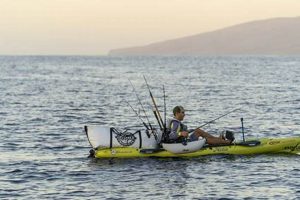
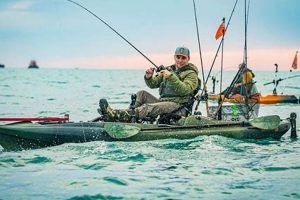
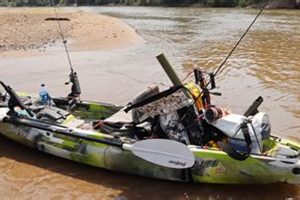
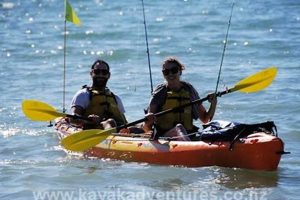
This type of watercraft blends the stability of a stand-up paddleboard with the utility of a fishing kayak. Imagine a hybrid vessel designed for anglers to cast lines while standing, offering improved visibility and casting range compared to traditional seated kayaks. These crafts often feature specialized design elements like wider hulls and non-slip surfaces for added stability and angler-friendly features like rod holders and storage compartments.
Elevated angling offers significant advantages in shallow water, allowing for better sight fishing and maneuverability around obstacles. The elevated perspective also provides greater casting distance and accuracy. The evolution of these specialized kayaks reflects the growing popularity of both kayak fishing and stand-up paddleboarding, combining the best of both worlds for a unique and effective fishing experience. This convergence has led to innovations in design and materials, resulting in increasingly stable and feature-rich platforms for anglers.
The following sections will delve deeper into specific aspects of these specialized watercraft, exploring design considerations, essential features, recommended accessories, and popular models available on the market. This comprehensive overview will equip anglers with the knowledge necessary to choose the right vessel for their needs and maximize their on-the-water experience.
Tips for Elevated Angling
Maximizing stability and fishing success requires careful consideration of several key factors. The following tips offer guidance for anglers seeking to enhance their experience on the water.
Tip 1: Prioritize Stability: Beginners should select wider, flatter-hulled designs for enhanced stability. Consider starting with seated fishing before gradually transitioning to a standing position.
Tip 2: Select the Right Paddle: An appropriately sized paddle is crucial for maintaining balance and efficient propulsion. Adjustable paddles offer versatility for different water conditions and fishing techniques.
Tip 3: Distribute Weight Evenly: Proper weight distribution is essential for maintaining balance. Center gear within the vessel and avoid sudden shifts in weight.
Tip 4: Wear a Personal Flotation Device (PFD): Safety should always be paramount. A PFD is essential safety equipment for any on-the-water activity.
Tip 5: Practice in Calm Waters: Before venturing into challenging conditions, practice standing and casting in calm, shallow water to develop balance and confidence.
Tip 6: Utilize Anchor or Stake-Out Pole: Maintaining position in a desired fishing spot requires an anchor or stake-out pole, particularly in currents or windy conditions.
Tip 7: Minimize Movement: Sudden, jerky movements can compromise stability. Practice smooth, controlled motions for casting and retrieving.
Tip 8: Be Mindful of the Environment: Respect wildlife and natural habitats. Practice Leave No Trace principles and adhere to local fishing regulations.
By adhering to these guidelines, anglers can significantly enhance their stability, safety, and overall fishing success from an elevated position. These practices contribute to a more enjoyable and productive experience on the water.
With a thorough understanding of these core principles, anglers can confidently explore the advantages and unique opportunities offered by this specialized fishing platform. The subsequent conclusion will summarize key takeaways and offer final recommendations for selecting and utilizing this innovative type of watercraft.
1. Stability

Stability forms the cornerstone of a successful experience with these specialized kayaks. The ability to stand comfortably and securely while casting and reeling is paramount, not only for fishing effectiveness but also for angler safety. Compromised stability can lead to falls, equipment loss, and potentially dangerous situations, particularly in challenging water conditions. Several factors influence stability, including hull design, kayak width, and the angler’s weight distribution. Wider, flatter hulls generally provide greater initial stability, while longer, narrower hulls may offer superior secondary stability (resistance to tipping once tilted). Consider a wide, flat-bottomed hull for calm lakes, while a slightly narrower hull with a pronounced keel might be preferred for navigating rivers or choppy waters. The angler’s weight distribution also plays a critical role; keeping weight centered and low enhances stability. For example, an angler shifting weight to one side while casting risks destabilizing the vessel.
Beyond the inherent design features, several practical steps can further enhance on-water stability. Using a paddle leash keeps the paddle within easy reach, preventing awkward overreaches that could compromise balance. Proper anchoring techniques, utilizing a stake-out pole in shallow water or a traditional anchor in deeper areas, provides a stable platform for fishing, especially in currents or wind. Even seemingly small details, such as wearing appropriate footwear with good grip and avoiding sudden movements, can significantly impact stability. Imagine the difference between attempting to stand on a wet, slippery kayak deck versus one with a textured, non-slip surface. The angler’s experience level is also a crucial factor; beginners are advised to practice in calm, shallow waters before venturing into more challenging environments. Gaining experience and confidence in a controlled setting builds a foundation for safer and more effective fishing in diverse conditions.
Ultimately, prioritizing stability ensures not only a safer experience but also a more productive one. A stable platform allows anglers to focus on fishing, maximizing casting accuracy and reaction time. This translates to a more enjoyable and successful outing on the water. Addressing stability proactively through careful equipment selection, informed technique, and mindful practice is essential for unlocking the full potential of these innovative fishing platforms. This foundational understanding allows anglers to explore diverse fishing environments with confidence and enhance their overall on-the-water experience.
2. Maneuverability

Maneuverability represents a critical performance attribute, directly influencing fishing effectiveness and overall experience. Efficient navigation through diverse water environments, whether navigating tight creeks, maneuvering around obstacles, or positioning precisely for optimal casting, hinges on the vessel’s responsiveness and control. A highly maneuverable craft allows anglers to access prime fishing spots, adjust positioning quickly to changing conditions, and present lures effectively. Consider the scenario of fishing in a mangrove-lined creek; a kayak with superior maneuverability enables precise navigation through narrow channels and around submerged roots, maximizing access to sheltered fish. Conversely, a less maneuverable craft restricts access and limits fishing opportunities. Several factors influence maneuverability, including hull design, length, and the presence of specialized features like rudders or fins. Shorter kayaks generally offer greater agility, while longer kayaks may track straighter in open water. A rudder system enhances directional control, particularly in windy conditions or strong currents. For example, a kayak equipped with a rudder allows for precise adjustments to maintain position while facing into the current, optimizing lure presentation.
The relationship between maneuverability and stability presents a design trade-off. While increased width typically enhances stability, it can also hinder maneuverability. Finding the optimal balance between these two attributes is crucial for selecting the right vessel for specific fishing environments and individual preferences. Anglers prioritizing stability might opt for a wider, more stable platform, potentially sacrificing some maneuverability. Those prioritizing maneuverability might choose a narrower, more agile hull, accepting a slightly less stable platform. Further enhancing maneuverability involves mastering efficient paddling techniques and utilizing specialized features effectively. Proper paddle strokes and body positioning maximize propulsion and turning efficiency. Learning to utilize a rudder system effectively allows for fine-tuning directional control, particularly in challenging conditions. For example, a skilled angler can use a rudder to compensate for wind drift, maintaining precise position without constant paddle adjustments.
Understanding the nuances of maneuverability empowers anglers to make informed decisions about vessel selection and optimize on-water performance. Recognizing the interplay between stability, maneuverability, and specific fishing environments enables anglers to tailor their approach and maximize fishing success. By considering these factors, anglers can select a craft that aligns with their individual needs and fishing style, enhancing their overall experience on the water. This informed approach translates to greater efficiency in navigating varied waters, accessing prime fishing locations, and ultimately, increasing the likelihood of a successful and rewarding fishing trip.
3. Specialized Features
Specialized features distinguish these kayaks from traditional sit-on-top or sit-in models, enhancing functionality, angler comfort, and overall fishing effectiveness. These purpose-built additions cater specifically to the demands of stand-up fishing, addressing stability, gear management, and ease of access to essential equipment.
- Rod Holders
Multiple rod holders, strategically positioned for easy access and secure storage, are essential. These range from flush-mounted rod holders that minimize interference with movement to adjustable holders that accommodate different rod lengths and fishing techniques. Consider a kayak with angled rod holders behind the seat for trolling or vertical jigging, and additional holders near the standing platform for quick access while casting. Securely stowed rods prevent tangling and minimize the risk of loss or damage during movement.
- Gear Storage and Organization
Ample, well-designed storage compartments keep essential gear organized and within easy reach. Dry storage compartments protect sensitive items like electronics and wallets from water damage, while open compartments offer quick access to frequently used items like tackle boxes and pliers. Integrated tackle storage systems with removable trays and dividers further enhance organization, maximizing efficiency and minimizing clutter. Consider a kayak with a large tank well or cargo area for storing larger items like a cooler or crate.
- Standing Platform and Stability Enhancements
A stable, non-slip standing platform is crucial for maintaining balance and maximizing casting accuracy. Features like textured deck padding, recessed footwells, and strategically placed grab handles enhance stability and angler confidence. Some models incorporate outriggers or stabilizers for added stability in challenging conditions. Consider a kayak with an elevated standing platform that offers improved visibility and a wider stance for enhanced balance.
- Anchor Systems and Accessories
Integrated anchor systems, including anchor trolleys and stake-out pole holders, facilitate controlled positioning in current or wind. These features allow anglers to maintain a desired location, optimizing lure presentation and maximizing fishing effectiveness. Consider a kayak with an anchor trolley system that allows for adjusting anchor position based on wind or current direction, and a dedicated stake-out pole holder for shallow water fishing.
These specialized features, thoughtfully integrated into the design, enhance the overall fishing experience, transforming a standard kayak into a dedicated angling platform. The combination of convenient rod storage, organized gear management, and stability enhancements contributes to a more efficient, comfortable, and ultimately, more successful fishing experience from a standing position. Selecting a kayak equipped with appropriate features tailored to specific fishing needs and target species significantly impacts on-the-water effectiveness and enjoyment.
4. Elevated Casting

Elevated casting, a defining characteristic of this specialized kayak type, offers significant advantages over traditional seated casting. Standing provides an elevated vantage point, improving visibility and expanding casting range. This enhanced perspective allows anglers to spot fish more easily in shallow water, sight-casting to specific targets with greater accuracy. The increased height also facilitates longer casts, covering more water and reaching fish holding in otherwise inaccessible areas. Consider a scenario where an angler targets redfish tailing in shallow flats; the elevated position allows for precise presentation of a fly or lure, maximizing the chances of a successful hookup. Conversely, a seated angler might struggle to spot the fish or accurately cast to the shallow target zone.
The benefits of elevated casting extend beyond improved visibility and range. Standing allows for a more dynamic casting motion, generating greater leverage and power. This translates to longer casts and the ability to handle heavier lures or lines effectively. Furthermore, the standing position facilitates quicker reactions to strikes, improving hookset ratios. Imagine an angler targeting largemouth bass lurking beneath overhanging vegetation; the elevated position allows for a precise flip cast beneath the cover, followed by a swift hookset upon feeling the strike. This rapid response, enabled by the standing position, maximizes the chances of landing the fish. Conversely, a seated angler might require more time and effort to react, potentially losing the fish.
While elevated casting offers undeniable advantages, it requires practice and adaptation. Maintaining balance while casting and retrieving, particularly in challenging conditions, presents a learning curve. However, the rewards of mastering this technique, including improved visibility, extended casting range, and enhanced leverage, significantly outweigh the challenges. Developing proficiency in elevated casting unlocks the full potential of these specialized kayaks, transforming the fishing experience and maximizing success on the water. This mastery translates to greater efficiency in targeting specific fish, covering more water effectively, and ultimately, increasing the likelihood of a successful and rewarding fishing trip.
5. Sight Fishing Advantage

Sight fishing, a technique reliant on visual detection of fish before casting, gains significant advantage from the elevated perspective offered by these specialized kayaks. The ability to stand and scan the water provides a crucial edge, allowing anglers to locate fish more effectively and present lures with greater precision. This enhanced visibility transforms the fishing experience, shifting from blind casting to targeted presentations, increasing the likelihood of successful hookups and minimizing wasted casts.
- Improved Visibility and Target Acquisition
Standing significantly improves visibility, particularly in shallow water environments. The higher vantage point expands the angler’s field of vision, allowing for observation of subtle movements, changes in water color, or the flash of a fish’s flank that might otherwise go unnoticed. This improved target acquisition enables anglers to focus efforts on actively feeding fish, maximizing efficiency and increasing the probability of successful hookups. Consider an angler poling across a shallow flat; the elevated position reveals a school of bonefish rooting in the sand, a sight impossible to detect from a seated position. This enhanced visibility translates directly into increased fishing opportunities.
- Precise Lure Presentation and Stealth
Once a target is acquired, the elevated position facilitates precise lure presentation. Anglers can accurately cast to specific locations, placing lures in the fish’s direct line of sight or within striking distance. This precision minimizes disturbance and maximizes the chances of eliciting a strike. The kayak’s inherent stealth further amplifies this advantage, allowing anglers to approach wary fish without spooking them. Imagine an angler sight-casting to a permit cruising along a reef edge; the elevated position and quiet approach enable a precise presentation of a crab imitation, enticing a strike without alarming the fish.
- Adaptability to Varying Water Conditions
The sight fishing advantage extends across diverse water conditions, from clear, shallow flats to slightly deeper, moderately turbid environments. In clear water, the elevated position allows for spotting fish at greater distances, while in slightly murky water, it helps discern subtle changes in water color or movement indicating the presence of fish. Consider an angler fishing in a river with moderate current; the elevated position allows for spotting subtle swirls or disturbances created by feeding fish, even if the fish themselves are not directly visible. This adaptability expands the range of environments where sight fishing can be effectively employed.
- Enhanced Angler Engagement and Excitement
Sight fishing adds a unique dimension to the angling experience, transforming it from a passive activity to an active pursuit. The visual element intensifies the thrill of the hunt, as anglers actively search for and target individual fish. Witnessing the fish react to the lure and the ensuing strike provides a heightened sense of engagement and excitement. Consider the adrenaline rush of spotting a large snook patrolling a mangrove shoreline, presenting a lure, and watching it inhale the offering. This heightened level of engagement elevates the overall fishing experience, adding a unique dimension of challenge and reward.
The synergy between the elevated perspective of these kayaks and the precision of sight fishing creates a powerful combination. This enhanced approach allows for targeted presentations, increased hookup rates, and a more engaging fishing experience. By leveraging the sight fishing advantage, anglers unlock a new level of precision and excitement, maximizing their potential for success on the water.
Frequently Asked Questions
This section addresses common inquiries regarding specialized fishing kayaks designed for stand-up angling.
Question 1: What are the key advantages of fishing from a standing position?
An elevated perspective improves visibility, allowing for better fish spotting and more accurate casts, particularly in shallow water. Increased leverage facilitates longer casts and easier handling of heavier tackle.
Question 2: Are these specialized kayaks suitable for beginners?
While designed for stand-up fishing, these kayaks can accommodate seated angling. Beginners are advised to practice standing in calm water before venturing into more challenging conditions. Selecting a wider, more stable model can also ease the learning curve.
Question 3: How does one choose the right size and type of specialized fishing kayak?
Consider factors such as angler weight and height, intended fishing environment (calm lakes vs. open ocean), and desired features (storage capacity, rod holders). Researching different models and seeking expert advice can aid in informed decision-making.
Question 4: What safety precautions should be taken when fishing from a standing position?
Always wear a personal flotation device (PFD). Practice standing and casting in calm water before attempting more challenging conditions. Distribute weight evenly in the kayak and avoid sudden movements. Be mindful of weather conditions and water hazards.
Question 5: What essential accessories enhance the stand-up fishing experience?
A high-quality paddle with an appropriate length and blade shape is crucial. An anchor or stake-out pole facilitates maintaining position. A fishing leash secures valuable equipment. Appropriate clothing and footwear designed for aquatic environments enhance comfort and safety.
Question 6: How does one maintain and care for a specialized fishing kayak?
Regularly rinse the kayak with fresh water after each use to remove salt, sand, and debris. Store the kayak in a sheltered location out of direct sunlight. Inspect and replace worn-out components promptly. Follow manufacturer guidelines for specific care instructions.
Understanding these key considerations empowers informed decisions regarding selection, utilization, and maintenance, contributing to a safer and more successful on-water experience.
The following section offers concluding remarks and recommendations for maximizing fishing success with these specialized kayaks.
Conclusion
Specialized fishing kayaks designed for stand-up angling offer distinct advantages in specific fishing scenarios. Elevated visibility, extended casting range, and enhanced maneuverability contribute to increased angling effectiveness. However, stability considerations and the development of appropriate techniques remain crucial for successful utilization. Careful selection based on individual needs and intended fishing environments, combined with a focus on safety practices, ensures a rewarding experience. Understanding the interplay between design features, angler skill, and environmental factors maximizes the potential of these specialized watercraft.
The evolution of kayak fishing continues to drive innovation in design and functionality. As technology advances and angler preferences evolve, further refinements in stability, maneuverability, and specialized features are anticipated. This ongoing development promises to further enhance the angling experience, providing new opportunities for exploration and success on the water. The informed angler, equipped with a comprehensive understanding of these specialized kayaks, stands poised to leverage these advancements and embrace the evolving landscape of kayak fishing.