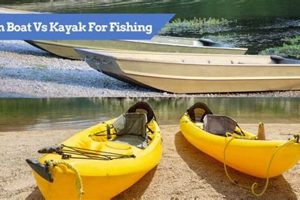
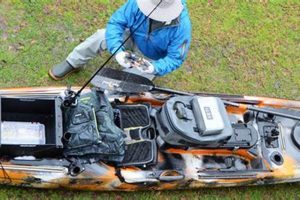
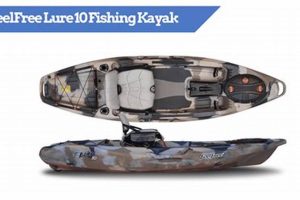
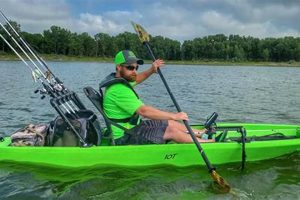
This specific type of watercraft is designed to meet the needs of anglers, offering stability, specialized storage, and features conducive to a successful fishing experience. These vessels often include rod holders, tackle storage compartments, and even livewells to keep catches fresh. A common example is a sit-on-top model configured with multiple fishing rod holders and a spacious tank well for storing gear or fish.
The evolution of these specialized boats reflects a growing appreciation for the sport of kayak fishing. They provide enhanced access to shallow waters and secluded fishing spots often unreachable by larger motorized boats. The stability and specialized design contribute to angler comfort and efficiency, allowing for longer outings and a more focused approach. This targeted design has become increasingly popular, leading to ongoing innovation in features and materials.
The following sections delve deeper into the key aspects of choosing and using these specialized kayaks, covering topics such as hull design, propulsion systems, essential accessories, and popular fishing techniques.
Tips for Enhanced Kayak Fishing
Strategic preparation and thoughtful execution contribute significantly to a productive and enjoyable fishing experience from a kayak.
Tip 1: Prioritize Stability: A stable hull platform is paramount, especially when casting, reeling, or landing fish. Wider kayaks generally offer greater stability, particularly for anglers new to the sport.
Tip 2: Plan and Organize Tackle: Pre-trip tackle organization is crucial. Select lures and accessories appropriate for the target species and arrange them for easy access during the outing. Waterproof tackle boxes are essential.
Tip 3: Master Paddle Strokes: Efficient paddling techniques conserve energy and facilitate precise maneuvering. Practice various strokes to navigate currents, wind, and tight spaces effectively.
Tip 4: Utilize Anchor Systems: An appropriate anchor system maintains position in desired fishing locations, especially in currents or windy conditions. Consider a stake-out pole for shallow water or a drift sock for controlled drifting.
Tip 5: Understand Water Conditions: Research tides, currents, and weather forecasts prior to departure. Awareness of these factors enhances safety and improves fishing success.
Tip 6: Practice Catch and Release Techniques: Proper handling and release techniques minimize stress on the fish and promote healthy fish populations. Use appropriate tools and handle fish gently.
Tip 7: Prioritize Safety Gear: Always wear a personal flotation device (PFD) and carry essential safety equipment such as a whistle, signaling device, and first-aid kit. Inform someone of your fishing plans and estimated return time.
By adhering to these guidelines, anglers can significantly improve their on-the-water experience, focusing on the enjoyment and productivity of their fishing endeavors.
This foundation of knowledge and preparation facilitates a more rewarding and successful pursuit of angling from a kayak.
1. Stability

Stability is a paramount consideration in a sportsman fishing kayak, directly impacting safety, comfort, and fishing efficacy. A stable platform allows anglers to cast, reel, and land fish without compromising balance, a critical factor, especially in challenging conditions such as wind or current. This stability is influenced by hull design, width, and weight capacity. For example, wider, flatter hulls generally offer greater initial stability, while longer, narrower hulls may provide better secondary stability (resistance to tipping once tilted). Kayaks designed for stand-up fishing prioritize stability through features like wider beams and outriggers.
The practical significance of stability becomes evident during critical moments, such as fighting a strong fish or navigating turbulent waters. A stable kayak minimizes the risk of capsizing, ensuring angler safety and preserving valuable equipment. Furthermore, enhanced stability allows for greater freedom of movement, facilitating casting accuracy and efficient retrieval. Consider the scenario of hooking a large fish in choppy water: a stable kayak provides the necessary platform to manage the fight effectively and land the catch safely. Conversely, an unstable kayak in the same situation could lead to line breakage, lost fish, or even angler immersion.
Understanding the nuances of stability in kayak design is crucial for informed decision-making. Evaluating factors like hull shape, width, and weight capacity relative to intended fishing conditions empowers anglers to select the most suitable vessel for their needs. This understanding, coupled with proper paddling technique and weight distribution within the kayak, significantly enhances on-the-water safety and overall fishing success.
2. Storage Capacity
Adequate storage capacity is a defining feature of a well-equipped sportsman fishing kayak. Efficient organization and readily accessible gear contribute significantly to a productive and enjoyable fishing experience. The ability to carry essential equipment, including tackle boxes, rods, safety gear, and personal items, directly impacts an angler’s effectiveness and comfort on the water.
- Tackle Organization
Dedicated compartments for tackle boxes, trays, and individual lures maintain order and facilitate quick retrieval of needed items. A well-organized tackle system minimizes time spent searching for specific lures, allowing anglers to focus on fishing. Examples include removable tackle trays, waterproof compartments, and specialized storage for leader lines and hooks. This efficient organization translates to more time spent fishing and less time managing gear.
- Rod Storage & Management
Securely storing fishing rods while paddling or maneuvering is essential. Rod holders, flush-mounted or adjustable, keep rods organized, prevent tangling, and protect them from damage. Recessed rod holders minimize interference while paddling, while vertical holders facilitate easy access. The ability to transport multiple rods rigged with different lures enhances versatility and responsiveness to changing fishing conditions.
- Dry Storage & Gear Protection
Protecting essential items from water damage is crucial. Waterproof hatches and compartments safeguard electronics, personal belongings, and extra clothing. Dry bags provide additional protection for sensitive items like phones and cameras. Maintaining dry gear ensures functionality and contributes to angler comfort and safety throughout the outing.
- Capacity for Catch & Accessories
Designated areas for storing fish, whether a livewell, cooler, or insulated bag, are essential for keeping catches fresh. Additional storage for accessories such as anchors, drift chutes, and safety equipment contributes to a well-prepared and efficient fishing experience. Ample storage capacity reduces clutter and allows anglers to focus on the task at hand.
Effective storage solutions in a sportsman fishing kayak enhance both functionality and enjoyment on the water. By prioritizing organization and accessibility, anglers can maximize their time fishing and minimize the challenges of managing gear in a limited space. A well-designed storage system streamlines the fishing process, allowing for a more focused and ultimately more rewarding experience.
3. Hull Design

Hull design significantly influences the performance and suitability of a sportsman fishing kayak. Understanding the nuances of various hull types empowers anglers to select a vessel optimized for their specific fishing style and target environment. Factors such as stability, speed, maneuverability, and tracking are directly affected by the hull’s shape and construction.
- Displacement Hulls
Characterized by a pointed bow and a distinct V-shape, displacement hulls excel in tracking and efficiency, particularly in open water or moving current. They slice through the water with minimal resistance, making them well-suited for longer paddling distances. However, they tend to be less stable than other hull types, making them less ideal for stand-up fishing or navigating tight, shallow areas. Their efficiency comes at the cost of maneuverability, requiring more effort to turn quickly.
- Planing Hulls
Featuring a flatter bottom and a wider beam, planing hulls are designed to rise up and plane on the surface of the water at higher speeds. This design prioritizes speed and maneuverability, making them suitable for covering water quickly and navigating tight spaces. While generally more stable than displacement hulls, they may sacrifice some tracking ability and efficiency in calmer waters. Their responsiveness to paddle input makes them a popular choice for anglers frequently changing locations or fishing in dynamic environments.
- Pontoon Hulls
Pontoon hulls utilize two separate pontoons connected by a platform, providing exceptional stability, particularly for stand-up fishing. This design maximizes stability but often compromises speed and maneuverability. Pontoon hulls are favored by anglers who prioritize stability over swift movement, offering a secure platform for casting and reeling. However, their wider profile and increased drag make them less efficient for paddling long distances.
- Tunnel Hulls
Tunnel hulls incorporate a recessed channel running the length of the hull’s bottom, creating a “tunnel” effect. This design enhances stability and improves shallow-water performance by allowing the kayak to float higher. Tunnel hulls are particularly suited for navigating very shallow water and provide a stable platform for fishing in calm conditions. While offering benefits in specific environments, they may be less efficient in deeper water compared to displacement or planing hulls.
Selecting the appropriate hull design is crucial for optimizing fishing performance and enjoyment. Considering factors like intended fishing locations, paddling distances, and desired stability helps anglers choose a kayak that best suits their individual needs and preferences. Understanding the trade-offs inherent in each hull type ensures a well-informed decision, leading to a more efficient, comfortable, and successful fishing experience.
4. Propulsion
Propulsion systems significantly impact the performance and versatility of a sportsman fishing kayak. Efficient and adaptable propulsion enables anglers to cover greater distances, access remote fishing locations, and conserve energy for the actual fishing activity. Choosing the right propulsion system depends on individual fishing styles, target environments, and physical capabilities.
- Paddle Propulsion
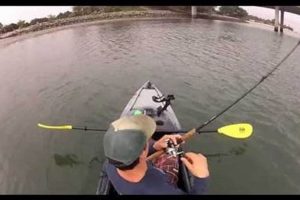
Traditional paddle propulsion remains a popular choice, offering simplicity, affordability, and a direct connection to the water. Different paddle types, such as feathered or asymmetrical blades, cater to varying paddling styles and efficiency preferences. While effective for shorter distances and calm waters, paddling can become strenuous over longer periods or in challenging conditions. However, its inherent simplicity and lack of moving parts contribute to reliability and ease of maintenance. This traditional method allows for quiet movement, a significant advantage when stealth is crucial for approaching fish.
- Pedal-Driven Systems
Pedal-driven systems provide a hands-free propulsion method, allowing anglers to maintain fishing readiness while navigating. These systems typically utilize either propeller or fin designs, each with its own advantages and disadvantages. Propeller systems offer speed and efficiency in open water, while fin systems excel in shallow water and maneuverability around obstacles. Pedal drives free up hands for casting, reeling, and managing tackle, enhancing fishing efficiency. However, these systems often add complexity and weight to the kayak.
- Motorized Kayaks
Electric motors offer increased range and speed, particularly valuable for covering large bodies of water or combating strong currents. Integrated motor systems provide a streamlined approach, while add-on motors offer flexibility for existing kayaks. Motorized kayaks significantly reduce physical exertion, allowing anglers to focus on fishing. However, factors such as battery life, weight, and potential noise output require consideration. Regulations regarding motorized watercraft vary by location and should be observed.
- Combination Systems
Some sportsman fishing kayaks offer hybrid propulsion systems, combining paddle power with either pedal drives or electric motors. This versatile approach allows anglers to adapt to changing conditions or preferences. For example, an angler might use the pedal drive for traversing open water and switch to paddle propulsion for navigating shallow areas or approaching fish stealthily. Combination systems provide flexibility but often come with a higher price tag and increased complexity.
The choice of propulsion system significantly influences the overall fishing experience in a sportsman fishing kayak. By carefully evaluating the advantages and disadvantages of each method, anglers can select the system that best aligns with their individual fishing styles, physical capabilities, and target environments. This informed decision enhances efficiency, expands access to fishing locations, and contributes to a more comfortable and rewarding experience on the water.
5. Fishing Features
Specialized features distinguish sportsman fishing kayaks from recreational models, enhancing angler efficiency and overall fishing success. These integrated design elements cater specifically to the needs of anglers, streamlining the fishing process and maximizing time spent actively pursuing fish. Understanding these features is crucial for selecting the appropriate kayak and optimizing its utilization on the water.
- Rod Holders
Multiple rod holders, strategically positioned for easy access and secure storage, are a hallmark of sportsman fishing kayaks. Flush-mounted rod holders minimize interference while paddling, while adjustable rod holders accommodate different fishing techniques and rod lengths. This feature keeps rods organized, prevents tangling, and allows anglers to quickly switch between different setups. For example, an angler might have one rod rigged for trolling and another for casting, readily available in dedicated holders.
- Tackle Storage
Integrated tackle storage systems, ranging from waterproof compartments to removable tackle trays, provide organized storage for lures, hooks, lines, and other essential fishing accessories. Easy access to tackle enhances efficiency and minimizes time spent searching for specific items. Dedicated compartments for specific lure types, such as crankbaits or soft plastics, further streamline the organization process. This dedicated storage keeps gear protected and readily available, optimizing fishing time.
- Livewells & Fish Management
Livewells, integrated tanks designed to keep caught fish alive and healthy, are a valuable feature for tournament anglers or those practicing catch-and-release fishing. These systems circulate water and often include aeration features to ensure fish survival. Alternatively, some kayaks offer designated areas for coolers or fish bags, providing options for storing catches. Proper fish management contributes to conservation efforts and ensures the ethical treatment of caught fish.
- Anchor Systems & Positioning
Integrated anchor systems, including anchor trolleys and stake-out poles, facilitate precise boat positioning in desired fishing locations. Maintaining position in current or wind enhances fishing effectiveness. Anchor trolleys allow for controlled drifting, while stake-out poles provide a secure anchor point in shallow water. These features contribute to angler control and optimize fishing presentation in specific target areas.
These specialized fishing features, thoughtfully integrated into sportsman fishing kayak designs, contribute significantly to angler success and enjoyment on the water. From efficient rod and tackle management to advanced fish handling and positioning capabilities, these features optimize fishing performance and streamline the overall experience. The selection of a kayak with appropriate features directly correlates with the angler’s ability to focus on the core activity: fishing.
6. Comfort & Ergonomics
Comfort and ergonomics are critical factors influencing performance and enjoyment in a sportsman fishing kayak. Extended periods on the water demand a comfortable and supportive environment to minimize fatigue and maximize focus on fishing. Proper ergonomic design enhances angler efficiency and prevents physical strain, contributing to a more positive and productive fishing experience.
- Seating Systems
A comfortable and adjustable seating system is paramount for long hours on the water. Features like adjustable backrests, padded seats, and breathable fabrics contribute to comfort and support. High-end models may offer elevated seating positions, facilitating easier casting and improved visibility. A well-designed seat minimizes pressure points and promotes proper posture, reducing fatigue and discomfort during extended fishing trips.
- Footrests & Leg Support
Adjustable footrests or foot braces provide essential support and leverage for paddling and maneuvering. Proper leg positioning contributes to stability and power transfer during paddling, reducing strain and enhancing overall control. Well-placed footrests allow anglers to maintain a comfortable and balanced position, even in challenging conditions.
- Deck Layout & Accessibility
A well-designed deck layout prioritizes accessibility to essential gear and equipment. Strategically placed rod holders, tackle storage compartments, and other fishing accessories minimize reaching and bending, promoting efficiency and reducing strain. Easy access to frequently used items enhances workflow and allows anglers to maintain focus on fishing rather than searching for gear.
- Paddle Ergonomics & Efficiency
Proper paddle length and blade shape are crucial for efficient paddling and injury prevention. A paddle that is too long or short can lead to inefficient strokes and increased strain on joints. Ergonomically designed paddles with comfortable grips and lightweight construction minimize fatigue and maximize paddling efficiency. Selecting the right paddle enhances performance and reduces the risk of repetitive strain injuries.
Prioritizing comfort and ergonomics in a sportsman fishing kayak directly translates to enhanced performance, reduced fatigue, and a more enjoyable fishing experience. By considering these factors, anglers can select a kayak that provides the necessary support and comfort for extended outings, allowing them to focus on the pursuit of fish rather than physical discomfort. A well-designed kayak promotes efficient movement and minimizes strain, ultimately contributing to a more successful and rewarding time on the water.
7. Durability & Materials

Durability and material selection are paramount considerations in sportsman fishing kayaks, directly impacting longevity, performance, and overall value. These vessels are subjected to harsh environments, including UV exposure, saltwater corrosion, and impacts from rocks, submerged debris, and fish handling. Robust materials and construction techniques are essential to withstand these rigors and ensure the kayak’s long-term functionality. For instance, high-density polyethylene (HDPE) is a common choice due to its impact resistance and UV stability, while lighter-weight thermoformed plastics offer increased rigidity and performance. Fiberglass and composite constructions provide superior strength and stiffness, albeit at a higher price point.
The practical significance of durable materials extends beyond mere longevity. A robust kayak maintains its structural integrity under stress, contributing to safety and performance in challenging conditions. For example, a kayak constructed with impact-resistant polyethylene can withstand collisions with rocks or submerged logs without significant damage, preserving its watertight integrity and protecting the angler. Furthermore, UV-resistant materials prevent degradation from prolonged sun exposure, maintaining the kayak’s color and structural integrity over time. Choosing appropriate materials also influences weight and portability. Lighter materials, such as thermoformed plastics or composites, facilitate easier transport and handling, particularly for anglers who frequently load and unload their kayaks.
Investing in a sportsman fishing kayak constructed with durable, high-quality materials represents a long-term investment in performance and enjoyment on the water. Understanding the properties of various materials and construction techniques empowers anglers to make informed decisions based on their individual needs and anticipated usage. This informed selection contributes to a safer, more reliable, and ultimately more rewarding fishing experience, ensuring the kayak withstands the demands of the sport for years to come.
Frequently Asked Questions
This section addresses common inquiries regarding sportsman fishing kayaks, providing concise and informative responses to assist in informed decision-making.
Question 1: What key features differentiate a sportsman fishing kayak from a recreational model?
Dedicated fishing features such as rod holders, tackle storage, anchor systems, and potentially livewells distinguish these specialized kayaks. These features enhance fishing efficiency and cater specifically to angler needs.
Question 2: How does hull design influence performance in a fishing kayak?
Hull design impacts stability, speed, maneuverability, and tracking. Wider hulls offer increased stability, while longer, narrower hulls enhance speed and tracking. Specific designs like pontoon hulls maximize stability for stand-up fishing.
Question 3: What propulsion options are available for sportsman fishing kayaks?
Propulsion choices include traditional paddles, pedal-driven systems (propeller or fin-based), and electric motors. Each method offers distinct advantages and disadvantages regarding speed, maneuverability, and angler effort.
Question 4: How important is storage capacity in a fishing kayak?
Ample storage is crucial for organizing tackle, rods, safety gear, and personal items. Dedicated compartments and waterproof storage protect equipment and enhance efficiency on the water.
Question 5: What materials are typically used in sportsman fishing kayak construction?
Common materials include high-density polyethylene (HDPE), thermoformed plastics, fiberglass, and composites. Material choice influences durability, weight, performance, and cost.
Question 6: What safety considerations are relevant to kayak fishing?
Essential safety precautions include wearing a personal flotation device (PFD), carrying a whistle and signaling device, informing someone of fishing plans, and being aware of weather conditions and water hazards.
Understanding these key aspects contributes to a more informed selection process and enhances the overall kayak fishing experience. Appropriate gear selection and adherence to safety guidelines promote enjoyable and productive outings.
For further information on specific models and features, consult detailed product specifications and reviews.
Conclusion
Specialized fishing kayaks represent a significant advancement in angling, offering purpose-built platforms designed to enhance on-the-water effectiveness and enjoyment. Key considerations discussed include hull design for stability and maneuverability, propulsion systems impacting range and efficiency, integrated fishing features like rod holders and tackle storage, comfort and ergonomic design for prolonged use, and durable material selection for lasting performance. Understanding these interconnected elements allows for informed decision-making, aligning individual angler needs with the appropriate vessel and equipment.
The evolution of these specialized watercraft reflects a growing appreciation for the sport of kayak fishing. Choosing the appropriate vessel and equipment, coupled with a focus on safety and ethical angling practices, contributes to a more rewarding and sustainable pursuit of this increasingly popular outdoor activity. Continued innovation promises further refinement and specialization within this evolving segment of the fishing industry, enhancing access and enjoyment for anglers of all skill levels.