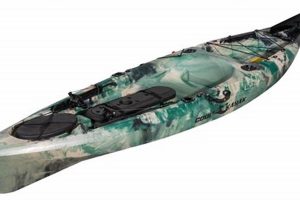
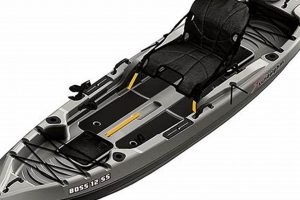
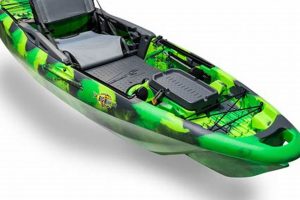
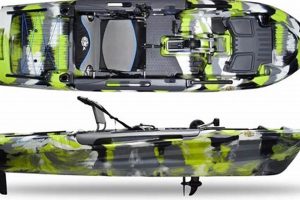
Modular kayak accessories designed for quick and easy attachment and detachment enhance the versatility of fishing kayaks. These adaptable components, ranging from rod holders and fish finders to storage compartments and outriggers, allow anglers to customize their vessel for specific needs and fishing styles. For example, a GPS mount can be effortlessly connected for navigation, then removed for storage or transport.
This adaptability contributes significantly to both the efficiency and enjoyment of kayak fishing. The ability to quickly modify a kayaks configuration allows anglers to respond effectively to changing conditions or targeted species. Historically, kayak modifications often required permanent alterations or complex rigging. The advent of easily attachable and detachable accessories represents a significant advancement, streamlining the process and allowing for greater flexibility on the water.
This article will explore various types of readily attachable kayak fishing accessories, examining their functionality, benefits, and potential drawbacks to provide anglers with a comprehensive understanding of the options available for optimizing their on-the-water experience.
Tips for Utilizing Modular Kayak Accessories
Optimizing the use of attachable kayak components requires careful consideration of several factors, from compatibility and weight distribution to safety and specific fishing needs. The following tips offer guidance for maximizing the benefits of this adaptable equipment.
Tip 1: Prioritize Compatibility: Ensure chosen accessories are compatible with the kayak’s design and mounting system. Check manufacturer specifications and consider universal mounting options for broader compatibility.
Tip 2: Balance Load Distribution: Distribute weight evenly across the kayak. Avoid concentrating heavy accessories in one area, which can compromise stability. Consider the impact of added weight on the kayak’s performance and maneuverability.
Tip 3: Secure Attachments Firmly: Double-check all attachments to ensure they are securely fastened. Loose components can create distractions or even safety hazards during navigation. Regular inspection and tightening are essential.
Tip 4: Streamline Setup and Takedown: Practice attaching and detaching accessories before heading out on the water. A streamlined process saves valuable fishing time and minimizes frustration.
Tip 5: Choose Accessories Strategically: Select accessories based on specific fishing styles and target species. Avoid cluttering the kayak with unnecessary equipment that can hinder movement and efficiency.
Tip 6: Consider Environmental Conditions: Account for potential weather conditions and water conditions when choosing and positioning accessories. Ensure they are adequately secured to withstand wind, waves, and potential impacts.
Tip 7: Maintain and Clean Accessories: Regularly clean and maintain accessories to ensure longevity and optimal performance. Rinse with fresh water after each use and address any signs of wear or damage promptly.
By adhering to these guidelines, anglers can significantly enhance their kayak fishing experience, improving efficiency, safety, and enjoyment on the water.
These tips provide a framework for making informed decisions about selecting and using modular kayak accessories. The following section will conclude the discussion by summarizing key takeaways and offering final recommendations.
1. Modular
Modularity is a defining characteristic of contemporary fishing kayak design, directly impacting functionality and adaptability on the water. It represents a shift away from fixed configurations toward versatile systems composed of interchangeable components. Understanding modularity is key to unlocking the full potential of a fishing kayak.
- Interchangeable Components
Modular systems rely on interchangeable parts. In the context of fishing kayaks, this translates to accessories like rod holders, fish finders, and storage compartments that can be easily attached and detached. This interchangeability allows anglers to customize their kayak setup for specific fishing techniques and target species. A kayak configured for trolling, for instance, can be quickly reconfigured for bottom fishing by swapping out accessories.
- Customization and Personalization
Modularity facilitates personalized kayak configurations. Anglers can select and arrange accessories based on individual preferences and fishing styles. This customization allows for optimized ergonomics, improved efficiency, and a more personalized on-the-water experience. Examples include adjusting rod holder positions for optimal casting angles or adding specialized mounts for cameras or other equipment.
- Adaptability to Changing Conditions
Modular designs provide adaptability to changing environmental conditions or fishing scenarios. Encountering unexpected wind or shifting target species requires adjustments in equipment. The ability to quickly add, remove, or reposition accessories allows anglers to respond effectively, maximizing fishing success and safety. For instance, adding outriggers for increased stability in rough water demonstrates the value of this adaptability.
- Storage and Transportation
The detachable nature of modular components simplifies storage and transportation. Accessories can be removed when not in use, reducing the kayak’s overall footprint and protecting components during transport. This is particularly beneficial for anglers with limited storage space or those who frequently transport their kayaks.
The modularity of a fishing kayak directly enhances its versatility and overall utility. By embracing the concept of interchangeable components, anglers can optimize their kayak’s performance for a wider range of fishing scenarios, contributing to a more efficient, enjoyable, and successful experience on the water. This adaptability represents a significant advancement in kayak fishing technology, empowering anglers to customize their vessels to meet evolving needs and challenges.
2. Adaptable

Adaptability is a critical feature of modern fishing kayaks, directly influencing their effectiveness and versatility in diverse fishing environments. The “snap-on” characteristic, enabling quick attachment and detachment of accessories, plays a crucial role in this adaptability. Examining the facets of adaptability reveals its importance in optimizing the kayak fishing experience.
- Versatility in Fishing Techniques
Adaptable kayaks empower anglers to employ diverse fishing techniques without requiring separate, specialized vessels. Switching from trolling to bottom fishing, for example, simply involves changing accessories. Quickly attaching or detaching rod holders, anchor trolleys, or depth finders allows for seamless transitions between fishing styles, maximizing angling opportunities.
- Responsiveness to Changing Conditions
Unpredictable weather or shifts in fish behavior necessitate adjustments in equipment and tactics. An adaptable kayak allows anglers to respond effectively to these changes. Adding outriggers for stability in rough water, switching to different lures based on observed fish activity, or quickly adding a shelter in unexpected rain showcases the value of adaptability in enhancing safety and fishing success.
- Personalized Configuration
Adaptability extends to personalizing the kayak setup based on individual preferences and physical characteristics. Adjusting rod holder positions for optimal casting angles, configuring seating arrangements for comfort, or positioning fish finders for easy viewing demonstrates how adaptability caters to individual needs, enhancing comfort and efficiency on the water.
- Efficient Storage and Transport
Adaptable kayak designs, featuring removable components, contribute to efficient storage and transport. Detaching accessories reduces the kayak’s overall size, simplifying storage in limited spaces and facilitating transportation. This feature proves particularly valuable for anglers frequently traveling with their kayaks.
These facets of adaptability, facilitated by the “snap-on” design of accessories, underscore the significant advantages of modular kayak systems. The ability to quickly and easily modify a kayak’s configuration enhances its overall utility, enabling anglers to optimize their fishing experience across a wide range of conditions and target species. This adaptability represents a substantial advancement in kayak fishing technology, providing anglers with unprecedented flexibility and control on the water.
3. Interchangeable
Interchangeability is a core principle underlying the design and functionality of modern fishing kayaks. The ability to quickly and easily swap out componentsthe essence of “snap-on”directly influences a kayak’s adaptability and effectiveness on the water. This characteristic warrants detailed examination to fully understand its implications for kayak anglers.
- Modular Design and Customization
Interchangeable components are the foundation of a modular kayak design. This modularity allows anglers to tailor their kayak setup to specific fishing styles, target species, and prevailing conditions. For instance, a kayak configured for trolling with rod holders and a fish finder can be rapidly reconfigured for bottom fishing by swapping these components for an anchor trolley and a bait storage container. This fundamental aspect of interchangeability empowers anglers to optimize their kayak for diverse fishing scenarios.
- Enhanced Efficiency and Versatility
The ability to quickly change components enhances on-the-water efficiency and versatility. Time spent re-rigging or adjusting fixed equipment is minimized, allowing anglers to focus on fishing. Encountering shifting weather patterns or changes in fish behavior necessitates quick adaptations. Interchangeable accessories, such as outriggers for stability or different types of rod holders, facilitate rapid responses to these dynamic conditions, maximizing fishing time and potential success.
- Streamlined Storage and Transport
Interchangeable components often contribute to easier storage and transport. The ability to detach accessories reduces the kayak’s overall footprint, simplifying storage in confined spaces and facilitating transport on vehicle racks. This feature is particularly valuable for anglers with limited storage capacity or those who frequently travel to different fishing locations.
- Cost-Effectiveness and Long-Term Value
Investing in a kayak system with interchangeable components can be more cost-effective in the long run. Rather than purchasing multiple specialized kayaks for different fishing styles, anglers can invest in a single platform with adaptable accessories. This approach allows for customization and expansion of capabilities over time as fishing needs evolve, maximizing the return on investment and minimizing the need for redundant equipment.
The interchangeability of components in a “snap-on fishing kayak” system directly translates to enhanced adaptability, efficiency, and long-term value. By embracing the modular design principles facilitated by interchangeable accessories, anglers gain a significant advantage in terms of customization, responsiveness to changing conditions, and overall fishing experience. This approach represents a substantial evolution in kayak fishing technology, empowering anglers with unprecedented flexibility and control on the water.
4. Quick Attachment

Quick attachment mechanisms are integral to the “snap-on fishing kayak” concept, directly impacting its practicality and efficiency. Rapid and secure attachment and detachment of accessories are essential for adapting to changing fishing conditions, optimizing equipment configurations, and maximizing time spent actively fishing. Examining the key facets of quick attachment reveals its importance within the broader context of kayak fishing.
- Reduced Setup Time
Quick attachment systems minimize the time required to prepare for fishing. Instead of complex rigging or permanent modifications, accessories can be secured in seconds, allowing anglers to transition quickly between different fishing techniques or adjust to changing conditions. This efficiency is crucial for maximizing fishing time, particularly in tournaments or when targeting specific feeding windows.
- Enhanced Adaptability
Rapid attachment and detachment of components enhance a kayak’s adaptability. Encountering unexpected weather, shifting fish behavior, or the need to change fishing techniques necessitates quick adjustments in equipment configuration. Quick attachment systems facilitate these changes, allowing anglers to respond effectively to dynamic conditions and maximize their chances of success. For example, quickly adding outriggers for stability in rough water or switching rod holders to accommodate different fishing styles highlights the practical benefits of quick attachment.
- Improved On-the-Water Efficiency
Quick attachment mechanisms contribute to overall on-the-water efficiency. Streamlined setup and takedown processes minimize distractions and allow anglers to focus on fishing. The ability to swiftly change lures, adjust rod positions, or add accessories without lengthy interruptions enhances the fishing experience and contributes to a more productive outing.
- Ease of Storage and Transport
Quick attachment systems often simplify storage and transportation. Easily removable accessories reduce the kayak’s overall footprint, facilitating storage in limited spaces and making transport on vehicle racks more convenient. This ease of disassembly and reassembly is particularly beneficial for anglers who frequently travel with their kayaks.
The quick attachment capability inherent in the “snap-on fishing kayak” concept represents a significant advancement in kayak fishing technology. By streamlining setup and takedown processes, enhancing adaptability, and improving overall on-the-water efficiency, these systems empower anglers to maximize their time on the water and focus on the core pursuit: catching fish. This focus on efficiency and adaptability underscores the value of quick attachment mechanisms in the evolution of modern kayak fishing equipment.
5. Versatile

Versatility stands as a defining characteristic of the “snap-on fishing kayak,” significantly impacting its functionality and appeal. This versatility stems directly from the ability to quickly and easily modify the kayak’s configuration through readily attachable and detachable accessories. The “snap-on” functionality empowers anglers to adapt their vessels to diverse fishing scenarios, enhancing overall efficiency and enjoyment on the water. Consider a scenario where an angler transitions from trolling for pelagic fish in open water to bottom fishing in shallower areas. With a snap-on system, rod holders and downriggers can be swiftly removed and replaced with an anchor trolley and bait storage, optimizing the kayak for the new fishing style.
This adaptability extends beyond simply changing fishing techniques. Versatility also encompasses the ability to respond effectively to changing environmental conditions. Sudden wind gusts or choppy water might necessitate the addition of stabilizing outriggers, while a shift in target species might require different rod and reel setups. The “snap-on” system facilitates these adaptations, allowing anglers to maintain optimal performance and safety regardless of evolving circumstances. Furthermore, versatility caters to individual preferences and fishing styles. Anglers can personalize their kayak configurations, optimizing ergonomics and equipment placement for maximum comfort and efficiency. This customization extends to specialized accessories, such as camera mounts or GPS systems, allowing anglers to tailor their setups to specific needs and interests.
The practical significance of this versatility is substantial. Anglers benefit from a single, adaptable platform rather than requiring multiple specialized kayaks for different fishing scenarios. This streamlined approach enhances overall efficiency, reduces equipment costs, and simplifies storage and transport. While the “snap-on” system undoubtedly contributes to versatility, careful consideration of weight distribution, compatibility of accessories, and secure attachment remains crucial for maintaining stability, safety, and optimal performance. Understanding the interplay between these factors is essential for fully realizing the versatility offered by the “snap-on fishing kayak” and maximizing its potential on the water.
Frequently Asked Questions
This section addresses common inquiries regarding modular kayak fishing accessories, providing clarity on their functionality, compatibility, and practical application.
Question 1: Are these accessories universally compatible with all kayak brands and models?
Compatibility varies depending on the kayak’s design and the specific mounting system used. Consulting manufacturer specifications is essential to ensure proper fit and function. Universal mounting systems offer broader compatibility across different brands.
Question 2: How does the addition of accessories impact kayak stability and maneuverability?
Added weight can influence stability and maneuverability. Distributing weight evenly across the kayak is crucial. Heavier accessories should be positioned lower and centrally to minimize impact. Consider the combined weight of all accessories and their potential effect on performance, especially in challenging conditions.
Question 3: What are the recommended maintenance procedures for these accessories?
Regular maintenance ensures longevity and optimal performance. Rinsing accessories with fresh water after each use removes salt and debris. Periodic inspection for wear and tear, along with prompt replacement of damaged parts, is crucial for safety and functionality. Specific maintenance requirements may vary depending on the material and design of the accessory.
Question 4: How securely are these accessories attached, and are there concerns about them detaching during use?
Secure attachment is paramount. Most “snap-on” systems utilize robust locking mechanisms designed to withstand typical on-the-water conditions. However, regular inspection and proper tightening are crucial to prevent accidental detachment. Always double-check attachments before embarking on a fishing trip.
Question 5: What are the key considerations for choosing appropriate accessories for specific fishing styles?
Accessory selection should align with the angler’s target species and preferred fishing techniques. Trolling requires different equipment than bottom fishing or fly fishing. Consider the specific functionality needed, such as rod holders, anchor trolleys, depth finders, or storage solutions, to optimize the kayak setup for the chosen fishing style.
Question 6: Are there weight limitations or recommendations regarding the number of accessories that can be safely added?
Weight limitations are determined by the kayak’s design and capacity. Exceeding these limits can compromise stability and safety. Consult the manufacturer’s specifications for maximum load recommendations. Distribute weight evenly and avoid overloading the kayak, especially when fishing in challenging conditions.
Careful consideration of these frequently asked questions ensures informed decisions about the selection, installation, and utilization of modular kayak accessories. Prioritizing compatibility, secure attachment, and proper weight distribution contributes to a safer and more efficient kayak fishing experience.
This concludes the FAQ section. The following section will offer concluding remarks and summarize key takeaways regarding “snap-on fishing kayak” systems.
Conclusion
This exploration of snap-on fishing kayak systems has highlighted the significant advantages offered by modular and adaptable equipment. The ability to quickly and easily attach, detach, and interchange accessories empowers anglers to customize kayak configurations for specific fishing styles, target species, and prevailing environmental conditions. Key benefits include enhanced versatility, improved on-the-water efficiency, streamlined storage and transport, and the potential for long-term cost savings through adaptable equipment choices. Emphasis has been placed on the importance of compatibility, secure attachment, and balanced weight distribution for optimal performance and safety.
The evolution of snap-on fishing kayak systems represents a significant advancement in kayak fishing technology. As innovation continues, further refinements in materials, design, and functionality are anticipated. Anglers embracing this modular approach gain a distinct advantage in terms of adaptability, efficiency, and overall fishing experience. Careful consideration of individual needs, fishing styles, and prevailing conditions, combined with a thorough understanding of available accessories, empowers anglers to harness the full potential of these adaptable systems and maximize their success on the water.