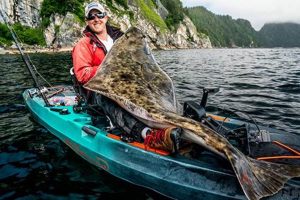
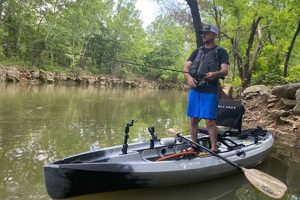
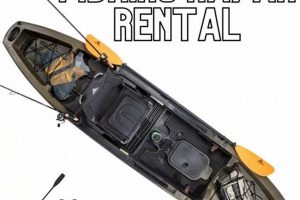
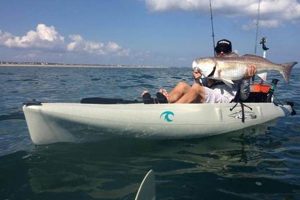
A compact, self-propelled watercraft designed for individual anglers offers enhanced maneuverability and access to shallow or confined waterways. These vessels are typically equipped with specialized features such as rod holders, tackle storage, and comfortable seating arrangements tailored to the needs of fishing enthusiasts. A typical example might include a sit-on-top design constructed from durable, lightweight polyethylene.
The advantages of this type of watercraft include portability, affordability, and stealth. Compared to larger motorized boats, these smaller vessels offer a quieter and less disruptive fishing experience, allowing anglers to get closer to fish without disturbing them. Historically, the evolution of these personal fishing platforms reflects advancements in materials science and design, leading to lighter, more stable, and feature-rich options for anglers.
This article will further explore the various types of these specialized watercraft, factors to consider when selecting one, essential safety precautions, and popular fishing techniques adaptable to their use.
Tips for Kayak Fishing
Careful planning and preparation contribute significantly to a successful and enjoyable fishing excursion using a small, human-powered watercraft. The following tips offer guidance for both novice and experienced anglers.
Tip 1: Prioritize Stability: Select a vessel appropriate for individual weight and the intended fishing environment. Wider hulls generally offer greater stability, particularly for beginners. Consider stability features like outriggers for added reassurance.
Tip 2: Research Regulations: Familiarize oneself with local fishing regulations, including licensing requirements and catch limits. Adhere to all safety guidelines mandated by governing bodies.
Tip 3: Plan and Pack Strategically: Create a checklist of essential gear, including safety equipment like a personal flotation device (PFD), signaling devices, and a first-aid kit. Pack fishing tackle efficiently to maximize space and accessibility.
Tip 4: Dress Appropriately: Wear comfortable, moisture-wicking clothing suitable for changing weather conditions. Consider sun protection measures like hats and sunscreen. Non-marking footwear with good grip is recommended.
Tip 5: Practice Paddle Strokes: Develop efficient paddling techniques to conserve energy and navigate effectively. Practice maneuvering in various water conditions before venturing into challenging environments.
Tip 6: Master Anchoring Techniques: Learn proper anchoring methods to maintain position in desired fishing locations, especially in currents or windy conditions. Carry a suitable anchor and appropriate length of rope.
Tip 7: Respect Wildlife and Environment: Observe wildlife from a respectful distance and avoid disturbing natural habitats. Pack out all trash and adhere to Leave No Trace principles.
By adhering to these guidelines, anglers can enhance their safety, enjoyment, and overall success on the water. Careful preparation allows for a more focused and rewarding fishing experience.
These tips provide a foundation for successful kayak fishing excursions. The following sections will delve deeper into specific techniques and equipment choices.
1. Hull Design

Hull design significantly influences the performance and suitability of a single-man fishing kayak for specific water conditions and fishing styles. Three primary hull designs exist: pontoon, sit-in, and sit-on-top. Pontoon hulls, characterized by two separate buoyant tubes, offer exceptional stability, ideal for calm waters and stand-up fishing. However, their wider profile reduces maneuverability and tracking in windy or current-prone environments. Sit-in kayaks, with a closed cockpit, provide better protection from the elements and enhanced tracking due to their narrower profile, making them suitable for open water and longer distances. Their lower center of gravity improves stability, but they can be more challenging to re-enter after capsizing. Sit-on-top kayaks, characterized by an open deck, offer superior stability and self-bailing capabilities, making them ideal for beginners and warmer climates. Their ease of entry and exit makes them suitable for fishing in shallow waters and maneuvering around obstacles. However, they offer less protection from the elements and can be wetter in colder conditions. For example, an angler targeting bass in a shallow, weedy lake might prioritize the stability and maneuverability of a sit-on-top kayak, while an angler trolling for trout in a larger lake might opt for the tracking and efficiency of a sit-in kayak.
The choice of hull design directly affects speed, stability, and maneuverability. A flatter hull provides greater initial stability but sacrifices speed and tracking, while a more rounded or V-shaped hull enhances speed and tracking but reduces primary stability. Choosing the correct hull design involves balancing stability, speed, and maneuverability based on individual fishing needs and intended water conditions. For instance, a kayak angler frequently fishing in rough coastal waters requires a hull design that prioritizes stability and tracking over maneuverability in tight spaces. Conversely, an angler fishing small streams or rivers will benefit from a highly maneuverable design that prioritizes agility over outright speed. The hull design also impacts how the kayak handles wind and waves. A longer, narrower hull generally tracks better in wind and waves, whereas a shorter, wider hull tends to be more affected by crosswinds and chop.
Understanding the nuances of hull design is paramount for selecting a single-man fishing kayak that optimizes performance and safety. Choosing a hull design appropriate for the intended fishing environment and style enhances overall fishing success and enjoyment. The interplay between hull design and other kayak features, such as length, width, and weight capacity, ultimately determines the kayak’s overall performance and suitability for specific fishing applications. Careful consideration of these factors ensures a safe and productive on-the-water experience.
2. Stability

Stability represents a critical performance characteristic in single-man fishing kayaks, directly influencing safety, angler comfort, and fishing effectiveness. A stable platform allows anglers to cast, reel, and land fish without compromising balance, reducing the risk of capsizing, especially in challenging conditions such as windy weather or moving water. Stability also enables anglers to stand up for sight fishing or casting, expanding fishing opportunities and improving visibility. The degree of stability required depends on the angler’s experience, fishing style, and anticipated water conditions. For example, a novice angler fishing calm lakes might prioritize a wider, more stable hull, whereas an experienced angler navigating swift rivers might opt for a narrower kayak offering greater maneuverability at the expense of some primary stability.
Several factors contribute to kayak stability. Hull design plays a significant role; wider, flatter hulls generally provide greater initial stability, while narrower, V-shaped hulls offer less initial stability but improved tracking and speed. The kayak’s center of gravity also influences stability; a lower center of gravity contributes to increased stability. Adding weight to the kayak, such as gear or an angler, lowers the center of gravity and further enhances stability. Outriggers and stabilizers can also augment stability, providing additional support and reducing the likelihood of tipping. For instance, an angler fishing in open ocean conditions might benefit from outriggers to counteract the destabilizing effects of waves and wind. Understanding the relationship between these factors allows anglers to select a kayak and configure its loading to achieve optimal stability for their specific needs.
Ultimately, prioritizing stability enhances angler safety and fishing performance. A stable kayak provides a secure and comfortable platform, enabling anglers to focus on fishing rather than maintaining balance. This is particularly crucial in dynamic fishing environments where unexpected movements or challenging conditions could compromise stability. Choosing a kayak with appropriate stability features and understanding how factors such as hull design and weight distribution influence stability are essential for a safe and successful fishing experience. Neglecting stability can lead to capsizing incidents, equipment loss, and potentially serious injury. Therefore, stability should be a primary consideration for any angler selecting a single-man fishing kayak.
3. Propulsion

Propulsion systems fundamentally influence the performance and versatility of single-man fishing kayaks. The primary methods of propulsion include paddle power and pedal drives. Paddle propulsion, the traditional and most common method, offers simplicity, affordability, and full-body exercise. However, paddling occupies both hands, potentially hindering fishing activities like casting and retrieving. Conversely, pedal-driven systems allow anglers to keep their hands free for fishing, increasing efficiency and responsiveness. Pedal drives, typically utilizing fins or propellers, provide greater speed and endurance over longer distances, particularly advantageous in larger bodies of water or against currents. However, pedal-driven kayaks often come at a higher price point and increased complexity regarding maintenance and repair. Choosing the appropriate propulsion system depends on individual fishing styles, physical capabilities, and budgetary constraints. For instance, an angler focused on casting and retrieving in small ponds might prefer the simplicity and affordability of paddle power, whereas an angler covering vast distances trolling for offshore species might prioritize the speed and hands-free operation of a pedal drive. Understanding the advantages and limitations of each propulsion method allows for informed decisions tailored to specific fishing scenarios.
The choice of propulsion directly impacts the kayak’s maneuverability and efficiency. Paddle power offers superior maneuverability in tight spaces and shallow water due to the direct control over paddle strokes. This allows for precise adjustments and quick turns, advantageous when navigating complex shorelines or pursuing agile fish species. Pedal drives, while less agile in confined areas, excel in open water, offering greater speed and sustained cruising capability. This increased range allows anglers to cover more water and access distant fishing spots, enhancing overall fishing opportunities. The impact of propulsion on maneuverability and efficiency extends to factors like wind and current resistance. Paddle-powered kayaks are generally more susceptible to wind drift, requiring more effort to maintain course in challenging conditions. Pedal drives, offering greater forward momentum, provide better tracking and reduced susceptibility to wind and current, particularly beneficial in open water or strong current situations. These considerations underscore the importance of aligning propulsion choice with environmental conditions and target fishing locations.
Effective propulsion selection necessitates careful consideration of various factors influencing on-the-water performance. Balancing the trade-offs between maneuverability, speed, and cost allows anglers to optimize their fishing experience. While paddle power offers simplicity and affordability, pedal drives provide hands-free operation and increased range. The ideal propulsion system depends on the specific fishing style, target species, and anticipated water conditions. A thorough understanding of propulsion systems empowers anglers to select the most effective method for maximizing fishing success and enjoyment. Ultimately, choosing the right propulsion is a critical decision that significantly influences overall fishing performance and on-the-water experience.
4. Storage Capacity
Storage capacity significantly impacts the functionality and practicality of a single-man fishing kayak. Adequate storage enables anglers to carry essential gear, including tackle boxes, rods, safety equipment, and personal items. Insufficient storage can limit fishing effectiveness by restricting tackle choices, reducing safety by precluding essential safety gear, and impacting overall comfort by neglecting provisions for personal items. The relationship between storage capacity and kayak fishing success hinges on efficient organization and accessibility. A well-designed storage system allows anglers to quickly locate and deploy necessary equipment without compromising stability or disrupting fishing flow. For example, dedicated rod holders, tackle compartments, and dry storage hatches facilitate streamlined access to essential gear, maximizing fishing time and minimizing distractions. Conversely, inadequate or poorly designed storage can lead to tangled lines, lost tackle, and compromised safety, ultimately hindering fishing success and enjoyment.
Practical examples illustrate the importance of storage capacity in various fishing scenarios. An angler targeting multiple species requiring diverse tackle setups benefits from ample storage to accommodate various rods, reels, and lures. Similarly, kayak anglers undertaking longer expeditions require sufficient storage for food, water, and camping gear, extending their range and fishing opportunities. Conversely, an angler fishing in confined spaces or targeting a single species with minimal gear might prioritize a smaller, more agile kayak with less storage capacity. The interplay between fishing style, target species, and trip duration dictates the necessary storage volume and organizational features. For instance, a fly fisherman might prioritize dedicated fly storage and readily accessible compartments for small tools and accessories, whereas a bass angler might require larger compartments for bulky tackle boxes and multiple rods. Understanding these nuanced requirements enables anglers to select a kayak with appropriate storage solutions for their specific needs.
In conclusion, storage capacity is a critical consideration when selecting a single-man fishing kayak. Balancing storage volume with maneuverability and weight considerations is crucial for optimizing fishing performance and overall enjoyment. A well-designed storage system enhances efficiency, safety, and comfort, allowing anglers to focus on fishing rather than managing gear. Failing to adequately address storage needs can compromise safety, limit fishing versatility, and ultimately detract from the overall kayak fishing experience. Therefore, careful evaluation of storage capacity and organizational features is essential for making informed decisions that align with individual fishing styles and objectives.
5. Comfort and Ergonomics

Comfort and ergonomics significantly influence the overall fishing experience in a single-man fishing kayak. Extended periods on the water necessitate a comfortable and supportive seating system to mitigate fatigue and prevent physical strain. Proper ergonomic design promotes efficient paddling and casting, reducing the risk of repetitive strain injuries and maximizing fishing effectiveness. An uncomfortable or poorly designed kayak can lead to back pain, leg cramps, and overall discomfort, detracting from the enjoyment and potentially shortening fishing trips. For example, an angler spending hours on the water benefits from an adjustable seat with lumbar support and ample legroom to maintain comfort and prevent physical strain, particularly during long paddling sessions or challenging fishing conditions. A well-designed kayak incorporates adjustable footrests and strategically placed thigh braces to enhance paddling efficiency and stability, enabling anglers to maintain balance and control during demanding maneuvers. The interplay between comfort and ergonomics directly impacts fishing performance; a comfortable angler is a more focused and effective angler.
Practical considerations underscore the importance of comfort and ergonomics. The choice of seat material, padding, and adjustability directly influence comfort levels. Features like breathable mesh fabric and contoured padding enhance comfort during extended periods on the water, especially in hot or humid conditions. Adjustable seating systems accommodate anglers of varying heights and body types, ensuring optimal posture and support. Similarly, the placement and design of footrests and thigh braces affect paddling efficiency and stability. Adjustable footrests accommodate different leg lengths, ensuring proper biomechanics and maximizing power transfer during paddling strokes. Well-positioned thigh braces provide crucial support during leaning turns and challenging maneuvers, enhancing stability and control. These practical elements contribute to a more comfortable and enjoyable fishing experience, enabling anglers to focus on fishing rather than physical discomfort.
In summary, comfort and ergonomics represent essential considerations for anglers seeking to maximize their on-the-water experience. A comfortable and ergonomically sound kayak enhances fishing performance, reduces the risk of injury, and promotes overall enjoyment. Prioritizing features like adjustable seating systems, supportive padding, and strategically placed footrests and thigh braces ensures a more comfortable and productive fishing experience, enabling anglers to spend longer hours on the water pursuing their passion. Neglecting these factors can lead to discomfort, fatigue, and potentially long-term physical strain, ultimately detracting from the enjoyment and effectiveness of kayak fishing.
6. Portability and Transportation
Portability and transportation considerations are paramount when selecting a single-man fishing kayak, directly impacting accessibility to diverse fishing locations. The ease of transporting a kayak influences the range of fishable waters, from remote ponds and secluded streams to larger lakes and coastal areas. The ability to efficiently transport a kayak expands fishing opportunities and enhances overall fishing versatility.
- Vehicle Compatibility
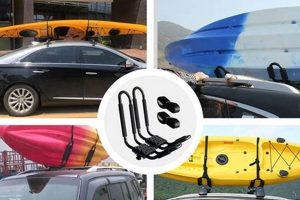
Assessing vehicle compatibility is essential. Roof racks, trailers, or truck beds are common transportation methods. Kayak dimensions and weight influence the suitability of different vehicle types. For example, a compact car might require a lightweight, easily maneuverable kayak and a simple roof rack system, while a larger truck or SUV could accommodate a heavier, feature-rich kayak and a specialized trailer. Understanding vehicle limitations ensures safe and efficient kayak transportation.
- Kayak Weight and Dimensions
Kayak weight and dimensions directly affect portability. Lighter kayaks are easier to load, unload, and carry, particularly beneficial for individuals without assistance or those accessing remote locations requiring portages. Compact dimensions simplify storage and maneuverability in tight spaces. For instance, a lightweight, shorter kayak is ideal for navigating narrow trails or launching from steep banks, while a longer, heavier kayak might require a cart or trolley for transport over longer distances. Balancing weight and dimensions with fishing needs and physical capabilities optimizes portability.
- Storage Solutions
Storage solutions further influence portability and long-term kayak care. Garages, sheds, or specialized storage racks provide secure and convenient options for protecting kayaks from the elements and minimizing damage during transport. Choosing appropriate storage solutions preserves kayak integrity and extends its lifespan. For example, storing a kayak on a dedicated rack prevents warping and deformation, while covering it protects against UV damage and weathering.
- Launch Site Accessibility
Launch site accessibility dictates transportation requirements and influences kayak selection. Some locations offer convenient boat ramps and ample parking, while others require navigating uneven terrain or carrying kayaks over longer distances. Evaluating launch site accessibility informs decisions regarding kayak portability features and transportation methods. For instance, a lightweight, easily carried kayak is preferable for accessing remote locations with limited vehicle access, while a heavier kayak with a wheeled cart might suffice for locations with improved accessibility.
Considering these factors ensures that transportation logistics do not limit fishing opportunities. Aligning kayak portability and transportation methods with individual needs and target fishing locations enhances fishing accessibility, convenience, and overall enjoyment. Ultimately, efficient and well-planned transportation logistics contribute to a seamless and rewarding kayak fishing experience.
7. Fishing-Specific Features
Specialized features distinguish fishing kayaks from recreational models, enhancing angling effectiveness and overall experience. These features cater specifically to the needs of anglers, optimizing functionality and convenience on the water. Careful consideration of these features ensures a seamless and productive fishing experience.
- Rod Holders
Rod holders secure fishing rods, freeing hands for paddling, landing fish, or other tasks. Various types exist, including flush-mounted, adjustable, and rotating rod holders. Flush-mounted holders offer a streamlined profile but less flexibility, while adjustable holders accommodate different rod lengths and angles. Rotating holders allow for quick adjustments and facilitate various fishing techniques. For example, trolling requires rod holders positioned for optimal line retrieval, while casting benefits from easily accessible and adjustable rod placements.
- Tackle Storage
Dedicated tackle storage compartments keep essential gear organized and readily accessible. These compartments vary in size, configuration, and accessibility. Some kayaks feature waterproof hatches for storing sensitive electronics or tackle, while others offer open compartments for quick access to frequently used items. For example, a bass angler might require larger compartments for bulky tackle boxes, while a fly fisherman might prioritize smaller, specialized compartments for flies and tools. Effective tackle storage maximizes fishing efficiency by minimizing time spent searching for gear.
- Fish Finders and Electronics
Integrating electronics, such as fish finders and GPS units, enhances fishing success by providing crucial information about water depth, fish location, and navigation. Transducers mounted on the hull transmit sonar signals, providing real-time underwater imagery. GPS units aid navigation and marking productive fishing spots. For example, a kayak angler targeting offshore species benefits from a high-resolution fish finder to locate underwater structures and fish schools, while a GPS unit helps navigate to and from preferred fishing locations, especially in unfamiliar waters or challenging conditions. These electronic aids significantly improve fishing effectiveness by providing valuable insights into underwater environments.
- Anchor Systems
Anchor systems maintain kayak position in desired fishing locations, particularly in current or wind. Various anchor types exist, including stake-out poles, claw anchors, and folding grapnel anchors. Stake-out poles are effective in shallow water or soft bottoms, while claw and grapnel anchors are suitable for deeper water or rocky terrain. An efficient anchor system prevents drifting and allows anglers to focus on fishing without constantly adjusting position. For example, an angler fishing in a river current requires a secure anchor system to maintain position and prevent drifting downstream, while a lake angler might utilize a stake-out pole for shallow-water fishing.
These specialized features collectively enhance the functionality and effectiveness of single-man fishing kayaks. By carefully considering these features, anglers can select a kayak tailored to their specific needs and fishing styles, optimizing on-the-water performance and maximizing fishing success. The integration of these features exemplifies the evolution of kayak design, catering specifically to the demands of modern angling.
Frequently Asked Questions
This section addresses common inquiries regarding single-person fishing kayaks, providing concise and informative responses to facilitate informed decision-making.
Question 1: What are the primary advantages of a fishing kayak designed for a single person?
Key advantages include enhanced maneuverability in tight spaces, improved stealth for approaching fish, and ease of transportation and storage compared to larger vessels. Individualized customization options further cater to specific angler preferences and fishing styles.
Question 2: How does one choose the appropriate size and type of fishing kayak?
Selection depends on factors such as angler weight, intended fishing environment (calm lakes vs. open ocean), and preferred fishing style (casting vs. trolling). Consideration of these factors ensures optimal stability, performance, and comfort.
Question 3: What essential safety equipment should accompany every kayak fishing trip?
Essential safety gear includes a personal flotation device (PFD), a whistle or other signaling device, a first-aid kit, and appropriate navigation lights if fishing during low-light conditions. A communication device, such as a waterproof cell phone or VHF radio, is also highly recommended.
Question 4: How does one maintain and store a fishing kayak properly?
Proper maintenance involves rinsing the kayak with fresh water after each use, especially in saltwater environments, and storing it in a shaded area to prevent UV damage. Regular inspection for damage and timely repairs ensure kayak longevity.
Question 5: What are the typical costs associated with owning a fishing kayak?
Costs vary significantly based on features, materials, and propulsion systems. Entry-level models can range from a few hundred dollars to more advanced, feature-rich kayaks costing several thousand dollars. Additional expenses include paddles, safety gear, and optional accessories such as fish finders and rod holders.
Question 6: What resources are available for learning more about kayak fishing techniques?
Numerous online resources, including instructional videos, forums, and articles, offer valuable information on kayak fishing techniques, safety guidelines, and location-specific tips. Local kayak fishing clubs and outfitters provide opportunities for hands-on learning and community engagement.
Addressing these common inquiries provides foundational knowledge for prospective kayak anglers. Careful consideration of these factors ensures a safe, enjoyable, and productive fishing experience.
The subsequent section delves into advanced techniques for maximizing fishing success from a kayak.
Conclusion
This exploration of specialized single-person fishing kayaks has highlighted their unique advantages, diverse features, and essential considerations for selection and utilization. From hull design and propulsion systems to storage capacity and specialized fishing features, each aspect contributes to the overall performance, comfort, and effectiveness of these versatile watercraft. Understanding the interplay between these elements empowers informed decision-making, ensuring alignment between individual angler needs, fishing styles, and target environments. Emphasis on safety, proper maintenance, and continuous learning further contributes to a rewarding and sustainable kayak fishing experience.
The evolution of specialized single-person fishing kayaks reflects a growing appreciation for the unique blend of accessibility, versatility, and connection with nature that this fishing platform provides. As technology and design continue to advance, these specialized kayaks will undoubtedly play an increasingly prominent role in the future of angling, offering a sustainable and engaging pathway to explore and connect with the aquatic world.