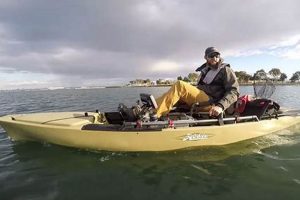
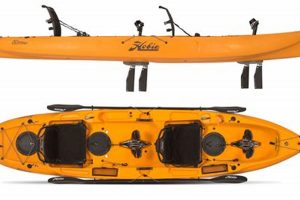
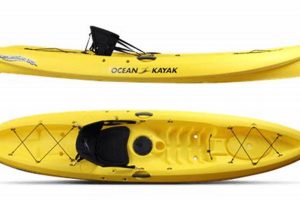
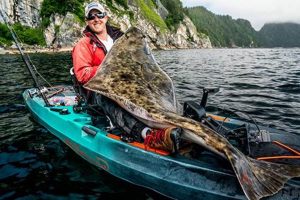
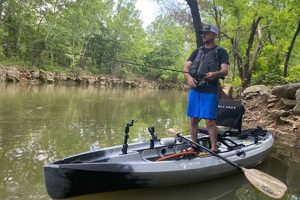
This specific type of watercraft designates a kayak designed for angling in marine environments. Such vessels are often characterized by features like rod holders, specialized storage for tackle and equipment, and stability-enhancing designs. An example might include a sit-on-top model with a shallow draft, facilitating access to shallow coastal areas.
Marine angling from a human-powered vessel offers advantages such as stealth, maneuverability in tight spaces, and the ability to reach fishing grounds inaccessible to larger boats. This approach aligns with a growing interest in sustainable fishing practices, minimizing environmental impact while maximizing the angling experience. The evolution of kayak design and materials has led to highly specialized craft catering to this specific activity, further contributing to its popularity.
This exploration provides a foundational understanding for delving into specific aspects of this topic. Subsequent sections will examine specific features, popular models, recommended techniques, and essential safety considerations for this activity.
Tips for Marine Kayak Angling
Successful saltwater kayak fishing requires careful planning and execution. The following tips offer guidance for a safe and productive experience.
Tip 1: Prioritize Safety Equipment. Always wear a personal flotation device and carry essential safety gear, including a whistle, signaling mirror, and VHF radio. A first-aid kit and appropriate clothing for prevailing conditions are also crucial.
Tip 2: Understand Local Regulations. Familiarize oneself with fishing license requirements, size and catch limits, and any area-specific regulations before embarking on a fishing trip.
Tip 3: Plan the Trip Carefully. Check weather forecasts, tides, and currents. Inform someone of the intended fishing location and estimated return time. Choose launch and landing sites appropriate for the prevailing conditions.
Tip 4: Select Appropriate Tackle. Rod and reel combinations should match the target species and fishing techniques. Saltwater environments necessitate corrosion-resistant equipment.
Tip 5: Practice Paddle Strokes and Boat Control. Maneuvering a kayak effectively is essential for positioning oneself for optimal fishing opportunities. Practicing in calm water before venturing into more challenging conditions is recommended.
Tip 6: Employ Proper Fish Handling Techniques. Minimize handling time to reduce stress on the fish. Utilize appropriate tools for hook removal and consider catch-and-release practices for conservation.
Tip 7: Respect the Environment. Properly dispose of fishing line and other waste. Avoid disturbing sensitive habitats, such as seagrass beds and coral reefs.
Adherence to these guidelines will enhance both safety and enjoyment while engaging in this activity. Careful preparation and responsible practices contribute to a positive experience and preservation of the marine environment.
This collection of tips provides practical guidance for a fulfilling outing. The following section will offer concluding remarks and emphasize the importance of responsible angling practices.
1. Stability

Stability represents a critical performance attribute in a fishing kayak, particularly within the demanding marine environment. A stable platform is essential for various angling activities, from casting and retrieving lines to landing fish. Compromised stability can lead to capsizing, jeopardizing both angler safety and equipment. A kayak designed for stability contributes to a confident and productive fishing experience, allowing focus on angling techniques rather than maintaining balance. Consider a scenario involving an angler battling a strong current; a stable kayak provides a secure foundation, enhancing control and minimizing the risk of overturning.
Several factors influence kayak stability. Hull design plays a significant role, with wider, flatter hulls generally offering greater initial stability. Features such as outriggers and stabilizers can further enhance stability, particularly in challenging conditions like rough seas or strong winds. The angler’s position within the kayak also impacts stability; a lower center of gravity contributes to increased stability. For example, a sit-on-top kayak with a wide, flat hull design and strategically placed footrests provides a stable platform for standing and casting, expanding angling versatility.
Understanding the relationship between stability and kayak design is crucial for selecting the appropriate vessel. Prioritizing stability, particularly for offshore or open-water fishing, enhances safety and angling performance. While maneuverability and speed remain important considerations, stability forms the foundation for a successful and secure fishing experience. Evaluating hull design, added stability features, and weight capacity provides insights into a kayak’s stability characteristics and its suitability for specific fishing environments and angler preferences.
2. Maneuverability

Maneuverability represents a crucial performance characteristic in fishing kayaks, particularly those designed for marine environments. Efficient navigation through complex coastal structures, swift currents, and changing sea conditions demands a highly responsive vessel. Effective maneuverability allows anglers to access prime fishing locations, position themselves optimally for casting and retrieving, and respond effectively to changing environmental dynamics. A kayak with limited maneuverability may restrict access to productive fishing zones or hinder the angler’s ability to follow schools of fish. Consider a scenario where an angler needs to navigate through a dense kelp forest or maneuver quickly to avoid a submerged obstacle; superior maneuverability proves essential for safe and effective angling.
Several factors influence kayak maneuverability. Hull design plays a significant role; shorter kayaks with a defined keel tend to track more effectively and offer enhanced maneuverability in tight spaces. Longer kayaks generally offer superior speed and tracking in open water but may prove less agile in confined areas. Features such as rudders and skegs contribute significantly to directional control and maneuverability, especially in windy or current-prone environments. Paddle type and technique also influence maneuverability; a longer paddle with an efficient stroke technique enhances control and responsiveness. For example, a kayak equipped with a rudder system and designed with a moderate hull length and a defined keel provides a balance of maneuverability and stability, enabling precise navigation in diverse marine environments.
The interplay between maneuverability and other performance characteristics, such as stability and speed, requires careful consideration when selecting a fishing kayak. A balanced approach is essential, recognizing the trade-offs between maneuverability and other attributes. While stability contributes to a secure fishing platform, excessive stability can compromise agility. Similarly, while speed offers advantages in covering larger distances, it may come at the expense of maneuverability in tight spaces. A thorough assessment of intended fishing environments, target species, and individual paddling preferences informs the selection of a kayak with the optimal balance of maneuverability, stability, and speed.
3. Storage Capacity

Storage capacity represents a critical factor in fishing kayak selection, directly influencing angling effectiveness and overall experience. Adequate storage accommodates essential gear, including tackle boxes, rods, safety equipment, and personal items. Insufficient storage can compromise organization, limit capacity, and hinder access to essential items during the fishing excursion. Evaluating storage options and their accessibility contributes significantly to a well-prepared and productive fishing trip. This section explores the multifaceted nature of storage capacity in the context of fishing kayaks designed for marine environments.
- Types of Storage
Fishing kayaks offer diverse storage solutions, each catering to specific needs and preferences. These solutions range from integrated compartments and hatches to bungee cord systems and specialized storage for rods and paddles. Integrated compartments provide secure, waterproof storage for sensitive items like electronics and personal belongings. Hatches offer access to larger storage areas within the kayak’s hull, ideal for bulky items such as tackle boxes and extra clothing. Bungee cord systems secure items on the deck, providing quick access to frequently used gear. Specialized rod holders and paddle clips keep essential equipment readily available and prevent loss or damage during transit. For example, a recessed tackle storage area within easy reach of the angler allows for efficient lure changes without disrupting the fishing process.
- Capacity and Organization
The overall capacity of the storage areas and their organization significantly impact usability. Ample storage space facilitates longer trips and accommodates diverse fishing gear. Well-designed compartments and organizational features, such as dividers and trays, enhance efficiency by keeping items readily accessible and preventing entanglement. Consider a scenario where an angler needs to quickly locate a specific lure amidst a variety of tackle; well-organized storage facilitates quick retrieval, minimizing disruption and maximizing fishing time. Prioritizing storage solutions tailored to specific fishing styles and target species enhances overall efficiency and enjoyment.
- Accessibility and Ergonomics
Accessibility of storage compartments plays a crucial role in maintaining an efficient and comfortable fishing experience. Easily accessible storage areas allow for quick retrieval of essential items without compromising stability or requiring awkward movements. Ergonomically designed hatches and compartments minimize strain and contribute to a seamless fishing experience. For instance, a front hatch located within easy reach allows for convenient access to frequently used items without requiring the angler to twist or reach excessively. Prioritizing accessibility and ergonomic design enhances both comfort and safety during the fishing trip.
- Weight Distribution and Stability
The distribution of weight within the kayak’s storage areas impacts both stability and performance. Evenly distributing weight enhances stability, preventing tipping and ensuring a balanced feel. Concentrating heavier items closer to the center of gravity contributes to optimal stability. Consider an angler carrying a heavy tackle box and a cooler; distributing these items evenly within the kayak maintains balance and prevents instability. Understanding weight distribution principles and their impact on kayak performance enhances safety and contributes to a more enjoyable fishing experience.
Careful consideration of storage capacity, accessibility, and organization contributes significantly to a successful and enjoyable fishing kayak experience. Balancing storage needs with other performance characteristics such as stability, maneuverability, and speed ensures the selection of a kayak ideally suited to individual angling preferences and target environments. Prioritizing these aspects optimizes both comfort and effectiveness during fishing excursions, contributing to a fulfilling experience on the water.
4. Fishing Features
Specialized features distinguish fishing kayaks from recreational models, enhancing angling effectiveness and overall experience. These features cater specifically to the demands of fishing in various environments, including the challenges presented by marine settings. A well-equipped fishing kayak provides a platform optimized for angling success, incorporating design elements that streamline activities and maximize efficiency.
- Rod Holders
Rod holders secure fishing rods, freeing hands for other tasks such as paddling, maneuvering, and handling lines. Various rod holder designs accommodate different fishing styles and rod types. Flush-mounted rod holders integrate seamlessly with the kayak’s deck, minimizing interference while trolling or paddling. Adjustable rod holders offer flexibility in positioning rods at optimal angles. A kayak equipped with multiple rod holders enables diverse fishing techniques and accommodates multiple lines in the water simultaneously. For example, an angler trolling for offshore species benefits from strategically placed rod holders that keep lines clear and prevent tangling.
- Tackle Storage
Dedicated tackle storage solutions maintain organization and provide efficient access to essential fishing gear. Tackle boxes, trays, and compartments within easy reach streamline lure changes and minimize disruptions during fishing. Specialized compartments for specific items, such as leader lines, hooks, and sinkers, contribute to efficient organization and prevent entanglement. A well-organized tackle storage system enhances efficiency, allowing anglers to focus on fishing rather than searching for equipment. For example, a kayak equipped with a readily accessible tackle tray facilitates quick lure changes when targeting different species or adapting to changing water conditions.
- Anchor Systems
Anchor systems maintain position in desired fishing locations, particularly in current-prone areas or when targeting specific structures. Anchor trolleys allow for controlled deployment and retrieval of the anchor, minimizing disruption and maximizing fishing time. Deploying an anchor from the bow or stern allows anglers to position the kayak optimally for drifting or maintaining a stationary position. An effectively deployed anchor system enhances fishing effectiveness by keeping the kayak in the ideal location relative to target species or underwater structures. For example, deploying an anchor up-current from a reef allows an angler to drift bait naturally across the structure, increasing the likelihood of attracting fish.
- Electronics Integration
Integrating electronics, such as fish finders and GPS units, enhances angling success by providing valuable information about water depth, bottom structure, fish location, and navigation. Mounting systems for transducers and display units ensure convenient access to data without compromising kayak stability or maneuverability. Real-time data from electronics informs fishing strategies and enhances the ability to locate and target specific species. For example, a fish finder integrated with GPS functionality allows anglers to mark productive fishing spots and navigate back to them precisely on subsequent trips. Integrating electronics expands angling capabilities and contributes to a more informed and successful fishing experience.
These specialized features enhance the functionality of a sea ghost fishing kayak, transforming it into a dedicated angling platform. The careful selection and utilization of these features contribute significantly to a more productive and enjoyable fishing experience, catering to diverse fishing styles and target species in the marine environment. By understanding the role and benefits of each feature, anglers can optimize their kayak setup to maximize their chances of success on the water.
5. Durability

Durability represents a critical factor influencing the lifespan and performance of a sea ghost fishing kayak, especially considering the demanding conditions of the marine environment. Exposure to saltwater, UV radiation, and potential impacts necessitates robust construction and resilient materials. A durable kayak withstands these challenges, ensuring long-term functionality and minimizing the need for frequent repairs or replacements. This exploration examines the multifaceted aspects of durability concerning fishing kayaks operating in marine environments.
- Material Selection
The choice of construction material significantly impacts a kayak’s durability. High-density polyethylene (HDPE) offers a robust and impact-resistant option, well-suited to withstand the rigors of marine use. Alternative materials, such as fiberglass or composites, offer advantages in weight and performance but may require greater care to prevent damage from impacts or abrasion. For example, an HDPE kayak can tolerate minor collisions with rocks or submerged debris without sustaining significant structural damage. The inherent properties of each material directly correlate with its resistance to wear and tear, influencing long-term durability.
- Construction Quality
Construction techniques and quality control measures significantly influence a kayak’s ability to withstand long-term exposure to marine conditions. Robust hull construction, reinforced seams, and quality hardware contribute to overall structural integrity. Properly sealed hatches and compartments prevent water intrusion, protecting internal components and preventing deterioration. For example, double-welded seams provide enhanced resistance to stress and prevent leaks, contributing to the kayak’s longevity. Thorough quality control measures throughout the manufacturing process ensure consistent construction standards and minimize the likelihood of defects.
- UV Resistance
Prolonged exposure to ultraviolet radiation from sunlight can degrade kayak materials, leading to discoloration, brittleness, and reduced structural integrity. UV-resistant coatings and additives protect against these detrimental effects, preserving the kayak’s appearance and extending its lifespan. Kayaks stored outdoors benefit significantly from UV protection, maintaining their structural integrity and aesthetic appeal despite continuous sun exposure. For example, a kayak treated with a UV-resistant coating retains its color and material strength even after extended periods under direct sunlight.
- Maintenance and Care
Proper maintenance practices contribute significantly to a kayak’s long-term durability. Regular cleaning removes saltwater residue, preventing corrosion and material degradation. Storing the kayak out of direct sunlight when not in use minimizes UV exposure. Addressing minor scratches or damage promptly prevents further deterioration. For example, rinsing the kayak with fresh water after each use removes salt deposits and minimizes the risk of corrosion. Implementing a consistent maintenance routine preserves the kayak’s structural integrity and extends its functional lifespan.
Durability directly impacts the long-term value and performance of a sea ghost fishing kayak. Investing in a durable kayak constructed from high-quality materials and incorporating robust construction techniques ensures long-term reliability and minimizes the need for repairs or replacements. Prioritizing durability contributes to a positive ownership experience, allowing anglers to focus on fishing rather than equipment maintenance. By understanding the factors contributing to durability, anglers can make informed decisions when selecting a sea ghost fishing kayak that meets their specific needs and withstands the demanding conditions of the marine environment.
Frequently Asked Questions
This section addresses common inquiries regarding kayaks designed for fishing in marine environments. Clear and concise responses provide practical information for informed decision-making.
Question 1: What key features differentiate a fishing kayak from a recreational model?
Fishing kayaks typically incorporate specialized features such as rod holders, tackle storage compartments, anchor systems, and mounting points for electronics. These features enhance angling functionality and overall efficiency on the water.
Question 2: How does hull design influence stability and maneuverability?
Wider, flatter hulls generally offer greater stability, while longer, narrower hulls prioritize speed and tracking. Features like keels and chines influence maneuverability and directional control.
Question 3: What materials are commonly used in fishing kayak construction, and how do they impact durability?
High-density polyethylene (HDPE) offers a balance of durability, affordability, and impact resistance. Fiberglass and composite materials provide lighter weight and enhanced performance but may require greater care to prevent damage.
Question 4: What safety precautions should one take when fishing from a kayak in marine environments?
Essential safety measures include wearing a personal flotation device, carrying signaling devices, informing someone of trip plans, checking weather forecasts, and understanding local regulations.
Question 5: How does one choose the appropriate paddle length and type for a fishing kayak?
Paddle length selection considers factors such as angler height, kayak width, and paddling style. Paddle blade shape and material influence efficiency and performance in various water conditions.
Question 6: What are the essential considerations for transporting and storing a fishing kayak?
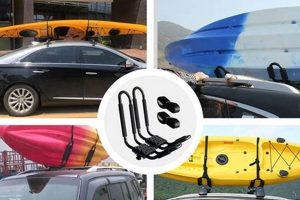
Transporting a kayak requires appropriate roof racks or trailers. Storage options include specialized racks, ceiling hoists, or secured outdoor storage, protecting the kayak from the elements.
Understanding these key aspects contributes to informed decisions regarding kayak selection, usage, and maintenance. Addressing these frequently asked questions aims to provide clarity and enhance the overall fishing experience.
The next section will offer concluding remarks and summarize the key takeaways for prospective kayak anglers.
Conclusion
This exploration has provided a comprehensive overview of kayaks designed for fishing in marine environments. Key aspects discussed include the importance of stability and maneuverability, the significance of ample storage capacity, the benefits of specialized fishing features, and the critical role of durability in ensuring long-term performance. Understanding these factors allows for informed decision-making when selecting a kayak best suited to individual needs and intended usage. An informed approach to kayak selection contributes significantly to a safe, efficient, and enjoyable fishing experience.
The evolving landscape of kayak design and technology continues to refine the angling experience. Further exploration of specific models, advanced fishing techniques, and emerging trends within the kayak fishing community will enhance proficiency and maximize enjoyment on the water. Responsible angling practices, including adherence to regulations and respect for the marine environment, remain paramount for ensuring the sustainability of this rewarding pursuit.