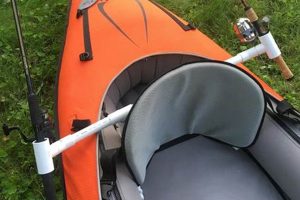
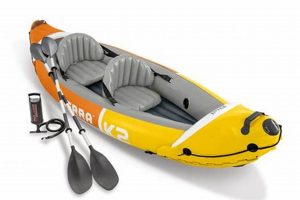
Securing fishing equipment is paramount in the dynamic environment of kayak angling. A short tether connecting a fishing rod to the kayak prevents loss due to accidental drops or sudden strong pulls from a hooked fish. These tethers, typically constructed from coiled cords, retractable lines, or webbing, offer flexibility while maintaining a secure connection.
The compact nature of kayaks presents unique challenges for anglers. Losing a rod overboard can quickly derail a fishing trip, especially in remote locations. These specialized lanyards provide peace of mind, allowing anglers to focus on the sport. Beyond preventing equipment loss, they contribute to overall safety by minimizing clutter and potential entanglement hazards in the confined space of a kayak. The evolution from basic cord ties to the sophisticated designs available today reflects the growing recognition of their importance in kayak fishing.
This article will delve into the various types of available tethers, discuss key features to consider when selecting one, and offer practical advice on their proper usage and maintenance. Understanding these aspects will empower kayak anglers to choose the most suitable device and maximize its effectiveness in safeguarding their valuable equipment.
Tips for Utilizing Rod Tethers in Kayak Fishing
Proper use and selection of rod tethers are essential for maximizing their effectiveness and ensuring angler safety.
Tip 1: Choose Appropriate Length and Material: Tether length should balance accessibility and safety. Shorter tethers reduce entanglement risks, while longer ones offer greater casting range. Consider material durability and resistance to saltwater corrosion.
Tip 2: Secure Attachment Points: Verify secure attachment points on both the kayak and the fishing rod. Reinforced attachment areas minimize the risk of failure under pressure.
Tip 3: Regular Inspection and Maintenance: Corrosion, wear, and tear can compromise tether integrity. Regularly inspect for damage and replace worn tethers promptly. Rinse with fresh water after each use, especially in saltwater environments.
Tip 4: Consider Quick-Release Mechanisms: In emergencies, quick-release mechanisms allow for rapid detachment of the rod. This feature is particularly valuable when dealing with large, powerful fish or unexpected obstacles.
Tip 5: Compatibility with Rod and Reel Types: Ensure tether compatibility with the specific rod and reel being used. Certain tether designs are better suited for particular fishing styles and equipment setups.
Tip 6: Avoid Excessive Slack: Excessive slack in the tether increases the risk of entanglement. Maintain appropriate tension to ensure a secure connection while allowing for casting and maneuvering.
Tip 7: Practice Deployment and Retrieval: Familiarize oneself with tether deployment and retrieval procedures before venturing onto the water. Smooth, practiced movements minimize disruptions during critical fishing moments.
By adhering to these guidelines, anglers can enhance safety, protect valuable equipment, and enjoy a more productive and worry-free kayak fishing experience.
In conclusion, selecting and utilizing an appropriate rod tether is a small investment that offers significant benefits for kayak anglers.
1. Security

Security, in the context of kayak fishing, centers on preventing equipment loss and ensuring angler safety. Rod leashes play a crucial role in achieving this security. Loss of a rod due to an unexpected jolt, a powerful fish, or an accidental slip can disrupt a fishing trip and represent a significant financial setback. A leash provides a vital safeguard against such incidents. For instance, imagine hooking a large fish that pulls the rod from an unsteady grip; a leash prevents it from being dragged overboard. Or consider navigating through tight mangroves; a secure leash minimizes the risk of the rod snagging and breaking.
The security offered by a rod leash extends beyond equipment preservation. A loose rod in a kayak poses a tripping hazard, especially in rough waters. Securing the rod with a leash maintains a clutter-free environment, enhancing angler safety and maneuverability. Furthermore, in challenging situations like rapidly changing weather conditions or equipment malfunctions, a securely tethered rod remains under control, minimizing potential risks and allowing for a more focused response to the situation. Choosing a leash with a reliable attachment mechanism and sufficient strength is paramount to ensure its effectiveness as a security measure.
Ultimately, the security provided by a rod leash translates to peace of mind for the kayak angler. Knowing valuable equipment is protected allows for greater focus on the fishing experience itself, contributing to a safer and more enjoyable outing. Selecting the appropriate leash for the specific fishing environment and target species further reinforces this security. This careful consideration minimizes risks, promotes responsible angling practices, and enhances overall fishing success.
2. Durability
Durability is a critical factor influencing the effectiveness of rod leashes in kayak fishing. Leashes must withstand harsh environmental conditions, including saltwater exposure, UV radiation, and abrasion against the kayak and other gear. A durable leash ensures consistent performance over time, minimizing the risk of failure at a critical moment. Consider a scenario where a braided nylon leash, known for its abrasion resistance, maintains its integrity despite repeated friction against the kayak hull, preventing the loss of a rod during a vigorous fight with a fish. Conversely, a less durable leash might fray or break under similar stress, resulting in equipment loss and potential safety hazards.
Material selection plays a crucial role in leash durability. High-quality materials like marine-grade stainless steel hardware and UV-resistant polymers contribute to long-term performance. The construction method also impacts durability. For instance, a leash with reinforced stitching at stress points will likely outlast one with simpler construction. Evaluating these factors during the selection process ensures the leash can endure the rigors of kayak fishing. Imagine a leash with stainless steel carabiners and a coated cable; this combination resists corrosion and abrasion, providing reliable performance even after extended use in saltwater environments.
Investing in a durable rod leash translates to long-term cost savings and enhanced safety. While a less durable leash might offer a lower initial price, its shorter lifespan necessitates frequent replacements, ultimately increasing costs and potentially jeopardizing valuable equipment. Moreover, a durable leash minimizes the risk of equipment failure during crucial moments, enhancing angler safety and contributing to a more enjoyable and productive fishing experience. Careful consideration of durability during leash selection ensures reliable performance and contributes to a safer and more fulfilling kayak fishing experience.
3. Length

Leash length significantly impacts functionality and safety in kayak fishing. An ideal length balances accessibility for casting and fighting fish with minimizing entanglement hazards. A shorter leash, for example, reduces the likelihood of tangling around gear or the angler during a struggle with a fish, particularly important in the confined space of a kayak. However, excessively short leashes restrict casting range and maneuverability. Conversely, longer leashes offer greater casting freedom but increase the risk of tangling around paddles, fishing rods, or other equipment in the kayak. Consider a scenario where a long leash becomes entangled around a propeller during trolling; this could lead to equipment damage or even capsizing. The optimal leash length depends on the angler’s fishing style and the specific conditions. Anglers targeting smaller fish in calm waters might prefer shorter leashes for greater control, while those pursuing larger species in open water might benefit from the extended casting range provided by longer leashes.
Selecting the appropriate leash length often involves a trade-off between casting distance and tangle prevention. Using a leash that is too long for the environment can create challenges, especially when landing a fish. A long leash can allow the fish to thrash around the kayak, increasing the risk of line tangles or even injury to the angler. Conversely, a leash that is too short can make it difficult to control a large fish, potentially resulting in a lost catch or damaged equipment. Practical experience plays a crucial role in determining the ideal leash length for individual preferences and fishing styles. Some anglers prefer adjustable leashes, which offer flexibility for varying fishing conditions. This adaptability allows for adjustments based on target species, fishing location, and other factors.
Understanding the relationship between leash length and kayak fishing safety and efficiency is essential for a successful outing. Choosing the correct leash length enhances control, minimizes risks, and ultimately contributes to a more productive and enjoyable fishing experience. Careful consideration of factors like fishing style, target species, and environmental conditions informs appropriate leash length selection. This informed decision enhances safety, maximizes fishing efficiency, and contributes to a more rewarding experience on the water.
4. Attachment

Attachment mechanisms are critical components of rod leashes for kayak fishing, directly impacting security and functionality. The attachment points on both the kayak and the fishing rod must be robust and reliable to prevent leash failure under stress. Consider a scenario where a leash is attached to a flimsy plastic component on the kayak; a strong pull from a fish could easily break this weak point, resulting in equipment loss. Conversely, secure attachment to a reinforced point on the kayak, such as a D-ring or a dedicated leash mount, significantly reduces this risk. Similarly, the rod-end attachment mechanism, whether a loop, clip, or other specialized connector, must securely grip the rod without damaging its components. Using a non-slip material or design in this attachment minimizes the risk of the leash detaching during casting or fighting a fish. The type of attachment mechanism influences how quickly the rod can be released in an emergency, a crucial factor in kayak fishing safety.
Several attachment options exist, each offering distinct advantages and disadvantages. Carabiners, for instance, offer robust attachment but can be bulky. Retractor clips provide convenience but may not be as secure under high stress. Loops offer simplicity and durability but can be more challenging to attach and detach quickly. The choice of attachment mechanism depends on factors like fishing style, target species, and personal preference. For example, an angler targeting large, powerful fish might prioritize a heavy-duty carabiner for maximum security, while someone fishing for smaller species might prefer a more compact and lightweight clip. Understanding the strengths and weaknesses of various attachment mechanisms enables anglers to select the most appropriate option for their specific needs.
Careful consideration of attachment mechanisms is crucial for maximizing the effectiveness of rod leashes in kayak fishing. Secure and reliable attachment points on both the kayak and the rod contribute significantly to preventing equipment loss and ensuring angler safety. Choosing appropriate attachment mechanisms based on fishing style and target species further enhances efficiency and contributes to a more secure and enjoyable fishing experience. Understanding these aspects empowers anglers to make informed decisions regarding leash selection and usage, ultimately contributing to a safer and more successful outing.
5. Functionality

Functionality in rod leashes designed for kayak fishing encompasses several key aspects affecting angler performance and safety. A primary functional consideration is the quick-release mechanism. Rapid detachment is crucial in situations involving snags, large fish, or potential capsizing. A quick-release system allows anglers to instantly free the rod, preventing equipment damage or entanglement hazards. For example, if a hooked fish dives under the kayak, a quick-release leash prevents the rod from being pulled overboard or snapping. Similarly, if the line becomes entangled in underwater debris, quick release prevents the kayak from being pulled over. Effective quick-release mechanisms must be both reliable and easy to operate, even under pressure. Furthermore, leash functionality extends to its compatibility with different rod and reel types. Certain leash designs may be better suited to specific fishing styles or equipment setups.
Beyond quick-release mechanisms, leash design contributes significantly to overall functionality. Retractable leashes offer convenience and controlled length adjustment, minimizing tangles and maximizing casting efficiency. Coiled leashes provide flexibility and shock absorption, crucial when battling strong fish. The material and construction of the leash also affect functionality. Materials resistant to saltwater corrosion and UV degradation ensure long-term performance. Durable construction, including reinforced stitching and high-quality hardware, contributes to reliable operation in demanding environments. For instance, a leash constructed from corrosion-resistant stainless steel and durable nylon webbing provides reliable performance in saltwater conditions, ensuring consistent functionality over time. Selecting a leash with appropriate functionality enhances angling efficiency and contributes to a safer experience.
In conclusion, leash functionality is a crucial factor influencing kayak fishing success and safety. Features like quick-release mechanisms, retractability, and material durability significantly impact performance in various fishing scenarios. Careful consideration of these functional aspects allows anglers to select leashes appropriate for their specific needs and fishing styles. Understanding the practical significance of leash functionality contributes to informed decisions, enhances angling efficiency, and promotes a safer and more rewarding experience on the water.
Frequently Asked Questions about Rod Leashes for Kayak Fishing
This section addresses common inquiries regarding rod leashes and their application in kayak fishing.
Question 1: Are rod leashes necessary for all kayak anglers?
While not universally mandatory, they are highly recommended, especially for beginners and those fishing in challenging environments. Their protective benefits outweigh the minimal investment.
Question 2: What is the ideal leash length for kayak fishing?
Optimal length depends on fishing style and environment. Shorter leashes (under 1 meter) offer better control in tight spaces, while longer leashes (1-2 meters) provide extended casting range. Adjustable leashes offer versatility.
Question 3: What materials are best suited for kayak fishing leashes?
Durable, corrosion-resistant materials are essential. Look for marine-grade stainless steel hardware, UV-resistant nylon webbing, or coated cables to withstand harsh conditions.
Question 4: How are rod leashes typically attached to a kayak and fishing rod?
Kayak attachment points include D-rings, paddle clips, or dedicated leash mounts. Rod attachment methods typically involve loops, clips, or specialized connectors designed to securely grip the rod without causing damage.
Question 5: How does one choose between a coiled leash and a retractable leash?
Coiled leashes provide flexibility and shock absorption, ideal for larger fish or rough conditions. Retractable leashes offer convenience and controlled length adjustment, suitable for calmer waters and precise casting.
Question 6: How often should a rod leash be inspected and replaced?
Regular inspection, especially after exposure to saltwater, is crucial. Replace leashes showing signs of wear, corrosion, or damage immediately to ensure continued safety and effectiveness.
Understanding these fundamental aspects of rod leashes contributes significantly to informed decision-making, ultimately enhancing both safety and fishing success in a kayak.
For further information on related kayak fishing accessories and techniques, continue reading the following sections.
Rod Leashes for Kayak Fishing
This exploration of rod leashes for kayak fishing has highlighted their crucial role in equipment security and angler safety. Key considerations include durability for withstanding challenging conditions, appropriate length balancing accessibility and tangle prevention, secure attachment mechanisms, and functionality encompassing quick-release systems and compatibility with various fishing styles. Careful selection based on these factors ensures optimal performance and longevity. Neglecting these seemingly minor details can lead to equipment loss, financial setback, and potential safety hazards, disrupting an otherwise enjoyable fishing trip.
Ultimately, prioritizing the proper selection and utilization of rod leashes demonstrates a commitment to responsible kayak angling. This proactive approach safeguards valuable equipment, enhances angler safety, and contributes to a more productive and enjoyable experience on the water. Investing in appropriate equipment, understanding its proper usage, and consistently applying best practices contribute significantly to a positive and sustainable kayak fishing experience.