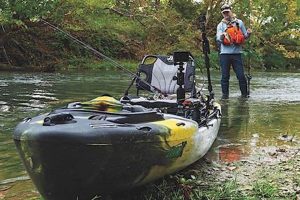
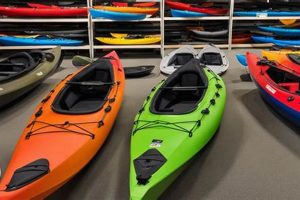
A kayak equipped with customized modifications and accessories, such as rod holders, anchors, outriggers, or specialized storage compartments, falls under this categorization. An angler might add rod holders and a fish finder, while a photographer might prioritize stability enhancements and camera mounts. These personalized setups cater to specific activities and enhance on-the-water experiences.
Such personalized watercraft allow for increased efficiency and enjoyment in various aquatic pursuits. A well-equipped vessel can be instrumental in improving fishing success, photographic stability, or overall comfort during longer expeditions. The evolution of these adaptations reflects a growing understanding of specific needs within kayaking communities, from recreational paddling to competitive angling.
This understanding of customized kayaks provides a foundation for exploring various aspects of the topic, such as specific equipment choices, rigging techniques, and safety considerations for different on-the-water activities.
Tips for Outfitted Kayaks
Careful planning and execution are crucial for a successful on-water experience. The following tips offer guidance for optimizing customized kayak setups.
Tip 1: Stability Considerations: Beginners should prioritize stability. Outriggers or wider hulls can enhance stability, especially when carrying additional gear.
Tip 2: Equipment Compatibility: Ensure all additions are compatible with the specific watercraft. Ill-fitting accessories can compromise performance and safety.
Tip 3: Weight Distribution: Proper weight distribution is essential for maintaining balance and maneuverability. Distribute gear evenly and avoid overloading.
Tip 4: Secure Mounting: Use appropriate mounting hardware and techniques to ensure all accessories are securely fastened to prevent loss or damage.
Tip 5: Regular Maintenance: Regularly inspect and maintain all equipment, including mounts, lines, and accessories, to ensure optimal performance and longevity.
Tip 6: Practice and Refinement: Test the setup in calm waters before venturing into challenging conditions. This allows for adjustments and refinements based on individual needs.
Tip 7: Safety First: Prioritize safety by carrying essential safety equipment, such as a personal flotation device, signaling devices, and a first-aid kit.
By adhering to these guidelines, paddlers can create efficient and enjoyable personalized setups for various on-water activities. A focus on safety and functionality is paramount for a positive experience.
These tips provide a solid foundation for creating a personalized and efficient kayak setup. The next section will explore advanced techniques and modifications for experienced paddlers.
1. Purpose-driven customization

Purpose-driven customization lies at the heart of a well-equipped kayak. The specific modifications and additions made to a standard vessel directly reflect the intended use. This customization transforms a general-purpose watercraft into a specialized tool optimized for a particular activity. Cause and effect are clearly linked: the desired activity dictates the necessary equipment and modifications. For example, a kayak intended for fishing will likely feature rod holders, fish finders, and perhaps even livewells. This differs significantly from a kayak designed for whitewater paddling, which would prioritize maneuverability and safety features like reinforced hulls and specialized seating. The importance of purpose-driven customization is paramount; it’s the defining characteristic that separates a standard kayak from a truly personalized and effective watercraft.
Real-world examples further illustrate this connection. A photographer might equip their kayak with specialized mounts and stabilizing outriggers to ensure steady shots, while a researcher studying marine life might incorporate equipment for collecting samples and data. These examples demonstrate the practical significance of understanding purpose-driven customization. By carefully selecting and integrating appropriate modifications, users enhance efficiency, improve safety, and maximize the overall effectiveness of their kayaks for specific on-water activities. An angler can focus on fishing with readily accessible rods and gear, while a researcher can efficiently gather data with specialized equipment at hand.
In conclusion, purpose-driven customization is not merely an optional aspect of outfitting a kayak; it is the foundational principle. It allows individuals to transform a generic vessel into a specialized tool perfectly suited to their individual needs and objectives. Recognizing this connection empowers users to make informed decisions about equipment choices, ultimately enhancing performance, safety, and overall enjoyment on the water. Challenges might include balancing desired features with weight capacity and maintaining stability, but careful planning and execution address these concerns effectively.
2. Enhanced on-water performance

Enhanced on-water performance represents a direct consequence of thoughtful customization. Modifications made to a standard kayak directly impact speed, stability, maneuverability, and overall efficiency. Cause and effect are clearly linked: strategic additions and alterations lead to improved performance characteristics tailored to specific activities. The importance of this enhancement lies in its ability to transform a standard vessel into a high-performing craft capable of meeting specific demands. A fishing kayak benefits from increased stability for casting and reeling, while a touring kayak gains efficiency through streamlined design and reduced drag.
Real-world examples illustrate this connection. A kayak rigged for racing benefits from reduced water resistance due to a sleeker hull design and specialized seating. A whitewater kayak gains maneuverability through strategically placed fins and a shorter, rockered hull. These examples demonstrate the practical significance of understanding the relationship between modifications and enhanced performance. By carefully selecting and integrating appropriate features, users gain a competitive edge in racing, improved control in challenging whitewater conditions, or increased efficiency during long-distance paddling.
In conclusion, enhanced on-water performance is not merely a desirable outcome of customization; it is a central objective. It transforms a standard kayak into a high-performing tool capable of meeting the specific demands of diverse activities. Recognizing this connection empowers users to make informed decisions about modifications, optimizing their kayaks for specific needs and achieving superior results on the water. While challenges such as added weight or potential compromises in stability might arise, careful planning and testing mitigate these concerns. The ultimate goal remains achieving optimal performance characteristics tailored to individual pursuits.
3. Specialized equipment integration
Specialized equipment integration is fundamental to the concept of a rigged kayak. The process involves incorporating purpose-built tools and accessories designed to enhance specific functionalities. Cause and effect are directly linked: the desired activity dictates the necessary equipment. The importance of this integration stems from its ability to transform a general-purpose vessel into a specialized platform optimized for a particular pursuit. A fishing kayak, for example, requires rod holders, fish finders, and possibly even specialized storage for tackle and bait. This specialized integration directly contributes to angling success by providing readily accessible tools and enhancing the overall fishing experience.
Real-world examples further illustrate this relationship. A kayak designed for scientific research might integrate equipment for water quality testing or underwater observation. A whitewater kayak benefits from specialized safety features like reinforced hulls and advanced floatation systems. These examples demonstrate the practical significance of understanding specialized equipment integration. By thoughtfully selecting and incorporating appropriate tools, users create a highly functional and effective platform tailored to their specific needs, whether it’s scientific data collection, navigating challenging rapids, or extended touring expeditions.
In conclusion, specialized equipment integration is not merely an add-on to a rigged kayak; it’s a defining characteristic. It’s the process that transforms a standard hull into a purpose-built tool. Recognizing this connection empowers users to make informed decisions about equipment choices, ensuring the final setup effectively meets the demands of the intended activity. While challenges like weight distribution and maintaining stability require careful consideration, a well-integrated system ultimately optimizes performance and safety, leading to a more productive and enjoyable experience on the water.
4. Safety and Stability Considerations
Safety and stability are paramount when customizing a kayak. Modifications impact balance and handling, requiring careful consideration to prevent capsizing or equipment failure. Addressing these factors ensures a secure and enjoyable on-water experience.
- Center of Gravity
Added equipment raises the center of gravity, increasing instability. Proper weight distribution and lower mounting positions mitigate this effect. For example, mounting heavier items closer to the hull improves balance. Ignoring center of gravity impacts maneuverability and increases capsize risk, especially in rough conditions.
- Freeboard and Buoyancy
Additional weight reduces freeboard (the distance between the waterline and the gunwale), impacting buoyancy and increasing the risk of swamping. Maintaining adequate freeboard is crucial for managing rough water and self-rescue. Adding floatation bags compensates for reduced buoyancy. Insufficient freeboard compromises safety, particularly in challenging conditions.
- Structural Integrity
Modifications should not compromise the kayak’s structural integrity. Drilling holes for mounts weakens the hull, requiring reinforcement. Using appropriate mounting hardware and techniques prevents leaks and structural failure. Inadequate reinforcement can lead to catastrophic damage, especially under stress.
- Emergency Procedures
Rigging impacts emergency procedures. Practice self-rescue and assisted rescue techniques with the added equipment. Equipment placement should not obstruct access to essential safety gear. Familiarity with modified handling characteristics is essential for safe and effective emergency response.
These considerations are integral to responsible kayak customization. Addressing these factors ensures modifications enhance performance without compromising safety, allowing for a secure and enjoyable experience on the water. Neglecting these aspects increases risk, potentially leading to hazardous situations.
5. Individualized Configurations

Individualized configurations are central to the concept of a rigged kayak. Customization transforms a standard kayak into a purpose-built vessel tailored to specific needs and preferences. Cause and effect are directly linked: individual requirements dictate the specific modifications and equipment choices. The importance of individualized configurations stems from the ability to optimize the kayak for a particular activity, enhancing efficiency, comfort, and overall performance. A kayak rigged for fishing differs significantly from one designed for photography or multi-day touring. Each configuration reflects the user’s priorities and the demands of the activity.
Real-world examples highlight this connection. An angler might prioritize rod holders, fish finders, and anchor trolleys for hands-free fishing. A photographer might opt for camera mounts, stabilizing outriggers, and dry storage for sensitive equipment. A touring kayaker might focus on ample storage space, comfortable seating, and navigational aids for extended journeys. These examples demonstrate the practical significance of individualized configurations. Tailoring the setup to individual requirements ensures the kayak functions optimally for the intended purpose, whether it’s maximizing fishing success, capturing stunning photographs, or comfortably navigating long-distance expeditions. Understanding this connection empowers users to make informed decisions about modifications and equipment, resulting in a more personalized and effective on-water experience.
In conclusion, individualized configurations are not merely a desirable feature of a rigged kayak; they are essential. This customization process transforms a generic watercraft into a specialized tool perfectly aligned with individual needs. While potential challenges like weight management and maintaining stability require careful consideration, the ultimate benefit lies in optimizing the kayak’s performance and functionality for a specific purpose. Recognizing the direct link between individual requirements and kayak configuration empowers users to create highly effective and personalized setups that enhance their on-water experiences.
6. Efficient workflow improvements
Efficient workflow improvements are a key benefit derived from a well-equipped kayak. Strategic placement of gear and specialized modifications streamline on-water activities, directly impacting productivity and enjoyment. Cause and effect are clearly linked: optimized setups minimize wasted time and effort, maximizing focus on the task at hand. The importance of these workflow enhancements lies in their ability to transform a standard paddling experience into a highly productive and enjoyable endeavor, whether fishing, photographing, or conducting research.
Real-world examples illustrate this connection. An angler with readily accessible rods, lures, and other gear can focus on fishing rather than searching for misplaced items. A photographer with a stable platform and strategically positioned camera equipment can capture desired shots quickly and efficiently. A researcher with organized sampling tools and data collection equipment can conduct fieldwork with minimal disruption. These examples demonstrate the practical significance of understanding efficient workflow improvements. By optimizing the layout and accessibility of essential tools, users minimize wasted time and maximize productivity on the water.
In conclusion, efficient workflow improvements are not merely a desirable outcome of a well-equipped kayak; they are a central objective. Strategic rigging transforms a standard vessel into a highly effective workspace, streamlining activities and maximizing productivity. Recognizing this connection empowers users to design setups that optimize workflow, leading to more successful and enjoyable on-water experiences. Challenges such as balancing equipment accessibility with stability and maneuverability require careful consideration, but the ultimate benefit lies in creating a seamless and efficient workflow tailored to individual needs and objectives.
7. Adaptability to various environments
A rigged kayak’s adaptability to diverse environments hinges on its customized setup. Modifications directly influence performance in specific conditions, from calm lakes to challenging open ocean or whitewater rapids. Understanding this connection is crucial for maximizing effectiveness and safety in varying on-water scenarios.
- Calm Water Environments:
Lakes and slow-moving rivers allow for specialized setups focused on stability and functionality. Fishing kayaks benefit from added rod holders and anchor trolleys. Photography kayaks prioritize stability platforms for capturing steady images. Recreational setups emphasize comfort and storage for leisurely paddling. In these conditions, stability and specialized functionality take precedence.
- Open Ocean Environments:
Ocean kayaking demands modifications for seaworthiness and safety. Longer, narrower hulls with rudders enhance tracking and efficiency in open water. Spray skirts and bulkheads protect against waves and keep gear dry. Sea kayaks often include deck rigging and storage compartments for essential safety equipment. Seaworthiness and safety are paramount in these challenging conditions.
- River Environments:
River running necessitates a focus on maneuverability and durability. Shorter, rockered hulls provide agility in rapids. Reinforced hulls and specialized outfitting enhance durability against rocks and obstacles. Whitewater kayaks incorporate features like thigh straps and floatation bags for safety and control. Maneuverability and durability are essential for navigating river currents and obstacles.
- Cold Water Environments:
Cold water paddling requires considerations for safety and thermal protection. Dry suits or wetsuits protect against hypothermia. Kayaks may include specialized deck rigging for storing emergency equipment like flares and communication devices. Modifications might focus on minimizing water entry and maximizing insulation. Safety and thermal protection are paramount in these extreme conditions.
Adaptability across diverse environments is directly linked to the effectiveness of a rigged kayak. Understanding the specific demands of each environment and tailoring the setup accordingly is crucial for maximizing performance and safety. This adaptability transforms the kayak from a recreational vessel into a versatile tool capable of navigating a wide range of on-water conditions, from tranquil lakes to challenging ocean swells and dynamic river systems. Careful consideration of environmental factors and appropriate modifications are essential for a successful and safe paddling experience.
Frequently Asked Questions
This section addresses common inquiries regarding outfitted kayaks, providing clear and concise information to aid decision-making and enhance understanding.
Question 1: What are the most important safety considerations when rigging a kayak?
Stability and structural integrity are paramount. Proper weight distribution, secure mounting of accessories, and maintaining adequate freeboard are crucial for preventing capsizing and ensuring the kayak’s structural soundness. Regular inspection and maintenance of all equipment are also essential safety practices.
Question 2: How does rigging affect kayak performance?
Rigging can significantly impact performance. Added weight affects speed and maneuverability, while specialized equipment, like rudders or skegs, can enhance tracking and control. Properly chosen and installed modifications improve efficiency and performance in specific activities.
Question 3: What are common mistakes to avoid when rigging a kayak?
Overloading the kayak, improper weight distribution, using inadequate mounting hardware, and neglecting regular maintenance are common pitfalls. Careful planning and execution are essential to avoid compromising stability, performance, and safety.
Question 4: Is it necessary to use specialized equipment for rigging?
While some specialized equipment may be necessary for certain modifications, many standard marine-grade components can be adapted for kayak rigging. Choosing appropriate materials and ensuring compatibility with the kayak’s design are critical.
Question 5: How does one choose the right accessories for a rigged kayak?
Accessory choices depend entirely on the intended activity. Fishing requires rod holders and fish finders, while photography necessitates camera mounts and stabilizing features. Careful consideration of individual needs and activity-specific requirements is essential for selecting appropriate accessories.
Question 6: How can one learn more about advanced rigging techniques?
Numerous resources, including online forums, instructional videos, and expert guides, provide valuable information on advanced rigging techniques. Consulting with experienced paddlers or kayak outfitters can also offer personalized guidance.
Careful planning and execution are key to a successful rigging project. Prioritizing safety, functionality, and compatibility ensures modifications enhance the kayaking experience.
This FAQ section serves as a starting point for understanding key considerations in rigging a kayak. The next section will delve into specific rigging techniques for different on-water activities.
Rigged Kayak
Exploration of outfitted kayaks reveals the transformative potential of customization. From enhancing stability and performance to integrating specialized equipment and optimizing workflows, modifications directly impact on-water experiences. Careful consideration of safety, individualized configurations, and adaptability to diverse environments ensures effective and enjoyable outcomes. A well-equipped kayak becomes a purpose-built tool, empowering paddlers to pursue specific activities with enhanced efficiency and confidence.
The evolution of kayak customization reflects a growing understanding of diverse needs within paddling communities. Continued exploration of innovative rigging techniques promises further advancements in performance, safety, and specialized functionality. Embracing informed decision-making in equipment selection and customization empowers paddlers to maximize their on-water experiences, fostering a deeper connection with the aquatic environment.