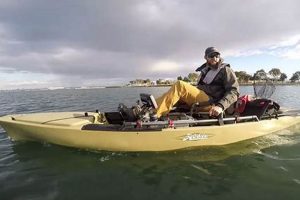
A kayak designed specifically for angling, typically manufactured by the Johnson Outdoors brand, offers distinct advantages over standard recreational kayaks. These specialized vessels frequently incorporate features like rod holders, tackle storage compartments, and even livewells to keep catches fresh. They are often constructed with stability and durability in mind, catering to the specific needs of anglers in various aquatic environments.
The development of angler-focused watercraft has significantly enhanced the fishing experience. Providing a stable and efficient platform for casting lines, trolling, and navigating waterways, these purpose-built kayaks allow for greater access to fishing spots often unreachable by larger boats. The evolution of designs, materials, and incorporated technologies reflects a growing understanding of angler requirements, leading to continuous improvements in performance and comfort.
This exploration delves further into the key aspects of selecting and utilizing a specialized fishing kayak. Topics covered include the different types of kayaks suitable for fishing, essential features to consider, safety precautions, and tips for maximizing fishing success from a kayak.
Tips for Kayak Fishing
Proper preparation and technique enhance safety and fishing success from a kayak. The following tips offer guidance for anglers of all skill levels.
Tip 1: Choose the Right Kayak: Kayak selection should consider the intended fishing environment (calm lakes, rivers, or open ocean). Longer kayaks offer speed and tracking for open water, while shorter, wider kayaks provide greater stability for calm waters and stand-up fishing.
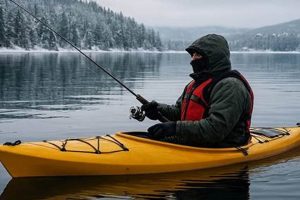
Tip 2: Prioritize Safety Equipment: A personal flotation device (PFD) is essential and should always be worn. Carry a whistle, signaling mirror, and waterproof communication device for emergencies. A first-aid kit and basic repair tools are also recommended.
Tip 3: Plan and Share Your Trip: Inform someone of the planned fishing location, launch time, and expected return. Check weather forecasts and be aware of tides and currents. Carry a map or chart of the area.
Tip 4: Master Basic Paddling Strokes: Efficient paddling conserves energy and allows for precise maneuvering. Practice forward, reverse, and turning strokes before venturing into challenging conditions.
Tip 5: Organize Tackle and Gear: Keep essential fishing gear readily accessible in designated storage compartments. Secure rods and reels to prevent loss during unexpected movements or capsizing. Minimize clutter to maintain a stable platform.
Tip 6: Practice Kayak Self-Rescue: Learning self-rescue techniques is crucial for safe kayaking. Practice re-entering the kayak from the water in a controlled environment before venturing out alone.
Tip 7: Respect the Environment: Practice Leave No Trace principles. Pack out all trash and fishing line. Avoid disturbing wildlife and sensitive habitats. Adhere to all local fishing regulations.
By adhering to these guidelines, anglers can enhance their safety, improve fishing success, and contribute to the responsible enjoyment of the sport.
These tips offer a starting point for successful kayak angling. Further research and practice will refine skills and build confidence on the water.
1. Stability

Stability is a paramount consideration in fishing kayaks, directly impacting safety, angling effectiveness, and overall comfort. A stable platform provides a secure base for casting, reeling, and landing fish, especially in challenging conditions. Within the context of Johnson fishing kayaks, stability is a key design feature influencing the choice of hull design, kayak width, and overall construction. Understanding the factors contributing to stability is crucial for selecting the appropriate kayak for specific fishing needs and environments.
- Hull Design:
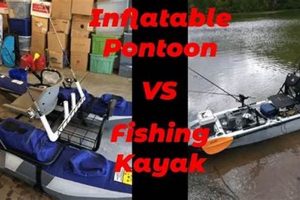
Different hull designs offer varying degrees of stability. Flat-bottomed hulls provide excellent primary stability (initial resistance to tipping), making them ideal for calm waters and stand-up fishing. Pontoon hulls also offer high initial stability. V-shaped hulls sacrifice some primary stability for enhanced tracking and speed in open water. Johnson fishing kayaks often utilize a hybrid hull design, balancing stability with performance based on the intended use.
- Kayak Width:
Wider kayaks generally offer greater stability than narrower kayaks. A wider beam provides a larger base of support, resisting tipping forces. However, increased width can compromise maneuverability and speed. Johnson fishing kayaks are designed with varying widths to cater to different fishing styles and environments, optimizing the balance between stability and agility.
- Center of Gravity:
A lower center of gravity enhances stability. Keeping weight low in the kayak, especially heavier items, improves balance and reduces the likelihood of capsizing. The design of Johnson fishing kayaks often incorporates features that facilitate lower weight distribution, such as recessed seating and strategically placed storage compartments. Anglers also contribute to stability by maintaining a balanced posture and avoiding sudden movements.
- Water Conditions:
Water conditions significantly influence kayak stability. Calm lakes and ponds present fewer challenges compared to moving water or open ocean environments. Wind, waves, and currents can exert destabilizing forces on a kayak. Understanding the limitations of a specific kayak design in various water conditions is crucial for safe and effective fishing. Johnson fishing kayaks are designed with specific environments in mind, offering varying degrees of stability suited to different conditions.
The stability of a Johnson fishing kayak is a critical factor influencing its suitability for various fishing environments and techniques. A thorough understanding of the factors affecting stability enables anglers to select the appropriate model and utilize it safely and effectively, maximizing both enjoyment and fishing success on the water.
2. Durability

Durability is a critical factor in fishing kayaks, directly influencing their lifespan, resilience in challenging environments, and overall value. For Johnson fishing kayaks, durability is a key selling point, reflecting the manufacturer’s commitment to providing reliable watercraft capable of withstanding the rigors of angling activities. This exploration examines the core components contributing to the durability of these kayaks, focusing on material selection, construction techniques, and reinforcement strategies.
- Material Selection:
The choice of materials significantly impacts a kayak’s resistance to impacts, abrasion, and UV degradation. High-density polyethylene (HDPE) is a common material known for its impact resistance and affordability. Other materials, such as rotomolded polyethylene and composites, offer varying levels of durability and performance characteristics. Johnson fishing kayaks utilize materials selected for their resilience in diverse aquatic environments.
- Construction Techniques:
The construction process influences the overall structural integrity of the kayak. Rotomolding is a common technique producing a seamless, one-piece hull with uniform thickness and exceptional strength. Other methods, like thermoforming, offer alternative approaches with distinct characteristics. Johnson utilizes construction techniques aimed at maximizing hull strength and durability.
- Reinforcements and Hardware:
Strategic reinforcements in high-stress areas enhance a kayak’s ability to withstand impacts and stress. Reinforced seating areas, keel guards, and impact-resistant skid plates protect vulnerable areas. The quality and durability of hardware components, such as handles, latches, and inserts, also contribute to the overall longevity of the kayak. Johnson fishing kayaks often incorporate such reinforcements to enhance durability and protect against wear and tear.
- UV Resistance:
Exposure to sunlight can degrade kayak materials over time, leading to brittleness and reduced lifespan. UV-resistant coatings and additives protect against sun damage, preserving the kayak’s structural integrity and appearance. Johnson kayaks typically incorporate UV protection to maintain their durability and colorfastness in prolonged sunlight exposure.
The durability of a Johnson fishing kayak is a result of a combination of material selection, construction techniques, reinforcements, and UV protection. These factors contribute to the kayak’s ability to withstand the rigors of fishing activities and various environmental conditions, ensuring a reliable and long-lasting investment for anglers.
3. Storage Capacity

Storage capacity is a crucial factor in fishing kayaks, directly influencing their practicality and the angler’s ability to carry essential gear. For Johnson fishing kayaks, storage solutions are integrated into the design, reflecting the specific needs of anglers. This exploration analyzes the relationship between storage capacity and these kayaks, considering its impact on organization, accessibility, and overall fishing effectiveness.
Ample storage space allows anglers to organize tackle, equipment, and personal items efficiently. Dedicated compartments for rods, reels, tackle boxes, and other gear prevent tangling and damage, ensuring quick access when needed. Dry storage compartments protect sensitive items like electronics and phones from water damage. Johnson fishing kayaks often feature various storage options, including front and rear hatches, tank wells, and side pockets, catering to diverse storage needs. This thoughtful design contributes to a more streamlined and productive fishing experience, minimizing clutter and maximizing efficiency on the water.
Consider an angler targeting different species throughout the day. Adequate storage capacity allows them to carry a variety of lures, lines, and terminal tackle, adapting to changing conditions and fish behavior without returning to shore. Similarly, sufficient storage for food, water, and safety gear enhances comfort and preparedness during extended trips. The practical significance of ample storage becomes evident in scenarios requiring diverse equipment or prolonged time on the water. Johnson recognizes these needs, incorporating storage solutions designed to enhance versatility and convenience for anglers. The efficient organization facilitated by ample storage translates directly to increased fishing time and improved overall success.
In summary, storage capacity in Johnson fishing kayaks is integral to their functionality. The ability to carry and organize essential gear directly impacts angling efficiency, comfort, and preparedness. The practical implications of this understanding are significant, empowering anglers to maximize their time on the water and adapt to diverse fishing scenarios. Selecting a kayak with appropriate storage capacity, tailored to individual fishing styles and anticipated needs, is a critical step towards a successful and enjoyable angling experience. The various storage solutions integrated into Johnson kayaks reflect a deep understanding of these needs, providing anglers with the tools they require for a productive and well-organized fishing outing.
4. Specialized Features

Specialized features distinguish fishing kayaks from recreational models, enhancing angling effectiveness and overall experience. In the context of Johnson fishing kayaks, these features represent a core design element, reflecting a deep understanding of angler needs and diverse fishing techniques. Examining these specialized features reveals a direct correlation between design and function, impacting practical application and overall fishing success.
Rod holders, a ubiquitous feature in fishing kayaks, exemplify this connection. Securely mounting fishing rods frees anglers’ hands for paddling, maneuvering, and other tasks. Johnson fishing kayaks typically incorporate multiple rod holders, strategically positioned for accessibility and to prevent rod entanglement. Flush-mounted rod holders minimize interference with paddling, while adjustable rod holders accommodate different fishing styles and rod lengths. This seemingly simple feature demonstrably improves angling efficiency and safety, highlighting the practical impact of specialized design. Similarly, integrated tackle storage compartments offer readily accessible organization for lures, hooks, and other essential gear. Rather than rummaging through a conventional tackle box, anglers can quickly locate and deploy the necessary equipment, maximizing fishing time and minimizing disruption. These specialized compartments also contribute to a clutter-free deck, enhancing both safety and fishing focus.
Other specialized features, such as anchor trolleys, further underscore the connection between design and function. An anchor trolley system allows anglers to control drift and boat position in current, crucial for techniques like river fishing or targeting specific structures. This feature provides a tactical advantage, allowing anglers to maintain optimal position relative to fish-holding areas. Furthermore, features like integrated fish finders enhance the ability to locate fish, increasing the likelihood of a successful outing. These examples illustrate how specialized features contribute directly to fishing success, transforming the kayak into a highly effective angling platform. Beyond these functional benefits, specialized features like adjustable seating contribute to angler comfort, particularly during extended trips. Ergonomic seating designs and adjustable backrests minimize fatigue and discomfort, allowing anglers to focus on fishing rather than physical strain. This attention to comfort underscores the comprehensive approach to design evident in Johnson fishing kayaks, where functionality is prioritized without compromising angler well-being. In conclusion, the specialized features found in Johnson fishing kayaks are not merely add-ons; they represent integral design elements that directly impact angling effectiveness, safety, and comfort. Understanding the function and practical application of these features empowers anglers to select the right kayak for their specific needs and maximize their fishing success. The thoughtful incorporation of these features reflects a commitment to enhancing the angling experience, transforming the kayak from a simple vessel into a purpose-built fishing platform.
5. Maneuverability

Maneuverability is a critical performance attribute in fishing kayaks, directly influencing access to fishing locations and the ability to respond effectively to changing conditions. Within the context of Johnson fishing kayaks, maneuverability is a key design consideration, impacting paddling efficiency, navigation in confined spaces, and overall angling success. Examining the factors affecting maneuverability reveals a complex interplay between hull design, kayak length, and water conditions. Shorter kayaks generally offer greater maneuverability, allowing for tighter turns and easier navigation in tight spaces like creeks and mangrove tunnels. Longer kayaks, while faster and more stable in open water, sacrifice some maneuverability due to their increased length and inertia. Johnson fishing kayaks offer a range of lengths and hull designs to address diverse fishing environments and angler preferences. The practical significance of this understanding is readily apparent when navigating challenging waterways or pursuing agile fish species. Consider an angler fishing in a narrow, winding river. A highly maneuverable kayak enables precise navigation through tight bends and around obstacles, maximizing access to prime fishing spots. Conversely, a less maneuverable kayak may limit access and hinder the angler’s ability to respond quickly to fish movements or changing currents. Similarly, in situations requiring rapid changes in direction, such as pursuing fast-moving fish or avoiding hazards, maneuverability becomes paramount.
The relationship between hull design and maneuverability further underscores the importance of this attribute. A kayak’s hull design influences its tracking (ability to maintain a straight course) and turning performance. V-shaped hulls typically track well in open water but require more effort to turn. Flat-bottomed hulls sacrifice some tracking for enhanced maneuverability, enabling sharper turns with less effort. Johnson fishing kayaks often employ hybrid hull designs, balancing tracking and maneuverability to suit specific fishing applications. Understanding the nuances of these design choices empowers anglers to select the appropriate kayak for their intended use. For example, an angler fishing in open water may prioritize tracking for efficient paddling over long distances, while an angler fishing in confined spaces may prioritize maneuverability for precise navigation and quick turns. Similarly, the use of a rudder or skeg can enhance tracking in windy conditions, improving maneuverability in challenging environments. The choice of paddling technique also impacts maneuverability. Efficient paddling strokes and proper body positioning maximize control and responsiveness, allowing for precise adjustments to direction and speed. Practice and familiarity with various paddling techniques enhance the angler’s ability to leverage the kayak’s inherent maneuverability.
In conclusion, maneuverability in Johnson fishing kayaks is a critical factor influencing fishing success and access to diverse environments. Understanding the factors contributing to maneuverability, such as kayak length, hull design, and paddling technique, empowers anglers to make informed decisions and maximize their on-water performance. The practical implications of this understanding are significant, enabling anglers to navigate challenging waterways, respond effectively to changing conditions, and ultimately enhance their fishing experience. The range of Johnson fishing kayaks available reflects this focus on maneuverability, offering diverse options to cater to specific fishing styles and environments. Choosing a kayak with appropriate maneuverability characteristics for the intended fishing application is a crucial step towards a successful and enjoyable angling experience.
6. Comfort
Comfort significantly impacts the overall fishing experience, particularly during extended outings. In the context of Johnson fishing kayaks, comfort is a crucial design consideration, directly influencing angler endurance, focus, and enjoyment. This exploration analyzes the multifaceted relationship between comfort and these kayaks, considering its impact on physical well-being, concentration, and ultimately, fishing success. Several key factors contribute to kayak comfort. Seat design plays a pivotal role; ergonomic contours and adjustable backrests provide crucial support, minimizing strain and fatigue. Ample legroom allows for comfortable positioning and reduces cramping during long hours on the water. The kayak’s stability also contributes to comfort; a stable platform minimizes the need for constant adjustments and reduces anxiety, allowing anglers to focus on fishing. Johnson fishing kayaks incorporate these design elements to varying degrees, catering to diverse angler preferences and fishing styles. For example, an angler planning extended trips might prioritize a kayak with a high-back, adjustable seat and ample legroom, while an angler focused on short excursions might prioritize portability and maneuverability over ultimate comfort.
The practical significance of comfort becomes evident when considering the physical demands of kayak fishing. Casting, reeling, paddling, and maneuvering require physical exertion, and discomfort can quickly lead to fatigue and reduced effectiveness. A comfortable kayak allows anglers to maintain focus and energy throughout the day, maximizing fishing time and improving overall success. Consider an angler sight-fishing for extended periods. A comfortable seating position allows for sustained concentration and quick reactions, crucial for capitalizing on fleeting opportunities. Conversely, an uncomfortable seating arrangement can lead to distraction, fatigue, and missed opportunities. Similarly, in challenging weather conditions, a comfortable and stable kayak provides a secure and reassuring platform, allowing anglers to persevere despite adverse elements. The ability to maintain physical comfort translates directly to improved mental focus and resilience, crucial for successful angling.
In conclusion, comfort in Johnson fishing kayaks is not merely a luxury; it is a crucial factor influencing angler performance, endurance, and overall enjoyment. The thoughtful integration of comfort-enhancing features reflects a comprehensive approach to design, acknowledging the physical demands of kayak fishing. Understanding the interplay between comfort and these kayaks empowers anglers to make informed decisions, selecting models best suited to their individual needs and fishing styles. The practical implications of this understanding are significant, enabling anglers to maximize their time on the water, maintain focus and energy, and ultimately enhance their fishing experience.
Frequently Asked Questions
This section addresses common inquiries regarding kayaks designed for fishing, specifically those manufactured by Johnson Outdoors.
Question 1: What differentiates a fishing kayak from a recreational kayak?
Fishing kayaks incorporate specialized features like rod holders, tackle storage, and enhanced stability for angling activities. Recreational kayaks prioritize comfort and ease of paddling for general-purpose use.
Question 2: Are Johnson fishing kayaks suitable for use in saltwater environments?
Specific Johnson models are designed for saltwater use, featuring corrosion-resistant hardware and durable construction to withstand marine conditions. Consult product specifications for intended use environments.
Question 3: What weight capacity should be considered when selecting a fishing kayak?
Kayak weight capacity should accommodate the combined weight of the angler, gear, and any potential catch. Exceeding the specified weight limit compromises stability and performance.
Question 4: What safety precautions should be observed when kayak fishing?
Always wear a personal flotation device (PFD). Inform someone of your fishing plans and estimated return time. Check weather forecasts and be aware of water conditions. Carry essential safety gear, including a whistle and signaling device.
Question 5: How is proper maintenance performed on a Johnson fishing kayak?
Regular rinsing with fresh water after each use, especially in saltwater environments, helps prevent corrosion and damage. Store the kayak out of direct sunlight to prevent UV degradation. Inspect and maintain hardware components as needed.
Question 6: Where can replacement parts or accessories be obtained for Johnson fishing kayaks?
Authorized Johnson Outdoors dealers or the manufacturer’s website are recommended sources for genuine replacement parts and compatible accessories.
Addressing these common questions provides a foundation for informed decision-making regarding the selection, use, and maintenance of fishing kayaks.
The following section offers an in-depth exploration of various Johnson fishing kayak models and their respective features.
Conclusion
Specialized fishing kayaks manufactured by Johnson Outdoors offer distinct advantages for anglers. Purpose-built features, including integrated rod holders, ample storage compartments, and enhanced stability, contribute to improved angling efficiency, comfort, and safety. Careful consideration of factors such as hull design, material durability, and specialized features ensures selection of a kayak optimized for individual needs and fishing environments. Proper maintenance and adherence to safety precautions maximize kayak lifespan and ensure safe and enjoyable fishing experiences.
Investing in a suitable fishing kayak represents a commitment to enhancing angling pursuits. The selection process empowers anglers to refine their approach, explore new fishing locations, and deepen their connection with the sport. Continued exploration of kayak fishing techniques and responsible enjoyment of aquatic environments ensures the sustainability of this rewarding pastime.