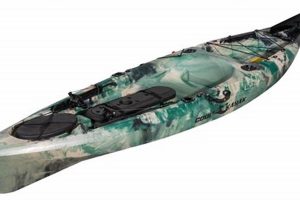
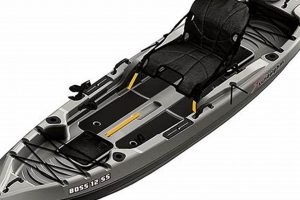
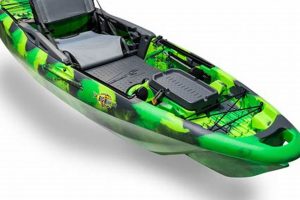
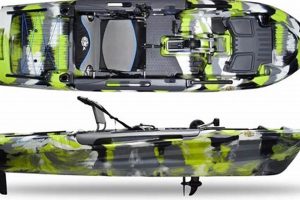
A kayak designed for professional fishing typically incorporates features like rod holders, specialized storage compartments for tackle and gear, and enhanced stability for casting and reeling. These vessels are often constructed from durable materials to withstand the rigors of frequent use and challenging environments. An example would be a sit-on-top model with a high weight capacity, multiple mounting points for accessories, and a rudder system for precise maneuvering.
Such specialized watercraft are crucial for anglers who rely on their equipment for livelihood or competitive tournaments. These kayaks offer significant advantages over recreational models by maximizing efficiency and effectiveness on the water. Their design enables anglers to cover more water, access difficult-to-reach fishing spots, and maintain stability in various conditions. Historically, fishing kayaks have evolved from basic, utilitarian designs to the highly specialized vessels available today, reflecting advancements in materials science and a deeper understanding of anglers’ needs.
This exploration of specialized fishing kayaks will delve into topics including hull design, material selection, propulsion systems, popular manufacturers, and essential accessories, providing a comprehensive understanding of the key features and benefits.
Tips for Effective Kayak Fishing
Maximizing success on the water requires careful consideration of equipment and technique. The following tips offer guidance for anglers seeking to improve their kayak fishing experience.
Tip 1: Stability is Paramount: Selecting a kayak with ample stability is crucial, particularly when standing to cast or reel. Wider hulls and outrigger systems enhance stability, allowing for greater freedom of movement.
Tip 2: Prioritize Storage and Organization: Efficient storage solutions are essential for maintaining a clutter-free and organized fishing platform. Tackle boxes, rod holders, and dry storage compartments keep gear readily accessible and protected from the elements.
Tip 3: Master Paddle and Rudder Control: Precise boat control is essential for navigating currents, wind, and approaching fish stealthily. Practicing paddle strokes and utilizing a rudder system allows for efficient maneuvering.
Tip 4: Choose the Right Propulsion System: Consider the fishing environment and personal preferences when selecting a propulsion system. Paddle kayaks offer excellent exercise and maneuverability, while pedal or motor-driven options cover greater distances and conserve energy.
Tip 5: Utilize Electronics Effectively: Fish finders and GPS units significantly enhance fishing success by locating fish, identifying underwater structures, and marking productive spots. Learning to interpret the data provided by these electronics is key.
Tip 6: Safety First: Wearing a personal flotation device (PFD) is paramount. Carrying essential safety gear, including a whistle, signaling device, and first-aid kit, is crucial for preparedness.
Tip 7: Respect the Environment: Practicing catch-and-release fishing helps preserve fish populations. Properly disposing of fishing line and other waste minimizes environmental impact.
By incorporating these tips, anglers can enhance their efficiency, safety, and overall enjoyment on the water, ultimately leading to a more successful and rewarding fishing experience.
This information provides a solid foundation for successful kayak fishing. The following section will offer a detailed exploration of advanced techniques for various fishing styles.
1. Stability

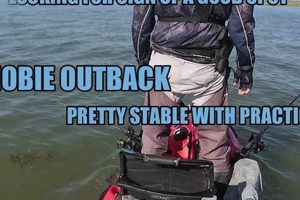
Stability is a paramount consideration in the design and selection of a professional fishing kayak. A stable platform is essential for various on-the-water activities, including casting, reeling, landing fish, and navigating challenging conditions. Compromised stability can lead to difficulty in maintaining balance, hindering fishing effectiveness and potentially creating safety risks. The degree of stability required depends on the intended fishing style and environment. For instance, anglers frequently standing to cast in open water require a significantly more stable kayak than those fishing from a seated position in calm rivers.
Several factors influence kayak stability. Hull design plays a crucial role, with wider, flatter hulls generally offering greater initial stability, while longer, narrower hulls provide superior secondary stability (resistance to tipping). The kayak’s center of gravity, influenced by weight distribution and the angler’s position, also significantly impacts stability. External factors, such as wind and waves, can further challenge stability, highlighting the importance of a well-designed and appropriately chosen vessel. For example, a kayak angler fishing in rough offshore conditions benefits from a wider, more stable hull design compared to an angler fishing in calm inland waters. Understanding the interplay of these factors is crucial for selecting the right kayak for specific fishing needs.
Selecting a kayak with appropriate stability enhances angler safety, efficiency, and overall fishing success. A stable platform allows anglers to focus on fishing techniques rather than maintaining balance, improving casting accuracy, and line control. Increased stability also allows for safer fish handling and reduces the risk of capsizing, particularly in challenging conditions. Ultimately, prioritizing stability ensures a more comfortable, productive, and secure fishing experience. Anglers should carefully consider their individual needs, fishing style, and the anticipated environment when evaluating kayak stability.
2. Storage Capacity

Storage capacity is a critical factor differentiating professional fishing kayaks from recreational models. Effective organization and readily accessible gear significantly impact fishing efficiency and success. A professional angler requires ample space for tackle boxes, rods, reels, safety equipment, and potentially electronic devices. Insufficient storage leads to a cluttered deck, hindering movement and increasing the risk of lost or damaged equipment. For example, a bass angler carrying a variety of lures and tackle needs significantly more storage than someone targeting a single species with minimal gear. Specialized compartments designed for specific items, such as dedicated rod holders and waterproof hatches for electronics, further enhance organization and protect valuable equipment from the elements. Furthermore, weight distribution within the kayak influences stability and performance, highlighting the importance of strategically organizing stored gear.
Kayak fishing often involves navigating remote locations or spending extended periods on the water. Sufficient storage allows anglers to carry necessary supplies, including food, water, and extra clothing, enhancing safety and comfort. In scenarios like tournament fishing, where time efficiency is crucial, well-organized storage facilitates quick access to essential gear, maximizing fishing time and potentially providing a competitive edge. Conversely, inadequate storage can disrupt fishing flow, leading to frustration and lost opportunities. For instance, an angler searching for a specific lure in a disorganized kayak loses valuable fishing time and potentially misses peak feeding periods. Practical considerations like ease of access and weight distribution also influence storage design. Front hatches, rear wells, and side storage compartments offer varying accessibility and weight distribution options, allowing anglers to customize their setup based on individual preferences and fishing style.
Optimizing storage capacity in a professional fishing kayak directly correlates with increased efficiency, safety, and overall fishing success. Adequate and well-organized storage allows anglers to focus on the task at hand, minimizing distractions and maximizing time spent fishing. This contributes to a more streamlined and productive experience on the water, ultimately improving the chances of a successful outing. Evaluating storage needs based on target species, fishing style, and anticipated trip duration is crucial for selecting a kayak that meets the demands of professional angling. Investing in a kayak with ample and well-designed storage is an investment in efficiency and success on the water.
3. Maneuverability

Maneuverability is a critical performance attribute for professional fishing kayaks, directly influencing anglers’ ability to navigate diverse water conditions and access prime fishing locations. Efficient and precise boat control is essential for navigating tight quarters, strong currents, and wind, as well as for stealthily approaching fish. A highly maneuverable kayak allows anglers to exploit various fishing techniques and maximize their time on the water.
- Tracking and Responsiveness
Tracking refers to a kayak’s ability to maintain a straight course, while responsiveness dictates how quickly and efficiently it reacts to paddle input. A kayak exhibiting excellent tracking minimizes the need for constant correction, conserving energy and allowing anglers to focus on fishing. Responsive kayaks quickly change direction, crucial for navigating obstacles or pursuing fish. For example, a kayak with superior tracking performs well in open water or when paddling against currents, whereas a highly responsive kayak excels in tight rivers or maneuvering around structure. The balance between tracking and responsiveness is a key consideration for anglers, influenced by the intended fishing environment and personal preferences.
- Hull Design and Length
Hull design significantly impacts maneuverability. Shorter kayaks generally turn more quickly, ideal for navigating tight spaces and complex waterways. Longer kayaks excel in tracking and maintaining speed, advantageous in open water and covering long distances. Hull shape also plays a role. A V-shaped hull enhances tracking and cuts through waves efficiently, while a flatter hull provides greater maneuverability and stability. For example, a short, flat-bottomed kayak is highly maneuverable in shallow creeks, while a longer, V-hulled kayak is better suited for open lakes or coastal fishing.
- Rudder Systems and Steering
Rudder systems enhance maneuverability by providing precise directional control. Foot-controlled rudders allow anglers to adjust course without changing paddle strokes, maintaining momentum and fishing efficiency. Rudders are particularly beneficial in windy conditions or strong currents, allowing anglers to maintain desired positions and navigate complex waterways. While some anglers prefer the simplicity and direct control of a paddle-only approach, a rudder system significantly enhances control and efficiency in challenging conditions.
- Weight and Waterline Length
A kayak’s weight and waterline length influence its maneuverability. Lighter kayaks accelerate and decelerate more quickly, facilitating rapid changes in direction. Waterline length, the portion of the hull in contact with the water, directly affects turning radius. A shorter waterline length generally results in a tighter turning radius. Anglers should consider the combined impact of weight and waterline length when assessing maneuverability. For instance, a heavily loaded kayak, even with a short waterline length, may feel less maneuverable due to increased inertia.
The interplay of these facets determines a fishing kayak’s overall maneuverability, a crucial factor influencing its suitability for specific fishing styles and environments. Anglers should carefully consider their individual needs and the anticipated fishing conditions when evaluating maneuverability. Prioritizing maneuverability empowers anglers to navigate efficiently, access difficult-to-reach fishing spots, and ultimately enhance their success on the water.
4. Durability

Durability is a paramount attribute for professional fishing kayaks, reflecting their capacity to withstand rigorous use, challenging environments, and the inevitable impacts inherent in the pursuit of angling. Unlike recreational kayaks used occasionally in calm waters, professional models frequently encounter harsh conditions, including rocky shorelines, submerged obstacles, and extended exposure to the elements. A durable kayak minimizes downtime and repair costs, ensuring consistent performance and longevity, essential for anglers who rely on their equipment for livelihood or competitive advantage.
- Material Selection
The choice of construction material directly influences a kayak’s durability. High-density polyethylene (HDPE) is a common material due to its impact resistance and affordability. Higher-end models might utilize more robust thermoformed plastics or composites like fiberglass or carbon fiber, offering increased strength and stiffness, albeit at a higher price point. Material selection also impacts weight, affecting portability and maneuverability. For example, a kayak constructed from rotomolded HDPE offers a balance of durability and affordability, suitable for general fishing environments. A lighter, composite kayak might be preferred for situations requiring greater portability or speed.
- Hull Construction
Hull construction techniques significantly contribute to a kayak’s overall durability. Single-piece, rotomolded hulls offer inherent strength and impact resistance, minimizing potential weak points. Multi-piece constructions, while potentially lighter, may introduce vulnerabilities at seams or joints. Reinforced keel areas and impact-resistant skid plates further enhance durability in high-wear areas. For example, a kayak designed for river fishing often features reinforced hulls and skid plates to protect against impacts with rocks and other submerged obstacles.
- Hardware and Fittings
The quality and design of hardware components, such as handles, latches, and deck fittings, contribute to overall durability. Marine-grade stainless steel or corrosion-resistant plastics are preferred for their ability to withstand harsh marine environments. Well-designed and securely installed fittings ensure long-term functionality and prevent premature failure. For example, high-quality stainless steel hardware is less susceptible to corrosion from saltwater exposure, contributing to the kayak’s longevity in marine environments.
- UV Resistance
Extended exposure to sunlight can degrade kayak materials, leading to fading, cracking, and reduced structural integrity. UV-resistant coatings and additives in the construction material enhance durability and prolong the kayak’s lifespan, particularly in regions with intense sunlight. Proper storage and maintenance practices further mitigate UV damage. For instance, storing a kayak under a cover or in a shaded area minimizes UV exposure, preserving its color and structural integrity over time.
These facets collectively determine a fishing kayak’s ability to endure the demands of professional angling. Prioritizing durability ensures a reliable and long-lasting investment, minimizing downtime and maximizing time on the water. Investing in a durable kayak is an investment in consistent performance and long-term value, essential for anglers who demand the best from their equipment. By carefully considering these factors, anglers can select a kayak that meets their specific needs and provides reliable performance for years to come.
5. Customization Options
Customization options are integral to the effectiveness of a professional fishing kayak, allowing anglers to tailor their vessels to specific needs and fishing styles. A customizable kayak provides a platform adaptable to diverse fishing techniques, target species, and environmental conditions. This adaptability is crucial for maximizing efficiency and success on the water, differentiating professional-grade kayaks from recreational models.
- Rod Holders and Positioning
Rod holders are fundamental customization elements, securing rods while paddling, trolling, or engaging in other onboard activities. Adjustable rod holders accommodate various rod lengths and fishing styles, allowing for optimal rod positioning and retrieval. Track systems offer flexibility in rod holder placement, enabling anglers to fine-tune their setup based on specific needs. For example, a bass angler might position rod holders for easy access to multiple rods rigged with different lures, while a fly fisher might prioritize a setup that facilitates casting and line management.
- Electronics Integration
Integrating electronics, such as fish finders, GPS units, and transducers, significantly enhances fishing effectiveness. Customization options allow for strategic placement of displays and transducers, optimizing visibility and data acquisition. Flush-mounted electronics minimize interference with fishing lines and optimize deck space. For example, a kayak angler targeting offshore species might prioritize a large screen fish finder integrated into the console, while an inland angler might opt for a smaller, portable unit.
- Storage Solutions and Gear Organization
Customizable storage solutions are crucial for maintaining an organized and efficient fishing platform. Modular storage systems, tackle box mounts, and specialized compartments for specific gear enhance accessibility and minimize clutter. These customized storage solutions ensure essential gear remains readily available and protected from the elements. For instance, an angler specializing in tournament fishing might prioritize a highly organized storage system for quick access to lures and tackle, maximizing fishing time.
- Propulsion and Pedal Drive Systems
Customization extends to propulsion systems, with options ranging from traditional paddles to pedal drives and electric motors. Anglers can select the system best suited to their fishing style and the environment. Pedal drives offer hands-free propulsion, beneficial for techniques requiring constant rod manipulation, while electric motors excel in covering long distances or battling strong currents. Choosing the right propulsion system is a critical customization decision, impacting fishing efficiency and overall experience.
These customization options collectively transform a standard kayak platform into a specialized fishing vessel optimized for individual needs and preferences. The ability to tailor the kayak’s setup significantly impacts fishing effectiveness and overall enjoyment on the water. By carefully considering these customization possibilities, anglers can create a truly personalized fishing platform that enhances their performance and maximizes their success on the water.
Frequently Asked Questions
This section addresses common inquiries regarding kayaks designed for professional angling.
Question 1: What key features differentiate a kayak designed for professional fishing from a recreational model?
Specialized fishing kayaks typically incorporate features like rod holders, specialized storage for tackle and gear, enhanced stability for casting and reeling, and often a higher weight capacity. These design elements cater to the specific needs and demands of professional anglers.
Question 2: How does hull design impact the performance of a fishing kayak?
Hull design significantly influences stability, maneuverability, and tracking. Wider hulls generally provide greater initial stability, while longer, narrower hulls offer better tracking. Specific hull shapes, such as pontoon hulls or catamaran designs, cater to particular fishing styles and water conditions.
Question 3: What materials are commonly used in the construction of professional fishing kayaks, and how do they impact durability and performance?
Common materials include high-density polyethylene (HDPE), thermoformed plastics, and composites like fiberglass or carbon fiber. HDPE offers a balance of durability and affordability, while composites provide increased strength and lighter weight but often come at a higher cost.
Question 4: What are the advantages and disadvantages of different propulsion systems for fishing kayaks, such as paddle, pedal, and motor drives?
Paddle propulsion offers simplicity and exercise but can limit range. Pedal drives provide hands-free operation for fishing but may be less efficient in shallow water or vegetation. Motor drives offer speed and range but introduce weight, cost, and potential maintenance requirements.
Question 5: How important is stability in a fishing kayak, and what factors contribute to it?
Stability is paramount for safe and effective fishing, particularly when standing to cast or reel. Contributing factors include hull width, length, and shape, as well as the angler’s weight distribution and the presence of outriggers or stabilizers.
Question 6: What safety considerations are essential for kayak fishing?
Essential safety measures include wearing a personal flotation device (PFD), carrying a whistle or other signaling device, informing someone of fishing plans and expected return time, and being aware of weather conditions and potential hazards.
Understanding these key aspects of professional fishing kayaks facilitates informed decisions, leading to enhanced on-the-water experiences. Selecting the right kayak tailored to individual needs and fishing styles is an investment in efficiency, safety, and overall success.
The next section will provide a detailed overview of leading manufacturers in the professional fishing kayak market.
Conclusion
Specialized fishing kayaks represent a significant advancement in angling technology, offering enhanced capabilities for professional and serious anglers. This exploration has highlighted the critical aspects of these vessels, including stability, storage, maneuverability, durability, and customization options. Each element plays a crucial role in maximizing efficiency, effectiveness, and overall fishing success. The analysis underscored the importance of selecting a kayak tailored to individual fishing styles, target species, and environmental conditions. Understanding the interplay of these factors empowers anglers to make informed decisions, leading to a more productive and rewarding experience on the water.
The evolution of fishing kayak design reflects a continuous pursuit of improved performance and angler-centric features. As technology advances and angling techniques evolve, further innovations in kayak design are anticipated. The informed angler, equipped with the knowledge presented here, is well-prepared to navigate the evolving landscape of specialized fishing kayaks and select the ideal vessel for their pursuit of angling excellence. The future of fishing kayaks promises enhanced performance, greater customization, and continued integration of cutting-edge technologies, further empowering anglers in their quest for success on the water.