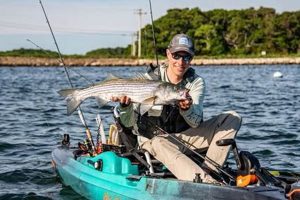
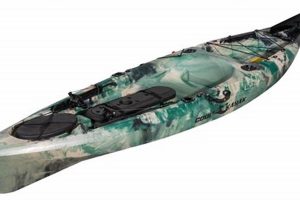
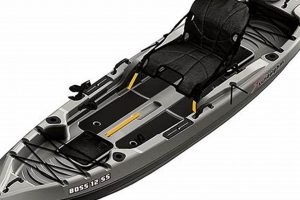
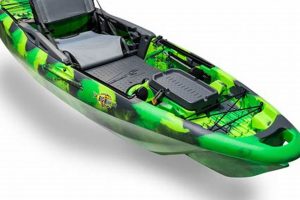
This type of personal watercraft, a sit-on-top vessel designed for angling, typically features a stable hull, ample storage for fishing gear, and specialized accessories like rod holders and paddle parks. These vessels are often constructed from durable, UV-resistant polyethylene. A common length for recreational fishing kayaks, twelve feet offers a balance between maneuverability and tracking performance suitable for various water conditions.
Compact and relatively lightweight, this style of watercraft provides anglers access to shallow waters and secluded fishing spots often inaccessible to larger boats. The stability inherent in the sit-on-top design allows for comfortable casting and reeling. Historically, fishing from small, human-powered vessels has been a common practice. Modern materials and manufacturing techniques, however, have enhanced the durability, portability, and performance of these vessels, increasing their popularity for recreational fishing.
Further exploration will cover specific features, advantages, and selection criteria relevant to this category of recreational fishing vessel, including factors like weight capacity, hull design, and included accessories. Additional topics may address proper usage, maintenance, and safety precautions for enjoyable and productive on-the-water experiences.
Tips for Kayak Fishing
Proper preparation and technique enhance safety and enjoyment while fishing from a kayak. The following tips offer guidance for a successful outing.
Tip 1: Check Local Regulations. Research licensing requirements and any specific regulations for the intended fishing area. Awareness of permitted fishing methods and catch limits is crucial.
Tip 2: Prioritize Safety. Always wear a personal flotation device (PFD). Carry a whistle for signaling, and inform someone of the fishing plan, including location and expected return time.
Tip 3: Plan for Stability. Distribute weight evenly within the kayak. Avoid sudden movements or leaning too far over the side, especially when casting or retrieving.
Tip 4: Pack Essential Gear. Carry necessary fishing equipment, including appropriately sized tackle, pliers, and a knife. Additional items like sunscreen, a hat, and water are also recommended.
Tip 5: Practice Paddling Technique. Efficient paddling conserves energy and allows for better boat control. Learn basic paddle strokes for maneuvering and maintaining position.
Tip 6: Respect the Environment. Practice catch-and-release fishing when appropriate. Properly dispose of any trash and avoid disturbing natural habitats.
Tip 7: Be Weather Aware. Check weather forecasts before heading out. Avoid fishing in strong winds, lightning storms, or other hazardous conditions.
Adhering to these guidelines promotes a safe and rewarding fishing experience. Preparation and thoughtful consideration of potential challenges contribute significantly to a positive outing.
These tips provide foundational knowledge for kayak fishing. Further research into specific techniques and regional regulations is always beneficial.
1. Sit-on-Top Design

The sit-on-top design is a defining characteristic of many recreational kayaks, including models designed for fishing, such as the Sun Dolphin 12-foot fishing kayak. This design significantly influences the kayak’s performance, stability, and overall suitability for angling.
- Self-Bailing and Stability
Sit-on-top kayaks feature scupper holes that allow water to drain away, preventing accumulation in the cockpit. This self-bailing mechanism is crucial for stability, especially in choppy conditions or when encountering waves. Anglers benefit from this design, as it allows for quicker recovery from unexpected splashes or wave action.
- Ease of Entry and Exit
The open cockpit of a sit-on-top kayak facilitates easy entry and exit, a significant advantage for anglers who may need to reposition themselves or enter the water quickly. This feature is particularly beneficial for fishing in shallow water or near shorelines.
- Comfort and Mobility
The elevated seating position in sit-on-top kayaks provides a comfortable and relatively dry experience. Anglers have greater freedom of movement compared to sit-inside designs, allowing for easier casting and retrieval. This design also provides better visibility, aiding in navigation and fish spotting.
- Storage and Gear Accessibility
Sit-on-top kayaks often incorporate built-in storage compartments and rigging options, allowing anglers to securely store tackle, rods, and other essential gear. The open design also simplifies access to equipment during a fishing trip.
These facets of the sit-on-top design contribute significantly to the Sun Dolphin 12-foot fishing kayak’s suitability for angling. The enhanced stability, ease of access, comfort, and gear management capabilities combine to create a user-friendly and efficient platform for recreational fishing. This design, therefore, differentiates this kayak model from traditional sit-inside kayaks and caters specifically to the needs of anglers.
2. Twelve-foot length

The twelve-foot length of this specific kayak model represents a compromise between maneuverability and tracking performance. Shorter kayaks, typically under ten feet, offer enhanced maneuverability in tight spaces and swift turns, making them suitable for navigating narrow creeks and rivers. However, shorter lengths often compromise tracking, the ability to maintain a straight course, which becomes more noticeable in open water or when paddling against currents. Longer kayaks, exceeding twelve feet, excel in tracking and glide efficiently over longer distances, beneficial for traversing larger lakes or coastal waters. However, increased length can hinder maneuverability, making tight turns and navigating confined areas more challenging. The twelve-foot length seeks to strike a balance, providing acceptable maneuverability while retaining reasonable tracking capabilities, thus suiting diverse fishing environments.
Consider a scenario where an angler targets fish near a heavily vegetated shoreline. The kayak’s twelve-foot length allows for sufficient maneuverability to navigate around obstacles like fallen trees or emergent vegetation. Simultaneously, when paddling across open stretches of water to reach a different fishing spot, the same length provides adequate tracking to maintain a relatively straight course, minimizing wasted effort and conserving energy. Alternatively, if targeting fish in a slow-moving river, the twelve-foot length facilitates maneuvering through bends and around shallow areas, while still allowing the angler to paddle upstream against the current with reasonable efficiency. These examples illustrate the practical implications of the twelve-foot length, highlighting its versatility in different fishing scenarios.
Understanding the implications of kayak length, specifically the twelve-foot length in this context, allows for informed decision-making during kayak selection. Choosing an appropriate length significantly influences on-the-water performance and overall fishing experience. While factors like weight capacity and hull design also play critical roles, length remains a fundamental consideration for optimizing maneuverability, tracking, and overall suitability for specific fishing environments. Recognizing the trade-offs between maneuverability and tracking associated with different kayak lengths helps anglers select a vessel aligned with their fishing style and target locations.
3. Fishing-Specific Features
Dedicated features differentiate fishing kayaks from recreational models. These features enhance angler convenience, efficiency, and overall fishing experience. Examining these specialized components provides insight into the design considerations specific to the Sun Dolphin 12-foot fishing kayak and its intended usage.
- Rod Holders
Flush-mounted or adjustable rod holders secure fishing rods, freeing hands for paddling, baiting hooks, or landing fish. Multiple rod holders accommodate different fishing techniques and allow for carrying spare rods. Consider a scenario where an angler trolls with one rod while having a second rod rigged for casting at visible structure. Rod holders allow for both rods to be readily available without cluttering the kayak’s cockpit.
- Storage Compartments
Dry storage hatches and recessed areas safeguard tackle boxes, fishing tools, and personal items from water damage. Dedicated storage for smaller items like lures, hooks, and weights keeps essential gear organized and accessible. Imagine an angler needing to quickly change lures based on fish activity. Organized storage allows for rapid retrieval of the necessary lure without disrupting the fishing process.
- Paddle Parks or Leashes
Paddle parks or leashes secure the paddle when not in use, preventing accidental loss and freeing hands for fishing. This is crucial during active fishing, as it ensures the paddle remains within reach but does not interfere with casting or reeling. Consider a scenario where an angler hooks a fish. A secured paddle eliminates the risk of it drifting away during the fight.
- Anchor Trolley System
An anchor trolley system allows for controlled anchoring from multiple positions on the kayak, enabling anglers to position the vessel effectively in relation to currents, structure, or wind. This feature enhances fishing precision by maintaining optimal boat position. For instance, an angler can use the trolley system to position the kayak slightly upstream of a submerged log, allowing the current to drift the bait naturally along the target area.
These features enhance the Sun Dolphin 12-foot fishing kayak’s practicality and suitability for angling. While the core design elements like length and hull type contribute to overall performance, the inclusion of fishing-specific features transforms the kayak into a dedicated fishing platform. The convenience, organization, and efficiency these features offer significantly improve the angler’s experience and contribute to a more productive and enjoyable outing on the water.
4. Durable Construction

Durable construction is a critical factor in the longevity and performance of a fishing kayak, especially considering the demanding conditions these vessels often endure. Exposure to sunlight, saltwater, and occasional impacts necessitates robust materials and construction techniques. This section examines the significance of durable construction specifically regarding Sun Dolphin 12-foot fishing kayaks.
- UV Resistance
Constant exposure to sunlight can degrade plastics, leading to brittleness and cracking. UV-resistant polyethylene, a common material in kayak construction, mitigates sun damage, extending the kayak’s lifespan. This resistance is essential for maintaining the structural integrity of the kayak over extended periods, especially in regions with intense sunlight.
- Impact Resistance
Kayaks inevitably encounter rocks, logs, or other obstacles, particularly when fishing in shallow waters or near shorelines. Impact-resistant construction, often achieved through thicker hull sections or reinforced materials, minimizes damage from such impacts. This durability reduces the risk of cracks or punctures, ensuring the kayak remains watertight and functional.
- Corrosion Resistance
Hardware components, such as fasteners and fittings, are susceptible to corrosion, especially in saltwater environments. Corrosion-resistant materials, like stainless steel or marine-grade aluminum, extend the lifespan of these components and maintain their functionality. This resistance prevents critical parts from weakening or failing due to corrosion, preserving the kayak’s overall structural integrity.
- Construction Techniques
Robust construction techniques, such as rotational molding or thermoforming, contribute to the kayak’s overall durability. These methods create a uniform and consistent hull thickness, minimizing weak points and enhancing resistance to stress and impact. Well-executed construction techniques ensure the kayak can withstand the rigors of regular use and maintain its structural integrity over time.
The durability of a Sun Dolphin 12-foot fishing kayak directly influences its lifespan and long-term performance. Investing in a kayak built with durable materials and employing robust construction techniques ultimately contributes to a more reliable and enjoyable fishing experience over the years. A durable kayak requires less maintenance and repair, allowing anglers to focus on fishing rather than addressing equipment issues. Durability, therefore, represents a key factor influencing the overall value and long-term satisfaction associated with this type of fishing kayak.
5. Stability and Maneuverability
Stability and maneuverability represent crucial performance characteristics for fishing kayaks, directly influencing angling effectiveness and overall user experience. These attributes are particularly relevant when evaluating a Sun Dolphin 12-foot fishing kayak, given its intended use in diverse aquatic environments. Stability refers to the kayak’s resistance to tipping or capsizing, allowing anglers to cast, reel, and land fish without compromising balance. Maneuverability describes the kayak’s responsiveness to paddle input, enabling precise navigation through various water conditions and around obstacles.
The hull design significantly influences both stability and maneuverability. Wider hulls generally provide greater initial stability, beneficial for casting and retrieving. However, increased width can compromise maneuverability, making tight turns more challenging. A longer kayak typically tracks more efficiently in open water but may be less maneuverable in tight spaces. The Sun Dolphin 12-foot fishing kayak’s design seeks to balance these factors. Its moderate width contributes to stability suitable for on-the-water fishing activities, while the twelve-foot length allows for reasonable maneuverability in various environments. Consider navigating through a narrow channel lined with emergent vegetation. Sufficient stability prevents tipping when reaching for a snag, while adequate maneuverability allows for navigating the confined waterway. Alternatively, when fishing in open water, stability allows for comfortable casting in various directions, while maneuverability enables adjustments to changing wind or current conditions.
Understanding the interplay between stability and maneuverability contributes significantly to informed kayak selection. Recognizing the inherent trade-offs between these attributes allows anglers to prioritize based on their specific fishing style and target locations. While a wider, more stable kayak might suit calm lakes or slow-moving rivers, a narrower, more maneuverable design might be preferable for navigating tight creeks or fast-flowing streams. Considering these factors in the context of the Sun Dolphin 12-foot fishing kayak provides a practical framework for assessing its suitability for individual angling needs and anticipated fishing environments. This understanding, coupled with consideration of other features like storage capacity and rod holders, empowers informed purchasing decisions and optimizes on-the-water performance.
6. Portability and Storage

Portability and storage considerations are essential factors influencing the overall practicality and usability of a Sun Dolphin 12-foot fishing kayak. The kayak’s size and weight directly impact transportation and storage logistics. While twelve feet represents a moderate length within recreational kayak categories, it still necessitates appropriate transport and storage solutions. Limited storage space or lack of suitable transport vehicles can significantly hinder kayak usage. Consider an individual residing in an apartment with limited storage options. Storing a twelve-foot kayak presents a logistical challenge, potentially requiring off-site storage solutions. Alternatively, an individual with a compact car might encounter difficulties transporting a kayak of this length, necessitating roof racks or trailers.
Several factors influence portability and storage practicality. Weight, hull design, and available accessories like kayak carts play significant roles. Lighter kayaks are easier to handle and transport, reducing strain during loading and unloading. Kayak carts facilitate transport from vehicle to launch point, minimizing carrying distance and physical exertion. Imagine transporting a kayak from a parking area to a distant boat ramp. A kayak cart significantly simplifies this process, especially for individuals with physical limitations. Similarly, consider storing a kayak during the off-season. A lightweight, easily maneuvered kayak simplifies storage in garages, sheds, or basements. Understanding these logistical aspects enhances long-term kayak ownership satisfaction.
Addressing portability and storage challenges enhances the overall kayak ownership experience. Roof racks, trailers, and kayak carts represent practical solutions for transport. Dedicated storage racks or ceiling hoists simplify storage in limited spaces. Evaluating these aspects during the kayak selection process ensures alignment between the kayak’s dimensions and available storage and transport resources. This proactive approach minimizes potential logistical issues, maximizing opportunities for on-the-water enjoyment. Ultimately, addressing portability and storage considerations contributes to a more seamless and rewarding kayaking experience.
Frequently Asked Questions
This section addresses common inquiries regarding Sun Dolphin 12-foot fishing kayaks, providing concise and informative responses to facilitate informed decision-making and enhance user understanding.
Question 1: What is the weight capacity of a typical Sun Dolphin 12-foot fishing kayak?
Weight capacity varies depending on the specific model, typically ranging from 300 to 400 pounds. Consulting manufacturer specifications provides precise figures for individual models.
Question 2: Are these kayaks suitable for ocean use?
While designed primarily for calm waters like lakes and slow-moving rivers, some models can handle moderate ocean conditions. However, careful consideration of weather forecasts and water conditions is crucial before venturing into open ocean environments.
Question 3: What accessories are typically included with a Sun Dolphin 12-foot fishing kayak?
Included accessories vary by model but often include paddle(s), rod holders, and storage compartments. Specific model descriptions detail included accessories.
Question 4: How does one transport a 12-foot kayak?
Transportation options include roof racks, trailers, and truck beds. Kayak carts facilitate transport from vehicle to launch point. Selecting an appropriate method depends on vehicle type and individual circumstances.
Question 5: What maintenance is required for a Sun Dolphin 12-foot fishing kayak?
Regular rinsing with fresh water after each use removes salt and debris. Periodic inspection of hardware and hull condition helps identify potential issues early. Manufacturer recommendations provide detailed maintenance guidelines.
Question 6: What safety precautions should one take when fishing from a kayak?
Wearing a personal flotation device (PFD) is paramount. Informing someone of the fishing plan, including location and expected return time, enhances safety. Checking weather forecasts and avoiding hazardous conditions are crucial precautions.
Understanding these frequently asked questions provides a foundation for informed kayak selection and safe, enjoyable on-the-water experiences. Thorough research, including consulting manufacturer specifications and seeking expert advice, further enhances product knowledge and promotes responsible kayak usage.
Further sections will explore specific model comparisons, user reviews, and advanced fishing techniques relevant to this category of recreational fishing vessel.
Conclusion
This exploration has provided a comprehensive overview of the Sun Dolphin 12-foot fishing kayak, encompassing key aspects such as design features, performance characteristics, and practical considerations related to portability, storage, and maintenance. The sit-on-top design, coupled with the twelve-foot length, offers a balanced approach to stability and maneuverability, catering to diverse fishing environments. Specialized features like rod holders, storage compartments, and anchor trolley systems enhance angling functionality, while durable construction ensures longevity and reliable performance. Addressing practicalities like transportation and storage facilitates seamless integration of kayak fishing into recreational pursuits.
The information presented empowers informed decision-making for prospective kayak anglers, enabling selection of a vessel aligned with individual needs and preferences. Ultimately, understanding the nuances of kayak design, performance characteristics, and practical considerations contributes to enhanced on-the-water experiences and promotes responsible enjoyment of this popular recreational fishing platform.