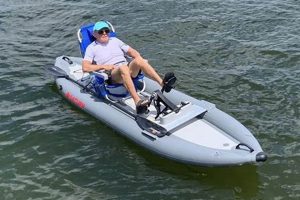
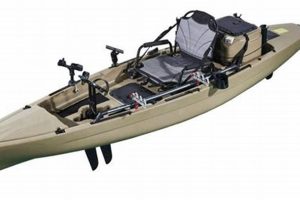
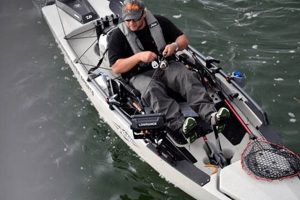
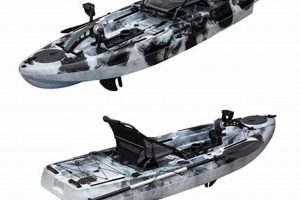
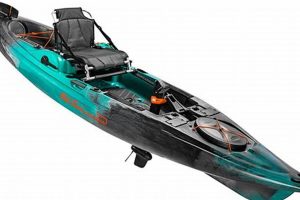
Hands-free propulsion kayaks designed specifically for anglers offer a unique blend of stability, speed, and stealth. These watercraft utilize leg-powered pedal drives, leaving hands free for casting, reeling, and other fishing activities. This design allows for greater maneuverability and sustained speeds compared to traditional paddle kayaks, particularly beneficial when navigating currents or covering larger distances on the water. They often come equipped with features such as rod holders, tackle storage, and even live wells, further enhancing their fishing utility. A wide range of models are available on the market, catering to diverse budgets and fishing styles.
The increasing popularity of human-powered fishing vessels reflects a growing demand for efficient and environmentally friendly approaches to angling. Compared to motorized boats, these craft offer a quieter, less intrusive fishing experience, minimizing disturbance to aquatic life and enhancing the overall connection with nature. This method of propulsion also offers physical benefits, providing a low-impact workout while enjoying the outdoors. Historically, fishing from kayaks relied solely on paddles, limiting an angler’s ability to multitask efficiently. The development of pedal-driven systems has significantly improved fishing efficacy and comfort, expanding the possibilities for kayak angling.
Further exploration will delve into specific types of propulsion systems, key features to consider when selecting a fishing kayak, and an overview of the current market landscape, including popular brands and pricing considerations.
Tips for Selecting and Using Pedal-Powered Fishing Kayaks
Choosing and effectively utilizing a pedal-driven fishing kayak requires careful consideration of various factors. The following tips offer guidance for optimizing the selection and usage process.
Tip 1: Propulsion System Evaluation: Assess different pedal drive mechanisms (e.g., propeller, fin) based on intended fishing environments. Propeller systems offer speed and open-water efficiency, while fin drives excel in shallow water and vegetation, minimizing the risk of entanglement.
Tip 2: Stability and Hull Design: Prioritize stability, especially when standing to cast or reel. Wider hulls generally offer greater stability, while longer kayaks track better in open water. Consider the desired fishing environment and personal preferences when evaluating hull design.
Tip 3: Feature Considerations: Evaluate features such as rod holders, tackle storage, and integrated fish finders based on individual fishing styles and needs. Prioritize features that enhance efficiency and comfort on the water.
Tip 4: Weight Capacity and Kayak Length: Ensure the kayak’s weight capacity accommodates the angler’s weight, fishing gear, and potential catch. Longer kayaks generally offer more storage space and improved tracking, but maneuverability may be reduced in tight spaces.
Tip 5: Transportation and Storage: Consider the kayak’s weight and length when evaluating transportation and storage options. Roof racks, trailers, or specialized kayak carts may be necessary for transport. Storage space at home or access to suitable storage facilities should also be considered.
Tip 6: Budgetary Considerations: Establish a budget before exploring available options. Prices vary based on features, materials, and brand reputation. Research different models and compare features to ensure optimal value within the designated budget.
Tip 7: Test Drive and Research: If possible, test drive different models before making a purchase. This allows for firsthand experience with stability, maneuverability, and features. Online reviews and forums can provide valuable insights from other anglers.
By considering these tips, anglers can make informed decisions, maximizing their fishing experience and ensuring the selection of a kayak suited to individual needs and preferences.
This comprehensive approach to selecting and using pedal-powered fishing kayaks will enhance angling effectiveness and overall enjoyment on the water. The following conclusion summarizes key findings and reinforces the benefits of this evolving fishing platform.
1. Propulsion

The defining characteristic of “pedal powered fishing kayaks for sale” lies in their propulsion system. Unlike traditional paddle-powered kayaks, these vessels employ a pedal-drive mechanism, offering distinct advantages and influencing various aspects of the fishing experience. This facet warrants detailed exploration to understand its implications fully.
- Hands-Free Fishing
Pedal-driven propulsion frees the angler’s hands for casting, reeling, and handling fish, significantly enhancing fishing efficiency. This advantage proves invaluable in various scenarios, such as fighting strong currents or managing multiple rods. The ability to maintain precise boat positioning while simultaneously engaging in fishing activities distinguishes pedal kayaks from their paddle-driven counterparts. This hands-free operation contributes substantially to the appeal of these specialized fishing kayaks.
- Increased Speed and Range
Pedal drives often offer higher sustained speeds compared to paddling, allowing anglers to cover greater distances and reach fishing spots more quickly. This increased range expands fishing opportunities, particularly in larger bodies of water. The continuous, leg-powered motion provides consistent propulsion, minimizing fatigue compared to repetitive paddling motions. This enhanced speed and range directly influence the versatility and appeal of pedal-powered fishing kayaks within the broader market.
- Maneuverability and Control
Modern pedal-drive systems offer excellent maneuverability, including forward and reverse motion and precise directional control. This level of control proves essential for navigating tight spaces, maneuvering in currents, and maintaining position while fishing. The ability to instantly adjust position and direction enhances fishing precision and responsiveness to changing conditions. This aspect of pedal propulsion significantly contributes to the overall utility and effectiveness of these kayaks for fishing applications.
- Types of Pedal Drives
Two primary types of pedal drives dominate the market: propeller-based and fin-based systems. Propeller systems generally offer higher speeds in open water, while fin drives excel in shallow water and vegetated areas due to their lower risk of entanglement. Understanding the nuances of each system is crucial for selecting the most appropriate drive type based on intended fishing environments. The choice between these systems directly impacts performance and suitability for specific fishing scenarios.
The pedal-driven propulsion system serves as the foundation for the distinct advantages offered by these specialized fishing kayaks. By understanding the various facets of this propulsion method hands-free operation, enhanced speed and range, maneuverability, and the different drive types prospective buyers can make informed decisions aligned with their specific fishing needs and preferences. This core feature directly influences the value proposition and overall experience offered by pedal powered fishing kayaks available for purchase.
2. Purpose

The “fishing” aspect of pedal-powered fishing kayaks directly influences their design, features, and overall functionality. These kayaks are specifically engineered to enhance angling effectiveness and cater to the unique needs of anglers. Understanding this core purpose is crucial for evaluating their suitability and appreciating the specialized features they offer.
- Enhanced Stability
Fishing kayaks prioritize stability, particularly for activities like standing casting and reeling. Hull designs often incorporate wider beams and flatter bottoms to maximize stability, allowing anglers to maintain balance while engaging in fishing activities. This enhanced stability is crucial for safe and effective angling, especially in challenging conditions or when handling larger fish. The stability requirements directly influence the design and construction of pedal-powered fishing kayaks intended for angling purposes.
- Specialized Storage and Organization
These kayaks typically feature specialized storage compartments and organizational systems designed for fishing gear. Rod holders, tackle storage compartments, and even live wells are common features, ensuring convenient access to essential equipment and maintaining a clutter-free fishing environment. These storage solutions optimize space utilization and enhance fishing efficiency. The specific needs of anglers regarding gear storage directly influence the design and layout of these specialized fishing kayaks.
- Integration of Fishing Technologies
Many pedal-powered fishing kayaks are designed for seamless integration with fishing technologies such as fish finders and GPS units. Mounting points, transducer scuppers, and wiring channels are often incorporated, facilitating the installation and use of electronic fishing aids. This integration enhances angling precision and effectiveness, reflecting the growing importance of technology in modern fishing practices. The compatibility with these technologies further distinguishes fishing kayaks from recreational models.
- Customization and Adaptability
Recognizing the diverse needs of anglers, many fishing kayaks offer customization options and adaptable features. Adjustable seating positions, modular track systems for mounting accessories, and interchangeable components allow anglers to tailor the kayak to their specific fishing styles and preferences. This adaptability ensures a personalized fishing experience and enhances overall comfort and efficiency on the water. The flexibility offered by these kayaks reflects the diverse requirements of various fishing disciplines.
The purpose-built design of pedal-powered fishing kayaks directly contributes to their effectiveness as angling platforms. By prioritizing stability, incorporating specialized storage solutions, integrating fishing technologies, and offering customization options, these kayaks cater specifically to the unique needs and demands of anglers. This targeted approach distinguishes them from recreational kayaks and reinforces their value proposition within the fishing community. The convergence of these purpose-driven features defines the essence of pedal-powered fishing kayaks and contributes to their growing popularity among serious anglers.
3. Vessel Type
The “kayak” designation within “pedal powered fishing kayaks for sale” signifies more than just a classification; it represents a fundamental design principle impacting performance, functionality, and overall suitability for angling. Kayaks, characterized by their relatively narrow beam, closed deck, and seated position, offer inherent advantages for fishing applications, particularly when combined with pedal-driven propulsion. This vessel type’s inherent characteristics significantly influence the overall effectiveness and appeal of pedal-powered fishing kayaks.
The kayak’s streamlined hull form facilitates efficient movement through the water, minimizing resistance and maximizing the effectiveness of the pedal drive. This efficiency translates to increased speed and range, allowing anglers to cover greater distances and access remote fishing locations. The sit-on-top design prevalent in fishing kayaks offers enhanced stability, particularly beneficial when standing to cast or reel. This stability is further augmented by the relatively low center of gravity inherent in kayak design, contributing to a secure and balanced fishing platform. Practical examples include navigating shallow, weedy areas where a kayak’s maneuverability excels, or maintaining stability in open water while battling strong currents or larger fish. Understanding the impact of kayak design on performance is essential for selecting the appropriate vessel for specific fishing environments and target species.
The kayak’s inherent characteristicsstreamlined hull, sit-on-top design, and low center of gravityconverge to create a stable, efficient, and maneuverable platform ideally suited for fishing. These inherent attributes, combined with the advantages of pedal propulsion, distinguish pedal-powered fishing kayaks from other fishing watercraft. Recognizing the interplay between vessel type and functionality allows for informed decision-making, ensuring the selected kayak aligns with specific angling needs and enhances overall fishing success. This understanding is crucial for navigating the market and selecting the optimal vessel for a given fishing application, reflecting the practical significance of “kayak” as a defining element in “pedal powered fishing kayaks for sale.”
4. Availability
The “for sale” component within “pedal powered fishing kayaks for sale” signifies market availability, a crucial aspect connecting potential buyers with desired products. This availability, or lack thereof, directly impacts market dynamics, consumer choice, and overall industry trends. Understanding this seemingly simple element reveals deeper insights into the interplay between supply, demand, and consumer behavior within the specialized fishing kayak market. Analyzing “for sale” requires considering various factors, including distribution channels, pricing strategies, and overall market saturation.
The state of “for sale” reflects broader market trends. High availability often indicates robust production and potentially competitive pricing, suggesting a mature market segment. Conversely, limited availability might signal high demand, production constraints, or strategic market positioning. The “for sale” status influences purchasing decisions. Ready availability allows immediate acquisition, fulfilling immediate needs. Limited availability, however, may necessitate pre-orders, waiting lists, or exploring alternative products. Real-world examples include seasonal sales fluctuations, limited edition releases creating artificial scarcity, or supply chain disruptions impacting product availability. These scenarios demonstrate the tangible impact of “for sale” on consumer behavior and market dynamics.
The practical significance of understanding “for sale” lies in informed purchasing decisions. Recognizing market availability empowers consumers to strategize purchases, compare pricing, and explore alternative options. Monitoring availability trends provides insights into product lifecycle, potential price fluctuations, and overall market health. This knowledge enables proactive purchasing decisions, optimizing value and ensuring access to desired products. “For sale,” while seemingly straightforward, represents a dynamic market force influencing both consumer behavior and industry trends within the specialized niche of pedal-powered fishing kayaks. Analyzing this element provides valuable context for navigating the market and making informed purchasing decisions.
5. Target Audience

The “anglers” component within “pedal powered fishing kayaks for sale” defines the specific consumer group targeted by this product category. This focus on anglers directly influences design, features, marketing strategies, and overall product development. Understanding this target audience is crucial for manufacturers, retailers, and marketers seeking to effectively reach and engage potential buyers. The relationship between anglers and pedal-powered fishing kayaks represents a symbiotic connection, where product development caters to specific needs and angler preferences drive market demand.
The specialized design of pedal-powered fishing kayaks directly addresses the unique requirements of anglers. Features like rod holders, tackle storage, and enhanced stability cater specifically to fishing activities. Marketing campaigns emphasize these features, highlighting benefits such as hands-free fishing and increased maneuverability, resonating directly with angling priorities. This targeted approach optimizes product development and marketing effectiveness, maximizing appeal within the designated target audience. For example, bass anglers might prioritize stability and shallow-water maneuverability, while offshore anglers may emphasize speed and storage capacity. These diverse needs within the broader angling community drive specialized product development and targeted marketing efforts.
Understanding the “anglers” component allows for refined market segmentation and targeted outreach. By focusing on specific angling disciplines, manufacturers and retailers can tailor product offerings and marketing messages to resonate with distinct angler subgroups. This focus optimizes resource allocation and maximizes return on investment. The practical significance lies in connecting the right product with the right consumer, fostering customer satisfaction and driving market growth within the specialized niche of pedal-powered fishing kayaks. Recognizing the “anglers” as the core target audience shapes the entire product lifecycle, from design and development to marketing and sales. This understanding is fundamental for sustained success within this specialized market segment.
Frequently Asked Questions
This section addresses common inquiries regarding pedal-powered fishing kayaks, providing concise and informative responses to facilitate informed decision-making.
Question 1: What are the primary advantages of pedal-powered kayaks over traditional paddle kayaks for fishing?
Pedal propulsion allows for hands-free fishing, enhancing casting, reeling, and fish handling. Increased speed and range expand fishing coverage, while enhanced maneuverability improves navigation in various water conditions.
Question 2: How do different pedal-drive systems (propeller vs. fin) compare in terms of performance and suitability for various fishing environments?
Propeller systems excel in open water, delivering higher speeds. Fin drives are better suited for shallow or vegetated areas, minimizing entanglement risks. Drive selection depends on the intended fishing environment.
Question 3: What key features should one consider when selecting a pedal-powered fishing kayak?
Essential features include stability, storage capacity, rod holders, transducer compatibility, and seating comfort. Individual fishing styles and target species influence feature prioritization.
Question 4: How does one determine the appropriate size and weight capacity for a pedal-powered fishing kayak?
Kayak size and weight capacity should accommodate the angler’s weight, fishing gear, and potential catch. Longer kayaks offer better tracking but reduced maneuverability. Weight capacity ensures safe and stable operation.
Question 5: What are the typical maintenance requirements for pedal-drive systems and fishing kayaks in general?
Regular rinsing with fresh water after each use minimizes corrosion. Periodic lubrication of moving parts and inspection for wear and tear are essential for optimal performance and longevity. Specific maintenance requirements vary depending on the drive system and kayak materials.
Question 6: What are the typical price ranges for pedal-powered fishing kayaks, and what factors influence pricing?
Prices vary significantly based on features, materials, brand reputation, and included accessories. Establishing a budget and comparing features across different models ensures optimal value within the desired price range.
Addressing these frequently asked questions provides a comprehensive overview of key considerations for prospective buyers of pedal-powered fishing kayaks. Understanding these aspects empowers informed decisions and ensures optimal selection based on individual needs and preferences.
The subsequent section offers concluding thoughts on the evolution and future of pedal-powered fishing kayaks, summarizing the key benefits and highlighting the growing popularity of this specialized angling platform.
Conclusion
This exploration of pedal-powered fishing kayaks available for purchase has highlighted their transformative impact on the angling experience. Key advantages, including hands-free operation, enhanced speed and range, and specialized design features tailored for fishing, distinguish these vessels from traditional paddle kayaks. Analysis of propulsion systems, hull designs, and integrated fishing technologies underscores the purpose-driven engineering behind these specialized watercraft. Market availability, influenced by factors such as demand, production, and distribution, directly impacts consumer access and purchasing decisions. The focus on anglers as the target audience shapes product development, marketing strategies, and overall industry trends. Understanding these interconnected elements provides a comprehensive perspective on the value proposition offered by pedal-powered fishing kayaks within the broader angling landscape.
The evolution of fishing kayak technology continues to refine the angling experience, enhancing efficiency, accessibility, and overall enjoyment on the water. Careful consideration of individual needs, fishing styles, and target species empowers informed purchasing decisions. As technology advances and angler preferences evolve, pedal-powered fishing kayaks represent a significant advancement in the pursuit of angling success, offering a dynamic and effective platform for exploring the world’s waterways.