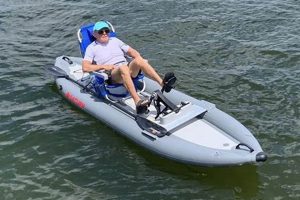
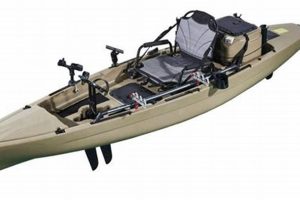
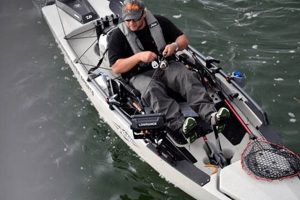
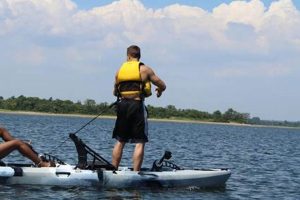
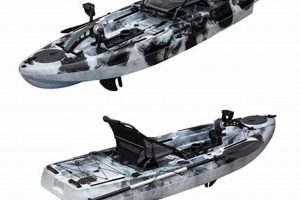
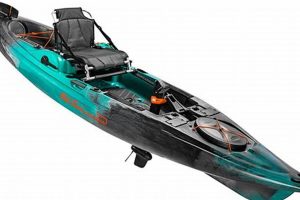
Hands-free propulsion kayaks offer anglers a unique advantage. Utilizing foot-powered systems, these watercraft allow for continuous fishing while maneuvering, providing enhanced control and stability compared to traditional paddle kayaks. This design frees the angler’s hands for casting, reeling, and handling tackle, optimizing fishing time and efficiency. Imagine the ability to maintain position against a current or subtly adjust location while simultaneously working a lure this exemplifies the core functionality.
This approach to angling provides several significant benefits. The increased mobility and hands-free operation contribute to a more productive fishing experience, especially in challenging environments. Furthermore, the physical effort involved in pedaling can be less strenuous over extended periods than paddling, reducing fatigue and allowing for longer outings. While kayaks have a long history in fishing cultures worldwide, the integration of pedal drives is a relatively recent innovation that has significantly enhanced the sport’s capabilities and accessibility. This evolution stems from the desire for greater efficiency and control on the water, a need answered by technological advancements in propulsion systems.
A deeper exploration of this fishing method reveals several key considerations, including the various types of pedal drive systems, selecting the right hull design for specific fishing conditions, and understanding the impact of these craft on angling techniques and strategies. Furthermore, an examination of the environmental impact and responsible usage guidelines is crucial for sustainable practice.
Tips for Hands-Free Kayak Fishing
Optimizing the hands-free fishing experience requires careful consideration of several key factors. These tips offer valuable insights for maximizing efficiency and enjoyment on the water.
Tip 1: Proper Pedal Drive Maintenance: Regular maintenance ensures optimal performance and longevity of the pedal drive system. Lubrication and inspection for wear and tear should be performed according to the manufacturer’s recommendations.
Tip 2: Strategic Gear Placement: Thoughtful organization of rods, tackle, and other equipment is essential for maintaining a clutter-free and efficient fishing platform. Utilizing readily accessible storage compartments and mounting systems contributes to a seamless fishing experience.
Tip 3: Understanding Water Conditions: Awareness of currents, tides, and wind patterns is crucial for effective navigation and positioning. Adapting pedaling cadence and direction to these conditions maximizes efficiency and minimizes effort.
Tip 4: Mastering Rudder Control: Efficient rudder usage is essential for precise maneuvering and maintaining desired headings, especially in challenging conditions. Practice and familiarity with the rudder system contribute to improved boat control and responsiveness.
Tip 5: Effective Anchor Deployment: Proper anchor deployment techniques are essential for maintaining position in target fishing areas. Utilizing appropriate anchor types and deployment strategies ensures stability and prevents drifting.
Tip 6: Respecting the Environment: Adhering to responsible fishing practices and minimizing environmental impact are crucial for preserving natural habitats. Proper disposal of waste and avoidance of sensitive areas contribute to sustainable angling.
Tip 7: Safety First: Wearing a personal flotation device and carrying essential safety equipment are paramount for a safe and responsible fishing experience. Checking weather conditions before embarking and informing someone of the intended fishing location are crucial safety precautions.
By implementing these strategies, anglers can significantly enhance their hands-free fishing endeavors, optimizing both efficiency and enjoyment on the water. Attention to these details contributes to a more productive and rewarding experience.
These tips provide a foundation for successful hands-free kayak fishing, paving the way for more in-depth exploration of specific techniques and strategies.
1. Hands-Free Angling

Hands-free angling represents a significant advantage offered by pedal-powered kayaks. This capability distinguishes the method from traditional paddling, enabling a more active and efficient fishing experience. The following facets illustrate the core components and implications of this approach.
- Enhanced Lure Control:
Maintaining constant lure manipulation while simultaneously maneuvering the kayak allows for precise presentation and improved action. Imagine working a topwater lure with subtle twitches and pauses, all while maintaining position in a current or slowly tracking a school of fish. This level of control maximizes the chances of enticing a strike. This subtle manipulation is often crucial for triggering a bite, a key advantage in challenging fishing scenarios.
- Improved Hookset Potential:
With hands readily available, anglers can react instantly to strikes, setting the hook with greater speed and efficiency. This responsiveness is critical for securing a solid hookset, especially when targeting fast-striking species. A delayed reaction, common when transitioning from paddle to rod, often results in missed opportunities.
- Simultaneous Navigation and Fishing:
Pedal kayaks allow anglers to fish effectively while navigating through various water conditions. This capability is invaluable for covering ground efficiently and exploring diverse habitats, whether trolling along a weed line or maintaining position in a river channel. Constant fishing maximizes the chance encounters with target species.
- Increased Versatility in Tackle Management:
Hands-free operation provides the freedom to manage multiple rods, switch lures quickly, and adjust tackle configurations with ease. This adaptability is especially beneficial in dynamic fishing situations where varying techniques are required to target different species or changing conditions. The seamless transition between techniques contributes to a more versatile and productive fishing experience.
These facets of hands-free angling collectively contribute to a more dynamic and engaging experience within pedal kayak fishing. The freedom to focus on fish behavior and react instantaneously to strikes significantly enhances angling effectiveness. This advantage positions pedal-powered kayaks as a compelling platform for both novice and experienced anglers seeking to optimize their time on the water. The seamless integration of propulsion and angling actions allows for a fluid and efficient fishing experience previously unattainable with traditional paddling methods.
2. Propulsion Efficiency

Propulsion efficiency is a defining characteristic of pedal kayaks, significantly impacting their performance and suitability for various fishing scenarios. Understanding the nuances of this aspect is crucial for maximizing the advantages these craft offer. The following facets explore the core components and implications of propulsion efficiency within the context of pedal kayak fishing.
- Reduced Physical Exertion:
Pedal drives generally offer greater efficiency compared to traditional paddling, converting leg power into forward momentum with less energy expenditure. This translates to reduced fatigue, especially during longer fishing trips, allowing anglers to cover more water and fish for extended periods without experiencing the same level of physical strain as paddling. This conservation of energy allows anglers to focus on fishing rather than battling fatigue.
- Maintaining Position in Current:
The continuous power delivery of a pedal drive system provides superior control in moving water. Holding position against a current or maintaining a slow, steady troll becomes significantly easier, allowing anglers to target specific areas with greater precision. This advantage is crucial for river fishing or fishing in tidal zones where currents can be challenging to navigate with traditional paddles. The ability to maintain precise position enhances fishing effectiveness in dynamic environments.
- Speed and Range:
Pedal kayaks often achieve higher speeds and cover greater distances compared to paddle kayaks, particularly over longer periods. This enhanced range opens up access to more distant fishing spots and allows for quicker transitions between locations, maximizing fishing time and exploring a wider range of habitats. Expanded access to fishing grounds increases opportunities for encountering target species.
- Stealth and Reduced Disturbance:
The underwater propulsion system of pedal kayaks creates less surface disturbance than paddling, contributing to a stealthier approach. This reduced noise and vibration can be crucial when fishing in shallow water or targeting wary species, enhancing the chances of a successful approach without spooking fish. Maintaining a low profile improves the probability of successful hookups.
These facets of propulsion efficiency highlight the significant advantages pedal kayaks offer in terms of performance and adaptability. From conserving energy and maximizing fishing time to accessing distant fishing grounds and maintaining a stealthy approach, propulsion efficiency significantly contributes to the overall effectiveness and enjoyment of pedal kayak fishing. These advantages position pedal-powered kayaks as a versatile and efficient platform for various angling scenarios, expanding the possibilities for anglers of all skill levels.
3. Enhanced Maneuverability

Maneuverability represents a critical aspect of pedal kayak fishing, directly influencing an angler’s ability to navigate diverse water conditions and effectively target fish. Superior maneuverability distinguishes pedal-powered kayaks from traditional paddle craft, offering significant advantages in various fishing scenarios. The following facets explore the core components and implications of enhanced maneuverability within this specialized fishing method.
- Precise Boat Control:
The hands-free nature of pedal propulsion allows for continuous rudder adjustments, enabling precise boat control in challenging environments. Navigating tight quarters, such as narrow creeks or weed-choked areas, becomes significantly easier. Maintaining precise positioning while simultaneously fishing enhances angling effectiveness, particularly when targeting structure or specific cover.
- Effortless Turning and Tracking:
The integrated rudder system, combined with the continuous propulsion of the pedal drive, facilitates effortless turning and tracking. Quick changes in direction and maintaining a desired course, even in windy conditions, become significantly more manageable. This responsiveness is crucial for following schools of fish, adjusting to changing currents, or navigating complex shorelines.
- Improved Stability in Challenging Conditions:
Enhanced maneuverability contributes to improved stability, especially in windy or choppy conditions. The ability to quickly adjust position and maintain heading minimizes the impact of external forces, providing a more stable and secure fishing platform. This stability is crucial for maintaining balance and comfort, especially when standing to cast or fight fish.
- Efficient Navigation in Shallow Water:
The shallow draft of many pedal kayaks, combined with their maneuverability, allows anglers to access areas inaccessible to larger boats or even traditional paddle kayaks. Navigating shallow flats, backwater channels, and weed beds becomes significantly easier, expanding fishing opportunities and allowing anglers to target fish in their preferred habitats. This access to shallow water environments often yields significant fishing advantages.
These facets of enhanced maneuverability collectively contribute to the effectiveness and versatility of pedal kayak fishing. The ability to precisely control the kayak, navigate challenging conditions, and access shallow water environments significantly expands angling opportunities and enhances the overall fishing experience. This advantage positions pedal-powered kayaks as a compelling option for anglers seeking to maximize their on-the-water effectiveness and explore a wider range of fishing scenarios. The seamless integration of propulsion and steering provides a level of control and responsiveness previously unattainable with traditional paddling methods, ultimately contributing to a more dynamic and successful fishing experience.
4. Increased Stability
Stability plays a crucial role in pedal kayak fishing, directly impacting angler safety, comfort, and fishing effectiveness. The design characteristics of pedal kayaks often contribute to enhanced stability compared to traditional paddle kayaks. Wider hulls and lower centers of gravity create a more stable platform, particularly beneficial when fishing in challenging conditions such as windy or choppy water. This inherent stability allows anglers to confidently stand and cast, fight fish, and navigate rougher waters without compromising balance or safety. Consider an angler battling a strong fish in windy conditions; a stable platform is essential for maintaining control and preventing capsizing. This stability fosters confidence, allowing anglers to focus on fishing rather than worrying about balance.
Furthermore, the hands-free nature of pedal propulsion contributes to stability. Anglers can use their hands for balance and support, especially when standing or maneuvering in challenging conditions. This added stability allows for more dynamic fishing techniques, such as sight casting or fly fishing, which require greater balance and body control. For example, an angler sight-fishing in shallow water can maintain a stable standing position while simultaneously pedaling and preparing to cast, maximizing their chances of a successful hookup. The ability to react quickly and maintain balance while landing a fish also contributes significantly to a successful and safe fishing experience.
The increased stability offered by pedal kayaks significantly enhances the overall fishing experience. Anglers can fish more confidently and comfortably, explore a wider range of water conditions, and employ more dynamic fishing techniques. This stability factor contributes to both safety and effectiveness, making pedal kayaks a versatile platform for anglers of all skill levels. While inherent stability is crucial, anglers should still prioritize safety precautions, such as wearing a personal flotation device and understanding the limitations of their kayak in various water conditions. This informed approach ensures a safe and enjoyable fishing experience, maximizing the benefits of increased stability provided by these specialized fishing platforms.
5. Targeted Fishing Access

Targeted fishing access represents a significant advantage offered by pedal kayaks. Unlike motorized boats restricted by water depth or shallow-draft paddle kayaks limited by speed and range, pedal-powered kayaks provide a unique combination of maneuverability, efficiency, and shallow-water capability. This combination unlocks access to previously inaccessible or difficult-to-reach fishing grounds. Consider a shallow, weed-choked estuary teeming with fish but inaccessible to larger vessels. A pedal kayak allows anglers to quietly navigate these complex environments, reaching prime fishing locations without disturbing the fish or damaging sensitive habitats. This targeted access significantly increases the probability of encountering target species.
The ability to precisely control speed and direction contributes substantially to targeted access. Anglers can maintain position in specific currents, hover near structure, or silently approach schooling fish without relying on noisy or disruptive anchoring techniques. This precise control is crucial for presenting lures effectively in challenging environments, maximizing the chances of enticing a strike. Imagine maintaining a precise drift along a submerged weed line, presenting a lure naturally within the strike zone. Pedal kayaks enable this level of precision, enhancing fishing effectiveness in targeted areas. Furthermore, the shallow draft of these kayaks allows access to areas often unreachable by other watercraft. This advantage opens up vast expanses of shallow flats, backwater channels, and protected coves, offering unique fishing opportunities.
Understanding the impact of targeted access on overall fishing success is crucial for maximizing the potential of pedal kayaks. Strategic planning and execution are essential for leveraging this advantage effectively. Factors such as water depth, vegetation density, current patterns, and fish behavior should be considered when selecting fishing locations and navigating within these targeted areas. By combining the capabilities of pedal kayaks with strategic planning, anglers can significantly enhance their fishing success and access previously unexplored fishing grounds. This targeted approach not only improves fishing outcomes but also promotes responsible angling practices by minimizing disturbance to sensitive habitats. Leveraging targeted access represents a core benefit of pedal kayak fishing, allowing anglers to connect with their environment and maximize their fishing potential in a sustainable and rewarding manner.
6. Physical Engagement
Physical engagement forms an integral part of the pedal kayak fishing experience, distinguishing it from other angling methods. While the focus remains on fishing, the physical activity inherent in propelling the kayak offers distinct advantages and considerations. Understanding this aspect provides a more complete perspective on the nature of pedal kayak fishing and its impact on the angler.
- Low-Impact Exercise:
Pedaling provides a low-impact cardiovascular workout engaging major leg muscle groups. This sustained physical activity offers health benefits while enjoying the outdoors. Unlike high-impact exercises that can stress joints, pedaling offers a gentler form of exercise suitable for a wide range of fitness levels. Anglers can improve their physical well-being while pursuing their passion for fishing.
- Improved Core Strength and Stability:
Maintaining balance and control while pedaling and fishing engages core muscles, contributing to improved stability and overall strength. This enhanced core engagement benefits posture and balance, both on and off the water. The dynamic nature of pedal kayak fishing requires constant adjustments and stabilization, providing a subtle yet effective core workout.
- Increased Endurance and Stamina:
Regular pedal kayak fishing can build endurance and stamina over time. The sustained physical activity challenges the cardiovascular system and builds muscular endurance, leading to improved overall fitness. This increased stamina translates to longer fishing trips and the ability to navigate challenging water conditions with greater ease.
- Mental and Physical Well-being:
The combination of physical activity, outdoor immersion, and the focus required for fishing can contribute to improved mental and physical well-being. The rhythmic motion of pedaling can be meditative, reducing stress and promoting relaxation. Combined with the inherent rewards of angling, pedal kayak fishing offers a holistic and fulfilling experience that benefits both mind and body. The connection with nature further enhances this positive impact, providing a sense of escape and rejuvenation.
The physical engagement inherent in pedal kayak fishing offers a unique blend of physical activity and angling pursuit. While the primary objective remains catching fish, the added element of exercise contributes to a more holistic and rewarding experience. This integration of physical exertion distinguishes pedal kayak fishing, offering a compelling alternative to more sedentary angling methods. The combined benefits of physical and mental well-being, alongside the thrill of the catch, enhance the overall appeal and contribute to the growing popularity of this dynamic fishing style. This physical aspect extends beyond simple exercise; it becomes an integral component of the fishing experience, connecting the angler more directly with the environment and enhancing the sense of accomplishment.
Frequently Asked Questions
Addressing common inquiries regarding pedal-powered kayak fishing provides clarity and facilitates informed decision-making for prospective anglers. The following questions and answers offer insights into key aspects of this specialized fishing method.
Question 1: What are the primary advantages of pedal kayaks over traditional paddle kayaks for fishing?
Pedal kayaks offer hands-free fishing, enabling continuous lure manipulation and quicker hooksets. Increased propulsion efficiency translates to covering more water with less effort. Enhanced maneuverability facilitates precise boat control, particularly in challenging conditions. These factors contribute to a more efficient and dynamic fishing experience.
Question 2: How stable are pedal kayaks, especially when standing to fish?
Pedal kayaks generally offer greater stability than traditional paddle kayaks due to wider hulls and lower centers of gravity. While stability varies between models, many designs allow for comfortable standing and casting. However, prioritizing safety and understanding individual kayak limitations remains crucial.
Question 3: What types of fishing environments are best suited for pedal kayaks?
Pedal kayaks excel in various environments, including calm lakes, slow-moving rivers, and sheltered coastal areas. Their maneuverability and shallow-water access make them ideal for exploring diverse habitats, from shallow flats and weed beds to deeper channels and open water. Specific hull designs cater to varying conditions, optimizing performance in specific environments.
Question 4: What maintenance is required for a pedal drive system?
Regular maintenance ensures optimal performance and longevity. Rinsing the system with fresh water after each use removes salt and debris. Periodic lubrication and inspection for wear and tear, as outlined in the manufacturer’s recommendations, are essential for preventing corrosion and mechanical issues.
Question 5: Are pedal kayaks significantly heavier than traditional paddle kayaks, and how does this impact transportation and storage?
Pedal kayaks are typically heavier due to the integrated drive system. Transportation and storage require appropriate equipment, such as roof racks or trailers, and secure storage solutions. Considering weight and dimensions is crucial when selecting a model and planning transportation logistics.
Question 6: What safety precautions should be considered when fishing from a pedal kayak?
Standard safety practices apply, including wearing a personal flotation device, carrying a whistle or other signaling device, and informing someone of the intended fishing location and estimated return time. Understanding weather conditions and water currents is paramount for safe navigation. Adhering to responsible boating practices ensures a safe and enjoyable fishing experience.
These responses provide a foundation for understanding the key aspects of pedal kayak fishing. Further research and consultation with experienced anglers can provide additional insights tailored to specific needs and fishing environments.
Exploring specific models and features further refines the selection process, aligning individual needs with appropriate kayak characteristics.
Conclusion
This exploration of pedal-powered kayak angling has highlighted its transformative impact on the sport. Advantages stemming from hands-free propulsion, enhanced maneuverability, and increased stability contribute significantly to fishing effectiveness and overall experience. Access to previously challenging fishing grounds expands angling opportunities, while the physical engagement inherent in the activity offers additional health benefits. Careful consideration of equipment selection, maintenance, and safety precautions remains essential for maximizing the potential and ensuring responsible enjoyment of this evolving fishing method.
As technology continues to advance and designs evolve, pedal-powered kayaks are poised to remain a prominent force in the angling landscape. This method offers a unique blend of physical engagement, strategic advantage, and environmental harmony, fostering a deeper connection between angler and environment. Continued exploration and responsible practice will ensure the enduring appeal and sustainability of this innovative approach to fishing.