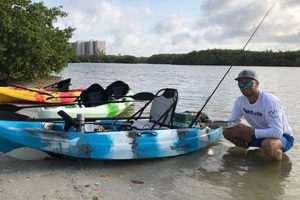
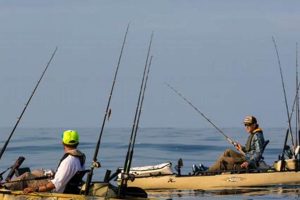
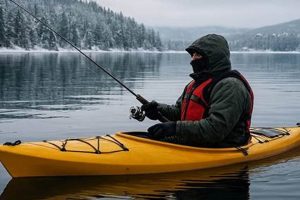
This type of watercraft combines human-powered propulsion with a pedal-driven propeller system, specifically designed for angling. It offers a hands-free fishing experience, allowing anglers to maintain position and maneuver easily while casting lines, reeling in fish, and managing tackle. Imagine effortlessly navigating shallow waters, maintaining a steady position against currents, or stealthily approaching fish-holding areas without the need for constant paddling.
Hands-free propulsion offers significant advantages for fishing. Anglers gain increased stability and control, crucial for casting accuracy and fighting fish. The pedal system often allows for quicker speeds and longer distances compared to traditional paddling, expanding fishing grounds accessibility. This evolution in kayak design provides a more efficient and enjoyable experience, particularly in demanding conditions. The ability to navigate quietly and efficiently makes these vessels a powerful tool for anglers of all skill levels.
This exploration of propulsion systems, design features, and the practical advantages for anglers provides a foundation for further investigation into specific models, techniques, and accessories. Understanding the core components and benefits allows for informed decisions when selecting the right vessel for individual fishing needs and enhances appreciation for this innovative approach to angling.
Tips for Pedal Kayak Fishing
Optimizing the use of a pedal-driven fishing kayak involves understanding key techniques and considerations. The following tips offer guidance for enhancing performance, safety, and overall fishing success.
Tip 1: Proper Pedal Stroke: Employing a smooth, consistent pedal stroke maximizes efficiency and minimizes fatigue. Varying cadence and pressure adapts to changing currents and wind conditions.
Tip 2: Rudder Adjustment: Regular rudder adjustments maintain a straight course and counteract drift, especially in windy or current-prone areas. Practicing rudder control is essential for precise maneuvering.
Tip 3: Trim Optimization: Distributing weight evenly within the kayak ensures optimal stability and tracking. Adjustments to seat position and gear placement fine-tune trim for varying water conditions.
Tip 4: Shallow Water Navigation: Exercise caution in shallow water, avoiding submerged obstacles and potential propeller contact with the bottom. Raising the drive unit when necessary prevents damage and maintains maneuverability.
Tip 5: Reverse Pedal Technique: Mastering the reverse pedaling technique allows for quick stops and precise repositioning, invaluable for approaching fishing spots stealthily or avoiding collisions.
Tip 6: Regular Maintenance: Rinse the pedal drive system with fresh water after each use to remove salt, sand, and debris, extending its lifespan and ensuring optimal performance.
Tip 7: Safety Gear: Always wear a personal flotation device and carry essential safety equipment, including a whistle, signaling device, and first-aid kit, regardless of fishing location or experience level.
Applying these techniques enhances control, efficiency, and safety while operating a pedal-powered fishing kayak. These practical considerations contribute to a more productive and enjoyable angling experience.
By implementing these strategies and prioritizing safety, anglers can fully leverage the advantages of these specialized vessels and focus on the ultimate goal: a successful fishing trip.
1. Hands-Free Propulsion

Hands-free propulsion represents a significant advancement in kayak fishing, fundamentally altering how anglers interact with their environment and pursue their quarry. This innovative approach, central to the design and function of paddle drive fishing kayaks, offers distinct advantages over traditional paddling, enabling enhanced focus on fishing techniques and strategic positioning.
- Enhanced Fishing Focus
Freedom from constant paddling allows anglers to dedicate full attention to the task at hand: fishing. This translates to improved casting accuracy, more effective lure presentation, and quicker reaction times when fish strike. The ability to maintain position and maneuver without paddle strokes proves particularly valuable in dynamic fishing scenarios, such as working a lure along a weed line or responding to a sudden fish strike.
- Improved Stability and Control
The pedal-driven system contributes to enhanced stability and control, especially in challenging conditions. Maintaining balance while casting or landing a fish becomes easier without the shifting weight and movement associated with paddling. This stability proves beneficial in rough water or when fighting strong currents, enabling the angler to maintain a secure and controlled platform.
- Increased Efficiency and Range
Pedal propulsion often allows for greater speed and endurance compared to paddling, expanding the angler’s effective fishing range and allowing exploration of more distant locations. The continuous, rhythmic motion of pedaling proves less fatiguing over long distances, enabling longer fishing sessions and maximizing time on the water.
- Stealth and Reduced Disturbance
The quiet operation of a pedal drive system minimizes disturbance to the underwater environment, a crucial factor in stealthy approaches to fish-holding areas. Traditional paddling creates surface ripples and noise that can spook fish, particularly in shallow waters. Pedal-powered kayaks allow for discreet movement, increasing the likelihood of successful approaches and improving fishing outcomes.
These facets of hands-free propulsion collectively elevate the capabilities of the paddle drive fishing kayak, transforming it into a highly effective and versatile fishing platform. This technology empowers anglers to explore new waters, employ diverse fishing techniques, and maximize their chances of success while enjoying a more comfortable and engaging experience on the water.
2. Increased Stability

Stability is a paramount consideration in fishing kayaks, directly impacting angler safety, comfort, and fishing effectiveness. Pedal-drive systems contribute significantly to enhanced stability, offering distinct advantages over traditional paddle kayaks, particularly in challenging conditions or when performing actions that would normally compromise balance.
- Lower Center of Gravity
The placement of the pedal drive system, typically lower in the hull than a seated paddler, contributes to a lower center of gravity. This lower center of gravity enhances stability, making the kayak less prone to tipping or rocking, especially in rough water or when encountering wakes. The inherent stability allows anglers to confidently stand and fish, providing a wider casting range and improved leverage when fighting fish.
- Wider Hull Design
Many pedal-drive fishing kayaks feature wider hulls than traditional kayaks, further enhancing stability. The wider beam provides a larger base of support, increasing resistance to tipping. This design characteristic proves particularly advantageous in shallow water or when navigating through vegetation, where stability is crucial for avoiding capsizing.
- Elimination of Paddling Motion
The act of paddling inherently introduces instability, as the angler shifts weight and reaches out to the sides. Pedal drive eliminates this destabilizing motion, allowing for a more stable and controlled fishing platform. This increased stability is particularly noticeable when casting, reeling, or landing fish, activities that require precise balance and control.
- Enhanced Confidence and Security
The inherent stability of pedal-drive kayaks fosters angler confidence and security, particularly in demanding conditions or for anglers with less experience. This sense of security allows for greater focus on fishing techniques and enjoyment of the experience, without the constant concern of maintaining balance. The enhanced stability also allows for safer handling of fish and equipment, reducing the risk of accidents or capsizing.
The increased stability afforded by pedal-drive systems significantly enhances the fishing experience, promoting safety, comfort, and effectiveness on the water. This inherent stability expands angling opportunities, allowing for confident exploration of various fishing environments and techniques.
3. Enhanced Maneuverability
Maneuverability plays a crucial role in fishing kayak performance, directly influencing the angler’s ability to navigate complex waterways, position effectively, and respond to changing fishing conditions. Paddle drive fishing kayaks offer significant maneuverability advantages compared to traditional paddle-powered vessels, enhancing fishing effectiveness and overall on-the-water experience.
- Precise Position Control
The pedal-driven propeller system, combined with rudder control, allows for precise positioning and adjustments, even in challenging environments like strong currents or windy conditions. Anglers can maintain a desired position relative to structure, cover, or baitfish schools without constant paddling adjustments, optimizing lure presentation and fishing effectiveness. This precise control proves invaluable for techniques like drift fishing or maintaining position along a defined contour line.
- Effortless Turning and Tracking
The rudder-controlled steering system, integral to most pedal drive kayaks, enables effortless turning and precise tracking. Tight turns, essential for navigating tight quarters or maneuvering around obstacles, become significantly easier compared to paddle steering. This responsiveness enhances agility and allows for quick adjustments to changing fishing scenarios or navigation challenges.
- Hands-Free Navigation
Hands-free navigation, facilitated by the pedal drive system, allows anglers to maintain constant heading and adjust position without interrupting fishing activities. This continuous control is particularly beneficial in dynamic fishing situations, where maintaining precise position or reacting quickly to fish movement is crucial. Anglers can focus on fishing techniques and respond instantly to bites without needing to adjust paddle position.
- Shallow Water Access
Many pedal drive systems offer adjustable propeller depth or the ability to be raised completely, facilitating access to shallow water areas inaccessible to traditional propeller-driven boats. This capability expands fishing opportunities, allowing anglers to explore shallow flats, backwater creeks, and other areas where fish often concentrate. The ability to navigate shallows without disturbing the bottom or risking propeller damage provides a significant advantage in these environments.
The enhanced maneuverability offered by paddle drive fishing kayaks expands fishing opportunities and enhances overall on-the-water effectiveness. These maneuverability advantages translate directly into improved fishing success, allowing anglers to access prime fishing locations, maintain optimal positioning, and respond efficiently to changing conditions. This capability, combined with other features of paddle drive kayaks, contributes to a more productive and enjoyable fishing experience.
4. Fishing-Specific Design
Fishing-specific design differentiates paddle drive fishing kayaks from recreational or touring models. This specialized design integrates features that directly enhance angling effectiveness and overall on-the-water experience. These features are not mere add-ons but integral components that contribute to a purpose-built fishing platform.
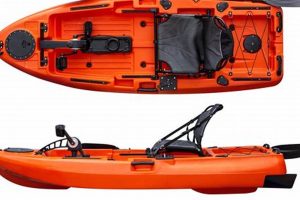
Consider rod holders. Multiple rod holders, strategically positioned for easy access and varying fishing techniques, are a hallmark of fishing-specific design. Flush-mounted rod holders minimize line entanglement and maximize deck space. Adjustable rod holders accommodate different rod lengths and angling styles. These design elements streamline fishing processes, allowing anglers to switch techniques quickly and efficiently. Similarly, integrated tackle storage systems, including compartments and trays designed to hold lures, hooks, and other essential gear, contribute to organization and efficiency. These dedicated storage solutions keep essential equipment within easy reach, minimizing clutter and maximizing fishing time. Additional features, such as fish finders, livewells, and anchor trolleys, further enhance the fishing-specific nature of these vessels. A well-designed anchor trolley system facilitates controlled drift fishing, while integrated fish finders provide crucial underwater intelligence. Livewells maintain the health and vitality of caught fish, essential for conservation-minded anglers or tournament fishing.
Understanding the importance of fishing-specific design is crucial for selecting the right kayak. Anglers should evaluate their fishing style, target species, and preferred fishing environments to determine which design features best suit their needs. The integration of these specialized features significantly enhances the fishing experience, providing anglers with a highly effective and purpose-built platform for pursuing their passion. This understanding empowers informed decision-making, ensuring anglers select a vessel that aligns with their individual fishing goals and maximizes their on-the-water success.
5. Quiet and Efficient Operation

Quiet and efficient operation represents a critical advantage of paddle drive fishing kayaks, significantly impacting angling success by minimizing disturbance to the underwater environment and maximizing angler effort. This advantage stems from the unique propulsion system and design characteristics inherent to these specialized vessels.
- Reduced Noise Pollution
Paddle drive systems produce significantly less noise than traditional paddling or motorized outboards. This reduced noise pollution is crucial for stealthy approaches to fish, particularly in shallow water or clear conditions where sound travels easily. The quiet operation allows anglers to get closer to fish without spooking them, increasing the likelihood of a successful presentation and hookup. For example, in clear, shallow flats, the subtle whir of a pedal drive is far less intrusive than the splashing of a paddle, allowing anglers to approach wary bonefish or permit undetected. This advantage becomes even more pronounced in heavily pressured waters, where fish are more likely to be spooked by noise.
- Minimal Water Disturbance
Unlike paddling, which creates surface ripples and vibrations, pedal drives minimize water disturbance. This reduced disturbance is crucial for maintaining a natural presentation of lures or bait, avoiding alerting fish to the angler’s presence. For instance, when fishing topwater lures for bass, a quiet pedal drive allows the lure to work naturally without the added disturbance of paddle strokes, creating a more enticing presentation. This advantage is also beneficial when sight fishing, where even slight disturbances can scatter fish.
- Efficient Energy Transfer
Pedal drive systems efficiently convert human energy into forward motion, maximizing angler effort and minimizing fatigue. The continuous, rhythmic motion of pedaling is often less tiring than paddling, particularly over long distances or extended fishing sessions. This efficient energy transfer allows anglers to cover more water and fish longer without experiencing the same level of physical exertion, increasing fishing opportunities and overall enjoyment on the water.
- Sustained Speed and Control
Paddle drive systems allow for sustained speed and precise control, beneficial for trolling or maintaining position in currents. Anglers can easily adjust speed and direction with the pedal drive and rudder system, maintaining a consistent presentation of lures or bait without the constant adjustments required with paddling. This precise control enhances fishing effectiveness, allowing anglers to target specific depths, cover, or structure with greater accuracy. For example, trolling for walleye or salmon becomes more efficient and controlled with a pedal drive system, allowing for consistent speed and depth control, optimizing lure presentation.
The quiet and efficient operation inherent to paddle drive fishing kayaks significantly enhances angling success by maximizing stealth, minimizing disturbance, and optimizing angler effort. These advantages translate directly to improved fishing opportunities and a more immersive, enjoyable experience on the water. This combination of stealth and efficiency distinguishes paddle drive kayaks as a highly effective platform for a wide range of fishing styles and environments, from shallow-water fly fishing to open-water trolling.
6. Versatile Fishing Platform

The concept of a “versatile fishing platform” finds a compelling embodiment in the paddle drive fishing kayak. Adaptability across diverse fishing environments and techniques distinguishes this vessel. Examination of key facets reveals the extent of this versatility and its implications for anglers.
- Adaptability to Diverse Environments
Paddle drive kayaks excel in various aquatic environments, from shallow flats and creeks to open lakes and coastal waters. Draft, often minimal, allows navigation in shallow areas inaccessible to larger boats. Stability and maneuverability enhance performance in currents and wind. Consider navigating mangrove tunnels for snook or exploring expansive reservoirs for bass the adaptability of these kayaks unlocks diverse fishing opportunities.
- Support for Multiple Fishing Techniques
Casting, trolling, jigging, and even fly fishing find support in the design and functionality of paddle drive fishing kayaks. Hands-free propulsion facilitates techniques requiring precise boat control, such as drifting a live bait or working a lure along a specific contour. Integrated features like rod holders and anchor trolleys further enhance technique-specific performance. This versatility expands angling possibilities, catering to diverse preferences and target species.
- Customization and Gear Integration
Paddle drive fishing kayaks accommodate a wide range of accessories and modifications, enhancing versatility. Fish finders, GPS units, rod holders, and specialized storage solutions integrate seamlessly, customizing the vessel to specific fishing styles. This adaptability allows anglers to create a personalized fishing platform optimized for their individual needs and preferences, whether targeting specific species or employing specialized techniques.
- Enhanced Accessibility and Transportability
Compared to larger fishing boats, paddle drive kayaks offer enhanced accessibility and transportability. Launching and retrieval require minimal effort, expanding access to remote or less accessible fishing locations. Transport on roof racks or trailers simplifies logistics, eliminating the need for boat ramps or marinas. This accessibility expands fishing opportunities, enabling exploration of diverse waterways and reducing logistical constraints.
The versatility inherent in paddle drive fishing kayaks empowers anglers to explore diverse environments, employ a range of fishing techniques, and personalize their fishing experience. This adaptability distinguishes these vessels as highly effective and versatile fishing platforms, expanding angling possibilities and fostering a deeper connection with the aquatic environment.
Frequently Asked Questions
Addressing common inquiries regarding pedal-powered fishing kayaks provides clarity and facilitates informed decision-making for prospective buyers and users.
Question 1: What are the primary advantages of a pedal drive system over traditional paddling?
Pedal drive systems offer hands-free propulsion, enabling simultaneous fishing and maneuvering. This translates to increased fishing time, improved casting accuracy, and enhanced control in challenging conditions.
Question 2: How does the stability of a pedal kayak compare to a traditional paddle kayak?
Pedal kayaks generally exhibit greater stability due to their wider hull design and lower center of gravity. This enhanced stability is particularly beneficial when standing to fish, fighting strong currents, or navigating rough waters.
Question 3: What maintenance is required for a pedal drive system?
Regular rinsing with fresh water after each use is essential to remove salt, sand, and debris. Periodic lubrication and inspection of moving parts ensure optimal performance and longevity.
Question 4: Are pedal kayaks suitable for all fishing environments?
While highly versatile, pedal kayaks are best suited for calm to moderately rough waters. Extremely shallow areas or fast-flowing rivers may present limitations due to potential propeller contact or excessive current.
Question 5: What is the typical price range for a pedal drive fishing kayak?
Prices vary significantly based on features, materials, and brand. Generally, pedal kayaks range from mid-range to premium prices, reflecting the advanced technology and specialized design.
Question 6: Are there any safety considerations specific to pedal kayaks?
Always wear a personal flotation device and adhere to local boating regulations. Exercise caution in shallow water to avoid propeller damage and be mindful of currents and wind conditions.
Understanding these key aspects facilitates informed decision-making and promotes safe and effective use of pedal-powered fishing kayaks. Further research into specific models and features is recommended to align vessel selection with individual angler needs and preferences.
This concludes the FAQ section. The following segment will delve further into specific features and considerations for selecting the ideal pedal-powered fishing kayak.
Paddle Drive Fishing Kayak
This exploration has highlighted the multifaceted nature of the paddle drive fishing kayak, emphasizing its unique advantages and specialized design. From the enhanced stability and maneuverability to the quiet, efficient operation and fishing-specific features, these vessels represent a significant advancement in angling technology. The ability to maintain precise position, navigate diverse environments, and employ various fishing techniques underscores the versatility and effectiveness of these specialized kayaks. The integration of advanced features, coupled with the inherent benefits of hands-free propulsion, positions the paddle drive fishing kayak as a powerful tool for anglers seeking to elevate their on-the-water experience.
The evolution of kayak fishing continues, driven by innovation and a pursuit of enhanced angling performance. Paddle drive technology stands as a testament to this ongoing evolution, offering anglers a unique blend of efficiency, versatility, and fishing-focused design. As technology progresses and design refinements emerge, the potential of paddle drive fishing kayaks to redefine angling experiences remains substantial. Careful consideration of individual fishing needs, coupled with a thorough understanding of available features and technologies, empowers informed decisions and ensures a rewarding experience on the water. The future of kayak fishing, propelled by innovation and a dedication to enhancing the angling experience, promises exciting advancements and continued exploration of new possibilities.