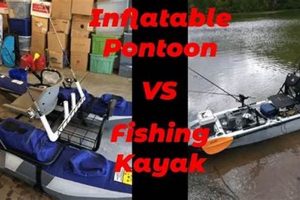
The term likely refers to a specific model of fishing kayak designed for diverse aquatic environments. “3 waters” suggests versatility across various water types, possibly including rivers, lakes, and oceans. “Big fish” implies a robust construction capable of handling larger catches. “120” likely denotes a measurement, perhaps length or weight capacity. “V2” indicates a second version or iteration of the original design. This type of watercraft typically features specialized design elements like rod holders, storage compartments, and a stable hull for enhanced fishing functionality.
A kayak tailored for diverse environments offers anglers expanded fishing opportunities. The ability to navigate different water bodies with a single vessel eliminates the need for multiple specialized kayaks. Increased stability and higher weight capacity contribute to a safer and more productive fishing experience, particularly when targeting larger species. Such advancements in kayak design reflect a growing demand for versatile and durable fishing platforms that cater to a wider range of angling styles and preferences.
This discussion will further explore the key features and advantages of this type of fishing kayak, including its construction, stability, maneuverability, and storage capacity. Additional topics may encompass suitable fishing techniques, recommended accessories, and overall performance evaluation.
Tips for Kayak Fishing
Effective kayak fishing requires preparation and technique. The following tips offer guidance for enhancing on-the-water experiences.
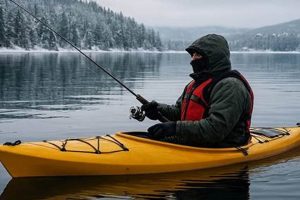
Tip 1: Prioritize Safety Gear: Always wear a personal flotation device (PFD). Carry a whistle, signaling mirror, and a waterproof communication device. Inform someone of your fishing location and estimated return time.
Tip 2: Balance and Stability: Practice entering and exiting the kayak in shallow, calm water. Distribute weight evenly within the vessel to maintain stability. Avoid sudden movements that could compromise balance.
Tip 3: Paddle Selection and Technique: Choose a paddle appropriate for your height and kayak width. Utilize proper paddling techniques to conserve energy and maximize efficiency.
Tip 4: Anchor Effectively: Learn various anchoring methods suitable for different water conditions and bottom types. A properly set anchor prevents drifting and maintains position in desired fishing areas.
Tip 5: Fishing Gear Organization: Utilize rod holders and storage compartments to keep fishing gear organized and readily accessible. Minimize clutter to prevent entanglement and maintain a clear casting area.
Tip 6: Respect Aquatic Environments: Adhere to Leave No Trace principles. Pack out all trash and fishing line. Minimize disturbance to wildlife and their habitats.
Tip 7: Weather Awareness: Check weather forecasts before embarking on a fishing trip. Be prepared for changing conditions and exercise caution in inclement weather.
Implementing these strategies contributes to safer and more successful kayak fishing excursions. Proper preparation and adherence to safety guidelines enhance enjoyment and promote responsible angling practices.
By following these tips, anglers can maximize their on-the-water experience while prioritizing safety and environmental stewardship. This focus on responsible fishing practices ensures the long-term health of aquatic ecosystems and the sustainability of the sport.
1. Versatility (3 waters)

The “3 waters” designation within the “3 Waters Big Fish 120 V2 Fishing Kayak” moniker signifies its adaptability across various aquatic environments. This versatility expands angling opportunities and reduces the need for multiple specialized kayaks. Understanding the implications of this adaptability requires examining its core facets.
- Rivers:
River fishing presents unique challenges, including currents, obstacles, and shallower depths. A kayak designed for river use requires maneuverability and stability in moving water. The presumed “3 waters” capability suggests the kayak possesses a hull design suitable for river navigation, potentially including features like a tracking fin or a shallow draft.
- Lakes:
Lakes offer calmer conditions compared to rivers, often with greater depths and open expanses. Stability and ample storage become paramount for lake fishing, allowing anglers to comfortably target various species. The “3 waters” designation implies the kayak offers the stability and storage capacity necessary for extended lake fishing excursions.
- Oceans (Coastal Waters):
Ocean kayaking for fishing demands a robust and stable platform capable of handling waves, currents, and wind. Features like higher weight capacity and self-bailing scupper holes become crucial for safety and performance in coastal environments. The “big fish” aspect of the name further suggests suitability for larger saltwater species. The “3 waters” adaptability extends this versatility to coastal areas.
- Overall Adaptability:
The ability to transition seamlessly between these diverse environments represents a significant advantage. Anglers can utilize a single vessel for various fishing styles and target species in different locations, eliminating the need for multiple specialized kayaks. This comprehensive adaptability enhances the overall value and utility of the “3 Waters Big Fish 120 V2 Fishing Kayak.”
The “3 waters” versatility underscores the kayak’s design focus on adaptability. This allows anglers to explore a broader range of fishing experiences without compromising performance or safety. This feature contributes significantly to the kayak’s appeal among diverse angling communities, from river enthusiasts to coastal anglers.
2. Capacity (big fish)

The “big fish” component within the “3 Waters Big Fish 120 V2 Fishing Kayak” name directly relates to its capacity and suitability for targeting larger fish species. This characteristic encompasses several interconnected factors, impacting stability, load-bearing capabilities, and overall fishing performance. Exploring these facets provides insights into the kayak’s intended use and advantages.
- Weight Capacity:
A higher weight capacity accommodates larger anglers and their gear, crucial for extended trips targeting substantial fish. This capacity directly correlates with stability, allowing anglers to confidently fight and land larger catches without compromising safety. A kayak designed for “big fish” likely possesses a weight capacity exceeding standard recreational models.
- Stability and Hull Design:
Stability is paramount when battling strong fish. A wider, flatter hull design typically offers enhanced stability compared to narrower, V-shaped hulls, though potentially at the cost of some maneuverability. The “big fish” designation suggests a hull design optimized for stability during the rigors of landing larger catches, possibly incorporating features like outriggers or a wider beam.
- Deck Space and Storage:
Adequate deck space and storage are essential for managing larger fish and the associated gear. Ample storage compartments and strategically placed bungee cords allow for efficient organization of tackle, rods, and other equipment required for targeting larger species. This contributes to a streamlined fishing experience, minimizing clutter and maximizing efficiency during critical moments.
- Durability and Construction:
Targeting larger fish often involves increased stress on the kayak’s structure. Reinforced construction, robust materials, and durable hardware become crucial for withstanding the forces exerted by powerful fish. The “big fish” designation likely implies a construction designed to withstand the rigors of pursuing and landing trophy-sized catches.
The “big fish” capacity influences multiple design elements, from hull design to storage solutions. These considerations collectively contribute to a kayak specifically engineered for anglers pursuing larger species. The combination of stability, durability, and ample storage enhances the angler’s ability to successfully target and land trophy fish in diverse aquatic environments, aligning directly with the “3 waters” versatility implied within the product name.
3. Size (120)

The “120” designation within the “3 Waters Big Fish 120 V2 Fishing Kayak” likely refers to a dimensional measurement, potentially length or weight capacity. This numerical value significantly impacts maneuverability, storage capacity, and overall performance. Understanding its implications requires exploring how this dimension relates to various performance characteristics.
- Length and Maneuverability:
A longer kayak generally tracks straighter and glides more efficiently, beneficial for covering distances in open water. Conversely, shorter kayaks tend to be more maneuverable, advantageous in rivers or tight spaces. “120,” presumably representing length in feet or centimeters, suggests a balance between tracking and maneuverability, suitable for diverse environments implied by the “3 waters” designation.
- Weight Capacity and Stability:
Length often correlates with weight capacity. A longer kayak typically supports more weight, accommodating larger anglers and gear. Increased weight capacity contributes to stability, crucial for handling “big fish.” The “120” measurement, if related to length, likely influences the kayak’s overall stability and load-bearing capability.
- Storage Capacity and Gear Organization:
Longer kayaks often offer more storage space. Ample storage facilitates organized gear management, essential for extended fishing trips and targeting larger species. The “120” dimension, if length-related, potentially impacts the kayak’s storage volume and organizational capabilities.
- Transportation and Portability:
Kayak length directly affects transportation and storage logistics. Longer kayaks require larger vehicles or trailers for transport. The “120” measurement influences portability considerations, potentially impacting ease of transport and storage requirements.
The “120” designation, likely representing a key dimensional measurement, directly influences several performance characteristics. Its implications for maneuverability, stability, storage, and transportation underscore the importance of considering this value in relation to the intended fishing environment and target species. This analysis further emphasizes the interconnectedness between the various elements within the product name, “3 Waters Big Fish 120 V2 Fishing Kayak,” highlighting a design philosophy focused on balanced performance across diverse fishing scenarios.
4. Updated design (V2)

The “V2” designation within the “3 Waters Big Fish 120 V2 Fishing Kayak” signifies an updated design, indicating improvements and refinements over a previous model. This version upgrade often reflects manufacturer responses to user feedback, technological advancements, and evolving market demands. Understanding the implications of “V2” requires examining potential areas of improvement.
- Enhanced Stability and Performance:
Design revisions may focus on enhancing stability through modifications to the hull design or the addition of stabilizing features. Improvements in tracking and maneuverability could also be incorporated, optimizing performance in various water conditions. A “V2” designation might indicate a more stable and responsive kayak compared to its predecessor, contributing to a safer and more efficient fishing experience, particularly in challenging environments like rivers or coastal waters.
- Improved Comfort and Ergonomics:
Updates frequently address comfort and ergonomics. Adjustments to the seating system, footrests, and paddle holders can enhance angler comfort during extended fishing trips. The “V2” iteration might feature a more ergonomic design, reducing fatigue and improving overall fishing enjoyment.
- Increased Storage Capacity and Functionality:
Storage solutions often undergo revisions in updated models. Redesigned compartments, additional storage options, and improved accessibility can enhance gear organization and management. A “V2” kayak might offer increased storage capacity and improved functionality compared to the previous version, facilitating efficient storage of tackle, rods, and other essential equipment.
- Advanced Materials and Construction:
Utilizing newer, more durable materials and construction techniques can enhance the kayak’s overall performance and longevity. Improvements in hull construction, seam sealing, and hardware can increase resistance to wear and tear, extending the kayak’s lifespan. The “V2” designation could signify the incorporation of advanced materials and construction methods, resulting in a more robust and durable kayak capable of withstanding the rigors of diverse fishing environments.
The “V2” designation represents a commitment to refinement and improvement. These potential updates in stability, comfort, storage, and construction collectively contribute to a more efficient, comfortable, and durable fishing platform. The “V2” enhancements underscore the manufacturer’s focus on meeting evolving angler needs and providing a superior on-the-water experience, further solidifying the value proposition of the “3 Waters Big Fish 120 V2 Fishing Kayak.”
5. Fishing-Specific Features
Fishing-specific features distinguish a dedicated fishing kayak from recreational models. These specialized design elements directly enhance angling functionality and contribute significantly to the overall performance of a kayak like the “3 Waters Big Fish 120 V2 Fishing Kayak.” These features cater specifically to the needs of anglers, optimizing efficiency, comfort, and safety on the water.
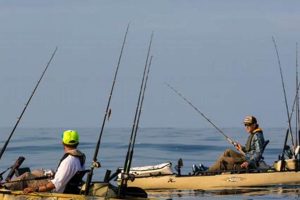
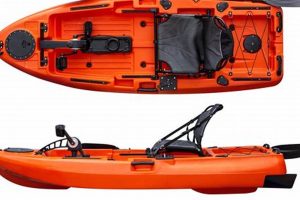
Several key fishing-specific features are commonly found on dedicated angling kayaks. Rod holders, strategically positioned for easy access and secure rod storage, allow anglers to manage multiple lines or keep rods readily available while paddling or maneuvering. Tackle storage compartments provide organized storage for lures, hooks, lines, and other essential fishing accessories, ensuring quick access and preventing clutter. These compartments are often designed with water resistance or drainage to protect sensitive equipment. Integrated fish finders and transducer mounts facilitate electronic fish location, crucial for increasing fishing success. These mounts provide secure and convenient placement for fish finders, maximizing their effectiveness. Additionally, comfortable seating with adjustable backrests and footrests enhances angler comfort during long hours on the water, reducing fatigue and improving focus. Anchor trolleys and anchor systems are also crucial features, enabling anglers to maintain position in desired fishing areas, regardless of current or wind conditions.
The “3 Waters Big Fish 120 V2 Fishing Kayak,” with its implied focus on diverse fishing environments and larger species, likely incorporates these fishing-specific features to maximize its effectiveness. For example, robust rod holders would be essential for securely managing heavier rods and reels used for targeting larger fish. Ample tackle storage would accommodate the variety of lures and equipment required for different fishing techniques across various water bodies. A stable hull design, coupled with an efficient anchor system, would enable anglers to maintain position and fight strong fish effectively. These specialized features transform the kayak from a simple mode of transportation into a dedicated fishing platform, optimized for performance and success in diverse aquatic environments.
6. Stability and Maneuverability
Stability and maneuverability represent crucial performance characteristics for any kayak, especially one designed for fishing, such as the “3 Waters Big Fish 120 V2 Fishing Kayak.” These attributes directly influence the angler’s safety, comfort, and overall fishing effectiveness. Balancing these often-competing factors is a key design consideration, impacting the kayak’s suitability for diverse water conditions and fishing styles.
- Static Stability (At Rest):
Static stability refers to the kayak’s resistance to tipping when stationary, crucial for activities like casting, reeling, and landing fish. A wider hull generally provides greater initial stability, enhancing angler confidence and reducing the likelihood of capsizing while at rest. For a kayak intended for “big fish,” static stability becomes paramount, allowing anglers to confidently manage larger, more powerful catches without compromising safety. A wider beam and potentially a flatter hull bottom contribute to enhanced static stability.
- Dynamic Stability (In Motion):
Dynamic stability describes the kayak’s stability while paddling or navigating through waves and currents. A longer, narrower hull typically offers better tracking and efficiency in open water, while a shorter, wider hull provides enhanced maneuverability in tighter spaces or moving water. The “3 waters” designation suggests the “3 Waters Big Fish 120 V2 Fishing Kayak” likely represents a design compromise between these two extremes, offering reasonable tracking performance while maintaining sufficient maneuverability for navigating diverse environments.
- Hull Design Influence:
Hull design significantly influences both stability and maneuverability. A flat-bottomed hull maximizes initial stability, beneficial for calm water fishing. A rounded or V-shaped hull improves tracking and speed but sacrifices some initial stability. A multi-chine hull, combining elements of both, seeks to balance stability and maneuverability. The specific hull design of the “3 Waters Big Fish 120 V2 Fishing Kayak” likely reflects a balance tailored to its intended use in various water conditions.
- Impact of Length and Width:
Length and width directly affect both stability and maneuverability. Longer kayaks generally track straighter and glide more efficiently, while shorter kayaks turn more easily. Wider kayaks offer greater initial stability, while narrower kayaks are more maneuverable. The “120” designation in the kayak’s name, likely relating to length, suggests a balance between tracking and maneuverability. The overall width, though not specified in the name, plays a crucial role in determining its stability characteristics.
The interplay between stability and maneuverability is a defining characteristic of the “3 Waters Big Fish 120 V2 Fishing Kayak.” The design choices regarding hull shape, length, and width reflect a deliberate balance aimed at providing a versatile platform suitable for diverse fishing environments and the pursuit of larger fish. The anticipated stability allows anglers to confidently handle larger catches, while the maneuverability ensures adaptability across various water conditions, aligning with the “3 waters” versatility implied within the product name.
7. Durability and Construction

Durability and construction are paramount for a fishing kayak, especially one designed for diverse environments and larger fish like the implied “3 Waters Big Fish 120 V2 Fishing Kayak.” A robust construction ensures the kayak withstands the rigors of various water conditions, impacts from obstacles, and the stress of battling strong fish. Material selection, construction techniques, and hardware choices directly influence the kayak’s longevity and overall performance.
- Hull Material:
Hull material significantly impacts durability. High-density polyethylene (HDPE) offers excellent impact resistance and UV protection, making it a common choice for fishing kayaks. Other materials like rotomolded polyethylene or thermoformed ABS offer varying degrees of durability and performance characteristics. A kayak designed for “big fish” and “3 waters” likely utilizes a durable, impact-resistant material like HDPE to withstand the demands of diverse environments and the stresses of landing larger catches.
- Construction Methods:
Construction methods influence structural integrity. Rotomolding creates a seamless, one-piece hull with uniform thickness, maximizing strength and durability. Other methods, like thermoforming or twin-sheet thermoforming, offer varying levels of durability and cost-effectiveness. The construction method employed in the “3 Waters Big Fish 120 V2 Fishing Kayak” likely prioritizes strength and impact resistance to withstand the rigors of diverse fishing environments.
- Hardware and Fittings:
Hardware, including rod holders, handles, and hatch latches, must be corrosion-resistant and durable. Marine-grade stainless steel or high-quality plastic components are essential for longevity in saltwater environments. The “3 waters” designation suggests the kayak utilizes corrosion-resistant hardware suitable for both freshwater and saltwater use, ensuring long-term functionality and reliability.
- Seam Construction and Sealing:
Proper seam construction and sealing prevent water ingress and ensure structural integrity. Double-welded or fused seams offer superior strength and watertightness compared to glued or stitched seams. A kayak designed for diverse environments, including “3 waters,” likely employs robust seam construction and sealing techniques to prevent leaks and maintain buoyancy in various water conditions.
The durability and construction of the “3 Waters Big Fish 120 V2 Fishing Kayak” directly influence its longevity and performance in diverse fishing scenarios. Robust materials, proven construction methods, and durable hardware contribute to a kayak capable of withstanding the demands of “3 waters” and “big fish” applications. These factors collectively enhance the kayak’s reliability and value, ensuring anglers can confidently pursue their passion in a variety of environments.
Frequently Asked Questions
This section addresses common inquiries regarding kayaks designed for diverse fishing environments, focusing on aspects like versatility, capacity, and design features. The information provided aims to clarify key characteristics and benefits.
Question 1: What specific water types does “3 waters” encompass?
“3 waters” typically refers to rivers, lakes, and coastal ocean environments. The kayak’s design features aim to provide suitable performance across these diverse water conditions.
Question 2: What defines the “big fish” capacity?
“Big fish” signifies a kayak designed to handle larger fish species. This typically translates to a higher weight capacity, enhanced stability, and robust construction capable of withstanding the stresses of landing substantial catches.
Question 3: Does the “120” designation refer to length or weight capacity?
“120” typically denotes length, often measured in either feet or centimeters. This measurement influences maneuverability, storage capacity, and overall performance characteristics.
Question 4: What improvements does the “V2” version offer over previous models?
“V2” indicates a second-generation design, often incorporating improvements based on user feedback and technological advancements. These updates may include enhanced stability, increased storage, improved comfort features, or upgraded materials and construction techniques.
Question 5: What specialized features cater specifically to fishing needs?
Fishing kayaks often include specialized features like rod holders, tackle storage compartments, anchor trolleys, and integrated fish finder mounts. These features enhance angling functionality and contribute to a more efficient and enjoyable fishing experience.
Question 6: How does one choose between stability and maneuverability?
The balance between stability and maneuverability depends on the intended fishing environment and personal preferences. Wider kayaks offer greater stability, while longer, narrower kayaks provide better tracking and speed. Anglers should consider their primary fishing locations and target species when evaluating these characteristics.
Understanding these key aspects provides valuable insights into the design and intended use of a fishing kayak suitable for diverse environments and targeting larger fish. Careful consideration of these features allows anglers to select a kayak that aligns with their specific needs and fishing preferences.
Further information on specific kayak models can be found in detailed product specifications and reviews.
Conclusion
Exploration of the hypothetical “3 Waters Big Fish 120 V2 Fishing Kayak” reveals a design philosophy centered on versatility, capacity, and specialized functionality. The presumed ability to navigate diverse aquatic environments (“3 waters”), target larger species (“big fish”), and incorporate design enhancements (“V2”) suggests a kayak tailored for serious anglers. The estimated size (“120”) likely influences maneuverability and storage capacity, further shaping its performance profile. An emphasis on fishing-specific features, stability, and durable construction underscores its focus on practicality and performance in demanding fishing scenarios.
Careful consideration of these attributes emphasizes the importance of selecting fishing equipment aligned with individual needs and target environments. Continuous advancements in kayak design and technology promise further enhancements in performance, comfort, and versatility, expanding opportunities for anglers to pursue their passion across a broader range of aquatic landscapes.