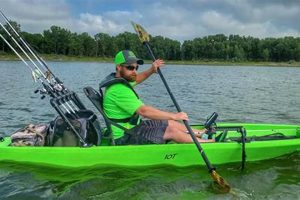
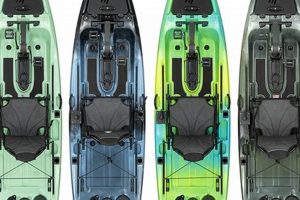
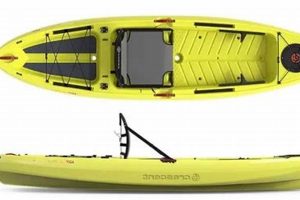
This activity involves the use of small, human-powered watercraft for angling. These vessels are propelled using pedals connected to a paddle wheel or propeller, offering a quiet and maneuverable platform ideal for accessing shallow or vegetated areas often frequented by fish. An angler might employ this method on a calm lake, slow-moving river, or sheltered coastal waters, using various fishing techniques appropriate to the environment and targeted species.
The low-impact nature of this approach minimizes disturbance to aquatic ecosystems, making it a preferred choice for environmentally conscious anglers. Its quiet operation allows close approaches to fish without alarming them, enhancing fishing success. Historically, similar human-powered vessels were employed for fishing and transportation, demonstrating the enduring practicality of this method. The physical activity inherent in pedaling provides a healthy exercise component, adding another dimension to the recreational experience. This method also offers an accessible and affordable entry point into angling, requiring minimal specialized equipment compared to motorized boating.
Further exploration will encompass optimal vessel selection, effective fishing techniques from these platforms, essential safety precautions, and responsible environmental practices for this style of fishing.
Tips for Pedal-Powered Angling
Maximizing success and enjoyment on the water requires careful consideration of several key factors. These tips offer guidance for a productive and rewarding experience.
Tip 1: Vessel Selection: Choose a stable platform designed for fishing, featuring rod holders, storage compartments, and comfortable seating. Consider the water conditions and target species when selecting vessel size and features.
Tip 2: Location Scouting: Research potential fishing spots beforehand, focusing on shallow areas, weed beds, or other structures where fish may congregate. Utilize maps and online resources for identifying promising locations.
Tip 3: Quiet Approach: Pedal smoothly and avoid sudden movements that could spook fish. Minimize noise and vibrations for a stealthy approach.
Tip 4: Appropriate Tackle: Select fishing rods, reels, and lines suitable for the target species and fishing environment. Lightweight and versatile setups are often preferred.
Tip 5: Effective Bait and Lures: Choose bait or lures that match the local forage and appeal to the target species. Experiment with different presentations to determine what works best.
Tip 6: Safety First: Wear a personal flotation device and carry essential safety equipment, including a whistle, first-aid kit, and communication device. Check weather conditions before heading out and be prepared for changing conditions.
Tip 7: Environmental Responsibility: Practice catch-and-release whenever possible. Dispose of fishing line and other waste responsibly. Respect wildlife and their habitats.
By adhering to these guidelines, anglers can enhance their chances of success while minimizing environmental impact and ensuring a safe and enjoyable outing.
These practical considerations contribute to a more informed and fulfilling angling experience. The following section will offer concluding remarks and further resources.
1. Quiet Propulsion

Quiet propulsion forms a cornerstone of effective paddle boat fishing. The minimal noise generated by human-powered paddling allows anglers to approach fish without disturbance, a significant advantage in shallow or clear water environments. Motorized boats, even at low speeds, produce sound vibrations that can spook fish, particularly in shallow habitats. A paddle boat’s quiet approach enables closer proximity to fish, increasing the likelihood of successful presentations and hookups. This is especially crucial when targeting species known for their sensitivity to noise, such as crappie or trout. For instance, navigating a lily pad-filled cove with a paddle boat allows for discreet presentations to bass lurking beneath the vegetation, a feat challenging to replicate with a motorized vessel.
The lack of engine noise contributes to a more immersive and natural fishing experience. Anglers can better appreciate the subtle sounds of the aquatic environment, enhancing their awareness of fish activity and contributing to a heightened sense of connection with nature. This quiet approach minimizes disruption to the ecosystem, benefiting both the angler and the environment. Furthermore, the absence of motor noise reduces stress on fish populations, promoting a healthier and more sustainable fishery. Practical applications include targeting shallow-water species in heavily vegetated areas or fishing in designated quiet zones where motorized vessels are restricted.
In summary, quiet propulsion inherent to paddle boats offers distinct advantages for anglers. It increases stealth, improves fishing success, enhances the angling experience, and minimizes environmental impact. While challenges such as limited range and slower speeds exist, the benefits of quiet propulsion make paddle boats a valuable tool for anglers seeking a closer connection with nature and increased effectiveness in specific fishing scenarios.
2. Shallow Water Access
Shallow water zones often harbor rich ecosystems, attracting various fish species seeking food, shelter, and spawning grounds. These areas, however, can be inaccessible to larger, motorized boats due to draft restrictions or the risk of damaging sensitive habitats. Paddle boats, with their shallow draft and maneuverability, offer distinct advantages in accessing these productive fishing grounds. This accessibility opens opportunities to target species that thrive in shallow environments, such as bass, panfish, and pike. For example, navigating through dense vegetation or along shallow shorelines, often unreachable by other means, becomes feasible with a paddle boat, allowing anglers to exploit these prime fishing locations. This capability is particularly valuable during spawning seasons when certain species congregate in shallow, protected areas.
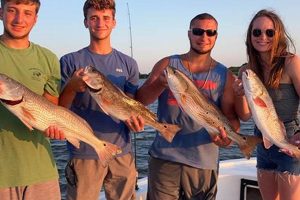
The ability to operate effectively in shallow water expands angling possibilities. Techniques like sight fishing, where anglers visually locate and target individual fish, become more viable in clear, shallow waters. Furthermore, the quiet operation of a paddle boat minimizes disturbance, increasing the chances of a successful approach. This is especially critical in shallow water where fish are more susceptible to noise and vibrations. Consider a scenario where an angler quietly pedals through a shallow flat, spotting a school of redfish tailing in the grass. The paddle boat’s shallow draft and silent approach allow for a precise presentation, maximizing the chances of a successful hookup. Such opportunities would be limited or impossible with a larger, motorized vessel.
In summary, shallow water access represents a significant advantage of paddle boat fishing. It opens up productive fishing areas inaccessible to other watercraft, expands angling techniques, and increases the likelihood of encountering target species. While challenges such as limited range in larger bodies of water and vulnerability to strong winds and currents exist, the ability to effectively fish shallow water environments makes paddle boats a valuable tool for anglers seeking to maximize their fishing opportunities and connect with these unique ecosystems.
3. Targeted Species Selection
Effective paddle boat fishing hinges on selecting species suited to the unique characteristics of this angling method. Understanding the habitat preferences, feeding behaviors, and size of target species optimizes fishing success and promotes responsible angling practices. Aligning species selection with the capabilities and limitations of paddle boats ensures a productive and enjoyable fishing experience.
- Habitat Considerations
Paddle boats excel in calm, shallow waters, often rich in vegetation or structure. Species thriving in these environments, such as panfish, bass, and pike, represent ideal targets. For instance, targeting largemouth bass in shallow weed beds aligns perfectly with a paddle boat’s maneuverability and quiet approach. Conversely, pursuing pelagic species inhabiting open, deep water would be less effective from a paddle boat.
- Fishing Technique Compatibility
Certain fishing techniques are particularly well-suited to paddle boats. Still fishing, slow trolling, and sight fishing are highly effective from these platforms. Species responsive to these techniques, like crappie or perch, become prime targets. Casting lures or using live bait around submerged logs or docks becomes readily achievable from a stable paddle boat, increasing the likelihood of enticing species like catfish or sunfish.
- Size and Fighting Ability
While capable of handling moderately sized fish, paddle boats are generally not ideal for battling large, powerful species. Targeting smaller to medium-sized fish ensures a manageable and safe fishing experience. Landing a large catfish from a paddle boat can present challenges, while reeling in a panfish or smaller bass is typically more manageable. Choosing species appropriate to the vessel’s size and stability enhances angler safety and minimizes the risk of equipment damage.
- Conservation and Regulations
Targeted species selection must always adhere to local fishing regulations and conservation guidelines. Understanding size limits, catch quotas, and protected species ensures responsible angling practices. Selecting legal targets and practicing catch-and-release when appropriate contributes to sustainable fisheries management. For example, targeting invasive species like carp, where permitted, can contribute to ecosystem health while providing a challenging fishing experience from a paddle boat.
By carefully considering these factors, anglers can maximize their success and contribute to the long-term health of aquatic ecosystems. Targeting species well-suited to paddle boat fishing enhances the angling experience, allowing for a more focused and rewarding time on the water. This strategic approach underscores the importance of aligning species selection with the unique advantages and limitations of paddle boat fishing, promoting both angler satisfaction and responsible resource management.
4. Appropriate Gear and Bait

Appropriate gear and bait selection significantly influences success in paddle boat fishing. The inherent characteristics of this angling method, such as quiet operation and shallow water access, necessitate specific gear choices to maximize effectiveness and enjoyment. Lightweight and versatile equipment aligns with the maneuverability and portability requirements of paddle boat fishing. For instance, shorter, lighter rods facilitate casting and retrieving in confined spaces, while smaller spinning reels paired with lighter lines enhance control and sensitivity. Selecting tackle appropriate to the target species and fishing environment directly impacts hookup ratios and overall fishing success. Using heavier tackle designed for larger offshore species would be cumbersome and ineffective in the typically shallow, vegetated environments accessed by paddle boats. A balanced approach ensures efficient handling while maintaining sensitivity to detect subtle bites. Furthermore, specialized gear such as anchor systems designed for shallow water and rod holders integrated into the boat’s design enhances stability and convenience. The cumulative effect of these choices directly contributes to a more productive and enjoyable experience.
Bait selection plays a crucial role in attracting target species in the specific environments accessed by paddle boats. Live bait, such as worms, minnows, or crickets, often proves highly effective in shallow, vegetated areas, mimicking the natural forage of species like panfish and bass. Artificial lures, such as spinnerbaits, jigs, and soft plastics, offer versatility and can be tailored to mimic the appearance and movement of prey fish, enticing predatory species like pike or walleye. Matching bait or lure selection to the target species and prevalent forage base in the fishing location increases the likelihood of attracting bites. For example, using brightly colored lures in murky water or employing scented baits in colder temperatures can significantly enhance fishing success. Furthermore, understanding the feeding habits of target species informs bait presentation techniques, such as slow trolling live bait or retrieving lures along weed edges. This targeted approach, aligning bait choice and presentation with species behavior and environmental conditions, significantly contributes to increased catch rates.
In summary, appropriate gear and bait selection are integral components of successful paddle boat fishing. Lightweight, versatile tackle enhances maneuverability and sensitivity, while informed bait choices maximize the chances of attracting target species. Aligning gear and bait selection with the specific conditions and target species encountered in paddle boat fishing ensures a more productive and enjoyable experience. Challenges such as limited storage space and the need for careful organization underscore the importance of thoughtful preparation. By adopting a strategic approach to gear and bait selection, anglers can enhance their effectiveness and fully appreciate the unique advantages of paddle boat fishing.
5. Stable Vessel Choice
Vessel stability forms a cornerstone of safe and effective paddle boat fishing. A stable platform enhances angler safety, facilitates effective fishing techniques, and contributes to overall enjoyment on the water. Various factors influence stability, including hull design, weight capacity, and added features. Understanding these elements empowers informed decision-making, ensuring a suitable vessel for individual needs and fishing conditions. The following facets explore key aspects of stable vessel choice in the context of paddle boat fishing.
- Hull Design and Stability
Hull design significantly influences a paddle boat’s stability. Wider, flatter hulls generally provide greater initial stability, resisting tipping, particularly important for anglers moving around or casting. Pontoon-style hulls offer exceptional stability, distributing weight evenly across multiple pontoons. Conversely, narrower, V-shaped hulls, while more efficient for paddling longer distances, can be less stable for fishing activities. Choosing a hull design aligned with the intended fishing environment and angler activity is crucial. A wide, stable platform is preferable for still fishing in calm waters, while a slightly narrower hull might suit anglers frequently changing locations or fishing in flowing water.
- Weight Capacity and Distribution
Weight capacity directly impacts stability. Exceeding the manufacturer’s recommended weight limit compromises stability, increasing the risk of capsizing. Evenly distributing weight within the boat is crucial. Concentrating weight in one area, such as the stern or bow, can destabilize the vessel, especially in windy conditions or when encountering waves. Proper weight distribution, including anglers, gear, and any catch, maintains balance and enhances stability. Understanding and adhering to weight limits and distribution guidelines ensures safe and effective operation.
- Features for Enhanced Stability
Certain features enhance paddle boat stability specifically for fishing. Outriggers, extending horizontally from the hull, provide additional stability, particularly helpful when standing to cast or land fish. Anchor systems designed for shallow water secure the vessel, minimizing drift and maintaining position in windy conditions or currents. Level flotation systems ensure the boat remains upright even if partially flooded, a crucial safety feature. These specialized features contribute significantly to a stable and secure fishing platform, enabling anglers to focus on fishing rather than managing vessel stability.
- Environmental Considerations
Environmental factors influence stability requirements. Calm lakes or slow-moving rivers require less inherent stability compared to open water or areas with strong currents or wind. Paddle boats, generally suited for calmer waters, may become unstable in adverse conditions. Matching vessel stability to anticipated environmental conditions ensures safety and effective fishing. For example, choosing a highly stable pontoon-style hull is recommended for larger lakes subject to wind or when fishing in tidal areas with changing currents. Conversely, a less stable, more maneuverable design might suffice for protected coves or smaller ponds.
In conclusion, stable vessel choice directly impacts paddle boat fishing success and safety. Selecting a vessel with appropriate hull design, adequate weight capacity, and stability-enhancing features ensures a secure and enjoyable fishing experience. Aligning vessel choice with anticipated environmental conditions further optimizes stability, allowing anglers to focus on fishing effectively and safely. Careful consideration of these factors empowers informed decisions and contributes significantly to a positive and productive paddle boat fishing experience.
6. Safety Precautions
Safety precautions are paramount in paddle boat fishing, ensuring angler well-being and fostering responsible enjoyment of the activity. While offering a relaxing and accessible angling experience, this method presents inherent risks mitigated through informed preparation and responsible behavior. Understanding and implementing appropriate safety measures contributes significantly to a positive and incident-free experience.
- Personal Flotation Devices (PFDs)
Wearing a properly fitted PFD is crucial, regardless of swimming ability or perceived water conditions. PFDs provide essential buoyancy in case of accidental overboard entry, particularly relevant in colder water or when encountering unexpected currents. A PFD can prevent drowning, especially if an angler is incapacitated due to injury or cold water shock. For example, an angler unexpectedly encountering a submerged obstacle and capsizing benefits significantly from wearing a PFD. Proper PFD selection and consistent usage are non-negotiable aspects of safe paddle boat fishing.
- Weather Awareness and Preparation
Checking weather forecasts before embarking and remaining vigilant for changing conditions are essential safety practices. Sudden storms or strong winds can create hazardous conditions for small vessels like paddle boats. Postponing trips during adverse weather or seeking safe harbor promptly when conditions deteriorate are crucial for preventing dangerous situations. An angler caught in a sudden squall on a large lake without adequate preparation faces significant risk. Prioritizing weather awareness equips anglers to make informed decisions, minimizing weather-related risks.
- Navigation and Communication
Carrying a map, compass, or GPS device aids navigation, especially in unfamiliar waters or during low visibility. A charged mobile phone or VHF radio enables communication in emergencies. Informing someone of the planned fishing location and expected return time provides an additional safety net. An angler venturing into a remote area without communication or navigation tools faces significant challenges if an emergency arises. Prioritizing communication and navigation preparedness enhances safety and facilitates timely assistance if needed.
- Essential Safety Equipment
Carrying essential safety equipment enhances preparedness for unforeseen circumstances. A first-aid kit allows for immediate treatment of minor injuries, while a whistle or signaling device aids in attracting attention if assistance is required. A basic tool kit enables minor repairs, addressing potential equipment malfunctions. An angler experiencing a hook injury or equipment failure benefits significantly from having a readily available first-aid kit and tools. Equipping a paddle boat with these essential items demonstrates responsible preparation and enhances angler safety.
These interconnected safety precautions contribute significantly to a secure and enjoyable paddle boat fishing experience. Neglecting these measures increases the risk of accidents or incidents that can detract from the recreational value and potentially endanger angler well-being. Prioritizing safety through informed preparation and responsible behavior ensures a positive experience while promoting responsible angling practices.
7. Environmental Stewardship
Environmental stewardship represents a crucial aspect of responsible paddle boat fishing. This approach recognizes the interconnectedness between angling activities and the health of aquatic ecosystems. Minimizing environmental impact through conscious practices ensures the long-term sustainability of these valuable resources, preserving them for future generations of anglers and contributing to overall ecological health. The following facets explore key components of environmental stewardship within the context of paddle boat fishing.
- Minimizing Disturbance
Paddle boats, by their nature, offer a less intrusive approach to fishing compared to motorized vessels. The absence of engine noise and reduced wake minimize disturbance to aquatic life and their habitats. This low-impact approach allows anglers to access sensitive areas without causing significant disruption. For example, navigating shallow spawning grounds or vegetated areas with a paddle boat minimizes stress on fish populations and preserves fragile habitats. This mindful approach aligns with the principles of environmental stewardship, promoting a harmonious coexistence between angling activities and the natural world.
- Responsible Waste Disposal
Proper disposal of fishing line, hooks, and other waste materials is paramount in preserving aquatic environments. Discarded fishing line poses a significant entanglement hazard to wildlife, while other debris can contribute to water pollution. Carrying a dedicated trash bag and properly disposing of all waste materials on shore demonstrates responsible angling practices. An angler retrieving discarded fishing line encountered during a paddle boat trip exemplifies active environmental stewardship. This proactive approach minimizes pollution and protects aquatic life, reflecting a commitment to preserving these ecosystems.
- Catch-and-Release Practices
Practicing catch-and-release, when appropriate and within regulations, contributes significantly to sustainable fisheries management. Handling fish carefully, minimizing air exposure, and using barbless hooks reduces stress and injury, increasing post-release survival rates. This practice helps maintain healthy fish populations and preserves the angling experience for future generations. An angler gently releasing a caught fish back into the water after a quick photo demonstrates responsible catch-and-release practices. This conservation-minded approach ensures the sustainability of fish populations and reinforces the principles of environmental stewardship.
- Respecting Aquatic Habitats
Avoiding anchoring in sensitive areas, such as spawning beds or submerged vegetation, minimizes habitat disruption. Refraining from disturbing wildlife, including nesting birds or basking turtles, demonstrates respect for the broader ecosystem. Educating oneself about local aquatic environments and their vulnerabilities fosters informed decision-making, guiding responsible angling practices. An angler choosing to paddle around a nesting area rather than disturbing its inhabitants exemplifies respect for aquatic habitats. This conscious avoidance minimizes disruption and reinforces the interconnectedness between angling activities and the health of these ecosystems.
These interconnected facets of environmental stewardship contribute to a more sustainable and responsible approach to paddle boat fishing. By embracing these practices, anglers actively participate in preserving aquatic ecosystems, ensuring their health and vitality for future generations. This mindful approach not only benefits the environment but also enhances the overall angling experience, fostering a deeper appreciation for the natural world and the importance of its preservation. Through active environmental stewardship, paddle boat fishing becomes more than just a recreational activity; it transforms into a conscious act of conservation, reflecting a commitment to protecting the very resources that support this rewarding pastime.
Frequently Asked Questions
This section addresses common inquiries regarding this method, offering concise and informative responses to clarify potential uncertainties and enhance understanding.
Question 1: What are the advantages of using a paddle boat for fishing?
Key advantages include quiet operation, minimizing disturbance to fish; shallow water accessibility, expanding fishing locations; affordability compared to motorized boats; and the inherent exercise benefit of paddling.
Question 2: What types of fish are commonly targeted from paddle boats?
Species commonly targeted include panfish, bass, trout, and other species inhabiting shallow, calmer waters accessible by these vessels.
Question 3: What essential gear is recommended for paddle boat fishing?
Essential gear includes a properly fitted personal flotation device, appropriate fishing rods and reels, tackle suited to target species, and basic safety equipment like a first-aid kit and signaling device.
Question 4: Are there specific regulations regarding paddle boat fishing?
Regulations vary by location and may include licensing requirements, catch limits, and restrictions on fishing in certain areas. Consulting local authorities ensures compliance.
Question 5: How does weather impact paddle boat fishing safety?
Weather significantly impacts safety. Strong winds, storms, or sudden temperature drops create hazardous conditions. Checking forecasts before embarking and promptly seeking shelter when conditions deteriorate are crucial safety practices.
Question 6: What environmental considerations are relevant to paddle boat fishing?
Key environmental considerations include minimizing disturbance to aquatic habitats, responsible waste disposal, adhering to catch-and-release guidelines, and respecting wildlife and their surroundings.
Understanding these frequently asked questions promotes informed decision-making and enhances angler preparedness. This knowledge contributes to safer, more effective, and environmentally responsible paddle boat fishing practices.
The following section offers a concluding summary and further resources for those interested in exploring this angling method.
Paddle Boat Fishing
This exploration of paddle boat fishing has highlighted its unique characteristics, advantages, and considerations. From quiet propulsion and shallow water access to targeted species selection and appropriate gear choices, the nuances of this angling method have been examined. Emphasis on safety precautions and environmental stewardship underscores the importance of responsible angling practices within this context. The discussion encompassed vessel selection, effective techniques, safety protocols, and the ethical considerations inherent in interacting with aquatic ecosystems. This comprehensive overview provides a foundation for informed participation in paddle boat fishing.
Paddle boat fishing offers a distinct approach to angling, blending recreation with a direct connection to the natural world. Its low-impact nature, combined with the potential for rewarding fishing experiences, positions this method as a valuable option for anglers seeking a closer engagement with aquatic environments. Continued exploration and responsible practice will ensure the enduring appeal and sustainability of paddle boat fishing for generations to come.