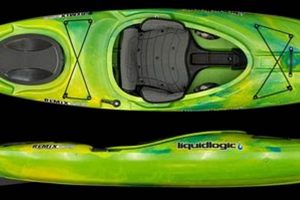
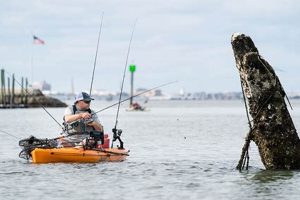
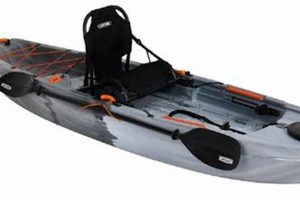
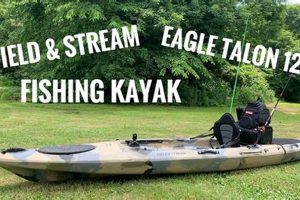
This type of watercraft, typically a sit-on-top model, combines a specific color with features designed for fishing and recreational paddling. The olive drab coloration provides camouflage, beneficial in natural environments. Such kayaks often include specialized features like rod holders, gear tracks, and ample storage for tackle and equipment. They are designed for stability and maneuverability, making them suitable for various water conditions, from calm lakes to slow-moving rivers.
The combination of color and features offers practical advantages for anglers. The camouflage helps approach fish without disturbance, increasing the chances of a successful catch. The specialized design enhances the fishing experience by providing convenient access to equipment and ensuring a stable platform for casting and reeling. Historically, kayaks have evolved from traditional hunting vessels used by indigenous peoples. Modern designs incorporate advanced materials and technology to improve performance, durability, and comfort.
Further exploration will cover specific features, materials, manufacturers, and selection criteria for this type of kayak, enabling informed decisions based on individual needs and preferences. Considerations such as size, weight capacity, and hull design will also be addressed.
Tips for Kayak Fishing Success
Effective angling from a kayak requires preparation and technique. The following tips offer guidance for enhancing fishing success and overall experience.
Tip 1: Pre-Trip Planning: Research potential fishing locations beforehand, considering factors like water depth, currents, and accessibility. Check weather forecasts and dress accordingly. Pack essential safety gear, including a personal flotation device, a whistle, and a first-aid kit.
Tip 2: Paddle Proficiency: Practice basic paddling strokes to maneuver efficiently and quietly. Learning to control the kayak’s movement is crucial for approaching fish without disturbance.
Tip 3: Effective Gear Storage: Organize tackle and equipment within easy reach. Utilize storage compartments and consider additional accessories like tackle boxes and rod holders for optimal efficiency.
Tip 4: Stealth and Observation: Approach fishing spots slowly and quietly. Observe the water for signs of fish activity, such as ripples or baitfish movement. Avoid sudden movements that might spook fish.
Tip 5: Anchor Positioning: Learn how to effectively deploy an anchor to maintain position in desired fishing areas, particularly in currents or windy conditions.
Tip 6: Catch and Release Practices: Handle fish carefully, minimizing stress and injury. Use appropriate hooks and tools for efficient removal. Practice catch-and-release techniques to conserve fish populations.
Tip 7: Respect Wildlife and Environment: Minimize environmental impact by properly disposing of waste and avoiding disturbance of natural habitats. Respect wildlife and observe local regulations.
Implementing these strategies can significantly enhance angling success, promote safety, and contribute to an enjoyable and responsible kayaking experience.
This information provides a foundation for planning fishing excursions and maximizing opportunities for a successful and rewarding experience on the water.
1. Camouflage
Camouflage plays a crucial role in the effectiveness of an OD green sport fisher kayak, enabling anglers to approach fish without being detected. This coloration blends with natural environments, reducing visibility and increasing the likelihood of a successful fishing experience. Understanding the principles and practical applications of camouflage in this context is essential for maximizing angling potential.
- Blending with the Environment
OD green, a shade of olive drab, is chosen for its ability to mimic the colors found in natural aquatic environments. This color scheme allows the kayak to blend seamlessly with vegetation, shadows, and murky water, reducing its visual signature and making it less conspicuous to fish. This is particularly advantageous in shallow water or near the shoreline, where fish are more likely to be startled by brightly colored objects.
- Reducing Visual Detection
The primary purpose of camouflage is to minimize visual detection. By matching the kayak’s color to the surrounding environment, the angler effectively reduces the contrast between the kayak and the background. This makes it more difficult for fish to perceive the kayak as a foreign object, allowing for closer approaches and increased opportunities for observation and casting.
- Enhancing Stealth
Camouflage enhances stealth by minimizing not only visual detection but also potential disturbances in the water. A less visible kayak creates less noticeable ripples and shadows, further reducing the chances of alerting fish to the angler’s presence. This is especially important in calm water conditions where even slight disturbances can easily spook fish.
- Practical Applications in Various Environments
The effectiveness of OD green camouflage varies depending on the specific environment. In heavily vegetated areas, such as marshes or along riverbanks, the color blends seamlessly with the surrounding foliage. In open water, the muted tones help the kayak blend with the darker depths and reduce its silhouette against the sky. Understanding the interplay between color and environment is crucial for maximizing the benefits of camouflage.
The strategic use of camouflage in the design of an OD green sport fisher kayak significantly enhances its effectiveness as a fishing platform. By minimizing visual detection and promoting stealth, this coloration contributes directly to angling success, allowing for closer approaches to fish and increasing the chances of a productive fishing trip. Selecting appropriate camouflage for the intended fishing environment further optimizes the kayak’s effectiveness.
2. Fishing Features

Specialized features distinguish a fishing kayak from recreational models, optimizing it for angling. These features enhance functionality, convenience, and overall fishing success. Understanding their purpose and application is crucial for selecting and effectively utilizing an OD green sport fisher kayak.
- Rod Holders
Rod holders, typically flush-mounted or adjustable, secure fishing rods, freeing hands for paddling, baiting hooks, or landing fish. Multiple rod holders accommodate diverse fishing techniques and allow for carrying spare rods. Their placement and design contribute significantly to efficient angling from a kayak.
- Gear Tracks and Mounts
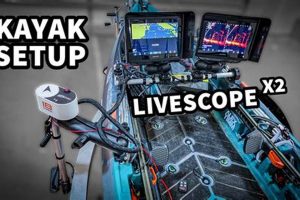
Gear tracks, integrated mounting systems, provide versatile attachment points for accessories like fish finders, GPS units, cameras, and other equipment. This customization allows anglers to tailor their kayak setup to specific needs and preferences, enhancing functionality and convenience on the water.
- Storage Compartments
Dedicated storage compartments, including hatches, tank wells, and dry bags, hold tackle, equipment, and personal items. These compartments protect gear from water damage and keep the kayak organized, essential for efficient retrieval of items during a fishing trip.
- Paddle Parks or Holders
Paddle parks or holders secure the paddle when not in use, preventing it from drifting away and providing easy access when needed. This feature allows anglers to focus on fishing without worrying about losing their paddle or having it interfere with casting and reeling.
These features collectively enhance the angler’s experience, contributing to efficiency, organization, and overall fishing success. When integrated into an OD green sport fisher kayak, they create a specialized platform optimized for stealth, maneuverability, and effective angling in various aquatic environments. The thoughtful selection and utilization of these features are key to maximizing the kayak’s potential and enjoying a productive fishing trip.
3. Stability

Stability is a critical attribute of an OD green sport fisher kayak, directly influencing angling success and overall safety. A stable platform allows anglers to cast, reel, and land fish effectively without compromising balance. It also provides a secure and comfortable position for extended periods on the water. Several factors contribute to kayak stability, including hull design, width, and weight distribution. Wider kayaks generally offer greater primary stability (initial resistance to tipping), while longer, narrower kayaks may have superior secondary stability (resistance to capsizing once tilted). Understanding the interplay of these factors is essential for selecting a kayak appropriate for individual needs and intended fishing environments.
Consider, for example, an angler fishing in a calm lake. A wider, more stable kayak allows comfortable standing for casting, providing a better vantage point and increased leverage. Conversely, in a fast-flowing river or choppy coastal waters, a kayak with greater secondary stability might be preferred, offering increased resistance to capsizing in turbulent conditions. The kayak’s center of gravity, influenced by the distribution of weight within the boat, also affects stability. Proper loading and weight management contribute significantly to maintaining balance and maneuverability.
Selecting a kayak with appropriate stability characteristics is paramount for both safety and fishing effectiveness. Compromised stability not only hinders casting and retrieving but also increases the risk of capsizing, especially in challenging conditions. Understanding the relationship between stability, hull design, and weight distribution empowers anglers to make informed decisions, ensuring a safe and productive fishing experience. Furthermore, practicing basic paddling techniques and developing a sense of balance on the water enhances stability regardless of the kayak’s inherent characteristics. Appropriate stability enables anglers to focus on fishing rather than maintaining balance, maximizing enjoyment and success on the water.
4. Maneuverability
Maneuverability is a crucial aspect of an OD green sport fisher kayak, directly influencing its effectiveness in various fishing environments. The ability to navigate tight spaces, change direction quickly, and precisely position the kayak contributes significantly to angling success. Several factors influence maneuverability, including hull design, length, and water conditions. Shorter kayaks generally offer greater maneuverability, allowing for tighter turns and easier navigation in confined areas such as shallow creeks or densely vegetated shorelines. Longer kayaks, while potentially faster in open water, may be less agile in tight spaces. Hull design also plays a crucial role; a kayak with a defined keel or tracking fin will track straighter and resist turning, while a flatter-bottomed hull allows for quicker turns and greater responsiveness. Consider, for example, navigating a narrow, winding creek choked with fallen branches; a shorter, more maneuverable kayak enables precise movements and avoids entanglement, allowing access to prime fishing spots inaccessible to larger, less agile craft. Conversely, in open water conditions, a longer kayak with better tracking might be preferred for covering greater distances efficiently. The interplay of these factors determines the kayak’s overall maneuverability and suitability for specific fishing environments.
Understanding the relationship between maneuverability, hull design, and environmental factors is crucial for selecting the right kayak. For example, anglers targeting fish in shallow, structure-rich environments benefit from a highly maneuverable kayak, enabling precise positioning near cover or submerged objects. In contrast, those fishing open lakes or coastal areas may prioritize speed and tracking over tight turning capabilities. The kayak’s maneuverability also impacts fishing techniques; a stable, maneuverable platform allows for precise casting and presentation of lures, while quick turns facilitate following fish or adjusting to changing currents. This responsiveness enhances the angler’s control and increases the chances of a successful hookup.
Maneuverability is therefore an essential consideration when evaluating an OD green sport fisher kayak. Selecting a kayak with appropriate maneuverability characteristics for the intended fishing environment and target species significantly enhances angling effectiveness and overall enjoyment. Balancing maneuverability with other factors like stability and storage capacity ensures the kayak meets the angler’s specific needs and preferences. This understanding empowers informed decisions, optimizing the fishing experience and maximizing success on the water.
5. Durability
Durability is a paramount consideration for an OD green sport fisher kayak, directly impacting its lifespan and resilience in demanding environments. These kayaks are frequently subjected to harsh conditions, including exposure to sunlight, saltwater, impacts with rocks or submerged debris, and the wear and tear of transport and storage. A durable kayak withstands these challenges, maintaining its structural integrity and functionality over extended periods. Durability is intrinsically linked to the materials used in construction. High-density polyethylene (HDPE) is a common choice due to its impact resistance, UV stability, and overall robustness. Other materials, such as rotomolded polyethylene and composites, also offer varying degrees of durability. For instance, a kayak constructed from HDPE can withstand impacts against rocks or logs without sustaining significant damage, essential for navigating shallow rivers or rocky coastlines. This resilience translates directly into a longer lifespan and reduced maintenance requirements, making it a cost-effective choice for anglers who frequently encounter challenging environments.
The connection between durability and an OD green sport fisher kayak extends beyond material selection to construction techniques. Proper welding, molding, and assembly ensure structural integrity and resistance to leaks or failures. Reinforced areas, such as the hull’s keel and sides, further enhance durability in high-impact zones. Consider, for example, a kayak used for fishing in rocky, fast-flowing rivers. Reinforced seams and a robust hull design protect against damage from impacts and abrasion, ensuring the kayak remains watertight and functional despite the challenging conditions. This durability translates into increased safety and confidence on the water, allowing anglers to focus on fishing without concern for the kayak’s structural integrity. Moreover, a durable kayak retains its value over time, making it a sound investment for serious anglers.
Understanding the importance of durability in an OD green sport fisher kayak is crucial for informed decision-making. Evaluating the materials, construction techniques, and features that contribute to durability ensures the kayak can withstand the rigors of its intended use. This understanding ultimately contributes to a safer, more enjoyable, and cost-effective fishing experience. A durable kayak not only withstands environmental challenges but also retains its functionality and aesthetic appeal over time, maximizing its value and contributing to long-term satisfaction. Choosing a kayak with appropriate durability characteristics is an investment in reliability, longevity, and peace of mind on the water.
Frequently Asked Questions
This section addresses common inquiries regarding kayaks designed for fishing, focusing on aspects related to their specialized features, functionality, and suitability for various angling scenarios.
Question 1: What advantages does the OD green color offer for fishing?
The OD green color provides camouflage, allowing the kayak to blend with natural environments such as vegetation and murky water. This reduces visibility to fish, enabling closer approaches and increasing angling success.
Question 2: Are these kayaks suitable for both freshwater and saltwater fishing?
While many models are suitable for both, it’s essential to consider material and hardware corrosion resistance, especially for saltwater use. Check manufacturer specifications for intended use and maintenance recommendations.
Question 3: How important is stability in a fishing kayak, and how is it affected by hull design?
Stability is paramount for safe and effective fishing. Hull design significantly influences stability; wider hulls generally offer greater initial stability, while longer, narrower designs may provide better secondary (tilt) stability. The choice depends on the intended fishing environment and angler preferences.
Question 4: What are the key features that distinguish a fishing kayak from a recreational model?
Key features include rod holders, gear tracks for mounting accessories, specialized storage compartments for tackle and equipment, and often a more stable hull design optimized for angling activities.
Question 5: How does the length of the kayak affect its maneuverability and tracking performance?
Shorter kayaks generally offer enhanced maneuverability in tight spaces, while longer kayaks typically track straighter and offer more speed in open water. The optimal length depends on the intended fishing environment and personal preferences.
Question 6: What materials are commonly used in the construction of these kayaks, and how do they affect durability?
High-density polyethylene (HDPE) is a common material due to its durability, impact resistance, and UV stability. Other materials, such as rotomolded polyethylene and composites, offer varying performance and durability characteristics. Material choice significantly influences the kayak’s lifespan and resistance to wear and tear.
Understanding these aspects contributes significantly to informed decision-making when selecting a fishing kayak appropriate for individual needs and intended usage scenarios. Carefully considering these factors optimizes the fishing experience and ensures long-term satisfaction with the chosen kayak.
Further exploration will cover specific models, manufacturers, and advanced features to enhance understanding and facilitate informed purchase decisions.
Conclusion
The exploration of this specialized kayak type reveals the critical interplay of design, features, and material selection in optimizing angling effectiveness. Camouflage, facilitated by the OD green coloration, enhances stealth and approach capabilities. Specialized features, such as rod holders, gear tracks, and ample storage, contribute to efficient tackle management and overall fishing performance. The balance of stability and maneuverability, influenced by hull design and length, dictates suitability for diverse aquatic environments, from calm lakes to challenging river systems. Durability, often contingent on robust materials like high-density polyethylene, ensures resilience against environmental factors and contributes to the kayak’s longevity. The synthesis of these elements distinguishes this kayak as a purpose-built platform for anglers seeking enhanced performance and integration with the natural world.
Careful consideration of these attributes empowers informed decisions aligned with individual angling styles and target environments. Understanding the nuances of design and functionality unlocks the full potential of these specialized kayaks, promising enhanced angling experiences and sustained engagement with the aquatic world. This knowledge base equips anglers to select the appropriate craft, maximizing both enjoyment and success on the water. Continued exploration of specific models, manufacturers, and emerging technologies will further refine selection criteria and contribute to an evolving understanding of kayak fishing dynamics.