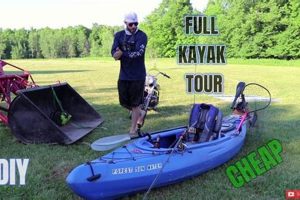
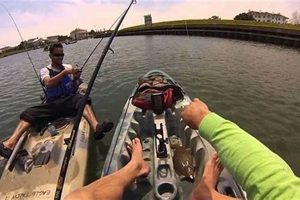
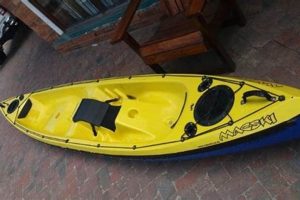
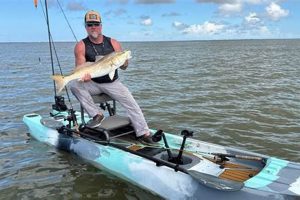
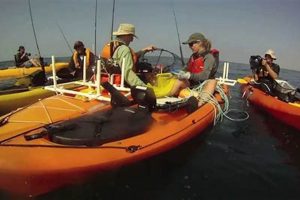
This specific model of personal watercraft is designed for angling activities. It combines the stability and maneuverability needed for a successful fishing experience with features tailored to the needs of anglers, such as rod holders, storage compartments, and often, a comfortable, elevated seating position. These vessels are typically constructed from durable, lightweight materials like high-density polyethylene.
Smaller, more agile watercraft like this offer significant advantages for fishing enthusiasts. Their compact size allows access to shallow waters and tighter spaces often inaccessible to larger boats, opening up a wider range of fishing locations. The focused design contributes to a more efficient and enjoyable fishing experience, minimizing distractions and maximizing utility. The evolution of these specialized kayaks reflects a growing demand for nimble, feature-rich vessels catering to the specific needs of the sport fishing community.
The following sections will delve deeper into specific aspects of this type of fishing kayak, exploring topics such as construction materials, design features, performance characteristics, and recommended accessories. This detailed examination will provide readers with a comprehensive understanding of its capabilities and suitability for various fishing environments.
Tips for an Enhanced Fishing Kayak Experience
Optimizing the use of a fishing kayak involves understanding its capabilities and employing effective techniques. The following tips offer valuable guidance for enhancing on-water performance and overall fishing success.
Tip 1: Pre-Trip Planning: Consult meteorological forecasts and water condition reports before embarking. Pack essential safety gear, including a personal flotation device, signaling whistle, and navigation lights. Plan routes and identify potential fishing spots in advance.
Tip 2: Weight Distribution: Evenly distribute gear within the kayak to maintain stability and maneuverability. Place heavier items closer to the center and secure all equipment to prevent shifting during movement.
Tip 3: Paddle Technique: Utilize efficient paddling techniques to conserve energy and maximize speed. Maintain a relaxed grip and use core muscles for power. Practice different paddle strokes for varied maneuvering requirements.
Tip 4: Anchor Positioning: Deploy anchors strategically to maintain position in desired fishing areas. Consider water depth, current, and wind direction when selecting anchoring locations. Carry multiple anchor types for varying conditions.
Tip 5: Fish Handling: Exercise proper fish handling techniques to minimize stress on the catch and ensure safe release. Use appropriate tools, such as lip grips and de-hookers, and handle fish gently. Adhere to local fishing regulations.
Tip 6: Navigation and Electronics: Familiarize oneself with navigational aids and electronic equipment, including GPS devices and fish finders. Ensure batteries are fully charged and devices are properly mounted and secured.
Tip 7: Maintenance and Care: Rinse the kayak thoroughly with fresh water after each use, especially after exposure to saltwater. Inspect for damage and address any necessary repairs promptly. Store the kayak in a protected environment.
By implementing these strategies, anglers can maximize their on-water efficiency, improve fishing success, and enhance overall safety and enjoyment. Careful preparation and informed practices contribute significantly to a rewarding kayaking experience.
These tips provide a framework for successful kayak fishing excursions. The next section will offer concluding remarks and highlight key takeaways for readers.
1. Stability

Stability represents a critical performance attribute for fishing kayaks, directly influencing angler safety, comfort, and fishing effectiveness. For the Intrepid 100xp, stability derives from a combination of hull design, material selection, and weight distribution. A wider, flatter hull provides primary stability, resisting initial tipping tendencies. Secondary stability, the ability to recover from larger disturbances, is influenced by hull shape and the distribution of weight within the kayak. This stability is essential for various on-the-water activities, from casting and reeling to landing fish and navigating challenging conditions. For example, the ability to remain stable while standing to cast significantly expands fishing opportunities and provides a tactical advantage.
The practical significance of stability becomes particularly apparent in dynamic fishing scenarios. Sudden movements, shifting weight, and external forces like wind and waves can compromise balance. A stable platform like the Intrepid 100xp minimizes these risks, enabling anglers to maintain equilibrium and focus on fishing. Consider a scenario where an angler hooks a large fish; the stability of the kayak becomes crucial for managing the fight and successfully landing the catch. Furthermore, enhanced stability contributes to angler confidence, allowing for more aggressive casting techniques and greater comfort during prolonged fishing trips. This confidence translates directly into a more enjoyable and productive fishing experience.
In summary, stability forms a cornerstone of the Intrepid 100xp’s design philosophy, contributing significantly to its performance and suitability for fishing applications. Understanding the factors that influence stability and their practical implications empowers anglers to make informed decisions and maximize their on-water safety and fishing success. A stable platform enhances angling versatility, improves comfort, and ultimately elevates the overall fishing experience.
2. Maneuverability
Maneuverability represents a critical performance characteristic for fishing kayaks, particularly in environments requiring precise navigation and quick adjustments. The Intrepid 100xp’s maneuverability stems from a combination of hull design, length, and weight. A shorter kayak generally turns more quickly than a longer one. Hull shape also plays a significant role; a kayak with a more pronounced keel will track straighter, while a flatter hull allows for quicker turns. The lighter the kayak, the easier it is to maneuver in various water conditions. This agility proves advantageous when navigating tight quarters, such as narrow creeks or areas dense with vegetation, and allows for efficient repositioning in response to changing currents, wind, or fish movement. Consider a scenario where an angler needs to navigate through a shallow, winding stream choked with fallen branches; the kayak’s maneuverability becomes essential for avoiding obstacles and reaching prime fishing spots. Similarly, in open water, responsive handling facilitates quick turns to follow schools of fish or adjust to shifting wind conditions.
The practical implications of maneuverability extend beyond simply navigating obstacles. Precise boat control allows anglers to position themselves optimally for casting and presentation, maximizing fishing effectiveness. The ability to subtly adjust position without excessive paddling minimizes disturbance in the water, increasing the likelihood of attracting fish. For instance, in a river environment, maneuverability allows anglers to hold position against the current, maintain a desired casting angle, and present lures naturally within the flow. Furthermore, enhanced maneuverability contributes to a more dynamic and engaging fishing experience, allowing anglers to explore diverse areas and react quickly to changing fishing opportunities. This responsiveness adds an element of excitement and increases the potential for success.
In summary, maneuverability constitutes a crucial element of the Intrepid 100xp’s performance profile, directly impacting fishing effectiveness and the overall on-water experience. Understanding the factors that influence maneuverability and their practical implications allows anglers to appreciate its value in various fishing scenarios. The ability to navigate efficiently, position precisely, and react quickly enhances angling versatility, improves catch rates, and elevates the overall enjoyment of kayak fishing. This responsiveness ultimately allows anglers to make the most of their time on the water.
3. Storage Capacity

Storage capacity significantly impacts the utility and practicality of a fishing kayak. The Intrepid 100xp addresses this need by incorporating various storage solutions designed to accommodate essential fishing gear and equipment. Ample storage space allows anglers to carry a wider selection of tackle, rods, safety gear, and personal items, enhancing preparedness for diverse fishing scenarios. This capacity proves particularly valuable during longer trips or when targeting multiple species requiring different equipment configurations. For instance, the ability to store extra rods rigged with various lures allows for quick adaptation to changing fish behavior or water conditions without the need to return to shore. Similarly, designated compartments for tackle boxes, electronics, and personal belongings ensure organization and easy access to essential items while on the water. Dedicated storage also contributes to a clutter-free deck, maximizing fishing space and promoting efficient movement within the kayak. Consider a scenario where an angler needs to quickly switch to a heavier line setup after hooking a larger fish; readily accessible storage compartments facilitate a swift transition, minimizing the risk of losing the catch. This organizational efficiency improves fishing focus and minimizes wasted time searching for essential gear.
The practical significance of storage capacity extends beyond mere convenience. Adequate storage contributes directly to safety by allowing for the secure stowage of essential safety equipment, such as first-aid kits, signaling devices, and extra clothing. Easy access to these items in emergencies can prove critical. Furthermore, proper gear organization minimizes the risk of items shifting during movement, enhancing stability and preventing entanglement with fishing lines or other equipment. This organizational aspect reduces distractions and allows anglers to concentrate on the fishing experience. For example, secure storage for a bilge pump ensures it’s readily available in the event of capsizing, while a dedicated compartment for a VHF radio maintains its accessibility for emergency communication. These practical considerations contribute significantly to enhanced safety and peace of mind on the water.
In summary, the Intrepid 100xp’s storage capacity constitutes a vital element of its overall design, impacting both practicality and safety. Adequate and well-designed storage solutions allow anglers to carry essential gear, maintain organization, and enhance preparedness for various fishing situations. This functionality improves efficiency, minimizes distractions, and contributes to a safer and more enjoyable fishing experience. The ability to bring necessary equipment and access it quickly and easily ultimately empowers anglers to maximize their time on the water.
4. Fishing Features
Specialized fishing features distinguish the Intrepid 100xp fishing kayak from recreational models, optimizing its performance for angling activities. These features represent deliberate design choices aimed at enhancing angler efficiency, comfort, and overall fishing success. Flush-mounted rod holders provide secure storage and quick access to fishing rods, minimizing tangling and maximizing fishing time. Integrated track systems allow for the customizable mounting of accessories such as fish finders, GPS units, and camera mounts, tailoring the kayak to individual angler preferences. Strategically placed tackle storage compartments keep essential gear organized and within easy reach, minimizing clutter and maximizing fishing space. Consider the scenario of an angler trolling with multiple lines; the rod holders maintain rod security and proper orientation, while accessible tackle storage facilitates quick lure changes. This integration of specialized features streamlines the fishing process, allowing anglers to focus on the task at hand.
The practical significance of these fishing features becomes evident in real-world fishing scenarios. The ability to quickly switch between rods, adjust equipment configurations, and maintain organized tackle contributes directly to fishing effectiveness. For example, an angler sight-fishing in shallow water can benefit from readily accessible rod storage and strategically placed tackle compartments, enabling swift adjustments to changing fish behavior. Furthermore, integrated features enhance angler comfort and reduce fatigue during long fishing trips. Ergonomically designed seating and strategically placed footrests contribute to sustained comfort, allowing for extended periods on the water without compromising performance. This enhanced comfort translates directly into increased fishing time and improved focus.
In summary, the Intrepid 100xp’s fishing features represent integral components of its design, directly impacting its suitability and effectiveness for angling applications. These features contribute to improved organization, enhanced efficiency, and increased angler comfort, ultimately elevating the overall fishing experience. The strategic integration of specialized features empowers anglers to maximize their time on the water and pursue fishing success with greater confidence and control. The kayak becomes more than just a vessel; it transforms into a dedicated fishing platform optimized for performance and enjoyment.
5. Construction Material
Construction material plays a crucial role in determining a fishing kayak’s durability, performance, and overall suitability for various on-water environments. The Intrepid 100xp leverages specific material properties to achieve a balance of strength, weight, and resistance to environmental factors. Understanding these material characteristics provides valuable insight into the kayak’s long-term performance and maintenance requirements.
- High-Density Polyethylene (HDPE)
HDPE is a common material choice for kayak construction due to its robust combination of properties. Its high impact resistance makes it resilient to collisions with rocks, submerged obstacles, and other potential hazards encountered in diverse aquatic environments. HDPE also exhibits excellent UV resistance, minimizing degradation from prolonged sun exposure, a critical factor for maintaining structural integrity over time. This material’s relative ease of molding allows manufacturers to create complex hull shapes optimized for specific performance characteristics. In the context of the Intrepid 100xp, HDPE contributes significantly to its durability and long-term performance.
- UV Resistance and Long-Term Durability
UV resistance is a critical factor for kayaks frequently exposed to sunlight. HDPE’s inherent UV resistance minimizes material degradation, preventing cracking, fading, and loss of structural integrity. This durability translates to a longer lifespan for the kayak and reduces the need for frequent repairs or replacements. For the Intrepid 100xp, this long-term durability contributes to its value proposition, ensuring reliable performance over extended periods.
- Impact Resistance and On-Water Safety
Impact resistance directly influences a kayak’s ability to withstand collisions and impacts encountered in various water environments. HDPE’s high impact resistance provides a critical safety margin, minimizing the risk of damage in the event of contact with rocks, submerged debris, or other potential hazards. This resilience ensures the kayak remains functional and safe even after minor impacts, contributing to angler safety and confidence on the water.
- Maintenance Considerations for HDPE Kayaks
While HDPE is inherently durable, proper maintenance practices contribute to maximizing its lifespan. Regular cleaning with mild soap and water removes dirt, grime, and saltwater residue that can accelerate material degradation. Storing the kayak out of direct sunlight when not in use further minimizes UV exposure and helps preserve its color and structural integrity. These simple maintenance steps ensure the Intrepid 100xp remains in optimal condition, extending its usable life and preserving its performance characteristics.
The selection of HDPE as the primary construction material for the Intrepid 100xp demonstrates a focus on durability, performance, and long-term value. The material’s inherent properties align with the demands of fishing environments, contributing to a kayak that withstands the rigors of on-water use while providing anglers with a reliable and robust platform for pursuing their passion.
Frequently Asked Questions
This section addresses common inquiries regarding the Intrepid 100xp fishing kayak, providing concise and informative responses to facilitate informed decision-making.
Question 1: What is the weight capacity of the Intrepid 100xp?
The weight capacity is typically specified by the manufacturer and can be found in product documentation or on the manufacturer’s website. Exceeding the specified weight capacity can compromise stability and performance.
Question 2: Is the Intrepid 100xp suitable for use in saltwater environments?
The kayak’s HDPE construction provides excellent resistance to saltwater corrosion. However, rinsing the kayak with fresh water after each use in saltwater is recommended to maximize its lifespan.
Question 3: What type of paddle is recommended for use with the Intrepid 100xp?
Paddle selection depends on individual paddling style and preferences. Factors to consider include paddle length, blade shape, and material construction. Consulting with a kayak specialist can assist in selecting an appropriate paddle.
Question 4: How does the Intrepid 100xp perform in windy conditions?
Performance in wind depends on various factors, including wind speed, direction, and paddling technique. Generally, kayaks with lower profiles are less affected by wind. Proper weight distribution and effective paddling techniques can improve performance in windy conditions.
Question 5: What safety precautions should be taken when using the Intrepid 100xp?
Standard safety precautions for kayak fishing apply. Always wear a personal flotation device (PFD), carry a signaling whistle, inform someone of your paddling plans, and be aware of weather conditions and water traffic. Checking local regulations regarding required safety equipment is also advisable.
Question 6: Can the Intrepid 100xp be transported on a car roof rack?
Yes, the Intrepid 100xp is typically compatible with standard car roof rack systems. Ensure the roof rack is properly installed and the kayak is securely fastened before transport. Following manufacturer recommendations for safe transportation practices is essential.
These responses address common inquiries regarding the Intrepid 100xp. Consulting the manufacturer’s website or contacting a authorized dealer can provide additional information and address specific concerns.
The following section offers concluding remarks and summarizes key takeaways for readers interested in the Intrepid 100xp fishing kayak.
Conclusion
This exploration of the Intrepid 100xp fishing kayak has provided a comprehensive overview of its key features, performance characteristics, and practical considerations. From its specialized fishing features and durable construction to its stability and maneuverability, the kayak presents a compelling option for anglers seeking a dedicated fishing platform. Storage capacity, material selection, and design elements contribute to its overall suitability for diverse fishing environments. Addressing frequently asked questions provides additional clarity regarding its capabilities and practical application.
The Intrepid 100xp fishing kayak represents a carefully considered design tailored to the specific needs of anglers. Its features and performance attributes contribute to enhanced fishing efficiency, comfort, and overall enjoyment on the water. Potential users are encouraged to consider the information presented here to assess its suitability for their individual fishing styles and preferences. Further research and in-person evaluation can provide a more complete understanding of its capabilities and potential benefits. The decision to invest in specialized fishing equipment should reflect careful consideration of individual needs and intended use.