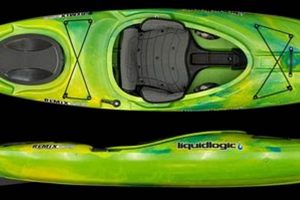
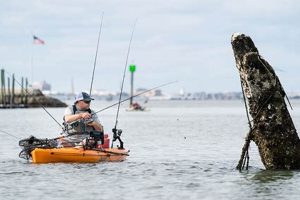
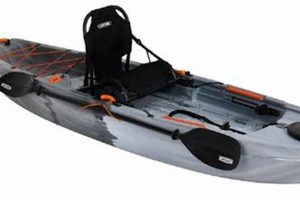
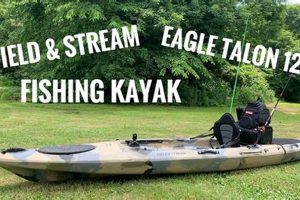
Tandem kayaks designed for angling in open saltwater environments typically feature specialized hulls for stability in waves and currents, along with ample storage for fishing gear and accessories. These vessels are often constructed from durable, UV-resistant materials like high-density polyethylene or composite blends. Common features include rod holders, adjustable seating, and sometimes livewells or coolers for keeping catches fresh.
The ability to share the experience and cost of offshore angling makes these craft an attractive option for fishing enthusiasts. Sharing a larger, more stable platform offers increased safety and the capacity to carry more equipment, potentially leading to more successful excursions. Historically, fishing from smaller, individual watercraft limited range and load-bearing capabilities. Modern designs address these limitations, providing anglers with a safer and more efficient way to access offshore fishing grounds.
This article will further explore the nuances of selecting, equipping, and safely operating these specialized kayaks, delving into specific design features, essential safety considerations, and popular fishing techniques suitable for offshore tandem kayak angling.
Tips for Tandem Kayak Fishing in the Ocean
Safe and successful offshore kayak angling requires careful planning and execution. The following tips offer guidance for enhancing the experience.
Tip 1: Check weather forecasts and sea conditions meticulously. Offshore conditions can change rapidly. Confirm favorable winds, tides, and swell forecasts before embarking. Be aware of potential fog and plan accordingly.
Tip 2: Utilize appropriate safety gear. Personal flotation devices (PFDs) are mandatory. Carry a VHF radio, signaling devices (flares, whistle), and a first-aid kit. A bilge pump and paddle leash are also essential.
Tip 3: Distribute weight evenly within the kayak. Proper weight distribution is crucial for stability and maneuverability. Store heavier items low and centered.
Tip 4: Practice paddling and maneuvering techniques in calm water before venturing offshore. Synchronized paddling is essential for efficient movement. Practice turning and recovery techniques as a team.
Tip 5: Establish communication protocols. Clear and concise communication between paddlers is paramount, particularly in challenging conditions. Discuss hand signals or verbal cues before departure.
Tip 6: Be mindful of other vessels. Larger boats may have difficulty spotting kayaks. Wear bright clothing and utilize a flag to increase visibility. Understand and adhere to navigational rules.
Tip 7: Respect the environment. Adhere to catch and release guidelines where appropriate. Dispose of waste responsibly and avoid disturbing marine life.
Adhering to these guidelines will contribute significantly to a safer and more rewarding offshore kayaking experience, enabling anglers to enjoy the thrill of fishing in the open ocean.
By understanding the nuances of tandem kayak fishing and embracing a safety-conscious approach, anglers can confidently explore the vast potential of offshore angling from these versatile vessels.
1. Stability

Stability forms a cornerstone of safe and effective ocean tandem kayak fishing. The inherent instability of kayaks, amplified by ocean conditions, necessitates careful consideration of design features and operational practices. Stability is broadly categorized into initial and secondary stability. Initial stability refers to the resistance to tipping when at rest, influenced by hull width and shape. Wider, flatter hulls exhibit greater initial stability, beneficial for calmer waters and stationary fishing. Secondary stability describes the resistance to capsizing when leaning or encountering waves. Kayaks with rounded or flared hulls offer greater secondary stability, performing better in rougher conditions and during dynamic movements like casting or landing fish. For instance, a kayak with a shallow-V hull will have higher initial stability, making it feel more stable when sitting still, but it will be more prone to tipping when leaned. A kayak with a deeper-V hull, on the other hand, may feel less stable initially but will offer greater resistance to capsizing when leaned further. Choosing the right balance between initial and secondary stability depends on the intended fishing environment.
Considerable factors influence stability beyond hull design. Weight distribution plays a crucial role; uneven loading can compromise stability even in otherwise stable designs. Proper gear stowage, keeping weight low and centered, becomes vital. The combined weight of anglers and gear should be compatible with the kayak’s specified capacity. Furthermore, the interaction between paddlers impacts stability. Synchronized paddling and coordinated movements enhance stability, while abrupt or unbalanced actions can destabilize the vessel. Environmental factors such as wind, waves, and currents also significantly affect stability, requiring constant awareness and adaptive paddling techniques.
Understanding the principles of stability is paramount for safe and successful ocean tandem kayak fishing. Choosing an appropriate hull design and adhering to proper loading and paddling practices are essential. Matching kayak stability characteristics to anticipated conditions minimizes risks and maximizes fishing effectiveness, ultimately contributing to a more enjoyable and rewarding experience.
2. Storage Capacity
Ample storage capacity is a defining characteristic of effective tandem fishing kayaks designed for ocean use. The demands of offshore angling necessitate carrying a variety of equipment, including rods, reels, tackle boxes, safety gear, and potentially food and water for extended trips. Insufficient storage can compromise safety by cluttering the cockpit, hindering paddling and access to essential items. It also limits the range of fishing techniques that can be employed and reduces the capacity to bring home the day’s catch. For example, carrying multiple rods rigged for different target species or techniques requires dedicated rod holders and storage for associated tackle. Larger catches necessitate storage wells or coolers to maintain freshness. Kayaks lacking adequate storage capacity restrict these possibilities, limiting versatility and effectiveness.
Several factors influence the practical storage capacity of a tandem fishing kayak. Dedicated compartments designed for specific items, such as tackle boxes or rods, optimize space utilization. Recessed storage areas within the hull maximize deck space and minimize interference with paddling. Bungee cord systems secure loose items and provide additional storage options. Weight capacity plays a crucial role, dictating the total amount of gear and supplies that can be safely carried. Exceeding the manufacturer’s specified weight capacity negatively impacts stability and performance. Furthermore, the accessibility of storage compartments is a key consideration. Easy access to frequently used items, such as pliers or lures, enhances efficiency and minimizes disruptions during fishing. Ergonomic design principles, such as strategically placed hatches and readily accessible storage compartments, optimize workflow and contribute to a more productive and enjoyable fishing experience.
Sufficient and well-designed storage directly influences the effectiveness and safety of ocean tandem kayak fishing. Prioritizing storage capacity when selecting a kayak allows anglers to carry essential gear and provisions comfortably, maximizing their fishing potential. Understanding the practical implications of storage solutions facilitates informed decision-making and ensures that anglers are well-equipped for successful offshore excursions. Careful consideration of storage capacity contributes significantly to a safe, organized, and productive fishing experience.
3. Durability
Durability stands as a critical factor in the selection and longevity of tandem fishing kayaks intended for ocean environments. The harsh conditions encountered offshore, including exposure to saltwater, UV radiation, and potential impacts against rocks or other obstacles, necessitate robust construction. Kayaks lacking sufficient durability are prone to cracks, leaks, and structural failures, compromising safety and potentially leading to premature replacement. A durable kayak withstands these rigors, ensuring reliable performance and extending its lifespan. For instance, a kayak constructed from high-density polyethylene (HDPE) exhibits greater impact resistance and durability compared to a kayak made from lower-grade plastics. Similarly, UV-resistant coatings protect against sun damage, preserving the structural integrity and aesthetics of the kayak over time. The choice of construction materials and manufacturing processes directly impacts the kayak’s ability to withstand the demanding conditions of offshore use.
Several elements contribute to a kayak’s overall durability. The material selection plays a primary role; kayaks constructed from high-quality, marine-grade materials demonstrate enhanced resistance to wear and tear. HDPE and composite materials, known for their strength and resilience, are commonly used in ocean-going kayaks. Construction techniques, such as rotational molding or thermoforming, influence the structural integrity and resistance to impact. Reinforced areas, particularly around the hull and seating areas, provide added protection against stress and abrasion. Hardware choices, including stainless steel fittings and UV-resistant components, contribute to overall durability and corrosion resistance. Proper maintenance, including regular cleaning and inspections, further extends the life of the kayak by addressing minor issues before they escalate into major problems.
Investing in a durable tandem fishing kayak minimizes long-term costs and enhances safety in the challenging offshore environment. The ability to withstand harsh conditions ensures reliable performance and reduces the risk of equipment failure. Prioritizing durability during the selection process empowers anglers to confidently explore the open ocean, knowing their vessel is equipped to handle the rigors of offshore fishing. Understanding the factors influencing durability facilitates informed purchasing decisions and ultimately contributes to a safer and more rewarding fishing experience.
4. Maneuverability
Maneuverability represents a critical performance attribute in ocean-going tandem fishing kayaks. The ability to precisely control the kayak’s direction and position directly impacts fishing effectiveness and safety in dynamic offshore environments. Navigating through currents, waves, and around obstacles requires responsive handling. Precise boat control facilitates accurate casting and lure presentation, maximizing fishing opportunities. Furthermore, maneuverability plays a vital role in responding to changing sea conditions or unexpected situations, enhancing overall safety. For instance, a kayak with superior maneuverability enables anglers to quickly reposition to exploit fleeting feeding opportunities or navigate around hazardous debris or breaking waves. Conversely, a less maneuverable kayak may hinder access to prime fishing locations or compromise safety in challenging conditions. The interplay between hull design, length, and rudder systems significantly influences a tandem kayak’s maneuverability.
Several design elements contribute to a tandem kayak’s maneuverability. Shorter kayaks generally exhibit greater responsiveness and turning agility compared to longer designs, although longer kayaks often track straighter and glide more efficiently. Hull shape plays a significant role; kayaks with a defined keel or tracking channels enhance directional stability, while kayaks with flatter hulls facilitate quicker turns. Rudder systems, controlled by foot pedals, provide enhanced steering control, particularly in windy conditions or strong currents. The combined weight of anglers and gear also influences maneuverability, with heavier loads requiring greater effort to maneuver. Furthermore, the interaction between paddlers impacts overall control; synchronized paddling and coordinated turning techniques maximize maneuverability, while uncoordinated movements can hinder performance.
Prioritizing maneuverability when selecting an ocean tandem fishing kayak empowers anglers to confidently navigate the dynamic offshore environment. Responsive handling enhances fishing precision, allowing for strategic positioning and efficient lure presentation. Furthermore, enhanced maneuverability contributes to safety by enabling quick reactions to changing conditions or unexpected hazards. Understanding the factors influencing maneuverability, including hull design, length, and rudder systems, enables informed decision-making and ensures anglers are well-equipped to handle the challenges of offshore kayak fishing. Ultimately, maneuverability plays a crucial role in maximizing both fishing success and safety in the demanding open ocean.
5. Comfort

Comfort represents a crucial factor influencing the overall enjoyment and success of extended ocean tandem kayak fishing trips. Discomfort can detract from the experience, leading to fatigue, reduced focus, and a diminished appreciation of the surrounding environment. Prioritizing comfort features during kayak selection enhances endurance, promotes a positive fishing experience, and allows anglers to fully immerse themselves in the pursuit of offshore angling. Several key elements contribute to a comfortable and enjoyable experience in an ocean tandem fishing kayak.
- Seating Design and Adjustability
Well-designed seating systems contribute significantly to comfort, particularly during long hours on the water. Adjustable seating allows for customization to individual body types and preferences, reducing strain and promoting proper posture. Features such as padded seats, adjustable backrests, and ample legroom enhance comfort and minimize fatigue. High-quality seating systems contribute to a more enjoyable and productive fishing experience by allowing anglers to maintain focus and energy throughout the day. For example, kayaks equipped with higher-end seating systems often feature breathable mesh fabric and multiple adjustment points, allowing anglers to fine-tune their position for optimal comfort and support.
- Legroom and Cockpit Design
Adequate legroom and a well-designed cockpit are essential for comfort, especially for taller individuals or those prone to leg cramps. Sufficient space to stretch and change positions minimizes discomfort and promotes circulation. A spacious cockpit facilitates easy entry and exit, a crucial safety consideration. Features such as adjustable footrests or foot braces further enhance comfort and control, allowing paddlers to maintain a stable and efficient paddling position. For example, a kayak with a larger cockpit opening and adjustable footrests can accommodate anglers of varying heights and leg lengths, enhancing overall comfort and reducing the risk of cramping or discomfort during long paddling sessions.
- Stability and Motion
Kayak stability directly impacts comfort by influencing the angler’s sense of security and minimizing the effort required to maintain balance. A stable kayak reduces fatigue and allows anglers to focus on fishing rather than constantly correcting their position. Furthermore, the kayak’s motion in the water affects comfort. Kayaks that track smoothly and minimize rocking or rolling enhance comfort, particularly in choppy conditions. This stability and predictable motion contribute to a more relaxing and enjoyable experience, minimizing motion sickness and promoting overall well-being. For example, a kayak with a well-designed hull and a lower center of gravity will provide a more stable and comfortable ride, particularly in rough seas.
- Deck Layout and Accessibility
A well-organized deck layout enhances comfort and efficiency by providing easy access to essential gear and equipment. Strategically placed rod holders, tackle storage compartments, and other accessories minimize the need to reach or stretch, reducing strain and promoting a streamlined fishing experience. Easy access to essential items enhances comfort by reducing frustration and allowing anglers to focus on the task at hand. For example, a kayak with readily accessible storage compartments for tackle boxes and other frequently used items can significantly improve the overall fishing experience by reducing clutter and minimizing the need to reach or search for essential gear.
Comfort considerations play a vital role in maximizing the enjoyment and effectiveness of ocean tandem kayak fishing. Prioritizing features such as comfortable seating, ample legroom, a stable platform, and an ergonomic deck layout contributes to a more positive and productive fishing experience. By addressing these comfort factors, anglers can fully embrace the challenges and rewards of offshore kayak angling, enhancing both their performance and their appreciation of the marine environment.
6. Specialized Features

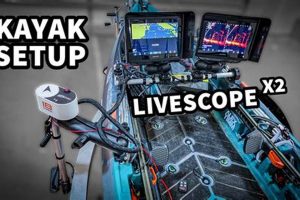
Specialized features distinguish ocean-going tandem fishing kayaks from recreational models, optimizing performance and enhancing the angling experience in demanding offshore environments. These features directly address the unique challenges and opportunities presented by open-water fishing, contributing to both safety and effectiveness. Consider rod holders, for instance. Flush-mounted or adjustable rod holders secure rods while paddling or trolling, freeing hands for other tasks. Similarly, integrated track systems allow for customized mounting of fish finders, GPS units, and other accessories, enhancing navigational and fishing capabilities. These specialized features reflect a purposeful design philosophy centered around optimizing the offshore angling experience. Without these features, adapting recreational kayaks for ocean fishing would be cumbersome and potentially compromise safety and performance.
Further enhancing functionality, many ocean tandem fishing kayaks incorporate livewells or bait tanks, crucial for keeping bait fresh and lively throughout the fishing trip. These integrated systems often include aeration and drainage features, ensuring optimal bait health. Additionally, features like anchor trolleys facilitate controlled drifting and precise positioning in currents, crucial for targeting specific fishing zones. Paddle parks or leashes secure paddles when not in use, preventing loss in rough conditions. These specialized adaptations, absent in recreational kayaks, demonstrate the thoughtful design and attention to detail that characterize purpose-built ocean fishing kayaks. For example, an angler targeting pelagic species like tuna or mahi-mahi would benefit significantly from a kayak equipped with a livewell for keeping smaller baitfish alive and readily available, illustrating the practical application of specialized features.
The integration of specialized features represents a critical aspect of ocean tandem fishing kayak design. These features are not mere add-ons but rather integral components that elevate functionality and enhance the overall fishing experience. Features like rod holders, track systems, livewells, and anchor trolleys transform the kayak into a dedicated fishing platform optimized for the demanding offshore environment. Understanding the purpose and application of these specialized features empowers anglers to make informed decisions when selecting a kayak and to fully utilize its capabilities to maximize their fishing success and overall enjoyment on the water. The presence and effective utilization of these features can often be the differentiating factor between a successful offshore fishing expedition and a frustrating one.
Frequently Asked Questions
This section addresses common inquiries regarding tandem kayaks designed for ocean fishing, providing concise and informative responses to facilitate informed decision-making and promote safe and effective offshore angling practices.
Question 1: What key features should one prioritize when selecting an ocean-going tandem fishing kayak?
Prioritize stability, especially secondary stability for rough conditions; ample storage for gear and catches; durable construction from marine-grade materials; sufficient maneuverability for navigating currents and waves; comfortable seating and cockpit design for extended trips; and specialized features like rod holders, anchor trolleys, and potentially livewells.
Question 2: How does one ensure safety when fishing offshore in a tandem kayak?
Essential safety measures include consistently wearing personal flotation devices (PFDs); carrying a VHF radio, signaling devices, and a first-aid kit; checking weather forecasts and sea conditions meticulously before departure; distributing weight evenly within the kayak; and practicing paddling and maneuvering techniques in calm water before venturing offshore.
Question 3: What are the advantages of using a tandem fishing kayak over a single kayak in the ocean?
Tandem kayaks offer increased stability, greater load capacity for gear and catches, and enhanced safety through shared effort and redundancy in challenging offshore conditions. They also provide a shared experience, distributing the physical demands of paddling and navigation.
Question 4: How does one choose the appropriate paddle length for a tandem ocean fishing kayak?
Appropriate paddle length depends on factors including paddler height, kayak width, and paddling style. Consulting retailer recommendations or utilizing online paddle sizing charts, considering both paddlers’ dimensions, assists in proper selection.
Question 5: What maintenance procedures are recommended for an ocean-going tandem fishing kayak?
Regularly rinse the kayak with fresh water after each use to remove salt and debris. Inspect the hull for damage and address any issues promptly. Store the kayak out of direct sunlight to prevent UV degradation. Periodically check and lubricate moving parts, such as rudder cables and hatch hinges.
Question 6: What are the typical costs associated with acquiring a properly equipped ocean tandem fishing kayak?
Costs vary significantly based on materials, features, and brand reputation. Entry-level models may start around $1000, while high-end, feature-rich kayaks can exceed $3000. Additional costs include paddles, safety gear, fishing equipment, and potentially transportation or storage solutions.
Careful consideration of these frequently asked questions equips prospective buyers with the knowledge necessary to make informed decisions when selecting and operating a tandem fishing kayak in the ocean. Prioritizing safety, understanding key features, and adhering to recommended maintenance practices contribute significantly to a positive and rewarding offshore angling experience.
The following section delves deeper into specific kayak models and accessories suitable for ocean tandem fishing, providing further guidance for prospective buyers.
Conclusion
Tandem kayaks designed for ocean fishing represent a specialized category of watercraft, purpose-built for the demanding offshore environment. This article explored key aspects of these vessels, emphasizing the critical roles of stability, storage capacity, durability, maneuverability, comfort, and specialized features in ensuring both safety and fishing effectiveness. Careful consideration of these interconnected elements empowers informed purchasing decisions and promotes responsible offshore angling practices. Understanding the nuances of hull design, material selection, and feature integration enables anglers to choose a kayak optimized for their specific needs and target species.
The evolution of tandem fishing kayak design reflects a continuous pursuit of enhanced performance and safety in the challenging open ocean. Further advancements in materials, construction techniques, and integrated technologies promise to further refine the offshore angling experience. As anglers venture farther offshore in pursuit of prized catches, the importance of selecting and operating appropriate, well-equipped vessels remains paramount. Continued emphasis on safety, responsible angling practices, and respect for the marine environment will ensure the sustainability and enjoyment of this exciting pursuit for generations to come.