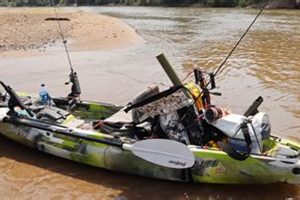
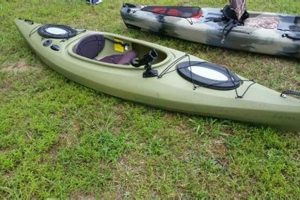
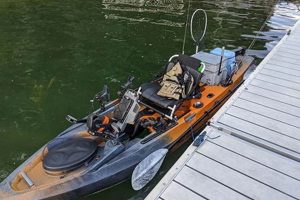
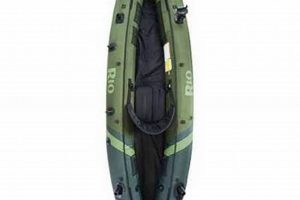
Sit-on-top kayaks designed specifically for angling offer stability, specialized features like rod holders and gear tracks, and often a pedal-driven propulsion system for hands-free fishing. These vessels provide anglers with a unique platform for accessing a variety of waterways, from shallow rivers and lakes to coastal areas.
The specialized design of these watercraft provides significant advantages over traditional kayaks or other small fishing boats. Enhanced stability allows anglers to stand and cast with confidence, while integrated features streamline tackle management and improve overall fishing efficiency. The relatively recent development and growing popularity of this type of watercraft reflects a broader trend toward specialized outdoor equipment designed for specific activities.
This discussion will further explore key features, popular models, and essential accessories, offering a comprehensive guide for those interested in learning more about this specialized segment of the kayaking market. Considerations for selecting the right vessel, along with safety and maintenance best practices, will also be examined.
Tips for Pedal-Driven Kayak Fishing
Optimizing the angling experience from a pedal-powered kayak involves understanding key techniques and strategies. The following tips provide valuable insights for maximizing efficiency and enjoyment on the water.
Tip 1: Master Pedal Propulsion: Practice maneuvering the pedal drive system in various water conditions. Understanding the nuances of forward and reverse pedaling, as well as turning techniques, is crucial for precise boat control and efficient navigation.
Tip 2: Prioritize Stability: While these kayaks are designed for stability, understanding weight distribution and balance is essential, particularly when standing to cast or land fish. Practice standing and moving within the kayak in calm water before venturing into more challenging conditions.
Tip 3: Organize Tackle Strategically: Utilize integrated storage compartments and accessory mounts to organize tackle and keep essential gear within easy reach. This minimizes time spent searching for equipment and maximizes fishing time.
Tip 4: Employ Stealth Tactics: The quiet operation of pedal kayaks offers a significant advantage in approaching fish without disturbance. Minimize noise and movement to enhance stealth and improve fishing success.
Tip 5: Understand Water Conditions: Familiarize oneself with water depth, currents, and potential hazards before launching. This knowledge allows for more effective route planning and enhances safety on the water.
Tip 6: Practice Proper Anchoring Techniques: Learn how to effectively deploy and retrieve an anchor in different water conditions. Secure anchoring prevents unwanted drift and maintains position in desired fishing locations.
Tip 7: Prioritize Safety Equipment: Always wear a personal flotation device and carry essential safety gear, including a whistle, signaling device, and first-aid kit. Safety preparation is crucial for mitigating potential risks.
By implementing these strategies, anglers can significantly improve their efficiency, safety, and overall enjoyment while fishing from these specialized kayaks. Preparation and practice are key to maximizing the potential of this unique fishing platform.
This information provides a solid foundation for successful pedal kayak fishing. The next section will explore popular models and accessories available on the market.
1. Stability

Stability is a paramount consideration in fishing kayaks, directly impacting angler safety, comfort, and fishing effectiveness. A stable platform allows for confident casting, fish fighting, and even standing to sight fish or paddle through shallow water. In the context of specialized fishing kayaks, stability is engineered through hull design and thoughtful weight distribution.
- Primary Stability:
Primary stability refers to the initial resistance a kayak offers to tipping when at rest. A wider, flatter hull provides greater primary stability, making it feel secure and less prone to rocking. This is crucial for activities like standing casting and reeling in fish. Wide, flat-bottomed hulls excel in calm waters but can feel less responsive in moving water.
- Secondary Stability:
Secondary stability describes the kayak’s resistance to tipping when leaned or tilted. This comes into play during turns, navigating rough water, or when reaching for a dropped item. Kayaks with a rounded or flared hull shape offer higher secondary stability, providing a reassuring feel even at steeper angles. This characteristic is crucial for maintaining balance in challenging conditions.
- Center of Gravity:
The center of gravity plays a significant role in overall stability. Lowering the center of gravity enhances stability, which is why sitting lower in the kayak increases stability. Weight distribution within the kayak also impacts the center of gravity; proper gear placement further enhances stability, crucial for maintaining balance and control.
- Hull Design:
Features like pontoon hulls, catamaran designs, and wider beams contribute significantly to stability. These design elements increase the kayak’s buoyancy and resistance to tipping. Choosing a hull design that aligns with the intended fishing environment and angler preferences is crucial for maximizing stability and performance.
The interplay of these factors determines a fishing kayak’s overall stability. Anglers must consider their fishing style, the typical water conditions they encounter, and their comfort level when selecting a kayak. Prioritizing stability ensures a safe and enjoyable fishing experience, enabling anglers to focus on the task at hand rather than maintaining balance.
2. Propulsion (pedal-drive)

Pedal-drive systems represent a significant advancement in kayak propulsion, particularly for fishing applications. Unlike traditional paddle kayaks, pedal-powered systems allow anglers to maintain continuous forward motion while keeping their hands free for fishing. This hands-free operation significantly enhances fishing efficiency, enabling anglers to focus on casting, retrieving lures, and fighting fish without interrupting their movement. The propeller-based propulsion mechanism, commonly employed in these systems, delivers efficient and relatively quiet operation, minimizing disturbance to fish and enhancing stealth. Pedal drives also facilitate precise boat control, allowing anglers to maintain position in currents or wind, and navigate tight spaces effectively.
The integration of pedal-drive systems within fishing kayaks has transformed the angling experience. Consider the scenario of fishing in a river with a moderate current: a paddle kayak requires constant paddling adjustments to maintain position, diverting attention from fishing. A pedal-driven kayak, however, allows the angler to hold position effortlessly, focusing solely on fishing. Similarly, when trolling, a pedal drive provides consistent speed and frees the angler’s hands for rod manipulation. This advantage is particularly noticeable in challenging conditions, where maintaining paddle power for extended periods can be physically demanding. Specific examples include the Hobie MirageDrive with its fin-based propulsion, and the Native Watercraft Propel Drive with its propeller system, each offering unique advantages in terms of performance and maintenance.
Understanding the functionality and benefits of pedal-drive systems is crucial for anglers considering a specialized fishing kayak. While pedal drives offer significant advantages, considerations such as cost, maintenance requirements, and potential draft limitations in very shallow water should be factored into the decision-making process. Proper maintenance, including regular cleaning and lubrication, ensures optimal performance and longevity of the drive system. The evolution of pedal-drive technology continues to enhance the angling experience, providing increased efficiency, control, and access to diverse fishing environments. This innovation underscores the ongoing development of specialized equipment tailored to specific outdoor pursuits.
3. Specialized Features
Specialized features distinguish fishing kayaks from recreational models, optimizing them for angling effectiveness and efficiency. These features are integral to the overall fishing experience, enhancing convenience, organization, and performance on the water. Careful consideration of these features is essential when selecting a fishing kayak tailored to specific angling needs and preferences.
- Rod Holders:
Rod holders are fundamental components of fishing kayaks, providing secure storage and easy access to fishing rods. Flush-mounted, adjustable, and rotating rod holders accommodate various fishing techniques and rod lengths. Multiple rod holders allow anglers to switch between different setups quickly, maximizing fishing versatility. For example, an angler might have one rod rigged for trolling and another for casting, readily available in dedicated holders.
- Tackle Storage:
Integrated tackle storage systems keep essential gear organized and within easy reach. Dry storage compartments protect sensitive electronics and tackle from water damage, while open compartments offer quick access to frequently used items. Customizable storage solutions allow anglers to tailor their kayak to specific fishing styles. An angler specializing in lure fishing might configure their storage with compartments for various lure types, leader lines, and tools.
- Gear Tracks and Mounting Systems:
Gear tracks and mounting systems provide versatile platforms for attaching accessories like fish finders, GPS units, cameras, and additional rod holders. These systems allow for personalized customization and adaptability, enhancing the kayak’s functionality. An angler might mount a fish finder to track underwater structures and fish activity, or a camera to document their fishing adventures.
- Anchor Systems:
Anchor systems, including anchor trolleys and stake-out poles, are essential for maintaining position in specific fishing locations, particularly in current or wind. These systems allow anglers to control their drift and focus on fishing a targeted area effectively. For example, an angler might deploy a stake-out pole in shallow water to hold position while fishing a productive flat.
These specialized features, combined with the core attributes of stability and propulsion, define the fishing kayak’s purpose-built design. The thoughtful integration of these features enhances the overall angling experience, promoting efficiency, organization, and ultimately, fishing success. The selection of a kayak with the right combination of features depends on individual fishing styles, target species, and preferred fishing environments. Understanding the function and benefits of each feature empowers anglers to choose a kayak that aligns seamlessly with their specific needs and enhances their time on the water.
4. Fishing Performance

Fishing performance represents a critical benchmark for evaluating the efficacy of a specialized fishing kayak. This encompasses several key elements directly influenced by the vessel’s design and features. Maneuverability, stability, and the ability to efficiently and quietly access target fishing areas are paramount. A kayak designed for optimal fishing performance seamlessly integrates these attributes to enhance the angler’s experience and success on the water.
Consider a scenario involving fishing in a shallow, heavily vegetated area. A fishing kayak with a shallow draft and excellent maneuverability, coupled with a quiet propulsion system, allows anglers to navigate tight spaces and approach fish stealthily. This precise control and minimized disturbance significantly increase the likelihood of a successful catch. Conversely, a kayak lacking these attributes would struggle to navigate the environment effectively, potentially spooking fish and hindering fishing performance. Similarly, in open water scenarios, tracking and speed become crucial factors. A well-designed hull and efficient propulsion system contribute to covering more water and reaching distant fishing spots effectively, directly impacting the angler’s ability to locate and target fish.
Ultimately, fishing performance hinges on the seamless integration of design, features, and functionality. Stability enables confident casting and fish fighting, while efficient propulsion maximizes time spent fishing rather than paddling. Specialized features, such as rod holders and tackle storage, further streamline the fishing process. Evaluating fishing performance requires a comprehensive assessment of these elements, recognizing their interconnectedness and impact on the overall angling experience. This understanding allows anglers to select a kayak optimized for their specific fishing style and target environments, ultimately increasing their chances of success on the water.
5. Hull Design

Hull design significantly influences the performance and suitability of a fishing kayak, impacting stability, maneuverability, speed, and tracking. Understanding the nuances of hull design is crucial for selecting a kayak optimized for specific fishing environments and angler preferences. Different hull configurations offer distinct advantages and disadvantages, necessitating careful consideration based on intended use.
- Pontoon Hulls:
Pontoon hulls, characterized by two separate pontoons connected by a platform, offer exceptional stability, especially primary stability. This design makes them ideal for standing and fishing, providing a secure platform even in choppy water. However, pontoon hulls tend to be slower and less maneuverable than other designs, making them better suited for calm waters like lakes and ponds rather than swift rivers or open ocean.
- Tunnel Hulls:
Tunnel hulls feature a recessed channel running along the bottom of the hull. This design enhances tracking and speed, particularly in calm water, allowing for efficient paddling or pedaling. The tunnel shape also improves shallow water performance, enabling access to areas inaccessible to deeper-draft kayaks. However, tunnel hulls may sacrifice some stability compared to wider, flatter designs.
- Displacement Hulls:
Displacement hulls, often found in longer, narrower kayaks, are designed for efficient paddling and tracking over long distances. They cut through the water smoothly and maintain speed well, making them suitable for open water and touring. However, displacement hulls typically offer less stability than other designs, requiring more experience and balance from the angler.
- Flat-Bottomed Hulls:
Flat-bottomed hulls maximize stability, providing a secure platform for standing and fishing. They excel in calm water environments like lakes and ponds, offering anglers excellent stability for casting and retrieving. However, flat-bottomed hulls are typically slower and less maneuverable than other hull types, and they may be more susceptible to wind drift.
The selection of a fishing kayak hull design should align with the angler’s intended use and fishing style. Considerations include the type of water typically fished (calm lakes, rivers, or open ocean), the need for stability versus maneuverability, and the angler’s experience level. Understanding the characteristics of each hull type empowers anglers to make informed decisions, selecting a kayak optimized for their specific needs and enhancing their overall fishing experience.
6. Material (typically polyethylene)

Polyethylene is the predominant material used in the construction of these specialized kayaks due to a combination of favorable properties. High-density polyethylene (HDPE) offers a balance of durability, impact resistance, and affordability, making it well-suited for the demands of fishing environments. Resistance to UV degradation and common kayak impacts, such as rocks and submerged obstacles, ensures longevity. The inherent buoyancy of polyethylene contributes to the kayak’s overall floatation and load-carrying capacity. Rotational molding, a common manufacturing process for polyethylene kayaks, allows for the creation of complex hull shapes and integrated features, contributing to the specialized designs found in fishing kayaks. This material choice reflects a prioritization of durability and practicality, essential for withstanding the rigors of on-water use.
Consider the impact of a rocky shoreline or submerged log on a kayak hull. Polyethylene’s impact resistance minimizes the risk of significant damage, ensuring the kayak remains functional despite potential collisions. This durability is paramount in fishing environments, where encounters with such obstacles are common. Further, the material’s resistance to UV degradation ensures the kayak maintains its structural integrity and colorfastness over extended periods of outdoor exposure. This longevity contributes to the overall value proposition of these specialized watercraft, making them a durable investment for anglers. The relatively low cost of polyethylene compared to other materials, such as fiberglass or composites, further enhances its appeal for kayak manufacturers and consumers.
The selection of polyethylene as the primary construction material underscores the emphasis on durability, affordability, and practicality in fishing kayak design. While alternative materials offer certain performance advantages, polyethylene’s overall balance of properties makes it the dominant choice. This focus on robust construction ensures these kayaks can withstand the rigors of diverse fishing environments, providing anglers with a reliable and long-lasting platform for pursuing their sport. Understanding the material properties of polyethylene provides valuable context for evaluating the long-term performance and value of these specialized watercraft.
7. Target Species/Water Type
The relationship between target species and water type significantly influences the selection and outfitting of a native watercraft fishing kayak. Specific species inhabit particular environments, demanding specific kayak characteristics for effective pursuit. Consideration of these factors optimizes angling success and overall experience. For instance, targeting large pelagic fish offshore necessitates a kayak with enhanced stability, ample storage for heavy tackle, and a robust propulsion system for navigating open water and contending with strong currents. Conversely, pursuing bass in a small lake requires a maneuverable kayak with a shallow draft, facilitating access to shallow, vegetated areas where these fish often reside. Understanding this interplay is paramount for effective kayak selection.
The choice of kayak features directly correlates with the intended target species and fishing environment. Kayaks designed for offshore fishing often feature rod holders capable of accommodating heavy-duty rods and reels, along with specialized storage for larger tackle boxes and other necessary gear. These kayaks typically prioritize stability over maneuverability, providing a secure platform for battling powerful fish in open water. In contrast, kayaks intended for freshwater fishing in rivers or lakes might prioritize maneuverability and shallow-water access, often incorporating features like retractable skegs or rudder systems for enhanced control in moving water. These kayaks may also feature specialized storage solutions for smaller tackle and accessories relevant to freshwater species. Recognizing these distinct requirements allows anglers to select a kayak optimized for their specific fishing goals.
Effective selection hinges on a comprehensive understanding of the target species’ habitat and behavior, along with the characteristics of the intended fishing environment. This knowledge informs decisions regarding hull design, propulsion systems, storage capacity, and specialized features. Failure to align kayak selection with these factors can negatively impact fishing success and overall enjoyment. A stable, ocean-going kayak would be impractical and inefficient for navigating a narrow, shallow creek, just as a small, nimble river kayak would be unsafe and inadequate for offshore fishing. Therefore, careful consideration of target species and water type is essential for maximizing angling potential and ensuring a safe and rewarding experience on the water. This understanding underscores the importance of informed decision-making in selecting the appropriate kayak for specific fishing pursuits.
Frequently Asked Questions
This section addresses common inquiries regarding specialized fishing kayaks, providing concise and informative responses to facilitate informed decision-making.
Question 1: What are the primary advantages of a pedal-driven fishing kayak over a traditional paddle kayak?
Pedal-drive systems offer hands-free propulsion, allowing anglers to focus on fishing rather than paddling. This enhances casting, lure retrieval, and fish fighting, particularly in situations requiring precise boat control, such as currents or wind. The quiet operation of pedal drives also minimizes disturbance to fish, enhancing stealth.
Question 2: How stable are pedal kayaks, and can one stand to fish comfortably?
Specialized fishing kayaks are designed with stability as a core attribute. Wide, flat-bottomed hulls and optimized center-of-gravity characteristics enhance stability, allowing many anglers to stand and fish comfortably. However, individual comfort levels vary; practicing in calm water before venturing into challenging conditions is advisable.
Question 3: What maintenance is required for a pedal-drive system?
Regular rinsing with fresh water after each use, especially in saltwater environments, is essential. Periodic lubrication of moving parts and inspection for damage or wear contribute to optimal performance and longevity. Specific maintenance recommendations may vary depending on the pedal-drive system manufacturer.
Question 4: What factors should be considered when choosing between different fishing kayak hull designs?
Intended fishing environment, target species, and angler preferences influence hull selection. Calm water environments favor wider, more stable hulls, while rivers or open water benefit from designs prioritizing tracking and maneuverability. Understanding the characteristics of pontoon, tunnel, displacement, and flat-bottomed hulls informs optimal selection.
Question 5: How does the weight capacity of a fishing kayak impact its performance?
Weight capacity determines the maximum combined weight of the angler, gear, and any catch the kayak can safely carry. Exceeding the specified weight capacity compromises stability and performance. Selecting a kayak with ample weight capacity ensures safe and efficient operation in various fishing scenarios.
Question 6: What safety precautions should be observed when fishing from these specialized kayaks?
Wearing a personal flotation device (PFD) is paramount. Carrying essential safety gear, including a whistle, signaling device, first-aid kit, and communication device, is strongly recommended. Understanding local regulations, informing someone of fishing plans, and checking weather conditions before embarking enhance safety on the water.
Addressing these frequently asked questions clarifies key considerations for those interested in specialized fishing kayaks. Understanding these aspects facilitates informed decisions and promotes safe and enjoyable experiences on the water.
The following section delves into popular models and accessories, providing a comprehensive overview of available options.
Conclusion
Specialized fishing kayaks represent a significant advancement in angling technology, offering a unique platform for accessing diverse fishing environments. The integration of features like pedal-drive propulsion, enhanced stability, and specialized storage solutions optimizes fishing efficiency and overall experience. Careful consideration of hull design, material construction, and intended target species/water type ensures appropriate kayak selection for individual angler needs and preferences.
As technology continues to evolve, advancements in kayak design and features promise further enhancements to fishing performance and accessibility. Informed selection and responsible use of these specialized watercraft contribute to a rewarding and sustainable approach to angling, fostering deeper connections with the aquatic environment and promoting responsible stewardship of natural resources.