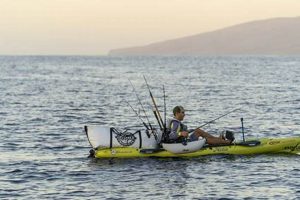
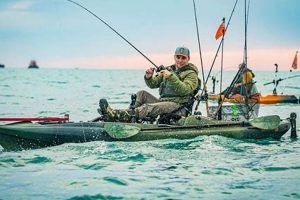
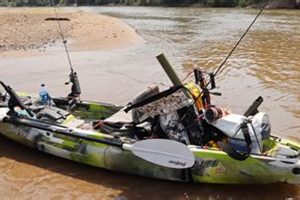
This pursuit combines the tranquility of paddling with the excitement of angling in the numerous lakes, rivers, and streams found throughout the American Midwest. Picture a calm morning on a placid lake, the sun rising, and a gentle tug on the line promising a fresh catch. This image captures the essence of this popular outdoor activity.
The relatively low cost of entry, combined with the ability to access smaller, secluded waterways often unreachable by larger boats, makes this pastime increasingly attractive. It offers a unique connection with nature, providing exercise, stress relief, and the rewarding challenge of hooking a variety of fish species. The historical roots of this activity can be traced back to indigenous communities who utilized canoes for both transportation and fishing, showcasing a long-standing relationship between humans and waterways in the region.
The following sections will explore various aspects of this popular activity, including recommended equipment, ideal locations, sustainable fishing practices, and safety considerations for enjoying the waterways of the Midwest.
Tips for Kayak Fishing in the Midwest
Careful planning and preparation contribute significantly to a successful and enjoyable fishing experience from a kayak in the Midwest. The following tips offer valuable insights for anglers of all skill levels.
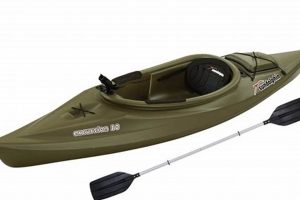
Tip 1: Research and Choose the Right Kayak: Kayak selection should consider factors such as stability, maneuverability, and storage capacity. Longer kayaks track better in open water, while shorter kayaks offer greater maneuverability in rivers and streams. Sit-on-top kayaks are generally preferred for fishing due to their stability and ease of access.
Tip 2: Prioritize Safety Equipment: A personal flotation device (PFD) is essential and should be worn at all times. A whistle, signaling device, and first-aid kit are also crucial safety items. Checking weather forecasts before embarking on any trip is highly recommended.
Tip 3: Organize Tackle and Gear Efficiently: Utilize tackle boxes and storage solutions designed for kayaks to keep essential gear organized and accessible. Rod holders, paddle leashes, and anchor systems can significantly improve fishing efficiency.
Tip 4: Understand Local Fishing Regulations: Familiarize oneself with state-specific regulations regarding fishing licenses, catch limits, and permitted fishing methods. Respecting these regulations ensures the sustainability of fish populations.
Tip 5: Practice Paddle Strokes and Kayak Control: Developing proficiency in basic paddle strokes and maneuvering techniques enhances boat control and safety, especially in challenging conditions like wind or current.
Tip 6: Learn Basic Knots and Rigging Techniques: Knowing essential fishing knots and how to rig different baits and lures increases the likelihood of a successful catch. Practice these skills before heading out on the water.
Tip 7: Respect Wildlife and the Environment: Practice Leave No Trace principles by packing out all trash and minimizing disturbance to wildlife and their habitats. Responsible angling ensures the preservation of these natural resources for future generations.
By implementing these tips, anglers can maximize their enjoyment and success while promoting safety and environmental responsibility on the water. These preparations create a foundation for memorable fishing experiences in the Midwest’s diverse waterways.
The following section will provide a detailed guide to selecting the appropriate gear for kayak fishing in this region.
1. Location Selection

Location selection plays a crucial role in successful Midwest kayak fishing. The diverse waterways of the region offer a range of fishing opportunities, from vast lakes to winding rivers and smaller ponds. Careful consideration of factors such as target species, water conditions, and accessibility significantly influences angling success. For example, anglers seeking walleye might target deeper lakes like Lake Erie or Mille Lacs, while those pursuing bass might prefer shallower, vegetated areas found in smaller lakes or river backwaters. The Missouri River offers opportunities for catfish and paddlefish, requiring different techniques and equipment compared to lake fishing. Understanding these nuances allows anglers to select locations optimized for their desired fishing experience.
Access points, water clarity, and the presence of current or wind are additional factors impacting location choice. Kayak anglers benefit from choosing launch sites offering easy access to target areas while minimizing paddling time against strong currents or winds. Clear water often favors sight fishing techniques, whereas murky water may necessitate using lures that rely on vibration or scent. Researching local fishing reports, consulting maps, and understanding seasonal fish behavior can further refine location selection. Such preparation allows anglers to maximize fishing time and enhance the chances of a successful outing.
Effective location selection optimizes the Midwest kayak fishing experience. By analyzing target species preferences, considering water conditions, and evaluating access points, anglers can identify productive fishing grounds. This strategic approach, combined with an understanding of local regulations and ethical fishing practices, contributes to both angling success and the long-term sustainability of the region’s aquatic ecosystems. This careful consideration ensures a rewarding and responsible angling experience.
2. Kayak Choice
Kayak selection significantly influences the overall experience of Midwest kayak fishing. Choosing the appropriate vessel involves carefully balancing stability, maneuverability, and storage capacity based on individual needs, target fishing locations, and intended fishing styles. A well-chosen kayak enhances both angler safety and fishing effectiveness.
- Hull Design:
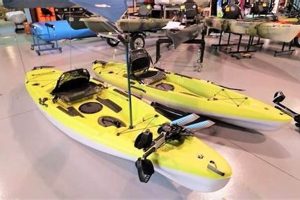
Hull design directly impacts kayak performance. Flat-bottomed hulls offer exceptional stability, ideal for calm lakes and ponds, enabling anglers to stand and cast with confidence. Rounded hulls provide greater maneuverability, well-suited for navigating rivers and streams. Pontoon-style hulls offer increased stability and load capacity, ideal for anglers carrying substantial gear. Selecting a hull design aligned with the intended fishing environment optimizes performance and safety.
- Length and Width:
Kayak dimensions influence both speed and stability. Longer kayaks typically track straighter and glide more efficiently, covering greater distances with less effort, making them suitable for larger bodies of water. Shorter kayaks offer enhanced maneuverability, allowing for quicker turns and easier navigation in tight spaces, advantageous in rivers or vegetated areas. Wider kayaks generally provide greater stability than narrower kayaks but may sacrifice some maneuverability.
- Storage Capacity:
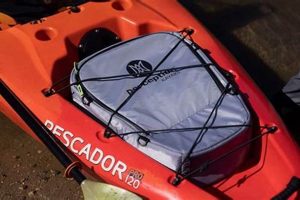
Adequate storage space is essential for carrying fishing gear, safety equipment, and personal belongings. Kayaks with built-in storage compartments, tank wells, and bungee rigging systems offer convenient options for securing gear and maintaining organization. The amount of storage required depends on the length of fishing trips and the amount of equipment carried. Evaluating storage needs ensures anglers can comfortably and safely transport all necessary items.
- Propulsion System:
Kayaks utilize various propulsion methods, each offering distinct advantages. Paddle kayaks offer affordability and versatility, suitable for a range of fishing environments. Pedal-powered kayaks allow hands-free fishing and increased speed, beneficial for covering larger areas or trolling. Motorized kayaks offer the greatest speed and range, enabling access to distant fishing spots. Choosing a propulsion system aligned with individual preferences, physical abilities, and fishing style enhances the overall experience.
Careful consideration of these factors ensures kayak selection aligns with individual angler needs and the unique characteristics of Midwest fishing environments. Choosing the right kayak contributes significantly to both on-the-water safety and fishing success, maximizing the enjoyment of this popular pastime. The right kayak enhances angling opportunities, enabling exploration of diverse waterways and successful pursuit of various fish species.
3. Essential Gear

Appropriate gear selection significantly impacts safety and success in Midwest kayak fishing. The unique demands of this activity necessitate specific equipment choices, ensuring angler preparedness for diverse conditions and target species. Understanding these essential gear components enhances both comfort and effectiveness on the water.
- Personal Flotation Device (PFD):
A properly fitted PFD is paramount for safety. Midwest waterways present varying conditions, and a PFD provides essential buoyancy in case of capsizing or unexpected emergencies. Selecting a PFD designed for paddling and fishing ensures comfort and freedom of movement. State regulations often mandate PFD usage, underscoring their critical role in angler safety.
- Paddle:
A kayak paddle serves as the primary means of propulsion and maneuverability. Choosing a paddle of appropriate length and blade shape enhances paddling efficiency and reduces fatigue. Lightweight, durable materials like fiberglass or carbon fiber are preferred for their performance and longevity. A spare paddle is a wise precaution against breakage or loss.
- Fishing Tackle:
Tackle selection depends on target species. Midwest waters host diverse fish populations, each requiring specific rods, reels, lines, lures, and baits. Researching prevalent species in the chosen fishing location informs appropriate tackle choices. Organizing tackle efficiently in waterproof containers ensures easy access and protects against damage.
- Safety and Navigation Equipment:
Essential safety equipment includes a whistle, signaling device, first-aid kit, and navigation tools. A whistle and signaling device facilitate communication in emergencies. A well-stocked first-aid kit addresses minor injuries. Navigation tools, such as a GPS device or waterproof map, assist in orientation and route planning. Checking weather forecasts before embarking on any trip is crucial for safety. A dry bag protects essential electronics and personal items.
Careful consideration of these essential gear components contributes significantly to a safe and successful Midwest kayak fishing experience. Appropriate gear selection, combined with knowledge of local regulations and ethical fishing practices, allows anglers to fully enjoy the diverse fishing opportunities this region offers while prioritizing personal safety and environmental responsibility. Proper preparation enhances the overall experience and contributes to the long-term sustainability of these valuable aquatic resources.
4. Safety Precautions

Safety precautions are paramount in midwest kayak fishing. The region’s diverse waterways, ranging from vast lakes to winding rivers, present unique challenges and potential hazards. Prioritizing safety ensures angler well-being and allows for a more enjoyable experience. Understanding and implementing appropriate safety measures are crucial for mitigating risks and promoting responsible angling practices.
- Weather Awareness:
Midwest weather can change rapidly. Checking forecasts before embarking on a fishing trip is essential. Sudden storms, high winds, and lightning pose significant threats. Postponing trips during unfavorable conditions prioritizes angler safety. Real-time weather updates via smartphone apps or weather radios provide crucial information while on the water. Being prepared for changing conditions ensures a safer fishing experience.
- Personal Flotation Devices (PFDs):
Wearing a properly fitted PFD is non-negotiable. PFDs provide essential buoyancy in case of capsizing or accidental immersion. Selecting a PFD designed for paddling and fishing allows for comfort and mobility. Regularly inspecting PFDs for wear and tear ensures their effectiveness in emergencies. PFDs are crucial for survival in cold water conditions, prevalent in the Midwest during certain seasons.
- Communication and Signaling:
Carrying a waterproof communication device, such as a cell phone or VHF radio, enables contact in emergencies. A whistle serves as a readily accessible signaling device. Informing someone of planned fishing locations and estimated return times allows for timely assistance if needed. These communication strategies provide crucial lifelines in unforeseen circumstances, ensuring prompt response in case of emergencies.
- Navigation and Awareness:
Understanding navigational markers, water depths, and potential hazards, like submerged debris or shallow areas, is essential for safe kayak operation. Carrying a map or GPS device aids in orientation and route planning. Awareness of boat traffic and maintaining a safe distance from larger vessels minimizes collision risks. Familiarizing oneself with local water regulations and access restrictions promotes responsible boating practices. These navigational precautions contribute to safe and informed decision-making while on the water.
Implementing these safety precautions significantly reduces risks associated with midwest kayak fishing. Combining these practices with responsible angling behavior, such as adhering to catch limits and respecting wildlife, enhances the overall experience while preserving the region’s aquatic ecosystems. Prioritizing safety ensures enjoyable and sustainable fishing for future generations.
5. Target Species

Target species selection significantly shapes the midwest kayak fishing experience. The region’s diverse waterways support a wide array of fish populations, each presenting unique challenges and rewards for anglers. Understanding the habits and habitats of target species informs effective fishing strategies, including lure selection, location choice, and angling techniques. This knowledge enhances angling success and promotes responsible fishing practices.
- Largemouth Bass:
Largemouth bass, a popular game fish, thrive in warm, shallow, vegetated areas of lakes and rivers throughout the Midwest. Their ambush predation style necessitates lures and techniques that mimic natural prey, such as crankbaits, spinnerbaits, and plastic worms. Kayak anglers often target largemouth bass near weed beds, fallen trees, and docks, leveraging the kayak’s stealth to approach these areas quietly.
- Walleye:
Walleye, prized for their firm, flaky flesh, inhabit cooler, deeper waters of lakes and larger rivers. They are low-light feeders, making early morning, late evening, and cloudy days prime fishing times. Jigs, crankbaits, and live bait rigs fished near drop-offs, humps, and rocky structures are effective for targeting walleye. Kayak anglers often utilize trolling or drifting techniques to cover larger areas and locate schools of walleye.
- Channel Catfish:
Channel catfish, known for their hard-fighting nature, are abundant in rivers and lakes across the Midwest. They are opportunistic feeders, readily taking a variety of baits, including cut bait, stinkbait, and prepared catfish baits. Kayak anglers often fish for channel catfish near river bends, logjams, and deep holes, utilizing bottom fishing rigs or suspended baits. Kayak stability provides an advantage when battling these powerful fish.
- Panfish:
Panfish, including bluegill, crappie, and perch, provide ample fishing opportunities for anglers of all skill levels. These smaller species inhabit a variety of habitats, from shallow weedy bays to deeper brush piles. Small jigs, live bait, and poppers are effective for catching panfish. Kayak anglers can access smaller, secluded ponds and coves often inaccessible to larger boats, increasing opportunities to target these plentiful fish.
Targeting specific species adds depth and focus to midwest kayak fishing. Understanding fish behavior, preferred habitats, and effective angling techniques enhances catch rates and contributes to a more rewarding experience. By aligning fishing strategies with target species preferences, kayak anglers maximize their chances of success while contributing to responsible fishing practices that preserve these valuable resources for future generations.
6. Fishing Techniques
Fishing techniques employed in midwest kayak fishing adapt to the specific characteristics of the region’s diverse waterways and target species. Kayak anglers utilize a range of methods, leveraging the kayak’s maneuverability and stealth to access productive fishing areas often unreachable by larger boats. Understanding these techniques enhances angling success and promotes efficient use of resources.
- Still-Fishing:
Still-fishing, a classic technique, involves anchoring or positioning the kayak in a promising location and casting bait or lures. This method proves effective in calmer waters, such as lakes, ponds, and slow-moving rivers. Target species for still-fishing include panfish, catfish, and bass. Kayak anglers often employ still-fishing near structures like docks, weed beds, or submerged timber, attracting fish seeking shelter or foraging opportunities.
- Drift Fishing:
Drift fishing allows anglers to cover more water by allowing wind or current to move the kayak across a fishing area. This technique effectively targets species like walleye, trout, and smallmouth bass, which often inhabit areas with current or moving water. Anglers cast their lines upstream or upwind, allowing the bait or lure to drift naturally with the flow, presenting a realistic presentation to fish holding in current breaks or along river channels.
- Trolling:
Trolling involves dragging lures or bait behind a moving kayak, covering a wide area to locate active fish. This technique proves particularly effective for species like walleye, crappie, and muskie, which often roam open water in search of prey. Kayak anglers can adjust trolling speed and lure depth to target specific fish species and adapt to varying water conditions. Utilizing rod holders allows for multiple lines to be trolled simultaneously, increasing the chances of encountering fish.
- Casting and Retrieving:
Casting and retrieving involves repeatedly casting lures and reeling them back to the kayak, imitating the movement of prey fish. This active technique effectively targets predatory species like bass, pike, and muskie. Kayak anglers can utilize a variety of lures, such as crankbaits, spinnerbaits, and topwater lures, to entice strikes. Varying retrieval speed and incorporating pauses or twitches adds realism to lure presentations, triggering aggressive fish to attack.
Adapting these fishing techniques to the unique characteristics of midwest waterways and target species enhances angling success from a kayak. Combining technique selection with knowledge of fish behavior, habitat preferences, and seasonal patterns maximizes fishing opportunities and promotes responsible angling practices. This considered approach contributes to a more rewarding and sustainable fishing experience in the Midwest’s diverse aquatic environments.
Frequently Asked Questions
This section addresses common inquiries regarding kayak fishing in the Midwest, providing concise and informative responses to assist anglers in planning successful outings.
Question 1: What type of kayak is best suited for fishing in the Midwest?
Kayak choice depends on intended fishing locations and personal preferences. Sit-on-top kayaks are generally preferred for their stability and ease of access. Longer kayaks track better in open water, while shorter kayaks offer enhanced maneuverability in rivers and streams. Consider factors such as storage capacity and propulsion systems (paddle, pedal, or motor) when selecting a kayak.
Question 2: What essential safety gear is recommended for kayak fishing?
Essential safety gear includes a properly fitted personal flotation device (PFD), a whistle, a signaling device, a first-aid kit, and navigation tools (GPS or waterproof map). Checking weather forecasts before each trip and informing someone of planned fishing locations and return times are also crucial safety practices.
Question 3: Where are good locations for kayak fishing in the Midwest?
The Midwest offers numerous kayak fishing locations, ranging from the Great Lakes to smaller inland lakes, rivers, and ponds. Researching local fishing reports, consulting maps, and understanding target species’ habitat preferences aid in identifying productive fishing spots. Consider factors such as water access, clarity, and current when selecting locations.
Question 4: What are common fish species targeted by kayak anglers in the Midwest?
Common target species include largemouth bass, smallmouth bass, walleye, crappie, bluegill, channel catfish, northern pike, and muskie. Species availability varies depending on location and season. Researching local fish populations informs appropriate tackle and technique choices.
Question 5: What fishing techniques are effective from a kayak in the Midwest?
Effective techniques include still-fishing, drift fishing, trolling, and casting and retrieving. Technique selection depends on target species, water conditions, and personal preference. Kayaks offer anglers the advantage of stealth and maneuverability, allowing access to areas often inaccessible by larger boats.
Question 6: Are there specific regulations for kayak fishing in the Midwest?
Fishing regulations vary by state and may include licensing requirements, catch limits, and permitted fishing methods. Consult state-specific resources or local authorities for current regulations and licensing information. Adhering to regulations ensures the sustainability of fish populations and responsible angling practices.
Careful consideration of these frequently asked questions enhances angler preparedness and promotes safe and successful kayak fishing experiences in the Midwest. Further research and planning optimize outings and contribute to the enjoyment of this popular outdoor activity.
The following section will explore advanced techniques for kayak fishing in the Midwest.
Midwest Kayak Fishing
Midwest kayak fishing offers a unique blend of angling challenge and connection with nature. This exploration has highlighted key elements contributing to successful outings, from kayak selection and essential gear to safety precautions and effective fishing techniques. Understanding the diverse habitats and target species within the Midwest’s waterways empowers anglers to make informed decisions, maximizing both enjoyment and responsible angling practices. The adaptability of kayaks for various fishing styles and the region’s rich aquatic resources provide ample opportunities for exploration and memorable experiences.
The future of midwest kayak fishing relies on continued conservation efforts and responsible angling practices. Preserving the ecological integrity of these waterways ensures the sustainability of fish populations and the continued enjoyment of this rewarding pursuit for generations to come. Anglers play a crucial role in protecting these valuable natural resources through ethical fishing practices, respect for wildlife, and a commitment to preserving the beauty and biodiversity of the Midwest’s aquatic ecosystems. Embracing these principles ensures the enduring legacy of this unique angling experience.