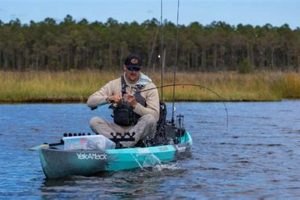
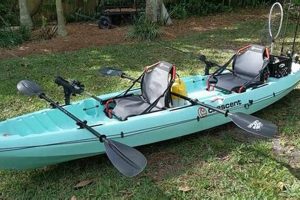
The price of a specific modular fishing kayak, identifiable by its model number, represents a crucial factor for prospective buyers. This figure encompasses not only the initial purchase price but may also include additional costs such as shipping, taxes, and optional accessories. Understanding the complete pricing structure allows consumers to make informed decisions and compare it with similar products on the market.
Pricing transparency offers considerable advantages to consumers. A clear understanding of all expenses associated with the purchase empowers informed decisions, facilitates budget planning, and fosters trust between buyer and seller. Historically, opaque pricing structures have led to consumer dissatisfaction and market inefficiencies. The current trend toward greater price transparency benefits consumers by promoting competition and enabling better value assessment.
This article will delve into several key aspects related to the financial considerations of acquiring this type of specialized watercraft. Topics covered will include a detailed breakdown of potential costs, comparisons with competitor products, an analysis of value for money, and strategies for securing the best possible price.
Tips for Evaluating Modular Fishing Kayak Expenses
Acquiring a modular fishing kayak requires careful consideration of various cost factors. These tips offer guidance for navigating the financial aspects of this purchase.
Tip 1: Research Base Price Variations: Retailers often offer different base prices. Comparing prices across multiple vendors, both online and brick-and-mortar stores, can yield significant savings.
Tip 2: Factor in Shipping Costs: Shipping a kayak can be expensive. Inquire about shipping fees upfront and compare options like freight, local delivery, or in-store pickup.
Tip 3: Consider Taxes and Import Duties: Sales tax and import duties can add considerably to the overall cost. Calculate these charges beforehand to avoid unexpected expenses.
Tip 4: Evaluate Essential Accessories: Certain accessories, such as paddles, life vests, and rod holders, may be essential but sold separately. Factor these into the overall budget.
Tip 5: Assess Optional Upgrades: Modular kayaks often offer customizable upgrades like extra seating, storage compartments, or advanced electronics. Carefully consider the necessity and cost-effectiveness of these upgrades.
Tip 6: Explore Financing Options: Some retailers offer financing plans. Evaluate interest rates, repayment terms, and potential long-term costs associated with financing.
Tip 7: Seek Out Sales and Discounts: Look for seasonal sales, promotional offers, or clearance deals to potentially reduce the purchase price.
By following these tips, prospective buyers can gain a comprehensive understanding of the total cost and make a well-informed purchase decision.
The subsequent section will offer a concluding perspective on the importance of meticulous financial planning when investing in a modular fishing kayak.
1. Retail Price

Retail price serves as the foundation for understanding the cost of the mfk003 modular fishing kayak. This advertised price, typically set by the manufacturer or distributor, represents the baseline cost before additional expenses are considered. It signifies the initial financial outlay required to acquire the kayak itself, excluding shipping, taxes, and accessories. Variations in retail price can exist due to retailer markups, sales promotions, or regional differences. For instance, a retailer specializing in outdoor gear might offer a different retail price than a general sporting goods store. Understanding this baseline cost is crucial as it forms the basis for calculating the total cost of ownership.
The retail price’s significance extends beyond a simple starting point. It influences consumer perception of value and affordability. A higher retail price might suggest premium features or construction, while a lower price could indicate a more budget-friendly option. Comparing retail prices across different vendors allows consumers to identify potential savings and make informed purchasing decisions. Additionally, the retail price often serves as the basis for calculating discounts, financing options, and potential resale value. For example, a 10% discount on a higher retail price could result in greater savings compared to the same percentage discount on a lower retail price. This understanding empowers consumers to navigate the market effectively and optimize their purchasing power.
In conclusion, the retail price of the mfk003 modular fishing kayak holds substantial weight in the overall cost assessment. While representing only one component of the final price, it anchors consumer perception of value and informs subsequent purchasing decisions. Accurately interpreting the retail price in the context of shipping fees, taxes, and accessory costs provides a comprehensive understanding of the overall investment required to acquire and maintain this specialized piece of equipment. This knowledge equips potential buyers to navigate the complexities of pricing and make well-informed decisions aligned with their budget and individual needs.
2. Shipping Fees

Shipping fees represent a significant component of the overall cost when purchasing an mfk003 modular fishing kayak. Due to the item’s size and weight, standard shipping methods often prove impractical or excessively expensive. Therefore, understanding the various factors influencing shipping costs is crucial for accurate budgeting and informed decision-making.
- Shipping Distance
Distance between the retailer and the delivery address directly impacts shipping costs. Longer distances typically translate to higher fees due to increased fuel consumption and logistical complexities. Shipping across states or internationally will likely incur substantially higher costs than local delivery.
- Shipping Method
Various shipping methods exist, each with its own cost implications. Freight shipping, often used for large items, may offer lower per-mile costs but can involve additional handling fees and slower delivery times. Specialized kayak carriers might provide more secure transport but at a premium cost. Choosing the appropriate method requires balancing cost, speed, and safety considerations. For example, expedited shipping might be preferable for time-sensitive deliveries despite the increased expense.
- Packaging and Handling
The size and fragility of kayaks necessitate specialized packaging to prevent damage during transit. This specialized packaging contributes to both the weight and dimensions of the shipment, impacting the overall shipping cost. Furthermore, handling fees may apply for oversized or irregularly shaped items, adding to the final expense. For instance, a retailer using custom crating for enhanced protection will likely charge more for shipping than one using standard packaging.
- Additional Services
Optional services, such as liftgate delivery or inside delivery, can further influence shipping fees. Liftgate service, necessary for unloading heavy items at residential addresses without a loading dock, incurs an extra charge. Inside delivery, where the item is brought inside the home or business, adds another layer of cost. Choosing these services enhances convenience but requires careful consideration of the associated expense.
Failing to account for these shipping-related factors can lead to unexpected expenses and budget overruns. Accurately estimating shipping fees upfront ensures a realistic understanding of the total cost associated with acquiring an mfk003 modular fishing kayak. This allows potential buyers to compare prices effectively across different retailers and make informed decisions based on both the product’s price and the associated shipping expenses. Ultimately, a comprehensive understanding of shipping costs contributes to a more satisfying and financially sound purchasing experience.
3. Applicable Taxes

Applicable taxes represent a critical component of the total cost when purchasing an mfk003 modular fishing kayak. Often overlooked, these taxes can significantly impact the final price and should be factored into budget considerations. Understanding the various types of applicable taxes and their potential impact ensures a more accurate cost assessment and facilitates informed purchasing decisions.
- Sales Tax
Sales tax, levied by state and local governments, represents a percentage of the purchase price. Rates vary significantly by jurisdiction, adding a substantial amount to the overall cost. Consumers should research the specific sales tax rate in their location to accurately calculate the total cost. For example, an 8% sales tax on a $1,000 kayak adds $80 to the final price.
- Use Tax
Use tax applies to purchases made from out-of-state retailers who do not collect sales tax in the purchaser’s state. This tax ensures fair competition between local and online businesses. While often overlooked, use tax remains the purchaser’s responsibility and failing to remit it can lead to penalties. For instance, purchasing a kayak online from a retailer in a different state may trigger use tax obligations in the consumer’s state.
- Import Duties
Import duties apply to kayaks purchased from international sellers. These duties, levied by the importing country’s customs authority, aim to protect domestic industries and generate revenue. Import duty rates vary depending on the product’s origin and classification. For example, a kayak imported from a specific country might be subject to a 5% import duty, adding to the purchase price.
- Value-Added Tax (VAT)
In some regions, value-added tax (VAT) applies to each stage of production and distribution. While the consumer ultimately bears the cost, VAT is typically included in the retail price rather than added as a separate line item. Understanding whether VAT is included in the advertised price helps ensure transparency and allows for accurate cost comparisons across different sellers. For instance, a kayak purchased in a region with a 10% VAT will have this tax embedded within the advertised price.
Accurately calculating applicable taxes provides a realistic view of the mfk003 modular fishing kayak’s total cost. Neglecting these taxes can lead to unexpected expenses and budget overruns. Therefore, incorporating these costs into pre-purchase research and financial planning ensures a more informed and financially sound acquisition process. This careful consideration of applicable taxes ultimately empowers consumers to make responsible purchasing decisions aligned with their individual financial circumstances.
4. Accessory Costs

Accessory costs represent a crucial factor influencing the overall expense of the mfk003 modular fishing kayak. While the base price of the kayak itself forms a significant portion of the total cost, necessary and optional accessories contribute substantially to the final investment. Understanding these accessory costs allows for comprehensive budgeting and informed purchasing decisions. Neglecting to factor in these expenses can lead to unexpected financial burdens and potentially compromise the kayaking experience.
- Essential Accessories
Certain accessories are essential for safe and effective kayak operation. These include paddles, personal flotation devices (PFDs or life vests), and appropriate safety gear. While some retailers may bundle basic paddles and PFDs with the kayak purchase, higher-quality options often require separate purchase. Costs can vary significantly based on brand, material, and features. For example, a high-end paddle designed for fishing kayaks might cost significantly more than a basic recreational paddle. Investing in quality essential accessories enhances safety and performance but requires careful budget allocation.
- Fishing-Specific Accessories
Given the mfk003’s designation as a fishing kayak, specialized fishing accessories contribute significantly to the overall cost. Rod holders, tackle storage systems, fish finders, and anchors represent common additions. Costs vary depending on complexity and features. A basic rod holder might be relatively inexpensive, while an advanced fish finder with GPS and sonar capabilities represents a substantial investment. Carefully considering individual fishing needs and selecting appropriate accessories optimizes functionality without unnecessary expense.
- Optional Comfort and Convenience Upgrades
Optional accessories enhance comfort and convenience during kayaking excursions. These include upgraded seating, dry bags for storage, kayak carts for transportation, and protective covers. While not strictly essential, these upgrades improve the overall experience. Costs range widely depending on the specific item and brand. A basic kayak cart might be relatively affordable, while a premium, adjustable seat with lumbar support represents a larger investment. Evaluating these optional upgrades based on individual needs and budget constraints optimizes the cost-benefit ratio.
- Modular System Components
The modular nature of the mfk003 allows for customization through interchangeable components. These components, such as additional storage compartments, specialized mounting platforms, or outriggers for stability, contribute to the overall cost. Prices vary based on the specific component and its functionality. Adding multiple modular components can significantly increase the total cost compared to the base kayak configuration. Carefully considering which modular components align with individual needs and usage patterns prevents unnecessary expenditure.
Accurately assessing accessory costs is crucial for determining the true cost of owning an mfk003 modular fishing kayak. While the base price provides a starting point, the cumulative cost of essential accessories, fishing-specific gear, optional upgrades, and modular components substantially influences the overall investment. Thorough research and careful consideration of individual needs and budget constraints ensure a satisfying and financially responsible purchase. By understanding these associated costs, prospective buyers can make informed decisions and fully equip themselves for enjoyable and productive fishing kayak adventures.
5. Optional Upgrades
Optional upgrades play a significant role in influencing the final cost of the mfk003 modular fishing kayak. While the base model provides a functional platform, optional upgrades allow for customization and enhanced performance, catering to individual preferences and fishing styles. Understanding the range of available upgrades and their associated costs empowers informed decision-making and accurate budget planning.
- Enhanced Seating
Upgraded seating systems contribute significantly to comfort during long fishing trips. Ergonomically designed seats with enhanced lumbar support and adjustable features mitigate fatigue and improve overall comfort. Costs vary based on materials, adjustability, and additional features like built-in storage or rod holders. While the base model includes a standard seat, investing in an upgraded seat enhances comfort and reduces physical strain, though it increases the overall cost.
- Advanced Electronics
Integrating advanced electronics significantly expands the kayak’s capabilities. Fish finders, GPS units, and trolling motor mounts transform the mfk003 into a sophisticated fishing platform. These upgrades vary significantly in price, with high-end fish finders and GPS systems representing substantial investments. While increasing functionality, these upgrades add considerably to the total cost.
- Increased Storage Capacity
Expanding storage capacity through additional compartments or specialized storage solutions provides ample space for tackle, gear, and personal belongings. Modular storage systems, dry bags, and integrated storage compartments offer varying degrees of organization and protection. Costs increase with storage volume, material quality, and specialized features like waterproofing or insulation. While the base model offers some storage, expanding capacity enhances convenience and organization, albeit at an added cost.
- Improved Propulsion Systems
Upgrading the propulsion system enhances maneuverability and speed. Adding a trolling motor, rudder system, or specialized paddles improves control and efficiency on the water. Costs depend on the chosen propulsion method, with electric motors and sophisticated rudder systems representing higher-end investments. While the base model relies on manual paddling, upgraded propulsion systems enhance performance and reduce physical exertion, but add to the overall cost.
Careful consideration of optional upgrades allows for a customized mfk003 configuration tailored to individual needs and preferences. However, each upgrade adds to the final cost, requiring a balanced approach between desired features and budget constraints. Understanding the costs associated with these upgrades facilitates informed decision-making and prevents unexpected financial burdens. Ultimately, customizing the kayak through optional upgrades enhances the fishing experience but requires careful consideration of cost implications.
6. Long-Term Maintenance

Long-term maintenance represents a crucial aspect of mfk003 modular fishing kayak cost, often overlooked during the initial purchase. While the upfront cost captures immediate expenses, ongoing maintenance contributes significantly to the total cost of ownership over the kayak’s lifespan. Understanding these long-term maintenance requirements and associated costs facilitates informed purchasing decisions and realistic budget planning. Neglecting these considerations can lead to unexpected expenses and potentially shorten the kayak’s usable life.
- Regular Cleaning and Storage
Regular cleaning and proper storage are essential for preserving the kayak’s condition and preventing premature wear and tear. Saltwater corrosion, UV damage, and mildew growth can significantly impact the kayak’s structural integrity and appearance. Cleaning requires specialized kayak cleaning solutions and protective coatings, incurring recurring costs. Proper storage necessitates a designated space, potentially including storage racks or covers, further adding to the expense. Diligent cleaning and storage practices minimize long-term maintenance costs and extend the kayak’s lifespan.
- Component Replacement and Repair
Modular components, while offering versatility, introduce potential points of failure. Replacing worn-out parts, such as seals, buckles, or hatch covers, adds to the long-term maintenance cost. Repairs due to damage from impact, improper handling, or environmental factors further contribute to expenses. The complexity of modular systems can increase repair costs compared to traditional kayak designs. Understanding the potential for component failure and associated repair or replacement costs informs long-term budget projections.
- Hardware Maintenance and Replacement
Hardware components, including screws, bolts, and rivets, are susceptible to corrosion and wear. Regular inspection and maintenance, including lubrication and replacement of corroded parts, are essential for maintaining structural integrity. Specialized marine-grade hardware, while more durable, comes at a premium cost. Neglecting hardware maintenance can lead to more extensive and costly repairs down the line. Factoring in these preventative maintenance measures contributes to a realistic assessment of long-term ownership costs.
- Scheduled Maintenance and Inspections
Periodic professional inspections and maintenance services, while not strictly mandatory, can identify potential issues before they escalate into major problems. These services typically involve comprehensive checks of the hull, hardware, and modular components, ensuring optimal performance and safety. Costs associated with professional maintenance vary depending on the service provider and the extent of the inspection. Investing in preventative maintenance can ultimately save money by addressing minor issues before they become major repairs, extending the kayak’s functional life.
Integrating long-term maintenance costs into the overall cost assessment provides a comprehensive understanding of mfk003 modular fishing kayak ownership. While the initial purchase price represents a significant outlay, ongoing maintenance contributes substantially to the total cost over time. Factoring these expenses into budget considerations ensures a realistic financial perspective and allows for informed decisions regarding purchase, usage, and potential resale value. A comprehensive understanding of long-term maintenance requirements empowers owners to maximize the kayak’s lifespan and optimize their investment.
Frequently Asked Questions
This section addresses common inquiries regarding the financial aspects of acquiring and maintaining an MFK003 modular fishing kayak. Clear and concise answers provide prospective buyers with the information necessary to make informed decisions.
Question 1: What is the typical price range for an MFK003 modular fishing kayak?
The price range varies depending on the retailer, sales promotions, and included accessories. Researching prices across multiple vendors is recommended to identify competitive offers.
Question 2: How do shipping costs influence the total expense?
Shipping costs can contribute significantly to the overall expense due to the kayak’s size and weight. Comparing shipping options and factoring in distance-based pricing is essential.
Question 3: What taxes typically apply to the purchase of an MFK003?
Applicable taxes include sales tax, potentially use tax for online purchases, and import duties for international transactions. Determining these taxes based on location and purchase origin ensures accurate cost calculation.
Question 4: Are accessories included in the base price of the kayak?
Essential accessories like paddles and PFDs may or may not be included in the base price. Clarifying included accessories with the retailer prevents unexpected additional expenses.
Question 5: How do optional upgrades affect the total cost?
Optional upgrades, such as enhanced seating, advanced electronics, or increased storage capacity, contribute significantly to the final cost. Carefully evaluating desired upgrades against budget constraints is advisable.
Question 6: What long-term maintenance costs should be considered?
Long-term maintenance includes cleaning, storage, component replacement, and potential repairs. Factoring these ongoing expenses into the overall cost assessment provides a realistic view of long-term ownership costs.
Understanding these cost factors empowers potential buyers to make informed decisions aligned with their individual needs and financial circumstances. Thorough research and careful planning contribute to a satisfying and financially responsible purchase.
The next section will provide a concluding overview and summarize key takeaways regarding the cost analysis of the MFK003 modular fishing kayak.
Concluding Remarks
Careful evaluation of the MFK003 modular fishing kayak cost reveals a multifaceted financial landscape. Beyond the initial retail price, factors such as shipping fees, applicable taxes, necessary accessories, optional upgrades, and long-term maintenance contribute significantly to the total cost of ownership. A comprehensive understanding of these individual cost components empowers informed purchasing decisions. Overlooking these factors can lead to unexpected expenses and budget overruns, potentially diminishing the enjoyment of kayak ownership. Prioritizing thorough research and meticulous financial planning ensures a satisfying and financially responsible acquisition.
Ultimately, the true cost of an MFK003 modular fishing kayak extends beyond the initial purchase price. A proactive approach to cost analysis, encompassing both immediate and long-term expenses, ensures a realistic financial perspective. This comprehensive understanding empowers potential buyers to align their investment with individual needs, budget constraints, and long-term ownership goals. Informed financial planning maximizes the enjoyment and minimizes the financial burden associated with owning this specialized piece of equipment.