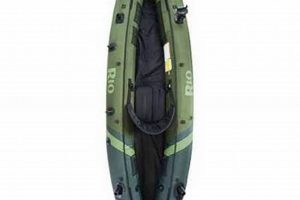
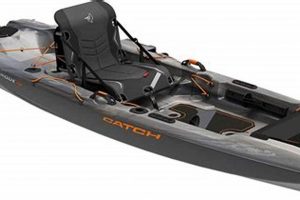
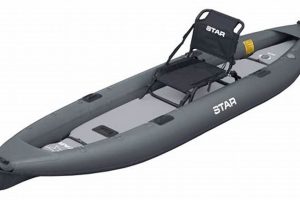
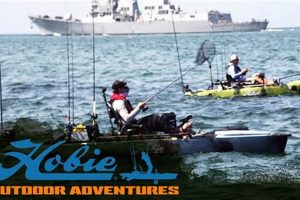
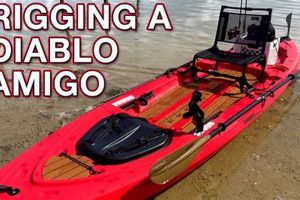
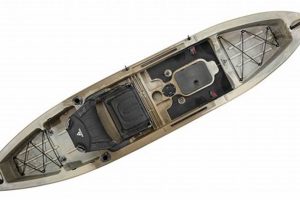
Choosing the right watercraft for angling significantly impacts the overall fishing experience. Small, human-powered vessels offer distinct advantages for reaching secluded fishing spots and maneuvering in shallow or vegetated waters. Two popular choices for this purpose are kayaks and jon boats, each offering unique characteristics tailored to different fishing styles and environments.
These small craft provide anglers with affordable and accessible means to enjoy the sport. Their portability and maneuverability allow exploration of diverse waterways often inaccessible to larger boats. Historically, both designs have evolved from practical working watercraft, adapted over time for recreational fishing. This evolution has led to specialized features and variations catering to specific fishing needs, from stability for stand-up casting to enhanced storage for tackle and equipment.
This article will explore the key distinctions between these two popular angling vessels, examining factors such as stability, propulsion, cost, maintenance, and suitability for specific fishing styles and environments. Understanding these differences will empower anglers to make informed decisions and enhance their fishing experience.
Tips for Choosing and Using Small Fishing Vessels
Selecting the appropriate small watercraft and employing effective strategies can significantly enhance angling success. Consider these essential tips to maximize the fishing experience.
Tip 1: Stability Considerations: Flat-bottomed designs offer excellent stability for stand-up casting and moving around, while narrower hulls prioritize speed and maneuverability. Choose a vessel that aligns with intended fishing styles and water conditions.
Tip 2: Propulsion Choices: Paddling offers quiet and efficient propulsion for stealthy approaches, while small outboard motors provide greater speed and range. Electric trolling motors offer a compromise between power and stealth.
Tip 3: Evaluating Capacity and Storage: Assess gear storage needs and weight capacity requirements. Ensure ample space for tackle boxes, rods, coolers, and other essential equipment.
Tip 4: Navigating Shallow Waters: Shallow drafts allow access to areas inaccessible to larger boats. Consider a vessel designed for navigating shallow waters, especially when targeting species that inhabit these environments.
Tip 5: Safety First: Always prioritize safety by wearing a personal flotation device (PFD) and carrying essential safety equipment, including a whistle, signaling device, and first-aid kit.
Tip 6: Fishing Style Considerations: Certain vessel designs are better suited to specific fishing styles. For example, kayaks excel in rivers and creeks, while jon boats are often favored for lakes and ponds.
Tip 7: Transportation and Storage Logistics: Consider transportation and storage practicalities. Roof racks, trailers, and compact storage solutions facilitate convenient transport and storage.
By carefully considering these factors, anglers can optimize their choice of small fishing vessel and enhance their overall fishing experience. Proper planning and preparation contribute significantly to successful outings.
The subsequent sections will delve deeper into specific features, advantages, and disadvantages of different small fishing craft options, offering a comprehensive guide for informed decision-making.
1. Stability

Stability plays a crucial role in the selection and effective use of small fishing vessels like kayaks and jon boats. Vessel stability directly influences angler safety, comfort, and fishing success. A stable platform allows for confident casting, fighting fish, and moving around the craft, particularly important for techniques like fly fishing or stand-up casting. Conversely, instability can lead to difficulties in handling fishing gear, angler fatigue, and even capsizing, posing risks to both equipment and personal safety. Consider a scenario where an angler hooks a large fish. In a stable vessel, the angler can focus on reeling in the catch. However, in an unstable craft, the fight becomes significantly more challenging, requiring constant adjustments to maintain balance, potentially leading to line breakage or even a lost fish.
Jon boats, typically featuring wider, flat-bottomed hulls, generally offer greater initial stability than kayaks. This design provides a solid platform ideal for still waters like lakes and ponds. Kayaks, with their narrower profiles, often exhibit less primary stability but can possess substantial secondary stability due to their lower center of gravity and hull design. This allows them to handle rougher conditions and lean into turns, making them suitable for rivers and ocean environments. Anglers seeking enhanced stability in kayaks can opt for wider, more stable models or utilize stabilizing accessories like outriggers. Choosing a vessel with appropriate stability for the intended fishing environment and style enhances safety and fishing success. For example, a kayak angler navigating choppy coastal waters benefits from the secondary stability offered by a sit-on-top design, while a jon boat angler fishing in a calm pond prioritizes the initial stability of a flat-bottomed hull.
Understanding the nuances of stability in different small fishing vessel designs is paramount for angler safety and fishing efficacy. Selecting a craft with appropriate stability for the intended fishing style and environment minimizes risks while maximizing fishing potential. While initial stability is crucial for activities like stand-up casting, secondary stability becomes critical in dynamic conditions, such as navigating currents or dealing with waves. Careful consideration of these factors ensures a safe and productive fishing experience.
2. Maneuverability

Maneuverability is a critical factor influencing the effectiveness and enjoyment of fishing from small vessels like kayaks and jon boats. The ability to precisely position the craft, navigate tight spaces, and respond quickly to changing conditions significantly impacts fishing success. Whether navigating narrow creeks, dodging obstacles, or following schooling fish, maneuverability directly affects an angler’s ability to reach prime fishing locations and present lures or bait effectively.
- Navigating Tight Spaces:
Maneuverability is paramount when fishing in confined areas such as narrow creeks, shallow backwaters, or weed-choked channels. Kayaks, due to their slim profiles and responsive paddling or pedal-drive systems, generally excel in these environments. Their ability to turn quickly and navigate through tight passages allows anglers to access secluded spots often inaccessible to larger, less maneuverable jon boats. For example, a kayak angler can easily weave through a dense stand of cypress trees to reach a hidden pool, while a jon boat might struggle to navigate the same area.
- Current and Wind Response:
Handling currents and wind effectively requires a vessel that responds quickly and predictably. Kayaks, though susceptible to wind drift due to their higher profile, offer excellent responsiveness to paddle input, allowing for precise adjustments in moving water. Jon boats, especially when powered by a motor, can handle stronger currents and wind more effectively but may sacrifice some maneuverability in tight quarters. For instance, a kayak angler can use paddle strokes to maintain position in a flowing river, while a jon boat angler might rely on an electric trolling motor for precise control.
- Tracking and Turning Performance:
Tracking, the ability of a vessel to maintain a straight course, and turning performance are key components of maneuverability. Longer kayaks generally track better in open water, while shorter kayaks offer enhanced turning capabilities. Jon boats, depending on hull design and the presence of a keel, can offer good tracking, but their wider beam typically results in wider turning radii. This means a kayak might be preferable for trolling a straight line in a lake, while a jon boat offers stability for casting in various directions.
- Stealth and Approach:
Approaching fish without spooking them is often crucial for successful angling. Kayaks, particularly when paddled, offer a stealthy approach, minimizing noise and disturbance. Jon boats, especially those equipped with outboard motors, can create more noise and vibration, potentially alerting fish. In situations where a quiet approach is crucial, such as fly fishing in shallow water, a kayak’s inherent stealth offers a distinct advantage. Conversely, a jon boat’s increased speed and range might be preferable when covering larger distances to reach fishing grounds.
The choice between a kayak and a jon boat depends heavily on the specific fishing environment and target species. While kayaks generally offer superior maneuverability in tight, shallow, or vegetated areas, jon boats provide a more stable platform and the option for motor power, making them suitable for larger bodies of water and open areas. Understanding the nuances of maneuverability for each vessel type allows anglers to select the craft best suited to their individual fishing needs and maximize their chances of success.
3. Propulsion (paddles/motor)
Propulsion is a defining characteristic of the fishing experience with kayaks and jon boats, directly influencing access, range, and fishing style. The choice between human-powered paddling and motorized propulsion significantly impacts how anglers interact with their environment and pursue their target species. Understanding the advantages and limitations of each propulsion method is crucial for selecting the appropriate vessel and maximizing fishing success.
- Paddling (Kayaks)
Paddling offers a quiet, efficient, and environmentally friendly means of propulsion for kayaks. This method allows for stealthy approaches, minimizing disturbance to fish, particularly in shallow or vegetated areas. Kayak paddling offers excellent control for precise maneuvering in tight spaces and currents. However, it limits range and speed compared to motorized options, making it less suitable for covering large distances or contending with strong winds or currents. Consider a fly fisherman seeking trout in a tranquil stream; the quiet propulsion of a paddle allows for an undisturbed approach, maximizing the chances of a successful cast.
- Electric Motors (Kayaks/Jon Boats)
Electric trolling motors offer a compromise between paddling and gas-powered outboards. Quieter than gas engines, they minimize disturbance to fish while providing increased range and power for navigating currents or larger bodies of water. Electric motors are particularly well-suited for controlled trolling and maintaining position in specific fishing areas. For example, an angler targeting bass in a large lake can utilize an electric motor to cover more ground and precisely control drift speed for optimal lure presentation.
- Gas Outboard Motors (Jon Boats)
Gas-powered outboard motors provide significantly greater speed and range than paddling or electric motors. This makes them ideal for covering long distances, quickly reaching fishing spots, and navigating strong currents or open water. However, gas outboards introduce noise and potential environmental impact, which can be detrimental in some fishing scenarios. They also require more maintenance and fuel costs. Consider an angler targeting offshore species; the speed and range of a gas outboard allow access to distant fishing grounds and the power to handle challenging sea conditions.
- Pedal Drives (Kayaks)
Pedal-powered kayaks offer a hands-free propulsion system, allowing anglers to maintain constant speed and maneuver while keeping their hands free for fishing. This offers advantages for techniques like fly fishing or trolling, where constant line management is essential. While offering efficiency and speed comparable to paddling, pedal drives can be more expensive and may limit maneuverability in very shallow water or dense vegetation. An angler targeting bonefish in shallow flats might prefer a pedal-driven kayak to maintain a slow, steady troll while simultaneously sight-casting to fish.
The choice of propulsion directly impacts the type of fishing experience available with kayaks and jon boats. Paddling offers stealth and control, while motors prioritize speed and range. Electric motors provide a balanced approach, and pedal drives offer hands-free operation. Selecting the appropriate propulsion method hinges on individual fishing styles, target species, and the specific characteristics of the fishing environment.
4. Capacity/Storage
Capacity and storage considerations are essential when selecting between a kayak and a jon boat for fishing. These factors directly impact the amount of gear that can be carried, influencing fishing versatility and overall comfort. Available space dictates the quantity of tackle, rods, safety equipment, and personal items that can be accommodated, impacting the types of fishing that can be pursued and the duration an angler can comfortably remain on the water. An angler planning an extended multi-day fishing trip requires significantly more storage capacity for camping gear, food, and water than an angler fishing for a few hours on a local pond. Understanding the capacity limitations of each vessel type allows for informed decisions and effective planning.
Kayaks, due to their smaller size and streamlined design, generally offer less storage capacity than jon boats. While modern fishing kayaks incorporate specialized compartments and storage wells for tackle and rods, space remains limited. Kayak anglers often prioritize lightweight and compact gear to maximize available space. For example, a kayak angler might choose a smaller tackle box and collapsible fishing rods to conserve space. Jon boats, with their larger, open design, offer significantly greater storage capacity. This allows for larger tackle boxes, multiple rods, coolers, and even specialized equipment like livewells or fish finders. A jon boat angler fishing for catfish might bring a large cooler for bait and drinks, several rods with different rigs, and a dedicated tackle box for catfish gear, all easily accommodated within the boat’s ample storage space.
Weight capacity is another crucial consideration related to storage. Exceeding a vessel’s weight capacity compromises stability and safety, potentially leading to capsizing. Kayak anglers must carefully consider their own weight, combined with the weight of gear, to ensure they remain within the kayak’s specified weight limit. Similarly, jon boat anglers, particularly those using smaller models, must be mindful of weight distribution and total load to maintain safe and stable operation. Effective planning and careful packing are essential for both kayak and jon boat anglers to maximize storage capacity while staying within safe weight limits. Understanding the interplay between storage capacity, weight capacity, and vessel type allows anglers to select the appropriate craft and optimize their fishing experience.
5. Cost
Cost is a significant factor influencing the decision-making process when selecting fishing watercraft. Budgetary considerations play a crucial role in determining which vessel type, features, and accessories align with an angler’s financial resources. Evaluating both initial purchase price and long-term ownership costs, including maintenance, storage, and transportation, provides a comprehensive understanding of the financial commitment associated with each option.
- Initial Purchase Price
The initial purchase price represents the most immediate cost associated with acquiring a kayak or jon boat. Kayaks generally have a lower entry point, with basic recreational models available at significantly lower prices than jon boats. However, high-end fishing kayaks with specialized features can rival or exceed the cost of basic jon boats. Similarly, jon boat prices vary widely depending on size, construction material, and included features. A small, basic aluminum jon boat is typically less expensive than a larger, fiberglass model with built-in livewells and seating.
- Accessories and Gear
Beyond the vessel itself, associated accessories and gear contribute significantly to the overall cost. Kayak anglers often invest in paddles, personal flotation devices (PFDs), rod holders, and specialized fishing gear. Jon boat anglers may incur costs for outboard motors, fuel tanks, batteries, trailers, and similar equipment. These additional expenses can significantly impact the total cost of ownership and should be factored into the budgeting process. For example, adding a fish finder, trolling motor, and upgraded seating to a jon boat can substantially increase the overall investment.
- Maintenance and Repairs
Ongoing maintenance and potential repair costs represent another important financial consideration. Kayaks generally require less maintenance than jon boats, primarily involving cleaning and occasional inspections for damage. Jon boats, particularly those with outboard motors, require more frequent maintenance, including engine servicing, hull cleaning, and potential repairs to mechanical or electrical systems. These ongoing maintenance costs contribute to the long-term financial commitment associated with each vessel type. For instance, regular engine maintenance, including oil changes and winterization, can represent a recurring expense for jon boat owners.
- Storage and Transportation
Storage and transportation costs also influence the overall financial burden of owning a fishing vessel. Kayaks, due to their smaller size, are often easier and less expensive to store and transport. Many kayak anglers can store their kayaks at home, minimizing storage costs. Transporting a kayak can be as simple as using roof racks on a vehicle. Jon boats, especially larger models, often require dedicated trailers for transportation and may necessitate off-site storage, incurring additional costs. These logistical considerations can influence the overall affordability and practicality of each vessel type. Storing a jon boat in a marina or renting trailer storage space can add to the annual cost of ownership.
Careful consideration of all cost factors, from the initial purchase price to long-term ownership expenses, is essential when choosing between a kayak and a jon boat for fishing. Evaluating budgetary constraints and projected expenses ensures the chosen vessel aligns with financial resources and provides long-term value. While kayaks typically offer a lower entry point, the addition of specialized features and accessories can narrow the price gap. Jon boats, while potentially more expensive initially, offer greater capacity and versatility, potentially offsetting the higher upfront cost. Ultimately, understanding the comprehensive cost landscape allows anglers to make informed decisions that balance functionality, practicality, and affordability.
6. Maintenance

Maintaining fishing vessels, whether kayaks or jon boats, is crucial for ensuring longevity, performance, and safety. Neglecting routine maintenance can lead to decreased functionality, costly repairs, and potentially hazardous situations on the water. Regular upkeep preserves the vessel’s value and contributes to a more enjoyable and reliable fishing experience. Understanding the specific maintenance requirements for each vessel type empowers owners to proactively address potential issues and maximize the lifespan of their investment. A well-maintained vessel performs optimally, enhancing fishing efficiency and safety.
- Hull Care and Cleaning
Hull maintenance is essential for both kayaks and jon boats. Kayak hulls, often constructed from polyethylene, require regular cleaning to remove dirt, grime, and algae, which can degrade the material over time. Jon boat hulls, typically aluminum or fiberglass, require similar cleaning and inspection for corrosion or damage. Addressing minor scratches or abrasions promptly prevents further deterioration. Regular cleaning and inspection preserve the hull’s integrity and contribute to optimal performance in the water. For instance, rinsing a kayak after each use in saltwater prevents salt buildup and protects the hull from corrosion. Similarly, inspecting a jon boat hull for dents or cracks after navigating shallow water allows for timely repairs, preventing further damage and ensuring structural integrity.
- Engine Maintenance (Jon Boats)
Jon boats equipped with outboard motors require regular engine maintenance, essential for reliable performance and longevity. This includes routine tasks such as oil changes, spark plug replacement, and fuel system maintenance. Regular servicing, as outlined in the engine manufacturer’s guidelines, ensures optimal performance and prevents costly repairs. Neglecting engine maintenance can lead to decreased power, fuel inefficiency, and potentially engine failure, jeopardizing fishing trips and incurring significant repair expenses. For example, failing to change engine oil regularly can result in increased engine wear and reduced lifespan. Proper winterization procedures are crucial for protecting the engine during periods of inactivity and preventing damage from freezing temperatures.
- Storage and Protection
Proper storage is essential for protecting both kayaks and jon boats from the elements and extending their lifespan. Storing kayaks out of direct sunlight and extreme temperatures prevents UV damage and material degradation. Jon boats benefit from similar protection, ideally stored under cover or utilizing protective covers to shield them from rain, sun, and debris. Proper storage practices minimize wear and tear, preserving the vessel’s appearance and functionality. Storing a kayak on its side or upside down prevents warping and deformation. Similarly, storing a jon boat on a trailer with proper support minimizes stress on the hull and prevents damage.
- Trailer Maintenance (Jon Boats)
Jon boats often require trailers for transportation, necessitating regular trailer maintenance to ensure safe and reliable operation. This includes checking tire pressure, inspecting wheel bearings, and maintaining the trailer’s lighting system. Regular maintenance ensures safe towing practices, preventing potential accidents and damage to the boat. Neglecting trailer maintenance can lead to tire blowouts, bearing failures, or lighting malfunctions, compromising safety and potentially damaging the boat during transport. For example, regularly greasing wheel bearings prevents excessive wear and ensures smooth operation, while inspecting the trailer’s frame for rust or damage helps maintain structural integrity.
Diligent maintenance practices are essential for preserving the value, performance, and safety of both kayaks and jon boats. Addressing routine maintenance tasks proactively minimizes the risk of costly repairs and extends the lifespan of these valuable fishing assets. Regular cleaning, engine maintenance (for jon boats), proper storage, and trailer upkeep (if applicable) contribute significantly to a more enjoyable, efficient, and safe fishing experience. By understanding and adhering to the specific maintenance requirements of each vessel type, anglers can protect their investment and maximize their time on the water.
7. Target Fishing Environment
Target fishing environment plays a pivotal role in determining the suitability of a kayak or jon boat. Specific characteristics of the intended fishing location, such as water type, depth, current, and accessibility, directly influence vessel choice. A sheltered pond presents different challenges and opportunities compared to a fast-flowing river or open ocean environment. Matching vessel characteristics to the target environment maximizes fishing effectiveness and ensures angler safety. Attempting to navigate a shallow, heavily vegetated marsh in a large jon boat proves impractical, whereas a kayak excels in such conditions. Conversely, venturing far offshore in a small kayak presents significant safety risks, while a larger, more stable jon boat equipped for open water provides a more suitable platform.
Calm lakes and ponds favor jon boats due to their stability and ample space for gear and multiple anglers. Their flat bottoms allow access to shallow areas, while the option for motorized propulsion enables covering larger distances. Kayaks, while maneuverable, might be less stable for stand-up fishing in open water conditions. Rivers and streams, particularly those with shallows, rapids, or narrow passages, often favor kayaks due to their maneuverability and ability to navigate tight spaces. A kayak’s smaller profile allows access to areas inaccessible to larger jon boats. Ocean environments, depending on the specific target area, can accommodate both vessel types. Protected bays and estuaries might favor kayaks for their maneuverability and shallow drafts, while offshore fishing necessitates larger, more stable jon boats equipped for open water conditions and longer distances.
Selecting the appropriate vessel based on the target fishing environment is crucial for maximizing fishing success and ensuring angler safety. Consideration of factors like water type, depth, current, and accessibility, alongside vessel characteristics such as stability, maneuverability, and propulsion, enables informed decision-making. A mismatch between vessel and environment compromises both effectiveness and safety. A kayak angler attempting to fish in rough seas faces considerable risks, while a jon boat angler attempting to navigate a narrow, winding creek encounters significant challenges. Matching the vessel to the environment optimizes the fishing experience and mitigates potential hazards.
Frequently Asked Questions
This section addresses common inquiries regarding the selection and use of kayaks and jon boats for fishing, providing concise and informative responses to facilitate informed decision-making.
Question 1: Which vessel type is better suited for beginners?
The ideal vessel for beginners depends on individual preferences and the intended fishing environment. Kayaks offer a simpler, more intuitive learning curve for paddling and maneuvering, while jon boats provide greater stability, especially for those new to boating. For calm, protected waters, a jon boat may offer a more comfortable starting point. For exploring rivers and streams, a kayak’s maneuverability might be preferable.
Question 2: What are the primary safety considerations for small fishing vessels?
Wearing a personal flotation device (PFD) is paramount. Checking weather conditions before embarking and carrying essential safety gear, such as a whistle, signaling device, and first-aid kit, is crucial. Informing someone of the fishing location and expected return time enhances safety measures.
Question 3: What are the advantages of using a motorized jon boat over a kayak?
Motorized jon boats offer increased speed and range, allowing access to distant fishing spots and facilitating travel across larger bodies of water. They provide greater carrying capacity for gear and passengers. However, they also introduce noise and require more maintenance and fuel costs.
Question 4: Are kayaks suitable for ocean fishing?
Certain kayak models, specifically designed for ocean use (often sit-on-top designs), are suitable for coastal fishing or protected bays and estuaries. However, venturing far offshore in a kayak requires experience, specialized equipment, and careful consideration of weather and sea conditions.
Question 5: How does one transport a kayak or jon boat?
Kayaks can be transported using roof racks on vehicles or specialized kayak trailers. Jon boats typically require trailers for transport due to their size and weight. Ensuring proper securing mechanisms during transport is crucial for safety.
Question 6: What factors influence the cost of a kayak or jon boat?
Several factors influence cost, including size, material, features, and brand. Additional accessories, such as motors for jon boats or specialized fishing gear for kayaks, further contribute to overall cost. Used vessels often offer a more budget-friendly option.
Careful consideration of these frequently asked questions empowers anglers to make informed choices aligning with individual needs, budgetary constraints, and the specific demands of their target fishing environments. Prioritizing safety and understanding the nuances of each vessel type contributes to a more enjoyable and productive fishing experience.
For further guidance or specific inquiries, consulting with experienced anglers or local boating retailers provides valuable personalized advice.
Conclusion
Selecting between a kayak and a jon boat for fishing hinges on a careful evaluation of individual needs and priorities. Factors such as target fishing environment, desired fishing style, budget, and storage/transportation logistics play crucial roles in determining the most suitable watercraft. Maneuverability in tight spaces, stability in open water, propulsion options, and storage capacity represent key differentiators between these two popular angling vessels. No single vessel type universally surpasses the other; rather, the optimal choice depends on the specific context of intended use.
Careful consideration of these factors empowers anglers to make informed decisions, maximizing fishing enjoyment and success. Understanding the nuances of each vessel type allows for a tailored approach, aligning watercraft selection with individual preferences and the specific demands of the fishing environment. Ultimately, the choice between a kayak and a jon boat represents a crucial step towards optimizing the angling experience, ensuring both safety and effectiveness on the water.