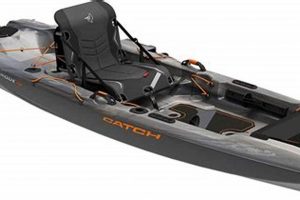
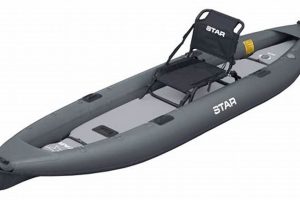
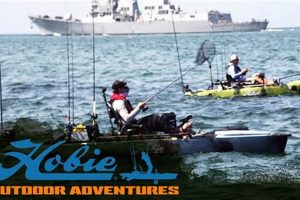
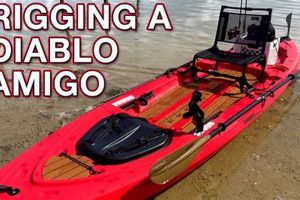
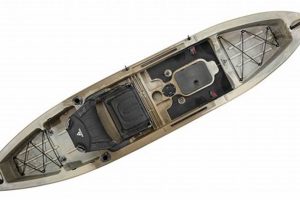
Specialized watercraft designed for pursuing game from waterways offer anglers and hunters unique access and stealth. These vessels prioritize stability, storage capacity, and specialized features like rod holders, camouflage patterns, and mounting points for accessories.
The ability to navigate shallow waters, approach wildlife discreetly, and transport gear effectively makes purpose-built watercraft invaluable tools for sportsmen. Historically, indigenous cultures utilized various small craft for similar purposes, demonstrating a long-standing connection between human ingenuity and leveraging waterways for sustenance and sport. Modern designs incorporate advanced materials and construction techniques for enhanced performance and durability.
Further exploration will detail key features, popular models, safety considerations, and ethical practices associated with using these specialized vessels for recreational and subsistence activities.
Tips for Kayak-Based Hunting and Fishing
Successful excursions require careful planning and execution. These tips offer guidance for maximizing safety and effectiveness on the water.
Tip 1: Stability is Paramount: Select a vessel designed for stability, especially when casting, retrieving, or taking aim. Wider beams and specialized hull designs contribute significantly to stability.
Tip 2: Prioritize Safety Gear: A personal flotation device (PFD) is essential. Carry a first-aid kit, signaling devices, and communication equipment for emergencies.
Tip 3: Master Paddling Techniques: Efficient paddling minimizes fatigue and maximizes stealth. Practice different strokes for maneuvering in various conditions.
Tip 4: Research Regulations: Understand and adhere to all local regulations regarding licensing, permitted areas, and harvesting limits for both fish and game.
Tip 5: Respect Wildlife and the Environment: Practice ethical hunting and fishing techniques. Minimize disturbance to wildlife and pack out all trash.
Tip 6: Plan for Weather Conditions: Check weather forecasts before embarking and be prepared for changing conditions. Dress appropriately and have contingency plans.
Tip 7: Organize Gear Strategically: Store gear securely and within easy reach for efficient access while maintaining balance and stability.
Tip 8: Consider Camouflage and Concealment: Choose kayaks and attire that blend with the surrounding environment to minimize disturbance to wildlife.
Adherence to these guidelines enhances safety and contributes to a more rewarding and responsible experience on the water.
By following these recommendations, individuals can improve their chances of success while prioritizing safety and responsible environmental stewardship.
1. Stability

Stability forms a cornerstone of effective kayak-based fishing and hunting. A stable platform minimizes the risk of capsizing, especially during activities that shift the center of gravity, such as casting a fishing rod, drawing a bow, or retrieving a harvested animal. Compromised stability not only jeopardizes safety but also reduces accuracy and effectiveness. For example, an unstable kayak makes accurate casting difficult, impacting fishing success. Similarly, an unsteady platform can hinder accurate shot placement when hunting. The degree of stability required depends on the specific activity and the environment. Calm, protected waters may permit the use of narrower kayaks with less inherent stability, while challenging conditions, such as open water or moving currents, necessitate wider, more stable platforms.
Several design elements contribute to kayak stability. Hull design plays a crucial role, with wider, flatter hulls generally offering greater initial stability. Outrigger systems and pontoons can further enhance stability, particularly valuable in rougher waters. Weight distribution within the kayak also significantly influences stability. Properly distributing gear and maintaining a low center of gravity contribute to a more stable and predictable platform. Understanding these factors allows for informed decisions when selecting a kayak for fishing and hunting, leading to safer and more successful excursions.
Ultimately, prioritizing stability in kayak selection for fishing and hunting directly correlates with safety and success. This understanding empowers informed decision-making, allowing individuals to choose vessels appropriate for their intended activities and environmental conditions. Evaluating hull design, considering outrigger options, and understanding the principles of weight distribution enhance on-the-water safety and contribute to a more rewarding experience. Neglecting stability, however, increases the risk of capsizing, compromises accuracy, and diminishes the overall effectiveness of these specialized pursuits.
2. Storage Capacity

Adequate storage capacity is a critical factor influencing the effectiveness and enjoyment of kayak-based fishing and hunting excursions. These activities necessitate carrying specialized equipment, including rods, reels, tackle, ammunition, safety gear, and potentially harvested game. Insufficient storage can lead to compromised safety, reduced efficiency, and a generally less satisfactory experience.
- Dedicated Compartments:
Purpose-built compartments designed for specific gear, such as fishing rods or ammunition, offer secure storage and prevent items from shifting during transit or use. For instance, rod holders prevent tangling and damage, while dry storage compartments protect sensitive items like electronics and ammunition from water exposure. Such specialized compartments enhance organization and accessibility, contributing to a more streamlined and efficient experience.
- Weight Capacity and Distribution:
Kayaks possess defined weight capacities that must be respected for safe and efficient operation. Exceeding the weight capacity compromises stability and maneuverability. Evenly distributing weight within the kayak is equally crucial. Uneven weight distribution can lead to instability, making the kayak difficult to control. Understanding weight capacity and employing proper weight distribution techniques are essential for safety and optimal performance. For example, heavy items should be positioned low and centrally, while lighter items can be stored in the bow or stern.
- Accessibility and Organization:
Easy access to frequently used items is paramount. Strategic placement of gear within the kayak minimizes disruption and maintains balance. Storing essential items within arm’s reach, such as pliers, knives, or extra lures, enhances efficiency and reduces the need for disruptive movements. Implementing organizational strategies, like utilizing dry bags or tackle boxes, further contributes to a more streamlined and enjoyable experience.
- Securing Gear:
Securely fastening gear prevents loss or damage, particularly in rough conditions or during unexpected events. Bungee cords, straps, and tie-down points provide effective means of securing items. A loose paddle, tackle box, or hunting bow poses a safety hazard and can lead to equipment loss. Properly securing gear preserves valuable equipment and contributes to a safer and more focused experience. For example, securing a cooler with straps ensures it remains in place, even in choppy water.
Careful consideration of storage capacity and organization is integral to maximizing the utility and enjoyment of fishing and hunting kayaks. Prioritizing these elements ensures that excursions remain safe, efficient, and focused on the intended pursuits. Neglecting storage considerations, however, can compromise safety, create unnecessary challenges, and detract from the overall experience. Selecting a kayak with adequate storage capacity, employing effective organizational strategies, and diligently securing gear enhances efficiency, improves safety, and contributes to a more rewarding time on the water.
3. Maneuverability
Maneuverability represents a critical performance attribute in kayaks designed for fishing and hunting. The ability to precisely and efficiently navigate waterways directly impacts the success and safety of these activities. Navigating shallow, vegetated areas, approaching wildlife discreetly, and responding effectively to changing currents or wind conditions necessitate a highly maneuverable vessel. A kayak’s maneuverability influences its suitability for specific environments and target species. For instance, pursuing fish in narrow creeks or maneuvering through dense reeds requires a kayak capable of tight turns and precise adjustments. Similarly, approaching waterfowl in marshy environments necessitates a vessel that can navigate shallow water and dense vegetation effectively.
Several design elements contribute to a kayak’s maneuverability. Shorter kayaks generally offer greater maneuverability than longer ones, exhibiting a smaller turning radius and responding more quickly to paddle input. Hull design also plays a significant role. A kayak with a defined keel or tracking fin will track straighter and resist turning, while a flatter hull design enhances maneuverability, allowing for quicker turns and easier pivoting. The type and size of the paddle further influence maneuverability. Shorter paddles with wider blades provide greater control and quicker turning, while longer, narrower blades are better suited for straight-line paddling and covering longer distances. Understanding these design elements allows for informed decisions when selecting a kayak based on the intended environment and activity.
Ultimately, prioritizing maneuverability in kayak selection for fishing and hunting significantly enhances efficiency, safety, and overall success. Selecting a kayak with appropriate maneuverability characteristics empowers anglers and hunters to effectively navigate diverse waterways and approach game discreetly. This understanding translates to a more rewarding and safer experience. Neglecting maneuverability, however, can limit access to prime fishing and hunting locations, compromise stealth, and potentially create hazardous situations in challenging conditions.
4. Camouflage
Camouflage plays a crucial role in the effectiveness of fishing and hunting kayaks, directly influencing the user’s ability to approach wildlife undisturbed. The primary purpose of camouflage in this context is to visually integrate the kayak and its occupant into the surrounding environment, minimizing the likelihood of detection by fish or game. This principle applies equally to both fishing and hunting scenarios. For example, a brightly colored kayak in a murky swamp would be readily visible to waterfowl, potentially causing them to flush prematurely. Conversely, a kayak utilizing a camouflage pattern that blends with the reeds and vegetation offers a significant advantage in remaining undetected.
Several factors determine the effectiveness of kayak camouflage. The pattern itself must match the dominant colors and textures of the intended environment. A woodland camouflage pattern might be highly effective in a forested river setting, but less so in open, marshy terrain. Furthermore, the camouflage should extend beyond the kayak itself to encompass the occupant’s attire and gear. A brightly colored hat or jacket can compromise the effectiveness of even the most sophisticated kayak camouflage. Movement also plays a significant role. Sudden, jerky movements are more likely to be detected than slow, deliberate actions. Finally, the type of wildlife targeted influences camouflage selection. Animals with keen eyesight, such as waterfowl, require more meticulous camouflage strategies than those with less acute vision. Understanding these factors enables informed decisions regarding camouflage selection, contributing significantly to successful fishing and hunting outcomes.
Effective camouflage is integral to maximizing success and minimizing disturbance in kayak-based fishing and hunting. Integrating principles of visual concealment into vessel selection, attire, and on-the-water behavior enhances stealth and increases the likelihood of close encounters with wildlife. Neglecting camouflage considerations, however, can compromise hunting and fishing success, potentially leading to premature flushing of game or causing fish to become wary. A comprehensive understanding of camouflage principles, therefore, represents a critical aspect of responsible and effective kayak-based fishing and hunting practices.
5. Customization Options
Customization options significantly enhance the utility and effectiveness of fishing and hunting kayaks, enabling users to tailor their vessels to specific needs and preferences. Adapting a kayak to individual requirements, target species, and environmental conditions maximizes efficiency, comfort, and overall success on the water. These modifications range from simple additions to more complex integrations, each contributing to a more personalized and effective fishing or hunting platform.
- Rod Holders and Mounting Systems:
Rod holders secure fishing rods, freeing hands for paddling, maneuvering, and other tasks. Various mounting systems accommodate different rod types and fishing styles. Adjustable rod holders allow for precise positioning, optimizing casting angles and retrieval efficiency. Track systems offer versatile mounting options for rod holders, fish finders, and other accessories, enhancing adaptability and customization. For example, a kayak angler targeting bass might configure rod holders for easy access to different lures and techniques.
- Anchor Trolleys and Deployment Systems:
Anchor trolleys allow precise anchor positioning, crucial for maintaining position in currents or holding steady near fishing or hunting spots. Deploying and retrieving the anchor from the cockpit enhances efficiency and minimizes disruption. This controlled positioning is particularly valuable in rivers or tidal areas, enabling anglers to hold position in a specific channel or near a submerged structure. Similarly, hunters can maintain a stable position for observing and approaching game.
- Gear Tracks and Mounting Points:
Gear tracks and strategically placed mounting points provide versatile platforms for attaching accessories like cameras, GPS units, lights, and other specialized equipment. This modularity enables users to configure their kayaks according to specific needs. A photographer might mount a camera for capturing wildlife encounters, while a night fisherman might install lights for enhanced visibility. These adaptable systems facilitate customization and enhance the versatility of the kayak platform.
- Camouflage and Concealment Systems:
Customization extends to camouflage and concealment, allowing users to tailor their kayaks to blend seamlessly with specific environments. This might involve applying camouflage patterns, adding vegetation, or utilizing specialized concealment systems. These adaptations minimize visibility, enhancing stealth and increasing the likelihood of approaching wildlife undisturbed. A hunter pursuing waterfowl in marshland might add natural vegetation to their kayak for enhanced concealment.
The ability to customize fishing and hunting kayaks significantly enhances their functionality and effectiveness. By tailoring their vessels to individual requirements and target environments, anglers and hunters can maximize efficiency, comfort, and overall success on the water. These customization options demonstrate the adaptability of kayaks as specialized platforms for pursuing game from waterways, transforming them from basic vessels into highly personalized and effective tools.
Frequently Asked Questions
Addressing common inquiries regarding specialized kayaks designed for fishing and hunting provides clarity and facilitates informed decision-making.
Question 1: What differentiates a fishing/hunting kayak from a recreational kayak?
Key distinctions include stability, storage capacity, and specialized features. Fishing and hunting kayaks prioritize stability for casting, shooting, and retrieving game. They typically offer increased storage for gear and often include features like rod holders, anchor trolleys, and camouflage patterns.
Question 2: Are specialized kayaks necessary for these activities?
While not strictly mandatory, purpose-built kayaks offer significant advantages in terms of safety, efficiency, and overall success. Their specialized features enhance stability, facilitate gear organization, and improve stealth.
Question 3: What safety considerations are paramount?
Wearing a personal flotation device (PFD) is crucial. Checking weather forecasts, carrying communication devices, informing someone of trip plans, and adhering to local regulations are essential safety practices.
Question 4: How does one choose the right kayak for specific needs?
Consider factors such as target species, intended environment (rivers, lakes, oceans), storage requirements, and desired level of customization. Research various models and consult with experienced anglers or hunters.
Question 5: What maintenance is required for these kayaks?
Regular cleaning, especially after exposure to saltwater, prolongs lifespan. Inspecting and maintaining moving parts, such as rudder systems and anchor trolleys, ensures proper functionality. Storing kayaks properly, protected from sunlight and extreme temperatures, preserves their integrity.
Question 6: What ethical considerations should be kept in mind?
Respecting wildlife and the environment is paramount. Adhering to catch limits, avoiding disturbing nesting areas, and minimizing environmental impact through responsible waste disposal are crucial ethical considerations.
Careful consideration of these frequently asked questions empowers individuals to make informed decisions regarding kayak selection, safe operation, and ethical practices.
Further exploration of specific kayak models and accessories will enhance understanding and facilitate informed purchasing decisions.
Fishing and Hunting Kayaks
Specialized kayaks designed for fishing and hunting offer distinct advantages in accessing and interacting with aquatic environments. Prioritizing stability, storage, maneuverability, camouflage, and customization options ensures effective and responsible pursuit of game from waterways. Understanding these core attributes empowers informed decision-making regarding kayak selection and utilization, contributing significantly to both safety and success. Adherence to ethical practices and respect for wildlife remain paramount considerations for all kayak-based fishing and hunting activities.
As technology continues to advance and kayak designs evolve, the potential for enhanced efficiency and reduced environmental impact in these specialized pursuits remains promising. Continued emphasis on safety, responsible resource management, and respect for natural ecosystems will ensure the sustainability and enjoyment of kayak-based fishing and hunting for generations to come.