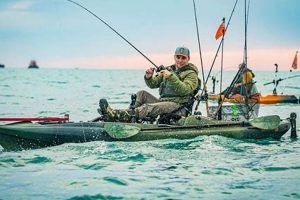
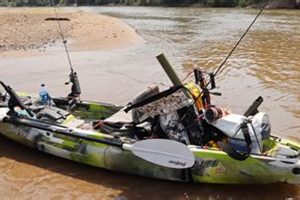
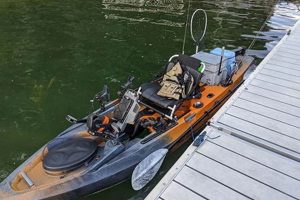
A nocturnal angling system deployed from a small, human-powered watercraft involves careful consideration of specialized equipment and techniques. This specialized approach typically includes adaptations for visibility, safety, and navigating in low-light conditions. For example, it might involve mounting rod holders, strategically placing lights, and integrating fish finders with night vision capabilities.
Optimizing an after-dark aquatic pursuit from a kayak offers unique advantages. The stillness of night often brings increased fish activity closer to the surface, while reduced boat traffic creates a more tranquil and immersive experience. Historically, fishing at night has been a common practice in many cultures, using the cover of darkness and the natural behavior of prey fish to enhance angling success. Modern technology now allows for a safer and more effective approach to this traditional fishing method.
The subsequent sections will delve into the key components of preparing for and executing a successful low-light angling excursion from a kayak. These components include navigation and safety considerations, lighting strategies, specialized electronics, and appropriate tackle and rigging.
Essential Considerations for Nocturnal Kayak Angling
Proper preparation is crucial for a safe and productive experience on the water after dark. The following tips offer guidance for optimizing equipment and techniques.
Tip 1: Prioritize Safety. Navigation lights, a personal flotation device, and a whistle are essential. Sharing float plans with someone on shore and carrying a communication device are highly recommended.
Tip 2: Choose Appropriate Lighting. Red or green lights preserve night vision while providing illumination. Headlamps with adjustable brightness allow for hands-free operation. Submersible lights can attract baitfish.
Tip 3: Optimize Kayak Organization. Securely mount rod holders, tackle boxes, and other gear within easy reach to maintain balance and minimize noise.
Tip 4: Select Specialized Electronics. Fish finders with night vision capabilities and GPS units enhance navigation and fish location in low-light conditions.
Tip 5: Adapt Tackle and Rigging. Use lures and bait that are effective in darkness, and consider using heavier line for increased visibility.
Tip 6: Understand Local Regulations. Be aware of any specific rules or restrictions regarding night fishing and watercraft operation in the chosen area.
Tip 7: Test Equipment Beforehand. Ensure all lights, electronics, and other gear function correctly to avoid complications on the water.
Adhering to these guidelines promotes a successful and safe nocturnal angling experience. Preparation and attention to detail enhance both enjoyment and efficacy on the water.
By considering these points, anglers can be well-prepared for a rewarding experience on the water after dark. The following section will discuss further advanced techniques for maximizing success.

Navigation lights are integral to a safe and legal kayak night fishing setup. Their primary function is to enhance visibility, preventing collisions with other vessels in low-light conditions. This is particularly crucial on waterways shared with motorized craft, where a kayak’s low profile makes it difficult to see. A properly configured lighting system communicates a kayak’s position, direction of travel, and size to other boaters, reducing the risk of accidents. For example, a white light visible from all directions signifies a vessel under oars or sails, while sidelights (red and green) indicate the direction of travel. Failing to display appropriate navigation lights can lead to legal penalties, especially in heavily trafficked areas.
Beyond collision avoidance, navigation lights also contribute to the overall safety of the angler. They illuminate the surrounding water, aiding in the identification of potential hazards such as submerged debris or shallow areas. This improved visibility is particularly beneficial when navigating unfamiliar waters or during changing tidal conditions. Furthermore, navigation lights can facilitate the location of a kayak in the event of an emergency, enabling quicker response times from rescue personnel. For instance, a kayak drifting away from its intended location due to unexpected currents can be easily spotted and retrieved if properly lit.
In summary, the integration of navigation lights within a kayak night fishing setup is not merely a legal requirement but a crucial safety precaution. Their function extends beyond visibility, encompassing hazard identification and emergency preparedness. Understanding and implementing appropriate lighting configurations are essential for responsible and safe nocturnal angling from a kayak. This contributes to a more secure and enjoyable experience for the angler while mitigating potential risks on the water.
2. Kayak Stability

Kayak stability is a critical factor influencing the success and safety of nocturnal fishing excursions. A stable platform is essential for various on-the-water activities inherent to angling, including casting, retrieving, and landing fish. In low-light conditions, maintaining balance becomes even more crucial due to reduced visibility and the potential for unexpected movements. A stable kayak allows for more precise casting, minimizing the risk of snags or losing balance during the retrieve. Furthermore, landing a fish, particularly a larger one, requires careful maneuvering and weight shifting, which can be challenging in a less stable vessel, especially at night. For example, the unexpected surge of a hooked fish can easily destabilize a narrow or tippy kayak, potentially leading to capsizing in the dark. Conversely, a wider, more stable kayak provides a secure platform for managing these dynamic movements, increasing the likelihood of a successful landing and ensuring angler safety. Compromised stability can lead to difficulties in managing lines, hooks, and other equipment, increasing the risk of tangles, lost gear, and even injury in the low-light environment.
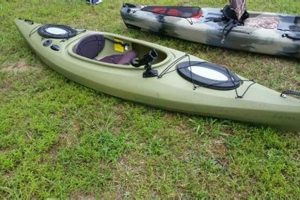
Several factors influence kayak stability, including hull design, width, and length. Wider kayaks generally offer greater initial stability, making them suitable for calmer waters and activities requiring frequent movement. Longer kayaks tend to track straighter and offer better secondary stability, which refers to the resistance to tipping when leaned. Hull design also plays a significant role; flat-bottomed hulls provide excellent initial stability, while rounded or V-shaped hulls offer better performance in rougher waters. Choosing a kayak with appropriate stability characteristics for the intended fishing environment and the angler’s experience level is paramount for a successful night fishing setup. For instance, an angler targeting larger species in open water might prioritize a longer, more stable kayak with a V-shaped hull to handle potential waves and the strong pull of a fish, while an angler fishing in calm, shallow waters might prefer a shorter, wider kayak for maneuverability and ease of access to tight spots.
In conclusion, prioritizing kayak stability significantly enhances the safety and effectiveness of nocturnal fishing endeavors. Understanding the relationship between stability, hull design, and intended fishing conditions allows anglers to select the appropriate vessel for their needs. This informed decision minimizes the risk of incidents related to instability, enabling a more focused and enjoyable fishing experience. A stable kayak facilitates precise casting, controlled retrieves, and safe fish landing, ultimately contributing to a successful and enjoyable night on the water.
3. Low-Light Tackle
Specialized tackle designed for low-light conditions plays a pivotal role in successful kayak night fishing setups. Optimal tackle selection significantly impacts an angler’s ability to attract and land fish in darkened waters. The following facets elucidate the key components and considerations for effective low-light tackle configurations.
- Line Choice
Low-visibility line, such as fluorocarbon, offers several advantages in night fishing. Its refractive index closely matches that of water, making it nearly invisible to fish. This stealth characteristic enhances the natural presentation of lures and baits, increasing the likelihood of strikes. Furthermore, fluorocarbon’s inherent abrasion resistance is beneficial when fishing around structures or heavy cover, which often hold fish during nighttime hours. For example, when fishing near submerged logs or rocky areas, the abrasion resistance of fluorocarbon minimizes the risk of line breakage when a fish seeks cover. This characteristic contributes to successful hooksets and reduces lost fish due to line failure.
- Lure Selection
Lure selection for night fishing should prioritize attracting fish through sound, vibration, and silhouette. Dark-colored lures create a distinct profile against the night sky or illuminated water surface, making them easier for fish to detect. Lures incorporating rattles or other noise-producing elements attract predatory fish by mimicking the sounds of struggling prey. Additionally, lures with reflective surfaces or those designed to produce bioluminescence can be highly effective in attracting fish in dark environments. For instance, a dark-colored crankbait with internal rattles can effectively trigger strikes from bass or walleye lurking in deeper water.
- Rod and Reel Considerations
Rod and reel setups tailored for night fishing enhance sensitivity and control. A sensitive rod allows anglers to detect subtle bites, which can be more common in the stillness of night. A reel with a smooth drag system is crucial for managing strong runs from larger fish, which are often more active during nighttime hours. Baitcasting reels, known for their robust construction and high line capacity, are well-suited for night fishing applications, especially when targeting larger species or fishing in areas with heavy cover. For example, a medium-heavy baitcasting rod paired with a high-capacity reel spooled with heavy braid provides the necessary strength and sensitivity for targeting catfish in deep, murky waters.
- Importance of Scent and Bait
Incorporating scent into lures or utilizing live bait can significantly increase the effectiveness of night fishing tackle. Fish often rely more heavily on their olfactory senses in low-light conditions. Applying scent attractants to lures mimics the natural smell of prey, enticing fish to strike. Live bait, such as nightcrawlers or minnows, presents a natural and appealing target for predatory fish, triggering their feeding instincts. The use of scented soft plastics, such as worms or crawfish imitations, can also be highly effective in attracting fish at night. For instance, soaking soft plastic worms in garlic scent can be particularly effective for attracting catfish.
The careful consideration of line, lures, rod and reel combinations, and the incorporation of scent or bait significantly enhance the chances of success in kayak night fishing. By understanding the specific characteristics and advantages of each element, anglers can create a cohesive and effective tackle system optimized for low-light conditions. This specialized approach maximizes the potential for attracting and landing fish, contributing to a rewarding and productive night fishing experience from a kayak.
4. Fish Finder/GPS
Fish finder and GPS technologies are integral components of a comprehensive kayak night fishing setup. These electronic aids enhance angler efficiency and safety by providing crucial information about underwater terrain, fish location, and navigation in low-light conditions. Integrating these technologies significantly improves the likelihood of locating fish and navigating safely after dark.
- Enhanced Underwater Awareness
Fish finders utilize sonar technology to create detailed images of the underwater environment. This capability allows anglers to identify structures, depth changes, and submerged vegetationkey areas where fish often congregate. At night, when visual cues are limited, this real-time underwater mapping becomes invaluable. For example, a fish finder can reveal a submerged drop-off or a concentration of rocks, indicating a potential hotspot for nocturnal feeding activity. This detailed information enables anglers to target their efforts more effectively, increasing the chances of success.
- Precise Fish Location
Beyond revealing underwater structures, fish finders can pinpoint the location of fish. The sonar signal reflects off fish, displaying their position on the fish finder’s screen. Some advanced units can even differentiate between individual fish and schools, providing valuable insight into fish behavior and distribution. In the darkness of night, this precise location data is essential for accurate casting and lure presentation. For instance, an angler can use the fish finder to position their kayak directly over a school of baitfish, increasing the likelihood of attracting larger predators lurking nearby.
- Safe and Efficient Navigation
GPS technology plays a crucial role in nocturnal navigation. A GPS unit provides accurate location data, enabling anglers to navigate unfamiliar waters, track their movements, and return safely to their launch point, even in complete darkness. This capability is particularly valuable in areas with complex shorelines, numerous islands, or potential hazards. For example, an angler can mark waypoints on their GPS unit, indicating productive fishing spots or safe navigation channels, ensuring efficient movement and minimizing the risk of disorientation in the dark.
- Integrated Systems and Advanced Features
Many modern fish finders and GPS units are integrated into single devices, offering a comprehensive suite of navigational and fish-finding tools. Some units include advanced features like chartplotting, waypointing, and even real-time mapping updates. These capabilities streamline the angler’s workflow, providing a wealth of information at their fingertips. For instance, a chartplotter with integrated GPS can overlay the angler’s position on a detailed nautical chart, displaying potential hazards, navigation markers, and even real-time weather information, contributing significantly to a safer and more informed night fishing experience.
The integration of fish finder and GPS technologies within a kayak night fishing setup significantly enhances both efficiency and safety. By providing crucial information about underwater terrain, fish location, and navigation, these tools empower anglers to make informed decisions, maximize their fishing efforts, and ensure a safe return after dark. The ability to pinpoint fish-holding structures, track movements in low-light conditions, and navigate complex waterways transforms the night fishing experience, increasing the likelihood of success and promoting responsible angling practices.
5. Quiet Propulsion

Quiet propulsion forms a cornerstone of effective kayak night fishing setups. Minimizing noise disturbance significantly impacts angling success in low-light conditions. Fish are often more attuned to sound at night due to reduced visibility. Excessive noise from propulsion can spook fish, particularly in shallow water or calm conditions, hindering their natural feeding patterns and reducing the likelihood of strikes. A stealthy approach, achieved through quiet propulsion, allows anglers to approach fish undetected, maximizing opportunities for a successful presentation.
Kayaks offer inherent advantages for quiet propulsion, especially when compared to motorized vessels. Paddling provides a near-silent mode of movement, allowing anglers to navigate stealthily within close proximity to fish. Electric trolling motors, while offering convenience, can produce subtle noise and vibrations that may still deter wary fish. Optimizing paddling techniques further enhances quietness. Smooth, deliberate strokes minimize splashing and water displacement, contributing to a more discreet approach. For example, a slow, controlled paddling cadence minimizes disturbance compared to rapid, erratic paddling, particularly when approaching shallow areas or vegetation where fish may be hiding. Furthermore, choosing a kayak designed for efficient and quiet movement through the water, such as those with streamlined hulls and optimized paddle designs, contributes significantly to a stealthy approach.
The practical significance of quiet propulsion extends beyond increased catch rates. A quieter approach promotes a more immersive and connected experience with the natural environment. Reduced noise pollution enhances the angler’s ability to appreciate the subtle sounds of the night, from the rustling of leaves along the shoreline to the gentle splashes of feeding fish. This heightened awareness enhances the overall enjoyment and appreciation of the nocturnal fishing experience. Furthermore, minimizing noise disturbance aligns with ethical angling practices, promoting respect for the aquatic ecosystem and minimizing disruption to wildlife. In conclusion, prioritizing quiet propulsion through mindful paddling techniques and appropriate kayak selection is paramount for a successful and ethical kayak night fishing setup. This approach maximizes catch potential while fostering a deeper connection with the natural world.
6. Personal Safety Gear

Personal safety gear constitutes a critical aspect of responsible kayak night fishing setups. The inherent risks associated with nocturnal on-the-water activities necessitate a proactive approach to safety. Prioritizing personal safety not only mitigates potential hazards but also fosters a more confident and enjoyable angling experience. The following facets illustrate the essential components and considerations for comprehensive personal safety in the context of kayak night fishing.
- Personal Flotation Device (PFD)
A properly fitted PFD is paramount for kayak angling, especially at night. PFDs provide buoyancy in the event of capsizing or accidental immersion, significantly increasing the chances of survival in dark or cold water. Choosing a brightly colored PFD with reflective elements enhances visibility in low-light conditions, aiding in location and rescue should an incident occur. For example, an angler thrown overboard at night in a dark-colored PFD might be difficult to locate quickly, while a bright yellow or orange PFD with reflective strips significantly increases visibility to rescuers or passing boaters. Furthermore, selecting a PFD designed for paddling comfort allows for unrestricted movement during casting and retrieval, promoting a more natural and enjoyable fishing experience.
- Communication Devices
Maintaining communication capabilities is essential for safety in remote or isolated fishing locations. A waterproof VHF radio allows direct communication with the Coast Guard and other vessels in case of emergencies. Carrying a fully charged mobile phone in a waterproof case provides a backup communication method for contacting emergency services or shore-based contacts. Pre-programming important numbers into the phone ensures quick access in critical situations. For example, an angler experiencing engine trouble or requiring medical assistance can quickly contact the appropriate authorities using a VHF radio or mobile phone, expediting response times and potentially mitigating the severity of the situation. Sharing float plans with a trusted individual on shore, detailing intended fishing locations and estimated return times, further enhances safety protocols.
- Signaling Devices
Signaling devices provide essential means of attracting attention in emergency situations. A waterproof flashlight or headlamp with a strobe function can signal distress to other boaters or rescuers in low-light conditions. Carrying a whistle provides an additional auditory signaling option, particularly useful in foggy conditions or when visibility is significantly impaired. Flares, while requiring careful handling and storage, offer a highly visible signal for attracting attention over long distances. For instance, an angler stranded due to equipment malfunction can use a flashlight’s strobe function or a whistle to alert nearby vessels or search parties to their location. The availability of multiple signaling options increases the likelihood of successful communication during emergencies.
- First-Aid and Emergency Kit
A compact, waterproof first-aid kit equipped with essential supplies addresses minor injuries and provides basic medical care in remote locations. Including items such as antiseptic wipes, bandages, pain relievers, and motion sickness medication addresses common ailments encountered during fishing trips. Adding a small knife or multi-tool enhances utility for various tasks, including cutting lines, removing hooks, or making minor repairs. For example, an angler sustaining a hook injury can utilize the first-aid kit to clean and bandage the wound, preventing infection and promoting faster healing. The availability of essential medical supplies contributes to angler well-being and preparedness for unexpected situations.
The meticulous consideration and inclusion of personal safety gear within a kayak night fishing setup demonstrates a commitment to responsible angling practices. Prioritizing safety not only mitigates potential risks but also contributes to a more confident and enjoyable experience on the water. By integrating these essential elements into their pre-trip preparations, anglers equip themselves with the tools and knowledge necessary to handle unforeseen circumstances, ensuring a safer and more rewarding nocturnal fishing adventure.
Frequently Asked Questions
Addressing common inquiries regarding nocturnal kayak angling setups facilitates informed decision-making and promotes safer, more effective fishing practices.
Question 1: What are the most important safety precautions for kayak night fishing?
Prioritizing visibility through proper navigation lights, wearing a personal flotation device (PFD), carrying communication devices (VHF radio, mobile phone), and sharing float plans with someone on shore are essential safety measures.
Question 2: How does one choose appropriate lighting for a kayak at night?
Navigation lights are legally required and enhance visibility. Red or green lights preserve night vision while providing illumination. Headlamps with adjustable brightness allow for hands-free operation, while submersible lights can attract baitfish.
Question 3: What type of kayak is best suited for night fishing?
Kayak selection depends on individual needs and fishing environment. Stable platforms are crucial, especially in low-light conditions. Wider kayaks generally offer greater initial stability. Longer kayaks tend to track straighter and provide better secondary stability. Hull design also plays a significant role; flat-bottomed hulls provide excellent initial stability, while rounded or V-shaped hulls offer better performance in rougher waters.
Question 4: What specialized fishing gear enhances success in nocturnal kayak angling?
Low-visibility fishing line, lures designed for darkness (dark colors, rattles, reflective surfaces), sensitive rods and reels, and the incorporation of scent or live bait increase effectiveness in low-light conditions. Heavier line can also be beneficial for increased visibility and strength.
Question 5: How can technology improve night fishing from a kayak?
Fish finders with night vision capabilities aid in locating fish and identifying underwater structures. GPS units enhance navigation and ensure safe return in darkness. Integrated systems combining fish finder and GPS functionalities streamline information access.
Question 6: What are the legal aspects of kayak fishing at night?
Regulations regarding night fishing and required safety equipment vary by location. Consulting local authorities or relevant agencies provides information specific to the intended fishing area. Adhering to these regulations ensures legal compliance and promotes safe angling practices.
Careful preparation, adherence to safety guidelines, and the appropriate utilization of specialized equipment contribute significantly to a successful and safe night fishing experience from a kayak.
For further exploration, the following section delves into advanced techniques and strategies specific to nocturnal kayak angling.
Kayak Night Fishing Setup
A comprehensive kayak night fishing setup requires careful consideration of various interconnected elements. Prioritizing safety through appropriate lighting, personal flotation devices, and communication equipment is paramount. Optimizing tackle and rigging for low-light conditions, selecting a stable and maneuverable kayak, and employing quiet propulsion techniques enhance angling effectiveness. Leveraging technologies such as fish finders and GPS units further improves navigation and fish location in darkness. Understanding and adhering to local regulations ensures legal compliance and promotes responsible angling practices.
Nocturnal angling from a kayak offers a unique and rewarding experience. The stillness of night, combined with the accessibility and stealth of a kayak, presents unparalleled opportunities for connecting with nature and pursuing prized game fish. Meticulous preparation and a commitment to safety empower anglers to fully embrace the challenges and rewards of this specialized pursuit, fostering a deeper appreciation for the aquatic world and the art of angling.