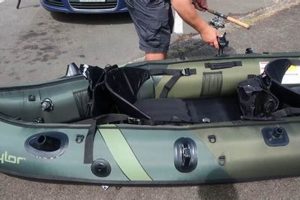
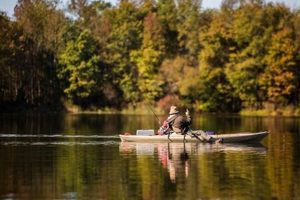
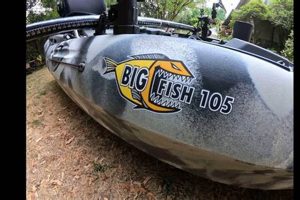
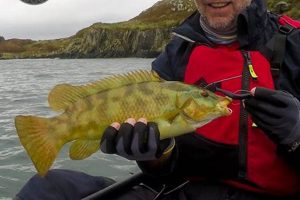
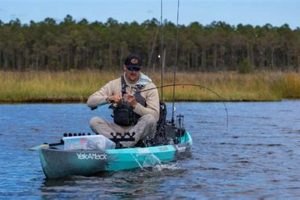
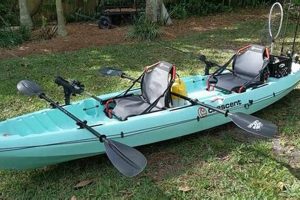
This activity involves using small, human-powered vessels specifically designed for stability and maneuverability in marine environments to pursue finfish. It offers a unique blend of angling and paddling, enabling access to shallow waters and diverse fishing grounds often inaccessible to larger boats. A typical setup might include specialized rod holders, storage for tackle and catches, and potentially even fish finders or other electronic aids.
Small-craft angling in the sea provides a close-to-nature experience, affording a sense of freedom and challenge. The low profile of these vessels allows for stealthy approaches, increasing the likelihood of successful catches. Historically, small boats have been employed for fishing in coastal communities for centuries, demonstrating a long-standing connection between human ingenuity and aquatic resources. The modern iteration, however, benefits from advancements in materials and design, enhancing both safety and performance.
This article will delve into various aspects of this increasingly popular pursuit, covering topics such as equipment selection, safety considerations, suitable fishing techniques, popular species targeted, and the environmental impact of the activity. Further sections will provide insights into choosing appropriate locations, understanding tidal influences, and practicing sustainable fishing methods.
Tips for Ocean Kayak Fishing
Preparation and awareness are crucial for a safe and successful experience. The following tips offer guidance for anglers of all skill levels.
Tip 1: Check Weather and Sea Conditions: Prior to departure, consult marine forecasts for wind speed, wave height, and tidal currents. Postpone trips if conditions are unfavorable.
Tip 2: Wear a Personal Flotation Device (PFD): A PFD is essential safety equipment and should be worn at all times while on the water.
Tip 3: Carry Essential Safety Gear: A waterproof communication device, a signaling whistle, a first-aid kit, and a knife should be readily accessible.
Tip 4: Plan a Float Plan: Inform someone on shore of the intended fishing location, planned return time, and emergency contact information.
Tip 5: Use Appropriate Kayaks and Equipment: Select a kayak designed for stability in offshore conditions. Ensure all fishing gear is properly secured and within easy reach.
Tip 6: Practice Self-Rescue Techniques: Familiarize oneself with re-entering a kayak in the event of a capsize. Consider practicing in a controlled environment before venturing into open water.
Tip 7: Be Aware of Marine Wildlife: Maintain a respectful distance from marine animals. Understand potential hazards associated with specific species encountered in the fishing area.
Tip 8: Adhere to Local Fishing Regulations: Obtain necessary licenses and familiarize oneself with size and catch limits for targeted species.
By adhering to these guidelines, anglers can significantly enhance their safety and enjoyment while minimizing risks associated with this demanding activity.
This compilation of advice serves as a starting point for responsible ocean kayak fishing. Continued learning and adherence to best practices are vital for long-term success and preservation of marine environments.
1. Stable Kayak Choice

Vessel stability forms the foundation of safe and effective angling in open water. An unstable craft compromises safety, hinders fishing techniques, and diminishes overall enjoyment. Selecting an appropriate kayak design directly influences success and angler well-being. The following facets detail the importance of stability in kayak selection for ocean fishing.
- Hull Design and Stability:
Wider hulls and flatter bottoms generally offer greater primary stability, resisting initial tipping. Longer kayaks tend to track straighter, benefiting trolling. Specialized hull designs, such as pontoon-style hulls, maximize stability but may sacrifice maneuverability. A shorter, wider hull excels in calm bays, while a longer, narrower hull suits open ocean conditions with swells. Choosing the correct hull design for the intended fishing environment optimizes stability and performance.
- Weight Capacity and Load Distribution:
Exceeding the manufacturer’s recommended weight capacity compromises stability and freeboard. Proper distribution of gear and angler weight within the kayak is critical for maintaining balance. Centering heavy items low in the hull enhances stability. Considering the combined weight of the angler, fishing gear, and potential catch ensures safe operation within the kayak’s limits. Overloading reduces freeboard, increasing the risk of swamping, particularly in rough conditions.
- Sit-On-Top vs. Sit-Inside Kayaks:
Sit-on-top kayaks offer inherent buoyancy and self-bailing capabilities, enhancing stability and simplifying recovery from capsizes. Sit-inside kayaks provide greater protection from the elements and allow for more efficient paddling, but require more skill to re-enter after a capsize. Anglers fishing in rough conditions or cooler water might prioritize the security of a sit-inside design, while those seeking ease of use and enhanced stability might opt for a sit-on-top.
- Impact of Water Conditions:
Calm waters allow for a wider range of kayak choices, while rough seas necessitate designs optimized for stability. Wind, waves, and currents significantly influence stability and require kayaks with greater secondary stability, the ability to resist capsizing when leaned. Understanding the prevailing conditions at the intended fishing location is crucial for safe kayak selection. For example, fishing in sheltered bays allows for shorter, more maneuverable kayaks, whereas offshore fishing demands longer, more stable designs capable of handling larger waves and currents.
Prioritizing stability in kayak selection for ocean fishing significantly improves safety and enhances fishing effectiveness. Matching the kayak’s design characteristics to the anticipated water conditions and angler’s skill level ensures a more enjoyable and productive experience. Neglecting stability considerations jeopardizes safety and diminishes the overall fishing experience.
2. Essential Safety Gear

Safety equipment is paramount for mitigating risks inherent in the demanding environment of open water angling. Preparedness significantly enhances angler well-being and enables effective response to unforeseen circumstances. The following facets detail critical safety gear integral to responsible ocean kayak fishing.
- Personal Flotation Device (PFD):
A properly fitted PFD is non-negotiable. It provides essential buoyancy in the event of capsize, increasing survival time in cold water and aiding rescue efforts. Inflatable PFDs offer greater comfort for extended wear, while inherently buoyant PFDs provide immediate flotation. Selecting a PFD with high visibility enhances detectability in emergency situations. Regular inspection and maintenance ensure reliable performance.
- Communication Devices:
Maintaining communication is crucial for summoning assistance or relaying changes in plans. A waterproof VHF radio enables direct contact with the Coast Guard and other vessels. Mobile phones, while convenient, may have limited range and reliability in offshore environments. Satellite communication devices offer global coverage for remote locations. Carrying signaling devices like flares or a whistle supplements electronic communication methods.
- Navigation and Signaling Equipment:
A compass, charts, and a GPS device are essential for maintaining orientation and navigating safely. These tools aid in route planning and prevent disorientation in changing weather conditions or unfamiliar waters. Carrying a waterproof flashlight or headlamp assists navigation in low-light situations. Visual distress signals, such as flares or a signal mirror, enhance visibility to potential rescuers in emergency scenarios.
- Safety and Rescue Gear:
A well-equipped first-aid kit addresses minor injuries and stabilizes more serious conditions until professional medical assistance arrives. A bilge pump or bailing device manages water accumulation in the kayak, preventing swamping. A paddle leash prevents loss of the primary means of propulsion. A knife serves multiple purposes, including cutting fishing line, releasing entangled gear, or performing emergency repairs.
Appropriate safety gear is fundamental to responsible ocean kayak fishing. Meticulous preparation and regular equipment maintenance contribute significantly to angler safety and preparedness for unforeseen events. Neglecting these precautions increases risks and potentially jeopardizes the well-being of anglers venturing into the challenging offshore environment.
3. Appropriate Fishing Techniques

Employing appropriate fishing techniques optimizes catch rates and minimizes environmental impact in the specialized context of this activity. The limited space and mobility of a kayak necessitate tailored approaches distinct from those employed on larger vessels. Casting accuracy and efficient line management become paramount due to the kayak’s compact nature. Specific techniques, such as drift fishing, trolling, and bottom fishing, align effectively with the unique characteristics of kayak angling.
Drift fishing, allowing the kayak to move naturally with currents, presents opportunities for covering a wider area and presenting bait naturally. Trolling, involving dragging lures or baited lines behind the moving kayak, proves effective for targeting pelagic species. Bottom fishing, requiring anchoring or positioning the kayak near structure, focuses on species inhabiting reefs or other seabed features. For instance, trolling with artificial lures mimics the movement of baitfish, attracting predatory species like mackerel or tuna. Similarly, bottom fishing with live bait near reefs targets species like snapper or grouper. Choosing techniques aligned with target species and prevailing conditions maximizes fishing success from a kayak.
Understanding the interplay between kayak fishing limitations and suitable techniques enhances angling effectiveness. Adapting methods to the unique characteristics of this pursuitrestricted space, mobility constraints, and close proximity to the waterdirectly influences success. The selection of appropriate techniques based on target species, environmental factors, and angler experience optimizes catch rates while promoting responsible fishing practices. This informed approach strengthens the connection between angler, environment, and targeted species, contributing to a more sustainable and rewarding experience.
Proficiency in navigation is fundamental to safe and successful ocean kayak fishing. The open-water environment presents dynamic conditions, including changing tides, currents, and weather patterns, requiring constant awareness and adaptation. Effective navigation ensures anglers can reach desired fishing locations, return safely to shore, and respond effectively to unforeseen circumstances. Without robust navigational skills, anglers risk disorientation, stranding, or exposure to hazardous conditions. For example, accurately interpreting nautical charts and utilizing compass bearings enables navigation through fog or featureless waters, while understanding tidal flows facilitates efficient travel and access to productive fishing grounds.
Practical application of navigational skills extends beyond basic route planning. Understanding how wind and currents interact with the kayak’s hull influences maneuvering decisions. Interpreting weather patterns allows for proactive adjustments to fishing plans or safe return strategies. Utilizing GPS technology enhances positional awareness but should not replace fundamental map and compass skills. For instance, recognizing the influence of offshore winds on kayak drift enables anglers to adjust their starting point to reach the intended fishing area. Similarly, anticipating tidal changes prevents stranding on exposed sandbars or reefs during low tide. Developing proficiency in these skills empowers anglers to navigate safely and effectively in the dynamic ocean environment.
Mastery of navigational skills empowers informed decision-making, enhances safety, and contributes directly to successful fishing outcomes. This proficiency mitigates risks associated with the unpredictable nature of the ocean environment and enables anglers to fully engage with the activity. Challenges such as navigating in low visibility or compensating for strong currents underscore the critical importance of these skills. Integrating navigational knowledge with other essential aspects of ocean kayak fishingequipment preparation, weather awareness, and fishing techniquescreates a comprehensive approach that elevates both safety and enjoyment on the water.
5. Weather Awareness
Weather awareness is paramount for safe and successful ocean kayak fishing. The open-water environment exposes anglers to rapidly changing conditions, including wind, waves, fog, and precipitation. These factors significantly impact kayak stability, navigation, and overall safety. Failing to account for weather conditions can lead to hazardous situations, including capsizing, stranding, or difficulty returning to shore. For example, strong offshore winds can quickly push a kayak far from the coast, making paddling back against the wind extremely challenging or even impossible. Similarly, sudden fog can reduce visibility, making navigation difficult and increasing the risk of collisions with other vessels.
Practical weather awareness involves checking marine forecasts before embarking on any trip, understanding weather patterns specific to the fishing location, and continuously monitoring conditions during the outing. Accessing real-time weather updates via VHF radio or a weather app on a waterproofed mobile device allows for informed decision-making. Recognizing signs of changing weather, such as shifting wind direction, darkening skies, or building waves, enables proactive adjustments to fishing plans. For instance, observing approaching storm clouds suggests the need to seek shelter or return to shore promptly. Similarly, recognizing increasing wind speeds against an outgoing tide can alert anglers to potentially hazardous wave conditions near inlets or river mouths.
Integrating weather awareness into pre-trip planning and on-the-water decision-making is crucial for mitigating risks inherent in ocean kayak fishing. This proactive approach minimizes exposure to hazardous conditions and contributes significantly to angler safety. Understanding the dynamic interplay between weather patterns, ocean currents, and kayak handling empowers informed decisions that enhance both safety and the overall fishing experience. Neglecting weather awareness jeopardizes safety and undermines the enjoyment of this demanding pursuit.
6. Respecting Marine Life

Sustainable interaction with the marine environment is crucial for the continued enjoyment and preservation of ocean kayak fishing. Respecting marine life ensures healthy ecosystems and supports the long-term viability of this activity. This involves minimizing disturbance to marine animals and habitats, practicing responsible fishing methods, and actively contributing to conservation efforts. Neglecting these considerations jeopardizes the delicate balance of marine ecosystems and undermines the future of this recreational pursuit.
- Minimizing Disturbance to Animals:
Kayaks offer a unique opportunity to observe marine life in its natural habitat. However, close approaches can cause stress and disrupt natural behaviors. Maintaining a respectful distance, avoiding sudden movements, and refraining from touching or feeding animals minimizes disturbance. For example, approaching sea turtles slowly and quietly allows observation without causing undue stress, while pursuing fleeing dolphins disrupts their natural behavior and can cause harm. Quiet observation fosters appreciation and promotes responsible interaction with marine fauna.
- Protecting Habitats:
Kayaks provide access to sensitive coastal habitats, such as seagrass beds, mangrove forests, and coral reefs. Avoiding contact with these fragile ecosystems prevents physical damage and minimizes disturbance to the organisms that rely on them. For example, anchoring on a seagrass bed damages the plants and disrupts the habitat for juvenile fish and invertebrates, while paddling carefully through mangrove channels minimizes erosion and protects nesting sites for birds. Respectful navigation preserves these vital nurseries and safeguards biodiversity.
- Responsible Catch-and-Release Practices:
Practicing catch-and-release fishing minimizes the impact on fish populations. Using appropriate tackle, handling fish gently, and minimizing air exposure reduces stress and increases their chances of survival after release. For example, using barbless hooks facilitates quick and easy removal, minimizing injury to the fish. Supporting the fish horizontally in the water while removing the hook allows for efficient oxygen exchange and reduces stress. Prompt release minimizes handling time and further promotes survival.
- Participating in Conservation Efforts:
Anglers can actively contribute to marine conservation by participating in cleanup events, reporting entangled or injured animals, and supporting organizations dedicated to protecting marine environments. Collecting discarded fishing line or plastic debris encountered during a fishing trip directly removes harmful pollutants from the ecosystem. Reporting sightings of entangled whales or injured sea turtles alerts rescue networks and facilitates timely intervention. Supporting conservation organizations amplifies these efforts and contributes to long-term protection of marine ecosystems.
Respect for marine life is integral to the ethical and sustainable practice of ocean kayak fishing. By integrating these principles into every aspect of the activity, anglers contribute directly to the preservation of healthy marine ecosystems. This responsible approach ensures the long-term viability of the sport and fosters a deeper appreciation for the intricate web of life that thrives beneath the surface. Protecting these environments safeguards not only the future of kayak fishing but also the health of our oceans for generations to come.
7. Sustainable Practices
Sustainability in ocean kayak fishing denotes a commitment to minimizing environmental impact while maximizing enjoyment and preserving the long-term health of marine ecosystems. This approach recognizes the interconnectedness of human actions and the delicate balance of ocean life. Adopting sustainable practices ensures the continued viability of this recreational activity for future generations. Neglecting these principles jeopardizes the very resources that support it.
- Responsible Waste Disposal:
Ocean kayak anglers have a direct responsibility to minimize pollution. Carrying all trash back to shore, including discarded fishing line, hooks, and packaging, prevents debris from entering the marine environment. Discarded fishing gear poses entanglement hazards to marine life, while plastics break down into microplastics, entering the food chain. Proper disposal ensures that these pollutants do not harm marine ecosystems or compromise water quality. For example, utilizing a small, sealable container attached to the kayak facilitates easy collection of trash throughout the fishing trip.
- Selective Harvesting:
Adhering to catch limits and size regulations preserves fish populations and maintains healthy ecosystems. Targeting specific species and releasing non-target or undersized fish minimizes unintended bycatch and reduces stress on fish stocks. Practicing catch-and-release techniques for species of concern contributes to their conservation. For example, releasing undersized redfish allows them to reach maturity and contribute to the breeding population, ensuring the long-term health of the fishery.
- Respectful Interaction with Wildlife:
Minimizing disturbance to marine animals and their habitats safeguards biodiversity. Maintaining a safe distance from marine mammals, sea turtles, and seabirds reduces stress and avoids disruption of their natural behaviors. Avoiding contact with sensitive habitats, such as coral reefs and seagrass beds, prevents physical damage and protects essential nursery grounds. For example, paddling quietly around a manatee allows observation without causing stress or altering its feeding behavior.
- Promoting Awareness and Stewardship:
Educating fellow anglers about sustainable practices and advocating for responsible ocean management amplifies conservation efforts. Sharing best practices, participating in beach cleanups, and supporting organizations dedicated to marine conservation contribute to broader environmental stewardship. Promoting awareness encourages collective responsibility for protecting ocean resources. For example, organizing a kayak fishing cleanup event engages the angling community in directly removing debris from coastal areas and raises awareness about pollution impacts.
Integrating these sustainable practices into every aspect of ocean kayak fishing demonstrates a commitment to environmental responsibility. This approach ensures the long-term health of marine ecosystems, protects biodiversity, and preserves the enjoyment of this activity for future generations. By prioritizing sustainability, anglers contribute to a healthier ocean and a more sustainable future for the sport.
Frequently Asked Questions
This section addresses common inquiries regarding small-craft angling in marine environments, providing concise and informative responses to facilitate informed participation.
Question 1: What type of kayak is best suited for ocean fishing?
Kayaks designed specifically for ocean fishing, often sit-on-top models, provide enhanced stability, storage, and specialized features like rod holders. Longer kayaks generally track better in open water, while wider hulls offer increased stability.
Question 2: What essential safety equipment is required?
Essential safety gear includes a personal flotation device (PFD), a VHF radio, a signaling device (whistle, flare), a first-aid kit, a navigation system (GPS, chart, compass), and a paddle leash.
Question 3: How does one choose a suitable fishing location?
Suitable locations depend on target species and angler experience. Sheltered bays and estuaries offer calmer conditions for beginners, while experienced anglers might venture further offshore. Consulting local fishing reports and nautical charts aids in identifying productive areas.
Question 4: What fishing techniques are most effective from a kayak?
Effective techniques include trolling, drift fishing, and bottom fishing, each suited to different species and conditions. Trolling involves dragging lures or bait behind the moving kayak. Drift fishing allows natural movement with currents, while bottom fishing focuses on stationary presentations near the seabed.
Question 5: How can anglers minimize their environmental impact?
Minimizing environmental impact involves adhering to catch limits, practicing catch-and-release when appropriate, properly disposing of all waste, and avoiding disturbance to marine life and sensitive habitats.
Question 6: What are the primary challenges faced by ocean kayak anglers?
Challenges include changing weather conditions, navigating currents and tides, managing fishing gear within limited space, and ensuring personal safety in the open water environment.
Addressing these common questions provides a foundation for safe and responsible ocean kayak fishing. Continuous learning and adherence to established best practices enhance both angler safety and the long-term health of marine ecosystems.
For further information on specific techniques, regulations, or regional considerations, consult local fishing authorities or experienced kayak angling organizations.
Conclusion
This exploration of small-craft angling in marine environments has highlighted key aspects of equipment selection, safety considerations, appropriate fishing techniques, and the importance of environmental stewardship. Successful pursuit of this activity necessitates careful preparation, informed decision-making, and continuous adaptation to the dynamic conditions inherent in the open ocean. Stability, maneuverability, and specialized features of appropriate vessels contribute significantly to both safety and fishing effectiveness.
The demanding nature of this pursuit underscores the critical importance of respecting marine ecosystems and practicing sustainable fishing methods. Minimizing environmental impact through responsible waste disposal, selective harvesting, and careful interaction with marine life ensures the long-term viability of this rewarding activity. Continued learning, adherence to best practices, and a commitment to conservation will safeguard both angler safety and the health of our oceans for future generations.