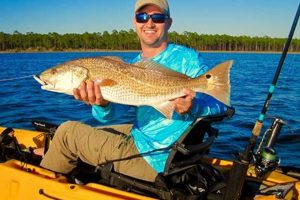
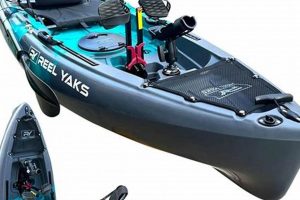
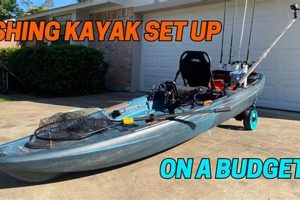
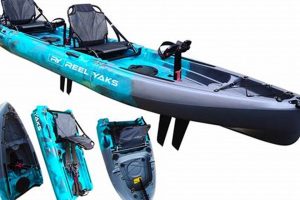
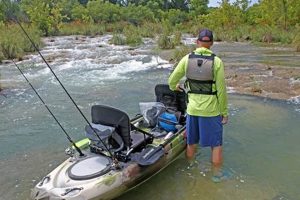
Regulations governing competitive angling from kayaks vary depending on the specific competition. These regulations often address permitted fishing areas, species targeted, legal tackle and bait, size and bag limits, sportsmanship, and safety procedures. For example, a tournament might specify a designated fishing zone within a larger body of water, mandate the use of artificial lures only, and establish a minimum size limit for eligible catches. Competitors typically submit photographic or video evidence of their catches, often with a designated identifier, for verification and scoring.
Structured competition promotes fair play, conservation, and angler skill development. Adherence to established guidelines ensures resource sustainability by enforcing limits on catch size and quantity. It also levels the playing field, rewarding angling prowess rather than access to superior equipment or locations. Furthermore, such structured events can foster a sense of community among participants and raise awareness about ethical angling practices. Over time, as kayak fishing has grown in popularity, tournament formats have evolved, reflecting an increased emphasis on conservation and ethical fishing.
A deeper understanding of common regulations is crucial for successful tournament participation. The following sections will explore key areas often covered in competition guidelines, including permitted fishing locations, species identification, acceptable gear and techniques, catch measurement and documentation processes, and safety protocols.
Tips for Tournament Success
Preparation and strategy are essential for competitive kayak angling. The following tips offer guidance for navigating tournament regulations and maximizing performance.
Tip 1: Review all regulations thoroughly. Carefully examine the official tournament rules, paying close attention to any specific requirements regarding permitted fishing areas, species, tackle, bait, and safety gear. Discrepancies between personal assumptions and official regulations can lead to disqualification.
Tip 2: Pre-fish the designated area. If permitted, scouting the competition zone in advance provides valuable insights into fish behavior, productive locations, and potential challenges. This allows for more efficient time management during the actual competition.
Tip 3: Master efficient measuring and documentation procedures. Familiarize oneself with the required methods for measuring and documenting catches. Practice these procedures to ensure accurate and timely submission during the tournament, minimizing the risk of penalties.
Tip 4: Prioritize safety. Adhering to all safety regulations, including wearing a personal flotation device and carrying appropriate communication equipment, is paramount. Adverse weather conditions or unforeseen circumstances can arise, requiring preparedness.
Tip 5: Organize tackle and equipment strategically. Efficiently organizing tackle and gear within the kayak minimizes time spent searching for items, allowing for maximum fishing time. A well-planned setup promotes focus and reduces stress during the competition.
Tip 6: Understand scoring criteria. Thoroughly review the scoring system to strategize effectively. Whether based on length, weight, or number of fish, understanding how points are awarded allows for informed decision-making during the tournament.
Tip 7: Respect fellow competitors and the environment. Maintaining sportsmanlike conduct and respecting the natural environment are essential aspects of competitive angling. Adhering to ethical guidelines promotes a positive atmosphere and ensures the sustainability of the fishery.
By adhering to these guidelines, participants enhance their competitive edge while contributing to a positive and sustainable tournament environment. Careful preparation and a thorough understanding of regulations are key to success in kayak fishing tournaments.
Following these recommendations facilitates successful tournament participation and contributes to the overall enjoyment and integrity of the competition.
1. Boundaries

Designated boundaries are fundamental to kayak fishing tournament rules, ensuring fair competition and resource management. These boundaries define the permitted fishing area, preventing anglers from accessing areas unavailable to others. Restricting the fishing zone to a specific section of a lake, river, or coastline creates a level playing field where skill and strategy, rather than access to broader areas, determine success. For instance, a tournament might confine participants to a designated section of a reservoir, excluding areas known for higher fish concentrations accessible only by longer paddles. This prevents some competitors from gaining an unfair advantage due to proximity or access to motorized assistance.
Clearly defined boundaries also contribute to effective resource management. By concentrating fishing pressure within a specific area, tournament organizers can minimize the impact on sensitive habitats or vulnerable fish populations. This localized pressure allows for better monitoring and management of fishing activity, promoting sustainable practices. Furthermore, boundaries may be adjusted from tournament to tournament to rotate fishing pressure across different areas, promoting overall ecosystem health. For example, a tournament might prohibit access to spawning grounds during breeding seasons, ensuring the long-term health of the fish population.
Understanding and respecting established boundaries are critical for tournament participants. GPS coordinates, physical markers, or detailed maps often delineate these boundaries. Anglers must familiarize themselves with these designations to avoid penalties or disqualification. Modern technology, including GPS-enabled fish finders and tournament-specific apps, assists anglers in staying within designated zones. Ultimately, adherence to boundary rules ensures fair play, promotes conservation, and contributes to the overall integrity of the tournament. Ignoring these rules undermines the competitive balance and potentially jeopardizes the future of the fishery.
2. Permitted Species

Regulations regarding permitted species are integral to kayak fishing tournament rules. These regulations define which species are eligible for capture and submission during the competition. Specifying target species ensures a focused and fair competition, preventing participants from gaining an advantage by targeting more readily available or larger species not intended for the tournament. For instance, a tournament focused on bass conservation might exclude other species like catfish or panfish, even if they inhabit the same waters. This ensures the competition remains centered on the target species and its associated angling techniques.
Restricting eligible species contributes significantly to conservation efforts. By focusing on specific species, tournaments can tailor regulations to protect vulnerable populations or promote the growth of particular species. For example, a tournament might prohibit the capture of redfish during their spawning season to minimize disruption to their reproductive cycle. Alternatively, a tournament might encourage the capture of invasive species to help control their population and mitigate their impact on the native ecosystem. This targeted approach to species management reinforces the role of fishing tournaments in broader conservation strategies.
Accurate species identification is crucial for anglers participating in tournaments with designated species regulations. Misidentification can lead to penalties, disqualification, and unintentional harm to protected species. Consulting reliable resources, such as fish identification guides or local experts, ensures accurate identification. Furthermore, some tournaments require photographic evidence of catches, often including specific anatomical features for verification. Thorough knowledge of permitted species characteristics and adherence to documentation procedures are essential for successful and ethical participation in kayak fishing tournaments.
3. Tackle Restrictions

Tackle restrictions are a common component of kayak fishing tournament rules, designed to level the playing field and promote fair competition. These restrictions standardize permitted fishing gear, preventing advantages based solely on equipment superiority and emphasizing angling skill and strategy. Limitations might encompass rod and reel types, line strength, lure size and type, or even prohibit certain technologically advanced aids. For example, a tournament might restrict participants to using artificial lures only, excluding live bait, thus challenging anglers to demonstrate their lure presentation and retrieval skills rather than relying on the natural attractiveness of live bait. Similarly, restrictions on rod length or reel type can equalize opportunities for anglers with varying budgets and equipment preferences.
Such restrictions serve several key purposes beyond promoting fairness. Limiting tackle options can encourage creativity and adaptability among anglers, forcing them to refine their techniques within the given constraints. This can lead to a more nuanced understanding of fish behavior and habitat interaction. Further, specific tackle restrictions contribute to conservation efforts. For example, limiting hook size can minimize injury to undersized fish that are released, while prohibiting certain types of nets can prevent unintended bycatch of non-target species. In a catch-and-release tournament, barbless hooks might be mandated to reduce stress and injury to released fish, enhancing their survival rates.
Understanding and adhering to tackle restrictions are crucial for competitive anglers. Careful review of tournament regulations prior to competition is essential to ensure compliance. Pre-tournament preparation should include assembling and testing permitted tackle combinations to ensure familiarity and effectiveness. Ignoring tackle restrictions can lead to penalties, disqualification, and undermine the spirit of fair competition. By promoting equitable participation and supporting conservation goals, tackle restrictions contribute to the overall integrity and sustainability of kayak fishing tournaments.
4. Size Limits

Size limits are a cornerstone of kayak fishing tournament regulations, playing a critical role in conservation and promoting fair competition. These regulations stipulate the minimum and sometimes maximum lengths or weights of fish eligible for capture and submission during a tournament. Adherence to these limits is crucial for maintaining healthy fish populations and ensuring equitable competition among anglers.
- Conservation of Fish Stocks
Size limits directly contribute to the conservation of fish stocks. By protecting smaller, younger fish, these regulations allow them to reach maturity and reproduce, contributing to the long-term health and sustainability of the population. Protecting larger, breeding-sized fish can also be important for maintaining genetic diversity and reproductive success. For example, imposing a minimum size limit on bass allows them to spawn at least once before becoming eligible for harvest in a tournament.
- Fair Competition
Size limits promote fair competition by preventing anglers from targeting smaller, more easily caught fish. This encourages anglers to focus on locating and catching larger, more challenging fish, rewarding skill and strategy. For instance, in a tournament targeting walleye, a minimum size limit ensures that anglers compete for mature fish rather than smaller, more abundant juveniles.
- Enforcement and Penalties
Tournament organizers employ various methods to enforce size limits, including on-the-water checks, weigh-in inspections, and photographic or video verification. Penalties for violating size limits can range from point deductions to disqualification, underscoring the importance of accurate measurement and adherence to regulations. A tournament might utilize a penalty system where catching undersized fish results in the deduction of points from an angler’s total score, potentially affecting their overall ranking.
- Variation in Regulations
Size limits can vary significantly based on the target species, the specific body of water, and the goals of the tournament. Regulations may differ between tournaments held on the same body of water due to seasonal variations in fish populations or specific conservation objectives. For example, size limits for a particular species might be stricter during spawning season to further protect breeding fish. Anglers must consult the specific regulations for each tournament to ensure compliance.
By protecting fish populations, fostering fair competition, and promoting responsible angling practices, size limits are essential to the long-term health and sustainability of kayak fishing tournaments. Understanding and adhering to these regulations are crucial for both competitive success and environmental stewardship.
5. Safety Gear

Safety gear regulations are paramount in kayak fishing tournament rules, prioritizing participant well-being and mitigating risks inherent in the sport. These regulations often mandate specific equipment, reflecting a proactive approach to preventing accidents and ensuring rapid response in emergencies. A direct correlation exists between stringent safety gear requirements and reduced incident rates in competitive kayak fishing. Mandating personal flotation devices (PFDs), for example, significantly reduces the risk of drowning in the event of capsizing, a common occurrence in kayak fishing. Similarly, requiring communication devices, such as whistles or VHF radios, enables rapid communication with tournament officials or other anglers in case of distress or emergencies like sudden weather changes. Real-life examples abound, where mandatory PFDs have proven life-saving in tournament situations involving capsizes or unexpected falls overboard.
Furthermore, safety gear requirements often extend beyond basic equipment like PFDs and communication devices. Some tournaments mandate additional gear based on specific environmental conditions or anticipated challenges. For instance, tournaments held in colder waters might require participants to wear immersion suits or dry suits to mitigate the risk of hypothermia. Events held in areas with significant boat traffic may mandate the use of visibility flags or lights to enhance kayak visibility and reduce collision risks. These specialized requirements demonstrate a proactive approach to risk management, tailoring safety protocols to the specific environment and potential hazards. The practical significance of understanding these regulations is clear: compliance directly contributes to angler safety and preparedness for unforeseen circumstances.
In summary, safety gear regulations in kayak fishing tournaments are not merely procedural formalities but essential components of responsible event management. These rules, often enforced through pre-tournament checks and on-the-water monitoring, establish a baseline level of safety preparedness for all participants. Challenges remain, particularly in ensuring consistent enforcement and educating anglers on the proper use of safety equipment. However, the demonstrable link between mandatory safety gear and reduced incident rates underscores the critical importance of these regulations in fostering a safe and sustainable competitive environment. Ultimately, prioritizing safety enhances the overall tournament experience, allowing anglers to focus on competition and sportsmanship with reduced risk.
6. Check-in Procedures

Check-in procedures are integral to kayak fishing tournament rules, serving as a critical link between angler participation and fair competition. These procedures, typically conducted before the start of the tournament, ensure all competitors are officially registered, comply with regulations, and receive necessary information. A well-defined check-in process establishes a structured starting point for the competition, minimizing confusion and preventing disputes related to eligibility or compliance. These procedures function as a verification step, confirming angler identities, validating required licenses and permits, and inspecting mandatory safety equipment like personal flotation devices and communication devices. For example, tournaments often require anglers to present a valid fishing license and sign a liability waiver during check-in, ensuring compliance with legal requirements and acknowledging participation risks.
Furthermore, check-in procedures facilitate the dissemination of crucial information to participants. Tournament organizers utilize this opportunity to communicate any last-minute rule changes, clarify specific boundary designations, or address questions regarding scoring procedures. This direct communication minimizes the potential for misunderstandings or discrepancies in rule interpretation, contributing to a more equitable competition. Distributing tournament-specific identifiers, such as numbered stickers or wristbands, during check-in enables accurate tracking and identification of anglers throughout the competition, facilitating catch verification and scoring. In some tournaments, check-in might also involve a boat inspection to ensure compliance with tackle restrictions or species-specific regulations, further reinforcing the fairness and integrity of the competition.
In conclusion, effective check-in procedures are essential for the smooth and equitable operation of kayak fishing tournaments. These procedures establish a framework for accountability and transparency, contributing to the overall credibility and fairness of the competition. Challenges can include managing large numbers of participants efficiently and adapting check-in processes to varying tournament formats and locations. However, the role of check-in procedures in ensuring regulatory compliance, facilitating communication, and establishing a structured competitive environment remains crucial for the successful execution of kayak fishing tournaments. Well-executed check-in procedures contribute significantly to the professionalism and credibility of the event, promoting both angler satisfaction and the long-term sustainability of the sport.
7. Sportsmanship

Sportsmanship in kayak fishing tournaments transcends mere adherence to established rules; it embodies a broader commitment to ethical conduct, respect for fellow competitors, and environmental stewardship. While regulations provide a framework for fair competition, sportsmanship cultivates an environment of integrity and mutual respect, essential for the long-term health and enjoyment of the sport. Upholding sportsmanlike conduct strengthens the community of kayak anglers and reinforces the positive values associated with competitive fishing.
- Respect for Fellow Competitors
Respect for fellow competitors forms the bedrock of sportsmanship in kayak fishing. This includes avoiding interference with other anglers’ fishing activities, refraining from disparaging remarks or unsportsmanlike behavior, and offering assistance when needed. For example, an angler encountering another participant struggling with equipment malfunction might offer assistance, demonstrating respect and camaraderie. Conversely, crowding another angler’s fishing spot or making derogatory comments demonstrates poor sportsmanship and detracts from the positive atmosphere of the competition.
- Adherence to Rules and Regulations
While sportsmanship extends beyond rule adherence, respecting and following all tournament regulations is fundamental. This includes complying with size and bag limits, respecting designated boundaries, and utilizing permitted tackle. Intentionally violating rules not only undermines the integrity of the competition but also disrespects fellow competitors who abide by the regulations. For instance, exceeding catch limits or fishing in restricted areas demonstrates a lack of sportsmanship and gives an unfair advantage over other participants.
- Environmental Stewardship
Sportsmanship in kayak fishing encompasses a strong commitment to environmental stewardship. This involves minimizing impact on the natural environment, practicing proper catch-and-release techniques, and refraining from littering or polluting waterways. Leaving fishing areas cleaner than they were found demonstrates respect for the environment and ensures the sustainability of the fishery for future generations. Disposing of fishing line or other trash improperly, conversely, demonstrates a lack of sportsmanship and disregard for the natural environment.
- Integrity and Honesty
Integrity and honesty are essential components of sportsmanship. Accurately reporting catches, avoiding any form of cheating or manipulation of results, and accepting outcomes gracefully contribute to a fair and trustworthy competition. For example, an angler who accidentally catches an undersized fish and releases it without claiming it demonstrates integrity and respect for the rules. Conversely, attempting to submit a fish caught outside the designated boundaries or falsely reporting the size of a catch demonstrates a lack of sportsmanship and undermines the integrity of the competition.
In conclusion, sportsmanship acts as the ethical compass guiding conduct within the framework of kayak fishing tournament rules. By embracing these principles, anglers contribute to a positive and respectful competitive environment, fostering camaraderie, promoting conservation, and ensuring the long-term enjoyment and sustainability of the sport. The true measure of success in a kayak fishing tournament extends beyond the weight of the catch, encompassing the ethical conduct displayed and the respect shown for fellow competitors and the environment. Cultivating sportsmanship ensures that competitive kayak fishing remains an enjoyable and sustainable activity for all participants.
Frequently Asked Questions
This section addresses common inquiries regarding kayak fishing tournament regulations, providing clarity on frequently misunderstood aspects.
Question 1: How do size limits contribute to fish conservation?
Size limits protect juvenile and breeding-sized fish, allowing them to mature and reproduce, contributing to the long-term health of fish populations.
Question 2: What are the typical penalties for violating tackle restrictions?
Penalties can range from point deductions to disqualification, depending on the severity and nature of the violation.
Question 3: Why are boundary restrictions important in kayak fishing tournaments?
Boundaries ensure fair competition by limiting fishing areas, preventing unfair advantages based on location accessibility, and aiding in resource management.
Question 4: What safety gear is typically required in kayak fishing tournaments?
Required safety gear usually includes a personal flotation device (PFD), a whistle or other audible signaling device, and sometimes a VHF radio, depending on the location and specific regulations.
Question 5: How do check-in procedures contribute to a fair tournament?
Check-in procedures verify angler registration, confirm compliance with regulations, disseminate important information, and distribute tournament identifiers, ensuring a smooth and organized start to the competition.
Question 6: What constitutes good sportsmanship in a kayak fishing tournament?
Good sportsmanship involves respecting fellow competitors, adhering to rules and regulations, practicing ethical angling, demonstrating environmental stewardship, and maintaining integrity throughout the competition.
Understanding these aspects of tournament regulations promotes fair play, conserves fish populations, and enhances the overall tournament experience.
For further inquiries or specific tournament regulations, consult the official tournament organizers or relevant governing bodies.
Kayak Fishing Tournament Rules
This exploration of kayak fishing tournament regulations has highlighted their crucial role in ensuring fair competition, promoting conservation, and prioritizing angler safety. From boundary designations and species restrictions to tackle limitations and size limits, these rules establish a framework for equitable participation and responsible resource management. Mandatory safety gear requirements, stringent check-in procedures, and the emphasis on sportsmanship further contribute to a well-organized and ethical competitive environment. Understanding these regulations is not merely a prerequisite for participation; it is a demonstration of respect for fellow competitors, the environment, and the long-term sustainability of the sport.
The future of kayak fishing tournaments hinges on the continued development and enforcement of comprehensive regulations. As the sport evolves, ongoing adaptation of rules to address emerging challenges and conservation needs will be essential. Active participation in rule-making processes, coupled with angler education and a shared commitment to ethical conduct, will ensure that competitive kayak fishing thrives as a sustainable and respected recreational activity.