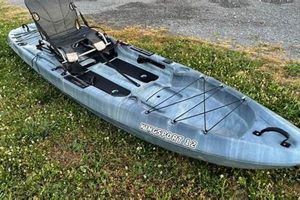
Acquiring a kayak designed for fishing can involve various payment methods, from outright purchase to installment plans and loans. For example, a consumer might use personal savings, a credit card, or a specialized loan offered through a retailer or financial institution. Choosing the optimal strategy depends on individual financial circumstances and the kayak’s cost.
Securing affordable access to a fishing kayak opens up opportunities for angling in diverse environments, from calm lakes to coastal waters. This can lead to enhanced recreational experiences, potential cost savings on commercially sourced fish, and a closer connection with nature. Historically, fishing kayaks were primarily a niche market, but increased accessibility through financing options has contributed to their growing popularity among outdoor enthusiasts.
This article will explore various acquisition methods, comparing their advantages and disadvantages to help consumers make informed decisions. Topics covered will include loan types, interest rates, repayment schedules, and budgeting tips. Furthermore, the article will delve into the factors influencing kayak pricing and offer guidance on choosing a vessel suited to individual needs and budgets.
Tips for Acquiring a Fishing Kayak
Careful planning facilitates acquiring a fishing kayak suited to individual needs and budgets. The following tips provide guidance for navigating the financial aspects of this process.
Tip 1: Establish a Budget: Determine a realistic spending limit, considering not only the kayak’s price but also related expenses such as paddles, life vests, and fishing gear. A comprehensive budget prevents overspending and ensures affordability.
Tip 2: Explore Financing Options: Research various financing methods, including personal loans, retailer financing, and credit card purchases. Comparing interest rates, loan terms, and associated fees allows for informed decision-making.
Tip 3: Assess Creditworthiness: Understanding one’s credit score is crucial before applying for financing. A higher credit score often translates to better loan terms and lower interest rates. Checking one’s credit report in advance allows for addressing any potential issues.
Tip 4: Consider Down Payments: A larger down payment reduces the loan amount and potentially lowers monthly payments. Evaluating the available funds and balancing upfront costs with long-term affordability is essential.
Tip 5: Compare Kayak Prices: Researching different kayak models and comparing prices across multiple retailers ensures a competitive purchase. Factors to consider include features, materials, and brand reputation.
Tip 6: Factor in Ongoing Costs: Account for potential maintenance, storage, and transportation costs associated with kayak ownership. Including these expenses in the overall budget provides a more accurate financial picture.
Tip 7: Negotiate the Price: Don’t hesitate to negotiate the kayak’s price, particularly when purchasing from a local retailer. Researching comparable models and their prices strengthens one’s negotiating position.
By adhering to these tips, consumers can confidently navigate the financial landscape of acquiring a fishing kayak and enjoy their time on the water responsibly.
This information provides a foundation for making sound financial decisions. The following sections will offer a more in-depth analysis of specific financing methods and kayak selection considerations.
1. Budgeting

Budgeting forms the cornerstone of responsible kayak acquisition. A well-defined budget provides a financial roadmap, guiding purchasing decisions and preventing overspending. It necessitates a comprehensive assessment of available funds, anticipated expenses, and potential financing options. Without a realistic budget, consumers risk exceeding their financial capacity, potentially leading to long-term debt burdens. For instance, a prospective buyer might initially focus solely on the kayak’s sticker price, overlooking additional costs like paddles, safety equipment, and transportation. A comprehensive budget accounts for these ancillary expenses, providing a clearer picture of the total investment. Failing to budget adequately can lead to unexpected financial strain and compromise the enjoyment of the purchase.
Creating a fishing kayak budget involves several key steps. First, one must determine the total funds available for the purchase, considering both savings and potential borrowing capacity. Next, research the costs of different kayak models, factoring in desired features and quality. Then, incorporate essential accessories and related expenses into the budget. Finally, explore financing options, comparing interest rates and repayment terms to minimize the overall cost. For example, a budget of $1,500 might allocate $1,000 for the kayak itself, $200 for paddles and safety gear, $100 for transportation and storage, and $200 for potential maintenance and upgrades over the first year. This detailed breakdown allows for informed decision-making and avoids financial surprises.
Effective budgeting empowers consumers to make informed choices aligned with their financial capabilities. It ensures that acquiring a fishing kayak enhances recreational opportunities without creating undue financial strain. Furthermore, a well-defined budget provides a framework for ongoing cost management throughout the kayak’s lifespan, encompassing maintenance, repairs, and upgrades. Ultimately, careful budgeting translates to a more enjoyable and sustainable kayaking experience.
2. Loan Options

Loan options represent a crucial component within the broader context of financing a fishing kayak. They provide potential purchasers with the financial flexibility to acquire a kayak without needing immediate access to the full purchase price. This accessibility expands the market, allowing individuals to enjoy the recreational and practical benefits of kayak ownership sooner rather than later. Several loan types commonly apply to such purchases. Personal loans from banks or credit unions offer fixed interest rates and repayment schedules, providing predictability. Retailer-specific financing plans, often available directly at the point of sale, may offer promotional rates or incentives. Secured loans, using an asset as collateral, might provide lower interest rates but carry the risk of asset forfeiture in case of default. For example, an individual unable to afford a $2,000 kayak outright could opt for a personal loan with a 24-month repayment term, making the purchase immediately accessible through manageable monthly payments.
The choice of loan option directly influences the overall cost and long-term affordability of the kayak. Comparing interest rates, loan terms, and associated fees is essential for making informed decisions. A lower interest rate over a shorter loan term typically results in lower total interest paid, while a longer loan term reduces monthly payments but increases the overall interest expense. Factors such as credit score and down payment amount influence loan eligibility and terms. For instance, a buyer with a strong credit history might secure a lower interest rate, reducing the total cost of the kayak over the loan’s lifespan. Conversely, a smaller down payment might necessitate a longer loan term and higher overall interest payments. Understanding these dynamics allows potential buyers to tailor their financing strategy to their specific financial circumstances.
Careful consideration of loan options is paramount for responsible financial planning. Choosing an appropriate loan structure aligns the purchase with individual budgetary constraints, preventing overextension and promoting long-term financial stability. Evaluating the various loan types available, comparing their terms and associated costs, and assessing personal financial capacity ensures a sound financial approach to acquiring a fishing kayak. This informed approach fosters a more sustainable and enjoyable ownership experience, allowing individuals to focus on the recreational aspects rather than financial burdens.
3. Interest Rates
Interest rates represent a critical factor when financing a fishing kayak. They directly impact the total cost of the purchase, influencing long-term affordability and financial planning. The interest rate applied to a loan determines the additional amount paid beyond the kayak’s initial price. This added expense accumulates over the loan term, significantly affecting the overall investment. For example, a $1,500 kayak financed at a 5% annual interest rate over two years will ultimately cost less than the same kayak financed at a 10% interest rate over the same period. Understanding this cause-and-effect relationship empowers consumers to make informed decisions and minimize unnecessary expenses. The interplay between interest rates, loan terms, and down payments requires careful consideration.
Practical application of this understanding involves comparing loan offers from various lenders. Different financial institutions offer varying interest rates based on market conditions, individual creditworthiness, and loan terms. Shopping around for the most favorable interest rate can save significant money over the life of the loan. For instance, a 0.5% difference in interest rates on a $2,000 loan might seem insignificant initially, but it can translate to a noticeable difference in the total amount repaid. Furthermore, negotiating interest rates with lenders, especially with a strong credit history or a substantial down payment, can further reduce borrowing costs. Utilizing online loan calculators allows potential buyers to compare scenarios with different interest rates, loan terms, and down payment amounts, providing a clear picture of the financial implications.
In summary, interest rates constitute a crucial component of kayak financing. A comprehensive understanding of their impact empowers consumers to make informed decisions, minimizing costs and promoting financial responsibility. Careful consideration of interest rates, alongside other loan terms and personal financial circumstances, facilitates a sustainable approach to acquiring a fishing kayak. This knowledge ensures that the purchase enhances recreational opportunities without creating undue financial burden.
4. Down Payments

Down payments play a significant role in financing a fishing kayak, impacting loan terms, interest rates, and overall affordability. A larger down payment reduces the principal loan amount, consequently lowering the total interest paid over the loan’s lifespan. This reduction in principal also typically translates to lower monthly payments, making the purchase more manageable within a budget. For example, a 20% down payment on a $2,000 kayak reduces the loan amount to $1,600, resulting in lower interest charges and potentially shortening the loan term compared to a 10% down payment. Conversely, a smaller down payment might increase interest charges and necessitate longer repayment periods, potentially increasing the overall cost of the kayak. This dynamic highlights the importance of down payments in shaping the financial landscape of kayak acquisition.
The practical implications of varying down payment amounts extend beyond immediate cost savings. A larger down payment can improve loan eligibility and potentially secure more favorable interest rates from lenders. It demonstrates financial responsibility and reduces the lender’s risk, leading to better borrowing terms. This can be particularly advantageous for individuals with less-than-perfect credit histories. Furthermore, a substantial down payment mitigates the risk of negative equity, ensuring that the loan amount remains lower than the kayak’s resale value. This consideration proves crucial if unforeseen circumstances necessitate selling the kayak before the loan is fully repaid. For instance, a buyer making a 50% down payment on a $1,000 kayak starts with a loan amount of $500, reducing the likelihood of owing more than the kayak’s potential resale value. This proactive approach safeguards against financial losses in the event of resale.
In summary, down payments represent a critical element in financing a fishing kayak. Their influence on loan terms, interest rates, and overall affordability requires careful consideration during the purchasing process. Evaluating available funds, assessing long-term budgetary constraints, and understanding the relationship between down payments and loan structures empowers consumers to make informed decisions. A strategic approach to down payments ensures a financially sound purchase and enhances the long-term enjoyment of kayak ownership.
5. Repayment Terms
Repayment terms constitute a critical aspect of financing a fishing kayak, directly influencing long-term affordability and financial planning. These terms define the timeframe and structure for repaying the loan, encompassing the loan duration, frequency of payments, and any associated penalties for late or missed payments. The length of the loan term significantly impacts the overall cost; shorter terms result in higher monthly payments but lower total interest paid, while longer terms offer lower monthly payments but accrue higher total interest over time. For example, a $1,500 kayak financed over 12 months at a 6% annual interest rate will result in lower total interest paid compared to the same kayak financed over 36 months at the same rate, even though the monthly payments will be higher in the former scenario. Understanding this dynamic is crucial for making informed decisions and aligning repayment plans with individual budgetary constraints.
Practical application of this understanding necessitates careful evaluation of available loan options. Consumers should compare loan terms offered by various lenders, considering not only interest rates but also the flexibility and potential penalties associated with each loan structure. Factors like prepayment penalties, which impose fees for early loan repayment, can influence long-term costs and should be considered. For instance, a borrower anticipating potential early repayment might prioritize a loan without prepayment penalties to avoid unnecessary charges. Furthermore, understanding the implications of different repayment schedules, such as bi-weekly or monthly payments, allows borrowers to optimize their repayment strategy based on cash flow and budgeting preferences. Utilizing online loan calculators facilitates comparison of various repayment scenarios, providing a clear picture of the long-term financial implications.
In summary, repayment terms represent a crucial component of financing a fishing kayak. Careful consideration of these terms, in conjunction with interest rates and other loan features, empowers consumers to make informed decisions aligned with their financial goals. A thorough understanding of loan duration, payment frequency, and potential penalties facilitates responsible financial planning and ensures the long-term enjoyment of kayak ownership without undue financial strain. This knowledge equips consumers to navigate the financial landscape effectively and prioritize a sustainable approach to kayak acquisition.
Frequently Asked Questions
This section addresses common inquiries regarding financing a fishing kayak, providing clarity and guidance for prospective buyers.
Question 1: What are the typical interest rates for financing a fishing kayak?
Interest rates vary based on factors such as credit score, loan term, and the lender’s policies. Rates can range from low single digits to higher percentages, influencing the total loan cost. Comparing offers from multiple lenders is recommended.
Question 2: How do down payments affect financing?
Larger down payments reduce the loan amount and potentially lower interest rates and monthly payments. Smaller down payments may lead to higher interest charges and extended loan terms, increasing the overall cost.
Question 3: What are the common loan terms for kayak financing?
Loan terms typically range from 12 to 60 months, affecting the monthly payment amount and total interest paid. Shorter terms result in higher payments but lower overall interest, while longer terms offer smaller payments but higher total interest.
Question 4: What financing options are available besides personal loans?
Options include retailer financing programs, credit cards, and secured loans using an asset as collateral. Each option presents different interest rates, terms, and eligibility requirements.
Question 5: How does credit score impact loan approval and interest rates?
A higher credit score generally increases the likelihood of loan approval and often qualifies borrowers for lower interest rates. Lower credit scores may lead to higher interest rates or loan denial.
Question 6: What are the potential penalties for missed or late loan payments?
Penalties vary by lender and may include late fees, increased interest rates, and negative impacts on credit score. Reviewing the loan agreement’s terms and conditions is essential to understand potential penalties.
Understanding these aspects of financing empowers informed decision-making and ensures responsible kayak acquisition.
The next section will delve into selecting the right fishing kayak based on individual needs and budget considerations.
Financing a Fishing Kayak
Acquiring a fishing kayak through financing requires careful consideration of various factors. Budgeting, loan options, interest rates, down payments, and repayment terms all play crucial roles in determining the overall cost and long-term affordability. Understanding these interconnected elements empowers consumers to make informed decisions aligned with individual financial circumstances. Exploring diverse financing avenues, comparing loan offers, and strategically managing down payments and repayment schedules contribute to a fiscally responsible approach. This informed approach ensures that acquiring a fishing kayak remains an enjoyable and sustainable investment.
Ultimately, responsible financial planning transforms acquiring a fishing kayak from a potentially burdensome expense into a rewarding investment in recreation and well-being. Careful consideration of financing options ensures accessibility without compromising long-term financial stability. This empowers individuals to pursue their passion for fishing and embrace the enriching experiences offered by kayak ownership. The informed consumer navigates the financial landscape effectively, securing a valuable asset and embarking on rewarding aquatic adventures.