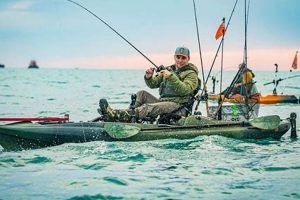
Evaluations of personal flotation devices (PFDs) specifically designed for kayak angling consider factors crucial to both safety and performance in this specialized activity. These assessments typically examine features like buoyancy, comfort, fit, adjustability, storage capacity, and integration with fishing accessories. An example would be an in-depth analysis of a high-back PFD with multiple attachment points for fishing tools, comparing its performance against other models in similar price ranges.
Choosing appropriate safety equipment is paramount in kayak fishing due to the inherent risks associated with open water and often remote locations. Objective evaluations of specialized PFDs provide anglers with crucial information needed to make informed purchasing decisions. This contributes significantly to angler safety by ensuring access to reliable and well-suited flotation aids. Historically, PFDs have evolved from basic buoyant vests to highly specialized equipment catering to specific water activities, reflecting an increased awareness of safety and performance needs.
The subsequent sections will explore key aspects of PFD selection for kayak fishing, including a detailed analysis of essential features, recommended models, and maintenance best practices.
Tips for Choosing a Kayak Fishing PFD
Selecting a suitable personal flotation device (PFD) is crucial for safety and comfort while kayak fishing. These tips offer guidance for making an informed decision.
Tip 1: Prioritize Comfort and Fit: A PFD must fit snugly without restricting movement. Consider adjustable straps and varying sizes to ensure a proper fit. Trying on different models before purchase is highly recommended.
Tip 2: Evaluate Buoyancy: Ensure the PFD provides adequate flotation for individual weight and potential gear load. Check buoyancy ratings provided by manufacturers.
Tip 3: Consider High-Back Designs: High-back PFDs offer increased comfort and compatibility with high-seat kayak designs, preventing interference with seat backs.
Tip 4: Assess Storage Capacity: Ample pockets and attachment points are essential for carrying fishing tools, lures, and other small accessories. Consider specialized pockets designed for specific tools.
Tip 5: Look for Fishing-Specific Features: Features like integrated rod holders, retractor attachment points, and pliers sheaths enhance convenience and efficiency while fishing.
Tip 6: Check for Durability and Construction: Opt for PFDs made from durable materials with reinforced stitching to withstand the rigors of kayak fishing environments.
Tip 7: Ensure Proper Maintenance: Regularly inspect the PFD for wear and tear, and follow manufacturer guidelines for cleaning and storage.
By considering these factors, anglers can select a PFD that enhances both safety and enjoyment on the water.
These considerations highlight the importance of careful PFD selection for optimal performance and safety in kayak fishing. The following section will provide a concluding overview and recommendations.
1. Buoyancy and Fit

Buoyancy and fit are paramount considerations within kayak fishing PFD reviews. A PFD’s ability to keep an angler afloat while ensuring unrestricted movement directly impacts safety and performance on the water. A comprehensive review must thoroughly examine these interconnected aspects.
- Buoyancy Rating and Weight Capacity:
PFDs are categorized by buoyancy rating, indicating the amount of flotation they provide. This rating must correspond with the angler’s weight and any additional gear carried. Reviews should clearly state the PFD’s buoyancy rating and weight capacity, allowing anglers to select appropriate flotation for their needs. A PFD with insufficient buoyancy could prove inadequate in an emergency, while excessive buoyancy may hinder paddling and casting.
- Fit and Adjustability:
A properly fitted PFD allows for a full range of motion while remaining secure. Reviews should assess the adjustability of straps and buckles, noting how well the PFD conforms to different body types. A PFD that fits poorly can restrict movement, impacting paddling efficiency and comfort, or may even fail to provide adequate flotation if it shifts out of position during a capsize.
- Body Type Considerations:
PFD design often varies to accommodate different body shapes and sizes. Reviews should address specific fit considerations for women, children, or individuals with larger or smaller frames. For example, women’s PFDs typically feature shorter torso lengths and contoured chest panels for a more comfortable and secure fit. Reviews should highlight these design variations and their suitability for specific body types.
- Impact on Mobility and Paddling:
A PFD should not impede paddling strokes or casting movements. Reviews should evaluate how the PFD’s design and fit affect an angler’s mobility on the water. High-back PFDs, for instance, are often preferred by kayak anglers as they minimize interference with high-seat backs. Reviews should discuss these design features and their impact on paddling ergonomics.
The interplay between buoyancy and fit ultimately determines a PFD’s effectiveness in a kayak fishing context. A thorough review analyzing these elements provides valuable insights, enabling anglers to choose a PFD that prioritizes both safety and performance. This information empowers anglers to make informed decisions, enhancing their overall fishing experience.
2. Comfort and Mobility

Comfort and mobility are critical factors in kayak fishing PFD reviews. A PFD that restricts movement or causes discomfort can significantly detract from the fishing experience and potentially compromise safety. Extended periods on the water necessitate a PFD that allows for unrestricted paddling, casting, and other fishing-related movements.
- Ventilation and Breathability:
Kayak fishing often involves strenuous activity in warm weather. A PFD’s ventilation and breathability directly impact comfort and prevent overheating. Reviews should assess the materials used and the presence of ventilation panels or mesh backing. A well-ventilated PFD promotes airflow, reducing heat buildup and enhancing comfort during long fishing trips.
- Range of Motion:
Casting, paddling, and retrieving fish require a full range of motion. PFD design should accommodate these movements without restriction. Reviews should evaluate how the PFD’s cut, design, and adjustability impact arm and shoulder mobility. A PFD that hinders movement can negatively impact casting accuracy and paddling efficiency.
- Padding and Pressure Points:
Padding distribution and potential pressure points are crucial comfort considerations. Reviews should assess the placement and type of padding, noting any areas where the PFD might cause discomfort during extended wear. Strategic padding placement minimizes pressure on sensitive areas, while inadequate padding can lead to chafing or discomfort, particularly during long hours on the water.
- Weight and Bulk:
A bulky or heavy PFD can become cumbersome and restrict movement. Reviews should consider the PFD’s overall weight and how it feels on the body. Lightweight designs with minimal bulk are preferable, particularly for longer fishing trips. A lightweight and streamlined PFD enhances mobility and reduces fatigue.
The interplay between comfort and mobility significantly influences a PFD’s suitability for kayak fishing. A comprehensive review considering these elements provides valuable insights for anglers seeking a PFD that supports both performance and long-term comfort on the water. This information empowers anglers to choose a PFD that enhances their overall fishing experience by minimizing discomfort and maximizing freedom of movement.
3. Storage and Pockets

Storage capacity plays a crucial role in kayak fishing PFD reviews. Dedicated storage options directly impact an angler’s organizational efficiency and access to essential tools while on the water. Reviews should carefully evaluate the type, size, and placement of pockets and attachment points, considering their practical utility in a fishing context. A PFD lacking sufficient storage can lead to cluttered kayaks and difficulty locating essential gear, compromising both efficiency and safety. Conversely, a well-designed PFD keeps essential tools readily accessible, allowing anglers to focus on fishing. For example, a PFD with dedicated pliers pockets, knife sheaths, and attachment points for retractable lanyards keeps these frequently used items within easy reach, minimizing time spent searching through tackle boxes.
Pocket design significantly influences functionality. Waterproof pockets protect sensitive items like phones and licenses, while strategically placed pockets provide quick access to frequently used tools. The size and configuration of pockets should accommodate a variety of fishing accessories, from small lures and hooks to larger tools like line cutters and fish grips. For instance, a PFD with multiple small, specialized pockets might be preferable for fly fishing, where organization of various small flies is crucial. Alternatively, larger pockets may be more suitable for lure fishing, allowing for storage of bulkier tackle. An effective review considers these nuanced requirements, analyzing how well a PFDs storage system caters to specific fishing styles.
The availability and design of storage options significantly influence a PFD’s overall utility for kayak fishing. A thorough review provides valuable insights into how a PFD’s storage system contributes to on-the-water efficiency and organization. This understanding empowers anglers to select a PFD that aligns with their specific needs and fishing style, ultimately enhancing their overall fishing experience. Insufficient or poorly designed storage can negatively impact an angler’s focus and efficiency, while well-designed storage solutions contribute to a streamlined and productive fishing experience. This consideration is therefore essential within any comprehensive kayak fishing PFD review.
4. Durability and Materials

Durability is a critical factor in kayak fishing PFD reviews, as these garments are subjected to harsh conditions, including prolonged sun exposure, saltwater spray, and abrasion from fishing gear and the kayak itself. A durable PFD ensures long-term performance and safety, representing a worthwhile investment for anglers. Material selection directly impacts a PFD’s resistance to these environmental factors and its overall lifespan.
- Fabric Type and Construction:
PFDs utilize various fabrics, each with different durability characteristics. Ripstop nylon and polyester are common choices due to their tear resistance and abrasion resistance. Construction methods, such as reinforced stitching and robust seams, further enhance durability. A PFD constructed from high-tenacity nylon with reinforced stitching, for instance, will likely withstand abrasion from fishing hooks and tackle better than one made from a less durable material or with weaker construction.
- UV Resistance:
Prolonged sun exposure can degrade PFD materials, weakening the fabric and compromising its structural integrity. UV-resistant coatings and materials protect against sun damage, prolonging the PFD’s lifespan. A PFD with a high UV resistance rating maintains its strength and color better than one without such protection, particularly in regions with intense sunlight.
- Water Repellency and Drying Time:
Water repellency prevents the PFD from absorbing excessive water, which can add weight and discomfort. Quick-drying materials enhance comfort and prevent mildew growth. A PFD treated with a durable water repellent (DWR) finish sheds water effectively, maintaining its buoyancy and reducing drying time after accidental submersion or exposure to rain.
- Hardware and Components:
Buckles, zippers, and other hardware components contribute significantly to a PFD’s overall durability. Corrosion-resistant materials, such as stainless steel or heavy-duty plastic, are essential for saltwater environments. High-quality zippers and buckles resist breakage and ensure reliable functionality over time. A PFD with rust-resistant hardware performs reliably in saltwater conditions, while inferior hardware may corrode, compromising the PFD’s adjustability and security.
Careful consideration of materials and construction within kayak fishing PFD reviews provides crucial insights into a PFD’s long-term performance and value. A durable PFD offers reliable performance and safety over extended use, justifying the investment for frequent anglers. Understanding these factors empowers anglers to choose a PFD built to withstand the rigors of kayak fishing environments, contributing to both safety and long-term satisfaction.
5. Fishing-Specific Features

Fishing-specific features are essential considerations within kayak fishing PFD reviews. These specialized design elements significantly enhance angler efficiency, safety, and overall comfort on the water. Reviews that neglect these features fail to provide a complete assessment of a PFD’s suitability for kayak fishing. The presence and design of these features directly influence an angler’s ability to manage fishing gear, maintain stability, and respond effectively to various on-the-water scenarios. For example, integrated rod holders secure fishing rods while paddling or landing fish, preventing loss and freeing hands for other tasks. Attachment points for pliers, nippers, and other tools provide quick access to essential equipment, minimizing time spent searching through tackle boxes. High-visibility accents and reflective strips improve visibility in low-light conditions, enhancing safety. These specialized features distinguish fishing-specific PFDs from general-purpose flotation devices.
Practical examples illustrate the importance of these features. A retractor attachment point secures essential tools, preventing loss in the event of a drop. A knife sheath allows quick access to a cutting tool for line management or emergency situations. Specialized pockets designed to hold fishing tackle boxes provide organized storage and efficient access to lures and other gear. These seemingly small details contribute significantly to a streamlined and productive fishing experience. The absence of these features can lead to frustration, lost time, and potential safety hazards. Imagine needing to cut a fishing line entangled in a propeller but having to search through a tackle box for a knifethe value of a readily accessible knife becomes immediately apparent.
Careful evaluation of fishing-specific features within kayak fishing PFD reviews equips anglers with the knowledge necessary to make informed purchasing decisions. Understanding the practical implications of these design elements allows anglers to select PFDs optimized for their specific needs and fishing styles. This ultimately contributes to a safer, more efficient, and more enjoyable kayak fishing experience. Neglecting these features within reviews undermines the review’s value, potentially leading anglers to choose inadequate or less suitable equipment.
6. Price and Value
Price and value represent crucial considerations within kayak fishing PFD reviews. While price reflects the monetary cost of a PFD, value encompasses the overall benefit derived from its features, performance, and durability. A comprehensive review must analyze the interplay between these two factors, helping anglers determine whether a PFD justifies its cost. A higher price doesn’t inherently guarantee superior value, and a lower price doesn’t necessarily indicate a poor investment. Careful evaluation of features, materials, and construction quality relative to the price determines a PFD’s true value proposition. For example, a PFD priced significantly higher than others may offer specialized features like integrated electronics or advanced buoyancy systems, justifying the increased cost for specific anglers. Conversely, a budget-friendly PFD lacking essential safety features or constructed from inferior materials may represent poor value despite its lower price.
Practical application of this understanding improves purchasing decisions. Anglers operating on tight budgets can identify PFDs offering essential safety and performance features without unnecessary extras. Reviews that analyze price and value provide a framework for evaluating cost-effectiveness, helping anglers select equipment aligned with their budgetary constraints and performance expectations. An angler prioritizing basic flotation and comfort may find excellent value in a mid-range PFD without specialized fishing features. Another angler requiring integrated storage and high-visibility elements for nighttime fishing may find a higher-priced, feature-rich PFD a more worthwhile investment. Understanding individual needs and priorities in relation to price and value optimizes equipment selection and maximizes satisfaction.
Effective kayak fishing PFD reviews provide critical insights into the complex relationship between price and value. This understanding empowers anglers to make informed purchasing decisions based on individual needs, budget, and desired features. Neglecting this analysis can lead to either overspending on unnecessary features or compromising safety and performance with inadequate equipment. The goal remains to identify PFDs offering the best combination of features, durability, and performance at a price point aligned with the angler’s budget and expectations. This careful consideration ensures optimal safety and enjoyment on the water.
Frequently Asked Questions
This section addresses common inquiries regarding personal flotation devices (PFDs) specifically designed for kayak fishing. Understanding these key aspects contributes significantly to informed purchasing decisions and enhanced safety on the water.
Question 1: What differentiates a kayak fishing PFD from a standard PFD?
Kayak fishing PFDs typically incorporate specialized features like high-back designs for compatibility with kayak seats, multiple attachment points for fishing gear, and strategically placed pockets designed to hold fishing tools and accessories. Standard PFDs may lack these specialized features, potentially hindering comfort and efficiency while kayak fishing.
Question 2: How important is a high-back design in a kayak fishing PFD?
High-back designs are crucial for comfort, especially with high-seat kayaks. They prevent the PFD from riding up and interfering with the seat back, ensuring comfort during long hours on the water.
Question 3: What type of material is best for a kayak fishing PFD?
Durable, quick-drying materials like ripstop nylon and polyester are preferred. These materials resist tears, abrasions, and UV damage while providing comfort and breathability.
Question 4: How many pockets are sufficient on a kayak fishing PFD?
The ideal number of pockets depends on individual angler needs and preferences. Multiple smaller pockets offer specialized storage for specific tools, while larger pockets accommodate bulkier items. Consider fishing style and essential gear when evaluating pocket configurations.
Question 5: Can an inflatable PFD be used for kayak fishing?
While some inflatable PFDs are approved for kayaking, they are generally less suitable for kayak fishing. Manual inflation types require conscious activation in an emergency, while automatic inflation may be triggered prematurely by splashes or rain. Inherently less buoyant than inherently buoyant PFDs, they provide less flotation. Inherently buoyant PFDs are generally recommended for kayak fishing due to their immediate buoyancy and consistent performance.
Question 6: How should a kayak fishing PFD be maintained?
Regular rinsing with fresh water after each use removes salt and dirt. Allow the PFD to air dry completely in a shaded area, away from direct sunlight. Inspect buckles, straps, and zippers for wear and tear, replacing any damaged components promptly. Proper maintenance prolongs the PFD’s lifespan and ensures reliable performance.
Prioritizing safety and informed decision-making enhances the overall kayak fishing experience. Selecting a suitable PFD contributes significantly to both comfort and security on the water.
The following section offers concluding remarks and recommendations based on the information presented throughout this article.
Kayak Fishing PFD Review
Thorough evaluations of personal flotation devices (PFDs) designed for kayak fishing are essential for angler safety and informed purchasing decisions. This exploration has highlighted key aspects of these reviews, including assessments of buoyancy, fit, comfort, mobility, storage capacity, durability, fishing-specific features, and price versus value. Each element contributes significantly to a PFD’s overall performance and suitability for the demanding environment of kayak fishing. Choosing the right PFD involves carefully balancing individual needs, fishing style, and budgetary constraints with available features and performance characteristics.
Prioritizing safety through informed equipment selection fosters a more enjoyable and productive kayak fishing experience. Careful consideration of PFD features and performance, guided by comprehensive reviews, empowers anglers to make responsible choices, promoting both personal safety and long-term enjoyment on the water. Ultimately, investing time in researching and understanding PFD options significantly contributes to a safer and more rewarding angling experience.