A specialized arrangement of fishing tackle designed for angling from a kayak involves selecting appropriate lines, rods, reels, and terminal tackle to match the target species and fishing environment. For example, a lightweight setup with braided line and a fast-action rod might be chosen for targeting bass in shallow, weedy waters, while a heavier setup with monofilament or fluorocarbon line and a slower-action rod might be preferred for offshore saltwater fishing.
Optimizing tackle for kayak angling improves casting accuracy and efficiency in the confined space of a kayak, reduces line tangling issues often exacerbated by wind and current, and enhances the overall fishing experience. This specialization reflects the evolution of fishing techniques, adapting to the unique challenges and advantages presented by kayak-based angling. Historically, anglers adapted existing gear; however, the growing popularity of kayak fishing has driven innovation in specialized equipment designed specifically for this pursuit.
Understanding the nuances of rod selection, reel choices, appropriate line types, and effective terminal tackle configurations are critical aspects of achieving success in kayak fishing. These considerations will be explored in detail, providing a comprehensive guide to effective angling from a kayak.
Tips for Effective Kayak Fishing Tackle Configuration
Proper tackle configuration is essential for a successful and enjoyable kayak fishing experience. The following tips offer guidance on optimizing equipment for various fishing scenarios.
Tip 1: Match Line to Target Species: Lighter lines (4-10 lb test) are suitable for smaller freshwater species like panfish and trout, while heavier lines (20-50 lb test) are necessary for larger game fish or saltwater species. Braided lines offer high sensitivity and strength but can be visible in clear water; fluorocarbon lines offer low visibility and abrasion resistance; monofilament lines provide a good balance of affordability and performance.
Tip 2: Choose the Right Rod and Reel Combo: Shorter rods (6-7 feet) are ideal for kayak fishing due to space constraints and maneuverability. Baitcasting reels offer greater control and accuracy for heavier lures and lines, while spinning reels are easier to use and better suited for lighter setups.
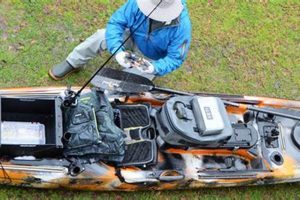
Tip 3: Organize Tackle Effectively: Utilize tackle boxes or bags specifically designed for kayak fishing to maximize space and keep gear readily accessible. Label compartments clearly and store frequently used items within easy reach.
Tip 4: Consider the Environment: In heavy cover or structure, heavier lines and stronger rods are recommended to prevent break-offs. For open water or finesse fishing, lighter lines and more sensitive rods are preferred.
Tip 5: Use Appropriate Knots: Learn and practice essential fishing knots such as the improved clinch knot, Palomar knot, and uni knot to ensure secure connections between line and terminal tackle.
Tip 6: Carry Essential Tools: A small toolkit containing pliers, line cutters, scissors, and a hook sharpener should be readily available for making adjustments and addressing common fishing challenges.
Tip 7: Practice Casting from a Seated Position: Develop proficiency in casting accurately and efficiently while seated in a kayak to avoid entanglement and maximize fishing opportunities.
By implementing these tips, anglers can significantly enhance their kayak fishing experience, increasing their chances of success while maintaining a safe and organized approach.
With a well-configured setup, anglers are prepared to tackle the water with confidence and focus on the enjoyment of the sport.
1. Line Type
Line type selection represents a critical component of a successful kayak fishing line setup. The chosen line directly influences casting distance, sensitivity, strength, and ultimately, the angler’s ability to land a fish. Understanding the characteristics of different line types is essential for optimizing tackle configuration and maximizing fishing success from a kayak.
- Braided Line
Braided lines consist of multiple interwoven fibers, offering exceptional strength and sensitivity. This makes them ideal for detecting subtle bites and battling strong fish. Their lack of stretch allows for immediate hooksets, a significant advantage when fishing from a kayak’s limited space. However, braided line’s high visibility can spook fish in clear water and its tendency to dig into itself when wrapped tightly on a reel requires careful spooling management. Its thin diameter also makes it more susceptible to wind knots.
- Fluorocarbon Line
Fluorocarbon lines are nearly invisible underwater due to their light refractive properties similar to water. This makes them ideal for clear-water scenarios where fish are easily spooked. Fluorocarbon also offers excellent abrasion resistance, crucial when fishing around rocks or heavy cover. Compared to braided line, it has lower sensitivity and a greater degree of stretch, which can make hooksets more challenging, particularly at longer distances.
- Monofilament Line
Monofilament lines are a versatile and affordable option, offering a good balance of strength, stretch, and visibility. They are easier to manage than braided line and more forgiving when casting. While not as sensitive as braid or as invisible as fluorocarbon, monofilament offers a reliable, cost-effective solution for various kayak fishing applications.
- Copolymer Line
Copolymer lines combine different nylon materials to enhance specific properties like strength, flexibility, or abrasion resistance. These lines offer a compromise between the characteristics of monofilament and fluorocarbon, often at a more affordable price point than pure fluorocarbon. They can be a good choice for anglers seeking enhanced performance without the cost of high-end lines.
Careful consideration of these line types, paired with an understanding of target species and fishing conditions, enables anglers to select the optimal line for their kayak fishing setup. The chosen line impacts every aspect of the fishing experience, from casting and lure presentation to hooksets and fighting fish, ultimately determining success on the water.
2. Rod Choice

Rod choice is integral to an effective kayak fishing line setup. The rod’s length, power, and action significantly influence casting accuracy, lure presentation, and fish-fighting capability within the confines of a kayak. Selecting the appropriate rod enhances an angler’s ability to manage line and target specific species effectively.
- Length
Kayak anglers often prefer shorter rods, typically between 6 and 7.5 feet, due to limited space and overhead obstructions. Shorter rods offer improved maneuverability and control in a kayak’s close quarters, facilitating more accurate casts and efficient retrieval. Longer rods, while offering increased casting distance, can be cumbersome and difficult to manage effectively from a kayak.
- Power
Rod power, ranging from ultralight to heavy, dictates the line weight and lure size a rod can handle. Ultralight rods are suitable for smaller species and lighter lures, while heavier rods are necessary for larger game fish and heavier tackle. Matching rod power to target species and fishing conditions is essential for optimal performance. An ultralight rod would be inadequate for larger saltwater species, while a heavy rod would be overkill for panfish.
- Action
Rod action describes the rod’s bending curve under pressure. Fast-action rods bend primarily in the tip, providing greater sensitivity and faster hooksets. Slower-action rods bend throughout their length, offering more casting distance and a forgiving fight against strong fish. Choosing the appropriate action depends on fishing style and target species. A fast action is ideal for techniques requiring precise lure control, while a slower action provides greater leverage for battling larger fish.
- Material
Rod materials, such as graphite or fiberglass, influence the rod’s weight, sensitivity, and durability. Graphite rods are lightweight and sensitive, ideal for detecting subtle bites. Fiberglass rods are more durable and affordable but less sensitive. Composite rods combine materials to balance performance characteristics. Material selection depends on angler preference and budget. Graphite’s sensitivity benefits finesse fishing, while fiberglass’s durability suits challenging environments.
Careful consideration of these factors ensures rod selection complements the overall kayak fishing line setup. A well-chosen rod optimizes casting, lure presentation, and fish-fighting ability, significantly contributing to angler success and enjoyment on the water. Ultimately, the ideal rod balances performance characteristics with the practical constraints of kayak fishing.
3. Reel Selection

Reel selection is a critical aspect of a kayak fishing line setup, directly influencing casting performance, line management, and the ability to effectively fight fish. The chosen reel must seamlessly integrate with the rod and line, balancing capacity, drag system performance, and gear ratio to meet the demands of kayak angling. An improperly matched reel can compromise line control, leading to tangles, lost fish, and a frustrating experience on the water.
Several factors govern reel choice in a kayak fishing context. The target species dictates the required line capacity and drag strength. Larger, stronger fish necessitate reels with higher line capacities and robust drag systems. Fishing environment and techniques also play a crucial role. Offshore kayak angling demands reels with greater saltwater corrosion resistance compared to freshwater applications. Similarly, techniques involving heavier lures or longer casts require reels with higher gear ratios for efficient retrieval. For example, targeting largemouth bass in heavy cover necessitates a baitcasting reel with a high gear ratio and a strong drag system to effectively manage heavy line and extract fish from dense vegetation. Conversely, targeting trout in a clear stream might require a spinning reel with a lower gear ratio and a lighter drag system for more delicate presentations.
Ultimately, effective reel selection hinges on a comprehensive understanding of the interplay between reel characteristics, target species, and fishing environment. A well-chosen reel enhances casting distance, improves line control, and provides the necessary power and finesse to successfully land fish from a kayak. This careful selection process contributes significantly to a positive and productive kayak fishing experience.
4. Knots

Knots form an integral part of a kayak fishing line setup, directly impacting the strength and reliability of the entire system. The connection between line and lure, line and leader, and even different lines when creating a double line rig relies entirely on the integrity of the chosen knot. A poorly tied or inappropriate knot can lead to line breakage, lost lures, and missed opportunities, significantly diminishing the effectiveness of the kayak fishing experience. Consider the scenario of battling a strong fish near a snag; a weak knot will likely fail under pressure, resulting in a lost fish and potentially damaged tackle. Conversely, a strong, properly tied knot maintains the connection, increasing the angler’s chances of successfully landing the fish.
Several knots prove particularly valuable in kayak fishing. The Palomar knot is renowned for its strength and ease of tying, making it a popular choice for attaching lures to braided line. The improved clinch knot provides excellent strength and works well with monofilament and fluorocarbon lines. The uni knot offers versatility, effectively joining different line diameters and types, such as connecting a braided mainline to a fluorocarbon leader. Loop knots, like the non-slip loop knot, provide freedom of movement for lures, enhancing their action and attracting fish. Choosing the appropriate knot for the specific line and application is paramount. For instance, using a knot not designed for braided line can significantly weaken the connection, negating the line’s inherent strength advantage. Learning to tie these knots correctly and consistently is an essential skill for any kayak angler.
Mastering essential fishing knots directly contributes to a more reliable and successful kayak fishing experience. Strong knots ensure the integrity of the line setup, minimizing the risk of breakages and lost tackle. This, in turn, allows anglers to focus on the techniques and strategies that lead to catching fish, rather than worrying about equipment failures. The ability to confidently rely on the strength of one’s knots fosters a more enjoyable and productive time on the water, underscoring the importance of this seemingly small but crucial aspect of kayak fishing.
5. Leader Material

Leader material plays a crucial role in a kayak fishing line setup, serving as the interface between the main fishing line and the lure or hook. Proper leader selection enhances the effectiveness of presentations, contributing significantly to angling success. Leader material choices must consider the target species, fishing environment, and the characteristics of the main line to optimize performance and durability.
- Abrasion Resistance
Leaders provide essential abrasion resistance, protecting the main line from damage caused by rocks, structure, or the teeth and abrasive mouths of certain fish species. Fluorocarbon and hard monofilament leaders excel in providing this protection, increasing the longevity of the main line and preventing break-offs during critical moments. For example, fishing near oyster beds or rocky structures necessitates a highly abrasion-resistant leader to prevent line failure when battling strong fish in these challenging environments. This added protection allows anglers to confidently fish in areas where line damage is a significant concern.
- Visibility
Leader material influences the visibility of the terminal tackle to fish. Fluorocarbon leaders are nearly invisible underwater due to their refractive index, making them ideal for clear water conditions where fish are easily spooked. This low visibility allows for more natural presentations, increasing the chances of enticing wary fish. Conversely, heavier monofilament leaders, while more visible, offer increased abrasion resistance in situations where stealth is less critical. Leader visibility should align with the clarity of the water and the sensitivity of the target species.
- Connection to Main Line
The knot used to connect the leader to the main line must be strong and reliable to prevent failure under pressure. The double uni knot, Albright knot, and FG knot are common choices for joining different line types, such as braided main line to a fluorocarbon or monofilament leader. Knot strength and proper tying technique are crucial for maintaining the integrity of the connection and preventing break-offs during hooksets or fights. A poorly tied or unsuitable knot can negate the benefits of a high-quality leader.
- Length and Diameter
Leader length and diameter depend on the fishing application. Longer leaders, typically 18-24 inches or more, can be beneficial in clear water or when targeting wary fish. Shorter leaders are preferred when fishing in heavy cover or when direct contact with structure is anticipated. Leader diameter, or test strength, should be appropriate for the target species and fishing conditions. A heavier leader is necessary for larger, stronger fish or when fishing around sharp objects, while a lighter leader is suitable for smaller fish and finesse presentations. For example, a longer, lighter fluorocarbon leader might be used for presenting small nymphs to trout in a clear stream, whereas a shorter, heavier monofilament leader might be used for flipping jigs into heavy cover for bass.
Careful leader selection based on these factors significantly influences the overall success of a kayak fishing line setup. A well-chosen leader enhances presentation, protects the main line, and increases the chances of landing fish. Integrating leader material considerations into the broader context of the kayak fishing line setup, alongside rod, reel, and main line choices, results in a cohesive and effective system optimized for specific fishing scenarios. Ultimately, understanding the nuances of leader selection contributes to a more rewarding and productive kayak fishing experience.
6. Tackle Organization
Effective tackle organization is paramount within the limited confines of a kayak fishing setup. A well-organized system directly impacts fishing efficiency and safety, allowing for quick access to necessary equipment while minimizing clutter and maximizing usable space. Poor tackle organization can lead to tangled lines, lost gear, and wasted fishing time, ultimately hindering the overall experience.
- Accessibility
Easy access to frequently used items like lures, hooks, and tools is crucial. Storing these items in readily accessible compartments or within arm’s reach minimizes disruptive movements and maintains a stable kayak position. Designated compartments for specific lure types or terminal tackle facilitate quick changes and adjustments, maximizing fishing time. For example, keeping a selection of topwater lures in a readily accessible box on the deck allows for seamless transitions when surface action presents itself, preventing wasted time rummaging through storage compartments.
- Space Optimization
Maximizing limited kayak space requires strategic organization. Utilizing specialized tackle boxes designed for kayak fishing, employing vertical storage solutions, and minimizing unnecessary gear contribute to an efficient and uncluttered environment. Prioritizing essential items and leaving behind redundant equipment optimizes available space and reduces weight, improving kayak maneuverability and stability. For instance, opting for a compact tackle box designed specifically for kayak use, rather than a larger, conventional tackle box, conserves valuable space and enhances overall organization.
- Safety
Proper tackle organization promotes safety by reducing the risk of entanglement and tripping hazards. Loose gear can easily snag fishing lines, create obstacles during casting, or cause instability within the kayak. Securing tackle boxes and other equipment prevents shifting during movement and minimizes the risk of entanglement, allowing for a more focused and safe fishing experience. For example, securing a tackle box to the kayak deck with bungee cords or straps prevents it from sliding around, especially in rough water, minimizing distractions and potential safety hazards.
- Efficiency
A well-organized tackle system streamlines the fishing process, allowing anglers to quickly locate and deploy the necessary equipment. This efficiency translates to more time spent fishing and less time searching for gear, ultimately increasing the likelihood of success. Efficient organization also minimizes distractions, allowing anglers to focus on the task at hand and respond quickly to changing fishing conditions. For example, organizing lures by type and size within a tackle box allows for rapid selection and deployment, minimizing disruption during critical moments when fish are actively feeding.
These facets of tackle organization directly influence the effectiveness of a kayak fishing line setup. An organized system enhances safety, improves efficiency, and maximizes the utilization of limited space, contributing significantly to a positive and productive kayak fishing experience. By prioritizing these organizational principles, anglers create an environment that promotes focus and efficiency, allowing them to fully enjoy the challenges and rewards of kayak fishing.
7. Target Species

Target species selection dictates the parameters of a kayak fishing line setup. The species’ size, fighting strength, habitat, and feeding behavior inform appropriate rod, reel, line, and leader choices. Aligning tackle to the target species maximizes angling effectiveness and ensures a balanced and enjoyable experience. Mismatched tackle can lead to break-offs, lost fish, and unnecessary stress on both angler and targeted species. A thorough understanding of the target species characteristics forms the foundation of a successful kayak fishing strategy.
- Size and Weight
Larger, heavier species like tuna or muskie require heavier tackle capable of handling their powerful runs and substantial weight. This translates to heavier rods, larger reels with higher line capacities, and stronger lines with higher breaking strengths. Conversely, smaller species such as panfish or trout can be effectively targeted with lighter, more sensitive tackle. Choosing appropriate tackle based on size ensures a balanced fight and minimizes the risk of equipment failure or injury to the fish.
- Fighting Style
Species exhibit varying fighting styles, influencing rod and reel choices. Fish known for acrobatic jumps and powerful bursts, like tarpon or bass, necessitate rods with fast action and reels with smooth, reliable drag systems. Species that tend to hug the bottom or make long, sustained runs, such as catfish or carp, benefit from slower-action rods and reels with high line capacity. Matching tackle to fighting style optimizes control during the fight and reduces the risk of lost fish.
- Habitat and Feeding Behavior
The target species habitat and feeding behavior inform line and leader choices. Fishing in heavy cover or around abrasive structures necessitates heavier lines and abrasion-resistant leaders. Targeting species in clear water may require the use of low-visibility fluorocarbon lines and leaders to avoid spooking fish. Understanding feeding patterns influences lure selection and presentation techniques, requiring adjustments in rod action and reel gear ratio for optimal performance. For example, fishing for bass in dense vegetation may necessitate braided line with a heavy fluorocarbon leader and a fast-action rod for efficient hooksets, while targeting trout in a clear stream might require a light fluorocarbon line, a long leader, and a sensitive rod for delicate presentations.
- Conservation Considerations
Target species considerations extend beyond tackle selection to encompass ethical angling practices and conservation principles. Using appropriate tackle minimizes stress on the fish during the fight and reduces the likelihood of injury or mortality during release. Adhering to size and catch limits contributes to the long-term health of fish populations. Respecting local regulations and employing catch-and-release practices when appropriate demonstrates responsible angling and ensures the sustainability of the sport for future generations.
By aligning kayak fishing line setups with the specific attributes of target species, anglers enhance their chances of success while promoting responsible fishing practices. The interplay between target species and tackle selection is a dynamic relationship requiring continuous adaptation based on species-specific characteristics and environmental conditions. This adaptive approach optimizes the kayak fishing experience, balancing the thrill of the catch with respect for the aquatic environment and the targeted species.
Frequently Asked Questions
Addressing common queries regarding optimal tackle configuration for kayak angling can significantly enhance an angler’s understanding and preparedness on the water.
Question 1: What line strength is recommended for kayak fishing?
Appropriate line strength depends on the target species and fishing environment. Lighter lines (4-10 lb test) suffice for smaller freshwater species, while heavier lines (20-50 lb test or more) are necessary for larger or saltwater species. Matching line strength to the target species and anticipated fishing conditions ensures a balanced and effective setup.
Question 2: Are shorter rods preferable for kayak fishing?
Shorter rods (6-7 feet) are generally preferred due to space limitations and enhanced maneuverability within a kayak. They offer better control and reduce the risk of tangling in the confined space. Longer rods, while offering increased casting distance, can be cumbersome to manage.
Question 3: What are the advantages of using braided line in a kayak?
Braided line offers high sensitivity and exceptional strength, allowing for better bite detection and the ability to handle larger fish. Its lack of stretch facilitates immediate hooksets, an advantage in close-quarters kayak fishing. However, its visibility can be a disadvantage in clear water.
Question 4: Why is fluorocarbon leader material often recommended?
Fluorocarbon leader material is nearly invisible underwater, reducing its visibility to fish. Its abrasion resistance provides added protection against rocks, structure, and sharp teeth, extending the life of the main line and preventing break-offs.
Question 5: How should tackle be organized in a kayak?
Tackle should be organized for efficient access and space maximization. Utilize specialized kayak fishing tackle boxes, prioritize frequently used items, and secure all gear to prevent shifting or entanglement. Labeling compartments and using clear storage containers enhances visibility and retrieval speed.
Question 6: How does target species influence line setup choices?
Target species characteristics, such as size, fighting strength, and habitat, dictate appropriate tackle choices. Larger, stronger fish necessitate heavier lines, stronger rods, and reels with robust drag systems. Fishing environments influence line type and leader material choices.
Understanding these fundamental aspects of kayak fishing line setups enables anglers to make informed decisions, optimizing their equipment for specific fishing scenarios and enhancing their overall experience on the water. Proper preparation through tailored tackle configuration translates to increased efficiency, safety, and angling success from a kayak.
Moving forward, practical applications of these principles will be explored through specific examples of targeted species and fishing environments, further refining the art of kayak angling.
Kayak Fishing Line Setup
Effective kayak fishing line setup requires a nuanced understanding of the interplay between various components. Rod length, power, and action must be carefully considered in conjunction with reel type, line characteristics, and leader material. Tackle organization and species-specific considerations further refine these choices, optimizing the entire system for efficiency, safety, and angling success. No single, universally ideal setup exists; rather, the optimal configuration emerges from a thoughtful analysis of individual fishing styles, target species, and prevailing environmental conditions.
Mastery of kayak fishing line setup empowers anglers to approach diverse fishing scenarios with confidence and precision. Adaptability remains key; continuous refinement of tackle configurations based on experience and evolving conditions ensures sustained success and enjoyment on the water. The pursuit of optimized tackle configurations reflects a commitment to maximizing the potential of each kayak fishing expedition, fostering a deeper connection with the sport and the aquatic environment.