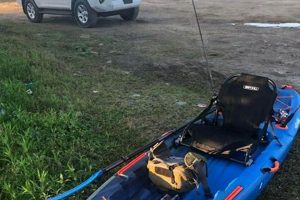
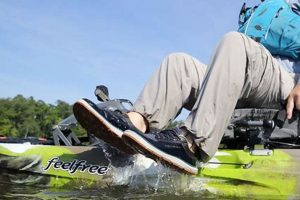
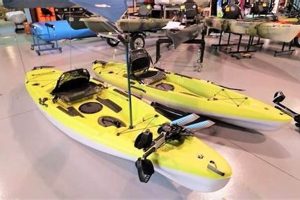
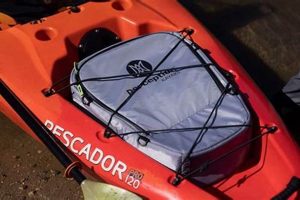
A tether securing angling equipment to a small, human-powered watercraft is an essential safety precaution. For example, a paddle, rod, or tackle box can be connected to the vessel with such a device, preventing loss in the event of capsizing or accidental dropping. This practice also mitigates environmental impact by reducing the chance of gear ending up on the seabed or polluting waterways.
These safety lines significantly improve angler security and contribute to responsible fishing practices. Retrieving dropped items can be challenging in dynamic aquatic environments; these tethers ensure valuable equipment remains within reach. This practice has become increasingly common as kayaking for fishing has gained popularity, reflecting a growing awareness of both safety and environmental stewardship.
The following sections will further explore various types of suitable connectors, recommended attachment methods, and best practices for maintaining these crucial pieces of safety equipment.
Tips for Secure Equipment Tethering
Proper use of equipment tethers is crucial for safe and responsible angling from a kayak. The following tips offer guidance for selecting, using, and maintaining these essential safety devices.
Tip 1: Choose appropriate tether lengths. Lines should be long enough to allow comfortable use of the equipment but short enough to prevent entanglement or snagging.
Tip 2: Utilize quick-release mechanisms. In emergencies, rapid detachment of equipment can be vital. Select tethers with reliable quick-release features and practice using them.
Tip 3: Inspect tethers regularly. Check for signs of wear, tear, or UV damage. Replace any compromised lines immediately.
Tip 4: Attach tethers securely to the kayak. Use designated attachment points or create secure anchor points to ensure the tether remains firmly connected.
Tip 5: Use different tether types for various equipment. A coiled tether is suitable for paddles, while a retractable tether is more appropriate for rods and reels.
Tip 6: Consider the environment. In areas with strong currents or potential snags, adjust tether lengths accordingly to minimize risks.
Tip 7: Avoid excessive tethers. While securing essential gear is crucial, too many tethers can create clutter and increase entanglement risks.
By following these guidelines, anglers can significantly enhance safety and minimize equipment loss while promoting responsible practices on the water.
These proactive measures contribute to a safer and more enjoyable kayak fishing experience, allowing anglers to focus on the sport while minimizing potential hazards.
1. Security

Security in kayak fishing hinges on preventing equipment loss and ensuring angler safety. A properly utilized tether plays a crucial role in achieving both. Securing essential gear like paddles, rods, and tackle boxes minimizes the risk of losing valuable items and reduces potential hazards on the water.
- Equipment Retention:
Retaining equipment during unexpected events, such as capsizing or sudden movements, is paramount. A secure tether keeps essential items attached to the kayak, preventing them from sinking or drifting away. This is particularly critical for items like paddles, which are vital for navigation and self-rescue. Imagine a scenario where an angler capsizes without a paddle leash; retrieval becomes significantly more challenging, potentially creating a dangerous situation.
- Hazard Reduction:
Loose equipment in a kayak can pose significant safety risks. A stray fishing rod or tackle box can impede movement and create entanglement hazards, especially during critical moments. Tethering gear mitigates these risks, allowing for a clear and uncluttered cockpit. Consider a hooked fish suddenly changing direction; a loose rod could easily swing around, potentially injuring the angler.
- Financial Protection:
Fishing equipment represents a significant investment for many anglers. Losing a high-quality rod or reel can be a costly setback. Utilizing tethers provides a simple yet effective way to protect this investment. Replacing lost gear can be expensive and time-consuming, impacting future fishing trips.
- Environmental Responsibility:
Lost fishing gear contributes to pollution in waterways and poses a threat to aquatic life. Tethers minimize the likelihood of gear ending up on the seabed or entangled in vegetation. This responsible practice helps preserve the environment and ensures the sustainability of the sport.
These interconnected facets of security underscore the vital role of tethers in kayak fishing. By securing equipment and reducing potential hazards, these simple devices enhance both angler safety and environmental responsibility. Adopting this practice demonstrates a commitment to responsible angling and contributes to a more secure and enjoyable experience on the water. Investing in and correctly using tethers provides peace of mind, allowing anglers to focus on the sport while minimizing risks.
2. Prevention of loss

Prevention of loss represents a critical function of equipment tethers in kayak angling. These small but vital devices mitigate the risk of losing valuable gear due to accidental drops, capsizing, or unexpected events inherent in the dynamic aquatic environment. Loss prevention translates directly to financial savings, preservation of essential tools, and reduced environmental impact. For example, losing a paddle far from shore compromises navigation and safety, while a lost fishing rod disrupts the angler’s activity and potentially contributes to underwater debris.
The connection between tethers and loss prevention extends beyond individual items to encompass overall safety and preparedness. A readily available paddle, secured by a leash, becomes a crucial self-rescue tool in the event of a capsize. Similarly, tethering essential gear like pliers, cutters, and first-aid kits ensures these resources remain accessible in emergencies. Consider a scenario where an angler hooks a fish and needs to cut the line quickly; fumbling for unthetered cutters in a moving kayak risks both injury and equipment loss. The proactive measure of employing tethers minimizes such risks, allowing for swift and effective responses to unexpected situations.
In conclusion, prevention of loss is not merely a desirable feature of tethers but a core component of responsible kayak angling practice. By securing essential equipment, these devices contribute significantly to angler safety, environmental protection, and the overall enjoyment of the sport. The practical implications of using tethers extend beyond immediate loss prevention to encompass broader preparedness and risk mitigation, crucial aspects of a safe and successful kayak fishing experience.
3. Essential Safety Gear

Essential safety gear in kayak fishing encompasses equipment crucial for angler well-being and successful navigation. A kayak fishing leash plays a key role within this broader safety framework, specifically by securing essential items and preventing loss. This connection warrants detailed exploration to understand the integrated nature of safety equipment and its collective contribution to a secure and productive fishing experience.
- Paddle Security:
A paddle represents a primary means of propulsion and control in a kayak. Securing it with a leash ensures its immediate availability, even in challenging situations like capsizing or rough water. Losing a paddle can severely compromise an angler’s ability to return to shore or maneuver effectively. A paddle leash directly addresses this risk, transforming a potential emergency into a manageable situation. Consider a scenario where an angler hooks a large fish that pulls the kayak sideways; a secured paddle remains within reach, enabling the angler to maintain control and avoid capsizing.
- Rod and Reel Retention:
Fishing rods and reels, often valuable investments, are essential tools for the sport. A leash specifically designed for these items prevents loss due to sudden movements, strong currents, or accidental drops. Losing a rod and reel interrupts the fishing activity and represents a financial setback. A leash safeguards against this loss, allowing anglers to continue fishing without interruption. Imagine a scenario where a hooked fish makes a sudden run, pulling the rod overboard; a leash prevents this loss, potentially saving the angler both the fish and the equipment.
- Tool Accessibility:
Essential tools like pliers, line cutters, and knives are crucial for various tasks in kayak fishing, including handling fish, cutting lines, and making repairs. Tethering these tools to the kayak ensures their accessibility when needed, minimizing fumbling and potential loss. Quick access to these tools is essential for efficient fishing and safe handling of catches. Consider a scenario where an angler needs to quickly cut a tangled fishing line; a tethered cutter is readily available, preventing further entanglement or injury.
- Floatation Device Integration:
While a personal flotation device (PFD) is paramount, its effectiveness can be enhanced by tethering essential signaling devices like whistles or air horns. This ensures these critical tools remain readily accessible in emergencies, even if the angler is separated from the kayak. Quick access to signaling devices can significantly improve rescue efforts. Imagine an angler capsizing in foggy conditions; a tethered whistle attached to the PFD enables the angler to signal for help even if separated from the kayak.
These interconnected elements highlight the integrated nature of safety gear in kayak fishing. A kayak fishing leash, while seemingly a small component, plays a vital role by securing other essential items and contributing to overall angler safety and preparedness. Understanding these connections allows anglers to make informed decisions about their equipment choices, leading to a safer and more enjoyable experience on the water. By considering the broader context of safety equipment and integrating its various components effectively, anglers can minimize risks and maximize their preparedness for a range of potential challenges.
4. Varied Types and Lengths

Effective equipment tethering in kayak fishing relies on selecting appropriate leash types and lengths tailored to specific equipment and angling styles. Variations in design and size accommodate diverse needs, ensuring both functionality and safety. Understanding these variations is crucial for optimizing equipment management and minimizing potential hazards.
- Coiled Leashes:
Coiled leashes offer flexibility and prevent excess line from interfering with movement. Their elastic nature allows for extension when reaching for items while retracting to a compact size when not in use. This is ideal for frequently used items like paddles and pliers, where accessibility is paramount. For example, a coiled paddle leash allows free paddling strokes while keeping the paddle secure and readily available. However, coiled leashes may not be suitable for heavier items like tackle boxes, where a more robust tether is required.
- Retractable Leashes:
Retractable leashes provide adjustable length and controlled extension, suitable for items requiring a wider range of motion, such as fishing rods and cameras. The locking mechanism secures the item at a desired distance, preventing unwanted movement or entanglement. This controlled extension is advantageous when fighting a fish, allowing the angler to maintain tension while keeping the rod secure. However, retractable leashes can be prone to malfunction if not properly maintained, potentially resulting in unintended release.
- Fixed-Length Leashes:
Fixed-length leashes offer simplicity and durability, ideal for securing items that require a consistent tether length, such as tackle boxes and anchors. Their straightforward design minimizes complexity and potential failure points. For example, a fixed-length leash is well-suited for securing a tackle box to the kayak, preventing its loss in the event of a capsize. However, their fixed length may limit flexibility for items requiring a wider range of motion.
- Leash Material and Construction:
Leash material and construction significantly impact durability and performance. Materials like strong nylon webbing or braided stainless steel cable offer high tensile strength and resistance to wear and tear. High-quality carabiners and clips ensure secure attachment points. For instance, a leash constructed from marine-grade stainless steel cable offers excellent corrosion resistance in saltwater environments, prolonging its lifespan. Choosing appropriate materials and construction ensures long-term reliability and safety.
The varied types and lengths of kayak fishing leashes cater to specific equipment needs and angling styles. Selecting the appropriate leash type and length enhances both safety and efficiency on the water. Understanding these variations and their respective advantages allows anglers to optimize equipment management and minimize potential hazards. This knowledge translates to a more secure and productive kayak fishing experience, enabling anglers to focus on the sport with confidence.
5. Durable Materials

Durable materials are fundamental to the efficacy and longevity of kayak fishing leashes. These tethers operate in demanding environments, exposed to constant moisture, sunlight, and potential abrasion. Material selection directly impacts leash performance and reliability, safeguarding valuable equipment and contributing to angler safety. Exploring the relationship between material durability and leash functionality reveals critical considerations for informed equipment choices.
- Material Selection:
Appropriate material selection is paramount for leash longevity and performance. Marine-grade materials, specifically designed to withstand harsh aquatic environments, are essential. Examples include nylon webbing, stainless steel cable, and high-strength polyethylene rope. These materials exhibit resistance to UV degradation, saltwater corrosion, and abrasion. Choosing non-marine-grade materials compromises leash integrity, potentially leading to premature failure and equipment loss.
- Corrosion Resistance:
Corrosion resistance is crucial, especially in saltwater environments. Stainless steel components, including carabiners, clips, and cable, offer superior resistance to rust and corrosion. Non-stainless steel hardware degrades rapidly in saltwater, compromising leash strength and reliability. Consider a stainless steel carabiner versus a standard steel clip; the stainless steel option maintains its integrity over time, ensuring consistent performance and safety.
- UV Resistance:
UV resistance is critical for maintaining leash integrity under prolonged sun exposure. Sunlight degrades many materials, reducing their strength and flexibility. UV-stabilized materials, like specific types of nylon webbing and polyethylene rope, resist degradation, prolonging leash lifespan. A UV-resistant leash retains its strength and flexibility even after extended exposure to sunlight, ensuring consistent performance. Conversely, a non-UV-resistant leash may become brittle and weak, increasing the risk of failure.
- Abrasion Resistance:
Abrasion resistance is essential for leashes frequently rubbing against kayak surfaces or other gear. Durable materials like high-density nylon webbing and coated stainless steel cable resist abrasion, maintaining their integrity over time. Consider a leash constantly rubbing against the edge of a kayak; an abrasion-resistant material prevents wear and tear, ensuring continued functionality. A less durable material would quickly fray or wear down, compromising leash strength and increasing the risk of equipment loss.
Durable materials are essential for constructing reliable and long-lasting kayak fishing leashes. Selecting appropriate materials based on factors like corrosion resistance, UV resistance, and abrasion resistance ensures leash integrity in demanding environments. This careful consideration contributes directly to equipment security, angler safety, and the overall enjoyment of the sport. Investing in leashes constructed from high-quality, durable materials represents a proactive approach to risk mitigation and ensures a dependable connection between essential gear and the kayak.
6. Reliable Attachment
Reliable attachment forms the critical link between a kayak fishing leash and its intended function: securing equipment. The strength and security of this connection directly influence the leash’s effectiveness in preventing loss and maintaining angler safety. Several factors contribute to reliable attachment, each playing a crucial role in the overall system’s integrity. For example, a poorly secured leash attachment point can fail under stress, rendering the leash ineffective and potentially leading to equipment loss. Conversely, a robust and properly secured attachment point ensures the leash performs its intended function, safeguarding valuable gear and contributing to a safer angling experience. The practical implications of this connection are substantial, impacting both the angler’s peace of mind and the longevity of their equipment.
Attachment mechanisms, including carabiners, clips, and loops, must be constructed from durable, corrosion-resistant materials like stainless steel. These components should be appropriately sized and rated for the intended load, ensuring they can withstand the forces exerted by the tethered equipment. Furthermore, the attachment points on the kayak itself must be robust and securely fastened to the vessel’s structure. D-rings, anchor points, or reinforced webbing straps provide secure attachment locations for the leash. Consider a scenario where an angler hooks a large fish; the force exerted on the rod and reel transmits through the leash to the attachment point. A weak or improperly secured attachment point could fail under this stress, resulting in the loss of the rod and reel. Conversely, a strong and reliable attachment point ensures the leash system remains intact, allowing the angler to land the fish without equipment failure. The practical application of this understanding guides anglers in selecting appropriate leashes and attachment methods, maximizing equipment security and minimizing potential risks.
In summary, reliable attachment is not merely a desirable feature of a kayak fishing leash but a fundamental requirement for its effectiveness. The security of the attachment point, the durability of the connecting hardware, and the robustness of the kayak’s attachment locations collectively determine the leash system’s overall integrity. Understanding these interconnected elements allows anglers to make informed decisions about leash selection and attachment methods, contributing to a safer and more productive fishing experience. Addressing potential attachment vulnerabilities proactively mitigates risks and ensures the leash performs its intended function reliably, safeguarding valuable equipment and enhancing angler safety.
7. Regular Inspection
Regular inspection of kayak fishing leashes is crucial for maintaining their effectiveness and ensuring angler safety. These tethers operate in challenging environments, exposed to constant moisture, sunlight, and abrasion. Over time, these factors can degrade materials, compromise structural integrity, and lead to leash failure. Regular inspection identifies potential weaknesses before they escalate into equipment loss or safety hazards. For example, a small nick in a nylon leash, if left unchecked, can weaken the material, making it susceptible to tearing under stress. Similarly, corrosion on a metal carabiner can compromise its locking mechanism, increasing the risk of unintended release. Proactive inspection mitigates these risks, ensuring the leash remains a reliable safeguard for valuable equipment.
Practical application of regular inspection involves a systematic assessment of the entire leash system. This includes examining the leash material for cuts, fraying, or discoloration, checking hardware like carabiners and clips for signs of wear, corrosion, or damage, and verifying the security of attachment points on both the leash and the kayak. The frequency of inspection depends on usage frequency and environmental conditions. Leashes used in saltwater environments require more frequent inspection due to the corrosive nature of saltwater. Similarly, leashes subjected to heavy use or exposure to sharp objects should be inspected more often. Consider a scenario where an angler frequently fishes near rocks or coral; the increased risk of abrasion necessitates more frequent leash inspections. This proactive approach ensures potential weaknesses are identified and addressed promptly, minimizing the risk of equipment loss or safety compromises.
In conclusion, regular inspection is an integral component of responsible kayak fishing leash usage. It provides a proactive mechanism for identifying and addressing potential weaknesses before they escalate into critical failures. This practice, while seemingly simple, plays a vital role in preserving equipment, mitigating risks, and ensuring angler safety. Integrating regular inspection into routine kayak fishing preparations establishes a proactive safety mindset, contributing to a more secure and enjoyable angling experience. This diligent approach underscores the importance of viewing kayak fishing leashes not as static pieces of equipment, but as dynamic components requiring ongoing care and attention to maintain their effectiveness.
Frequently Asked Questions
Addressing common inquiries regarding equipment tethers provides clarity on their selection, utilization, and maintenance, contributing to safer and more effective kayak angling practices.
Question 1: What types of materials are most suitable for these tethers?
Durable, corrosion-resistant materials like marine-grade stainless steel cable, nylon webbing, and high-strength polyethylene rope are recommended. Material selection should consider environmental factors such as saltwater exposure and UV radiation.
Question 2: How are appropriate tether lengths determined?
Appropriate tether length depends on the specific equipment and intended use. Lengths should allow sufficient range of motion while preventing entanglement hazards. Shorter tethers are generally preferred for frequently used items like paddles, while longer tethers may be suitable for rods and reels.
Question 3: Are there specific types of tethers recommended for different equipment?
Coiled tethers are well-suited for paddles and pliers, retractable tethers are suitable for rods and reels, and fixed-length tethers are often preferred for tackle boxes and anchors. Equipment type and usage patterns influence tether selection.
Question 4: How should these tethers be attached to a kayak?
Utilize designated attachment points on the kayak or create secure anchor points using reinforced webbing straps or D-rings. Ensure the attachment points are robust and capable of withstanding the forces exerted by the tethered equipment.
Question 5: What maintenance is required for these tethers?
Regular inspection is crucial. Check for signs of wear, tear, corrosion, or UV damage. Rinse with fresh water after each use, especially in saltwater environments. Replace any compromised tethers immediately.
Question 6: How can entanglement hazards be minimized when using these devices?
Choose appropriate tether lengths, avoid excessive tethers, and organize lines to minimize clutter. Practice equipment handling and retrieval techniques to prevent entanglement.
Understanding these frequently asked questions equips anglers with the knowledge to choose, utilize, and maintain tethers effectively, enhancing both safety and efficiency on the water.
The following section will delve into advanced techniques for securing equipment in challenging angling environments.
Kayak Fishing Leash
Exploration of the kayak fishing leash reveals its crucial role in ensuring both angler safety and environmental protection. Proper selection, utilization, and maintenance of these tethers directly mitigate equipment loss, reducing financial burden and minimizing environmental impact. Durable materials, reliable attachment mechanisms, and regular inspection are essential for maintaining leash integrity and effectiveness. Varied leash types and lengths accommodate diverse equipment needs and angling styles, optimizing functionality and safety on the water. Understanding these nuances empowers informed decision-making, contributing to a more secure and responsible angling experience.
Adoption of appropriate tethering practices signifies a commitment to responsible angling, reflecting a respect for both the environment and the pursuit of the sport. Consistent implementation of these practices elevates kayak fishing safety standards, fostering a culture of preparedness and minimizing potential risks. The kayak fishing leash, while a seemingly simple piece of equipment, embodies a significant contribution to responsible angling, promoting sustainable practices and enhancing the overall enjoyment of the sport for future generations.