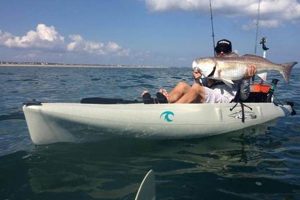
Lures and live offerings employed to attract and catch fish from a kayak comprise a specialized subset of angling tools. Examples include artificial presentations like jigs, soft plastics, and topwater lures, as well as natural options such as live shrimp, minnows, and worms. The selection often depends on the target species and the specific fishing environment.
Effective choices are crucial for a successful kayak fishing experience. A well-chosen presentation increases the likelihood of attracting and hooking fish, maximizing angling opportunities. Factors such as water clarity, depth, current, and prevalent forage influence these selections. Historically, anglers adapted readily available natural materials, evolving to include sophisticated artificial lures designed to mimic prey and trigger predatory responses.
This exploration will further delve into specific lure types, their applications, and strategies for effective deployment from a kayak. Additional topics will cover species-specific techniques, seasonal variations, and responsible practices for maintaining healthy fish populations.
Tips for Effective Bait Selection and Use in Kayak Fishing
Optimizing bait choices and presentation significantly enhances angling success from a kayak. The following tips offer guidance for improved catch rates and a more rewarding experience.
Tip 1: Match the Hatch. Observe the local ecosystem to identify prevalent forage. Selecting lures or live bait that mimic the primary food source of target species increases the likelihood of attracting strikes.
Tip 2: Consider Water Conditions. Clarity, depth, and current influence bait visibility and action. Brightly colored lures are often effective in murky water, while natural or subdued colors perform better in clear conditions. Heavier lures or weights may be necessary in deeper water or strong currents.
Tip 3: Vary Retrieval Techniques. Experiment with different retrieve speeds and actions to entice strikes. A slow, steady retrieve can be effective for bottom-dwelling species, while a faster, erratic retrieve can trigger reaction strikes from predatory fish.
Tip 4: Downsize for Finesse. Smaller lures and lighter lines can be more effective in heavily pressured waters or when targeting finicky fish. This approach often results in more subtle presentations and increased bite detection.
Tip 5: Utilize Scent and Flavor Enhancements. Applying attractants, such as fish oil or scented sprays, can enhance the appeal of artificial lures, particularly in challenging conditions. Live bait can be similarly enhanced with scent additives.
Tip 6: Organize and Prepare. Efficient tackle organization is crucial in the limited space of a kayak. Pre-rigging lures and storing bait effectively saves time and facilitates seamless transitions between techniques.
Tip 7: Practice Catch and Release. Conserving fish populations ensures the longevity of the sport. Handle fish carefully and utilize appropriate release techniques to minimize stress and injury.
By incorporating these strategies, anglers can significantly improve their chances of success while kayak fishing. Preparation, adaptability, and respect for the environment contribute to a rewarding and sustainable angling experience.
These insights provide a foundation for selecting and employing effective bait strategies from a kayak. The following section will offer concluding remarks and reiterate key takeaways for maximizing angling success.
1. Target Species

The target species significantly influences bait selection in kayak fishing. Understanding the feeding habits, habitat preferences, and seasonal behavior of desired fish directly impacts angling success. Choosing appropriate bait requires careful consideration of the specific target.
- Predator-Prey Relationships
Effective bait selection relies on mimicking the natural prey of the target species. For example, bass, a common target for kayak anglers, often feed on small fish, crayfish, and insects. Therefore, lures resembling these prey items, such as crankbaits, crawfish imitations, and topwater lures, are frequently successful. Conversely, species like catfish, which are bottom feeders, respond well to bait such as worms, cut bait, or stinkbait presented near the bottom.
- Habitat Considerations
The environment where the target species resides also impacts bait choices. Fish inhabiting clear, shallow waters might be more susceptible to sight-based lures like spinnerbaits or jerkbaits. In contrast, fish in murky or deeper water might respond better to lures that produce vibrations or scent, such as rattle traps or soft plastics infused with attractants. Similarly, fishing in areas with heavy vegetation might necessitate weedless lures or techniques to avoid snags.
- Seasonal Adaptations
Bait preferences of target species can shift throughout the year based on seasonal changes in water temperature, prey availability, and spawning behaviors. During warmer months, when fish are more active, faster-moving lures or live bait might be effective. In colder water, slower presentations and baits that mimic dormant prey might be preferred. Understanding these seasonal adaptations is key to choosing the most productive bait.
- Species-Specific Preferences
Some species exhibit distinct dietary preferences that dictate effective bait choices. Trout, for instance, are often targeted with small, brightly colored lures that imitate insects or other aquatic invertebrates. Saltwater species, such as redfish or snook, might respond well to shrimp imitations, baitfish patterns, or live bait like mullet or pinfish. Tailoring the bait to the specific dietary preferences of the target species increases the chance of a successful catch.
By considering the target species’ feeding habits, preferred habitat, seasonal behavior, and specific preferences, kayak anglers can significantly enhance their bait selection and maximize their chances of a successful fishing trip. This understanding emphasizes the critical connection between target species and bait choice in kayak fishing.
2. Live Bait
Live bait represents a crucial component within the broader context of kayak fishing bait. Its efficacy stems from the natural presentation and inherent appeal to predatory instincts. A live organism struggling in the water triggers feeding responses in many fish species, making live bait a highly effective option. This connection is fundamental to understanding successful kayak fishing techniques, as live bait often outperforms artificial lures, especially in challenging conditions or when targeting specific species.
Several factors contribute to the effectiveness of live bait in kayak fishing. Natural movement and scent create a realistic presentation that is difficult for artificial lures to replicate fully. This realism is particularly advantageous when targeting pressured fish or species with highly developed senses. For instance, using live shrimp in brackish water for redfish or speckled trout can yield significantly better results than artificial imitations. Similarly, employing live minnows while targeting crappie or walleye in deeper, cooler water can often entice strikes when other methods fail. The choice of live bait should align with the target species’ natural diet and the prevailing environmental conditions. The size and type of live bait also influence its effectiveness. Matching the prevalent forage in the fishing area increases the likelihood of attracting the target species.
While effective, employing live bait presents specific challenges. Maintaining its viability requires proper storage and handling, including aeration and temperature control, especially during longer fishing trips. Kayak anglers must also consider local regulations regarding the use and transport of live bait, as restrictions often apply to specific species or waterways. Despite these considerations, the efficacy of live bait in kayak fishing makes it a valuable tool for anglers seeking to maximize their catch rates and connect with the natural feeding patterns of their target species. Understanding the nuances of live bait selection, presentation, and legal considerations is essential for responsible and successful kayak angling.
3. Artificial Lures
Artificial lures constitute a significant category within kayak fishing bait, offering versatility and durability. Their design mimics natural prey, triggering predatory responses in fish. This imitation hinges on factors like color, size, shape, and action, each influencing effectiveness. Crankbaits, for instance, simulate injured baitfish, attracting species like bass or walleye. Spinnerbaits, with their flashing blades, create vibrations and visual appeal, drawing strikes from pike or muskie. Soft plastic lures, molded to resemble worms, crayfish, or other aquatic organisms, entice bottom-dwelling species like catfish or panfish. This diversity allows anglers to target specific species and adapt to varying water conditions and fishing environments.
The practical implications of understanding artificial lure selection are substantial. Matching lure characteristics to target species’ feeding habits and habitat preferences enhances angling success. Water clarity influences color choices; brighter lures prove effective in murky conditions, while natural or translucent hues perform better in clear water. Depth and current affect lure selection; heavier lures or added weights are necessary for deeper water or stronger currents. Moreover, varying retrieval techniques from slow, steady retrieves to quick, erratic jerks influence lure action and attractiveness. For example, a slow-rolling spinnerbait near the bottom might entice sluggish winter bass, while a fast-paced topwater lure can trigger aggressive surface strikes during summer months.
Artificial lures offer distinct advantages in kayak fishing. Their durability allows repeated use, reducing the need for constant rebaiting, which is particularly advantageous in the confined space of a kayak. Furthermore, the wide array of available lure types enables anglers to experiment and adapt to changing conditions. However, challenges exist. Selecting the appropriate lure from the vast assortment can be daunting for novice anglers. Furthermore, mastering effective retrieval techniques requires practice and understanding of species-specific behaviors. Despite these challenges, artificial lures remain a cornerstone of kayak fishing bait, empowering anglers with adaptable tools to target diverse species and enhance their angling experience.
4. Bait Presentation
Bait presentation significantly influences success in kayak fishing. It dictates how effectively lures or live bait are positioned and manipulated to attract target species. This encompasses factors like casting accuracy, retrieval speed, depth control, and lure action. A well-presented bait appears more natural and enticing, increasing the likelihood of a strike. Conversely, improper presentation, even with the perfect bait, can deter fish or render it invisible. Casting accuracy, crucial for placing bait in proximity to fish-holding structures like submerged logs or weed beds, maximizes exposure and effectiveness. Retrieve speed governs lure action and presentation depth, influencing how the bait appears to prey fish. Slow retrieves might be effective for bottom-dwelling species, while faster retrieves trigger reaction strikes from pelagic predators. Depth control, achieved through lure selection, added weights, or specialized retrieval techniques, ensures the bait is presented at the target species’ feeding level. Manipulating rod movements and retrieve speed imparts lifelike action to lures, creating an illusion of natural movement that attracts fish.
Consider a scenario targeting bass near a submerged log. An angler accurately casts a soft plastic crawfish imitation close to the structure. Employing a slow, steady retrieve along the bottom, the angler mimics the natural movement of a crawfish. This precise presentation increases the likelihood of a bass detecting and striking the lure. Conversely, casting the same lure far from the target area or retrieving it too quickly across the surface diminishes its effectiveness, even if bass are present. Similarly, targeting suspended crappie requires presenting small jigs at the specific depth where the fish are holding. Subtle jigging motions impart enticing movements, while accurate depth control ensures the bait remains within the crappie’s feeding zone. These examples highlight the crucial role of presentation in maximizing bait effectiveness. A well-presented bait appears natural, increasing its appeal to fish, while improper presentation can negate the effectiveness of even the most enticing bait.
Mastery of bait presentation techniques enhances angling success from a kayak. Understanding how factors such as casting accuracy, retrieve speed, depth control, and lure action influence bait presentation is crucial for attracting fish. This understanding directly translates to increased catch rates, demonstrating the practical significance of effective bait presentation in kayak fishing. While bait selection forms the foundation, effective presentation ensures that the chosen bait reaches its full potential, maximizing opportunities for successful hookups and contributing significantly to a positive angling experience. Challenges include adapting presentation techniques to different species and environments, but the rewards justify the effort invested in mastering these skills.
5. Seasonal Variations
Seasonal variations significantly influence bait selection and presentation in kayak fishing. Water temperature fluctuations, changes in prey availability, and fish spawning behaviors all contribute to dynamic shifts in feeding patterns throughout the year. Understanding these seasonal influences is crucial for optimizing bait choices and maximizing angling success. For example, during spring, as water temperatures rise and fish become more active, baitfish patterns and faster-moving lures become effective for targeting predatory species. In summer, topwater lures excel during low-light conditions or when fish are actively feeding near the surface. As fall approaches and water temperatures cool, slower presentations and lures that mimic dying baitfish often prove productive. During winter, when fish metabolism slows, smaller lures, slower retrieves, and bait presented near the bottom can be more effective. These seasonal adaptations in bait selection reflect the dynamic nature of aquatic ecosystems.
The practical implications of understanding seasonal variations extend beyond simply choosing the right bait. Adjusting fishing locations based on seasonal fish movements is equally crucial. During warmer months, fish often inhabit shallower waters or areas with abundant vegetation, while in colder months, they tend to congregate in deeper areas or near thermal refuge. Moreover, seasonal variations affect fish activity levels. Peak feeding periods might shift throughout the year, necessitating adjustments in fishing times. For instance, early morning and late evening can be productive during summer, while midday might offer better opportunities in winter. These considerations highlight the interconnectedness of bait selection, fishing location, and timing within the context of seasonal variations. Ignoring these factors can significantly reduce angling success, underscoring the importance of adapting strategies throughout the year. Adaptability is a cornerstone of successful kayak fishing.
Seasonal variations present both opportunities and challenges for kayak anglers. Recognizing and adapting to these changes is paramount for consistent success. While specific bait choices and techniques vary depending on the target species and geographic location, the underlying principle remains constant: adapting to the seasonal dynamics of the aquatic environment. This adaptability extends beyond bait selection to encompass fishing location, time of day, and presentation techniques. Overcoming the challenges of seasonal variations requires continuous observation, experimentation, and a willingness to adjust strategies. Successfully navigating these seasonal shifts is rewarding, leading to increased catch rates and a deeper understanding of the intricate relationship between fish behavior and the environment.
Frequently Asked Questions about Kayak Fishing Bait
Addressing common queries regarding bait selection and utilization in kayak fishing enhances angling preparedness and promotes responsible fishing practices.
Question 1: What are the most versatile artificial lures for kayak fishing?
Soft plastic lures, jigs, and topwater plugs offer versatility across various species and fishing conditions. These lure types can be rigged and retrieved in diverse ways, mimicking a range of prey items.
Question 2: How does one choose between live bait and artificial lures?
Live bait often excels in challenging conditions or when targeting specific species, while artificial lures provide convenience and durability. The choice depends on target species, fishing environment, and angler preference.
Question 3: What are essential considerations for live bait storage on a kayak?
Insulated containers, aerators, and appropriate temperature control are crucial for maintaining live bait viability, particularly during extended trips. Proper storage ensures bait remains effective and minimizes waste.
Question 4: How can lure selection be optimized for different water clarities?
Brightly colored lures are often effective in murky water, while natural or subdued colors perform better in clear conditions. Lure visibility plays a key role in attracting fish.
Question 5: How does current affect bait presentation and selection?
Stronger currents necessitate heavier lures or additional weight to maintain desired depth and presentation. Current strength influences lure action and retrieval techniques.
Question 6: What resources can assist with identifying appropriate bait for specific target species?
Local tackle shops, online fishing forums, and experienced anglers offer valuable insights into regional species preferences and effective bait choices. Researching target species enhances angling preparedness.
Informed bait selection and presentation optimize angling success. Addressing these common questions equips anglers with the knowledge to make informed decisions on the water.
The subsequent section delves into advanced kayak fishing techniques.
Kayak Fishing Bait
Effective deployment of appropriate offerings remains paramount for successful angling from a kayak. Considerations encompassing target species, environmental conditions, seasonal influences, and presentation techniques directly impact results. Whether employing live bait or artificial lures, understanding fish behavior and habitat preferences is essential. Adaptability and informed decision-making maximize opportunities and contribute significantly to a rewarding experience. The exploration of species-specific strategies, lure characteristics, and presentation nuances equips anglers with the knowledge to refine techniques and approach diverse fishing scenarios effectively.
Continued learning and observation remain crucial for refining angling proficiency. Evolving lure designs and emerging techniques offer avenues for further exploration. Respectful resource management and ethical angling practices ensure the sustainability of this pursuit. Ultimately, successful kayak fishing hinges on a comprehensive understanding of bait selection, presentation, and the dynamic interplay between predator and prey.