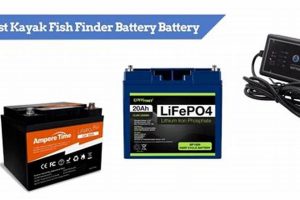
A specialized container designed to securely house and protect the power source for a fish finder mounted on a kayak typically incorporates features like water resistance, impact resistance, and convenient mounting solutions. These containers often include integrated wiring and connection points for easy installation and use. For instance, a typical unit might be a ruggedized plastic box with a sealed lid, strap mounts, and pre-wired terminals for the battery and fish finder.
Reliable power management is crucial for operating electronic devices in a marine environment. A dedicated power solution prevents damage to sensitive electronics from water exposure and vibration while kayaking. Historically, anglers relied on less convenient and less reliable methods, such as loose batteries or improvised enclosures. Modern, purpose-built units offer a significant improvement in safety, convenience, and longevity of electronic equipment. This allows for extended fishing trips and more accurate fish finding without the worry of power failure.
The following sections delve into specific aspects of selecting, installing, and maintaining these essential components of a modern kayak fishing setup, covering topics such as size and capacity considerations, different mounting options, and best practices for safe battery handling.
Tips for Powering Kayak Fish Finders
Proper power management is essential for a successful kayak fishing experience. These tips offer guidance on selecting and utilizing a dedicated power supply for electronic devices.
Tip 1: Size Appropriately. Battery capacity should align with fish finder power requirements and anticipated trip length. Overly large batteries add unnecessary weight, while undersized batteries lead to premature power depletion. Consult fish finder specifications and estimate usage time to determine the optimal battery size.
Tip 2: Prioritize Safety. Sealed, waterproof enclosures are paramount for protecting batteries and electronics from the harsh marine environment. Ensure the chosen enclosure provides adequate protection against water intrusion and impact.
Tip 3: Secure Mounting. A stable mounting system prevents shifting and potential damage during transit and on the water. Select a mounting location that provides easy access for battery changes and wiring connections, while remaining secure in rough conditions.
Tip 4: Consider Wiring. Use marine-grade wiring and connectors designed for water resistance and durability. Properly sized wiring and secure connections minimize voltage drop and ensure reliable power delivery to the fish finder.
Tip 5: Regular Maintenance. Periodically inspect the enclosure for cracks or damage, and clean battery terminals to prevent corrosion. Store batteries properly when not in use to maximize lifespan and performance.
Tip 6: Fuse Protection. Incorporate an inline fuse between the battery and fish finder to protect the electronics from power surges or short circuits. Select a fuse with an appropriate amperage rating for the fish finder.
Implementing these practices ensures reliable power for the fish finder, extending time on the water and maximizing fishing success. Proper power management also enhances safety and prolongs the life of valuable electronic equipment.
By understanding these key considerations, anglers can choose the optimal setup and ensure a safe and enjoyable experience on the water.
1. Size and Capacity

Appropriate size and capacity are crucial for a kayak fish finder battery box. The box must accommodate the battery while remaining practical for kayak use. Balancing power requirements with weight and space limitations is essential for optimal performance and maneuverability.
- Internal Dimensions
Internal dimensions directly dictate battery compatibility. A box must comfortably house the battery, including terminals and wiring, without excessive pressure or movement. For example, a common 12V 7Ah sealed lead-acid battery requires different dimensions than a slimmer lithium iron phosphate battery with the same capacity. Insufficient space can lead to damage and safety hazards.
- External Dimensions
External dimensions affect kayak stability and storage. A bulky box can interfere with paddling or limit storage space. Compact designs maximize available space and maintain kayak balance. Consider overall kayak dimensions and available storage areas when selecting a box size. For instance, a smaller kayak may necessitate a more compact box than a larger fishing kayak.
- Amp-Hour (Ah) Rating
The amp-hour rating of the battery determines its runtime. Higher Ah ratings provide longer operation but typically increase battery size and weight. Fish finder power consumption and anticipated fishing duration influence the required Ah rating. A high-powered fish finder used for extended trips requires a higher Ah rating than a basic unit used for shorter outings.
- Weight Considerations
Both battery and box weight impact kayak performance. Excessive weight reduces maneuverability and stability. Lightweight materials and efficient designs minimize overall weight, improving handling and range. Consider the combined weight of the box, battery, and other gear when assessing kayak capacity and balance. A lighter setup is particularly important for smaller kayaks and longer expeditions.
Careful consideration of these factors ensures the chosen battery box effectively balances power needs with practical limitations. Optimizing size and capacity maximizes both fish finder performance and overall kayak usability. Selecting an appropriate box enhances the fishing experience by providing reliable power without compromising maneuverability or stability.
2. Water Resistance

Maintaining the integrity and functionality of electronic components in a kayak fishing environment necessitates prioritizing water resistance. A kayak fish finder battery box safeguards the power source from the corrosive and potentially damaging effects of water exposure, ensuring reliable operation and extending the lifespan of the battery and connected electronics.
- Ingress Protection (IP) Ratings
IP ratings provide a standardized measure of an enclosure’s resistance to dust and water ingress. Higher IP ratings indicate greater protection. For a kayak fish finder battery box, a minimum rating of IPX7 is often recommended, signifying protection against temporary submersion. An IPX7 rating ensures the battery remains functional even after accidental immersion. Higher ratings, such as IP67, offer additional protection against dust and other particulate matter, further enhancing reliability.
- Seal Design and Materials
Effective seal design and durable materials are crucial for preventing water intrusion. Tightly sealed gaskets, waterproof latches, and robust O-rings create a barrier against water. Material selection plays a significant role in long-term durability and resistance to degradation from UV exposure and saltwater. High-quality, UV-resistant plastics or composite materials ensure long-lasting protection. Compromised seals or inferior materials can lead to water damage and premature failure.
- Internal Components and Wiring
Protecting internal wiring and connections is essential for maintaining a functional electrical system. Waterproof connectors and sealed cable glands prevent water from entering the box and compromising connections. Corrosion-resistant terminals minimize the impact of moisture and saltwater exposure. Internal layout and component placement can further enhance water resistance by minimizing exposed connections and promoting efficient drainage in case of minor ingress.
- Testing and Verification
Rigorous testing verifies the effectiveness of the water resistance measures. Submersion testing and simulated environmental exposure validate the enclosure’s ability to withstand real-world conditions. Manufacturers often conduct these tests to ensure their products meet specified IP ratings and performance standards. Understanding the testing procedures provides confidence in the reliability and durability of the chosen battery box.
Prioritizing water resistance in the selection of a kayak fish finder battery box is paramount for ensuring the longevity and dependable performance of electronic equipment. By considering factors like IP ratings, seal design, internal components, and testing procedures, anglers can choose a box that provides reliable protection against the harsh marine environment, maximizing the lifespan of the battery and fish finder. This safeguards the investment in electronic equipment and enhances the overall fishing experience.
3. Secure Mounting

A stable and secure mounting system is essential for a kayak fish finder battery box. Proper mounting prevents unwanted movement and potential damage to the battery, wiring, and kayak itself during operation. This ensures consistent power delivery to the fish finder and safeguards against equipment failure in challenging conditions.
- Mounting Location
Strategic placement of the battery box optimizes weight distribution and accessibility. Locations within easy reach of the angler allow for convenient battery checks and replacements without compromising stability. Common mounting locations include the kayak’s hull, inside a hatch, or within a dedicated storage compartment. Factors such as kayak design, angler preference, and available space influence the optimal mounting position. For example, mounting near the center of gravity enhances stability, while placement near the fish finder minimizes cable length.
- Mounting Methods
Various methods offer secure attachment to the kayak. Straps, clamps, and adhesive mounts provide varying degrees of stability and permanence. Strap mounts offer flexibility and easy removal, while adhesive mounts provide a more permanent solution. The chosen method must withstand the forces encountered during paddling and navigation through various water conditions. Heavier batteries and rough water necessitate more robust mounting solutions. For instance, heavy-duty straps with corrosion-resistant buckles offer enhanced security in demanding environments.
- Stability and Vibration Dampening
Minimizing movement and vibration protects the battery and electronics. Secure mounting prevents the box from shifting during paddling and impacts. Vibration dampening features, such as rubber pads or foam inserts, further reduce stress on the battery and connections. This prolongs battery life and ensures consistent fish finder performance. Navigating choppy waters or traversing rough terrain necessitates effective vibration dampening. A stable platform minimizes the risk of damage and maintains reliable power delivery.
- Integration with Kayak Design
Seamless integration with the kayak’s design maintains functionality and aesthetics. Mounting systems that complement the kayak’s contours and existing features minimize interference with paddling and other onboard equipment. This enhances overall usability and preserves the kayak’s intended purpose. For example, a low-profile mount within a recessed area minimizes disruption to the angler’s movement. Careful consideration of kayak design and intended use ensures optimal integration and functionality.
Effective mounting solutions contribute significantly to the overall performance and longevity of a kayak fish finder setup. By addressing these key aspects of secure mounting, anglers can optimize their fishing experience, ensuring reliable power delivery, minimizing equipment damage, and maximizing enjoyment on the water. A well-secured battery box enhances safety, improves performance, and contributes to a more successful and enjoyable kayak fishing experience.
4. Durable Construction

Durable construction is paramount for a kayak fish finder battery box due to the demanding nature of the marine environment. Exposure to saltwater, UV radiation, and physical impacts necessitates a robust enclosure to protect sensitive electronic components. A durable box ensures reliable, long-term performance and safeguards the investment in a fish finder and battery. For example, a box constructed from impact-resistant, UV-stabilized plastic withstands accidental drops and prolonged sun exposure, preventing cracks and discoloration that compromise water resistance. Conversely, a flimsy enclosure may crack under stress, leading to water damage and equipment failure.
Material selection significantly influences durability. High-quality polymers or composite materials offer superior resistance to impact, UV degradation, and chemical exposure compared to lower-grade plastics. Reinforced corners and thicker walls further enhance structural integrity, protecting the battery from damage during transport and use. Stainless steel hardware and corrosion-resistant latches maintain functionality and prevent failure in saltwater environments. Consider a scenario where a kayak overturns; a robustly constructed box protects the battery from impact and prevents water intrusion, ensuring continued operation after the incident. A less durable box may crack or leak, resulting in costly repairs or replacements.
Investing in a durably constructed kayak fish finder battery box directly translates to extended equipment lifespan and reliable performance. The ability to withstand harsh conditions ensures consistent power delivery to the fish finder, maximizing time on the water and enhancing the overall fishing experience. While initial costs may be higher for more durable options, the long-term benefits of protection and reliability outweigh the expense. Durability ensures consistent functionality, minimizing the risk of power failures during critical moments and contributing to a more successful and enjoyable fishing experience. Choosing a robustly constructed box safeguards the investment in electronic equipment and ensures dependable performance in challenging marine environments.
5. Wiring and Connections

Proper wiring and connections are integral to a safe and functional kayak fish finder battery box setup. They form the critical link between the power source and the fish finder, ensuring reliable power delivery and protecting sensitive electronics. Incorrect or inadequate wiring can lead to power loss, equipment malfunction, and even safety hazards like short circuits or fires. For example, using undersized wiring can cause excessive voltage drop, resulting in reduced fish finder performance or complete failure. Conversely, using marine-grade, tinned copper wiring with the correct gauge minimizes resistance and ensures efficient power transfer, maximizing fish finder performance and battery life.
Several key considerations apply to wiring and connections within a kayak fish finder battery box. First, all connections should be secure and weatherproof. Using waterproof connectors and heat shrink tubing protects against corrosion and water intrusion, ensuring reliable operation in harsh marine environments. Second, fuses or circuit breakers are essential safety components, protecting the fish finder and other electronics from power surges or short circuits. An appropriately sized fuse, placed in line between the battery and the fish finder, interrupts the circuit in the event of an overload, preventing damage. Third, cable management within the box is crucial for maintaining organization and preventing accidental disconnections or damage. Securing wires with cable ties or clips keeps them neatly arranged and minimizes strain on connections. For instance, routing wires away from sharp edges or moving parts prevents chafing and potential short circuits. Finally, utilizing a dedicated power switch allows for convenient and safe control of the power supply to the fish finder. This prevents accidental battery drain during storage or transport and facilitates quick power shut-off in emergencies.
Understanding the importance of proper wiring and connections is fundamental for a successful and safe kayak fishing experience. Implementing these best practices ensures consistent power delivery to the fish finder, protects valuable electronics, and minimizes potential safety risks. By prioritizing quality components, weatherproofing, and proper installation techniques, anglers create a dependable power system that enhances both performance and safety on the water. This attention to detail contributes to a more enjoyable and productive fishing experience while safeguarding the investment in electronic equipment.
6. Battery Compatibility

Battery compatibility is a critical factor when selecting a kayak fish finder battery box. The box must be designed to safely and effectively house the specific battery type chosen to power the fish finder. This involves considerations of physical dimensions, terminal types, and charging requirements. Mismatches can lead to safety hazards such as short circuits or overheating, and can also compromise performance. For example, attempting to fit a larger battery into a box designed for a smaller one can damage the battery or the box itself, potentially leading to leaks or electrical faults. Using a box not designed for a specific battery chemistry, such as lithium iron phosphate, could prevent proper ventilation or thermal management, posing a fire risk. Furthermore, incompatibility may hinder access to terminals, making connection and disconnection difficult or damaging the wiring. Selecting a compatible box ensures proper fit, secure connections, and safe operation, maximizing both battery and fish finder lifespan.
Different battery chemistries, such as sealed lead-acid (SLA), absorbed glass mat (AGM), and lithium iron phosphate (LiFePO4), have unique characteristics. SLA batteries are a common and cost-effective option, but they are heavier and more susceptible to damage from deep discharge. AGM batteries offer improved performance and durability compared to SLA, but come at a higher price. LiFePO4 batteries are the lightest and most energy-dense option, offering longer runtimes and a greater number of charge cycles, but require specific charging protocols and are the most expensive. The chosen battery chemistry influences the required box features. For instance, LiFePO4 batteries may require specialized charging circuits and thermal management considerations within the box, while SLA batteries benefit from venting features to prevent gas buildup. Understanding these nuances is crucial for selecting a compatible box that optimizes battery performance and safety. A box designed for one chemistry may not be suitable for another, underscoring the importance of careful consideration and matching.
Selecting a compatible battery and box combination is fundamental to a reliable and safe kayak fishing experience. Careful consideration of battery dimensions, terminal types, chemistry-specific requirements, and box features ensures proper fit, secure connections, and optimal performance. Ignoring compatibility can lead to safety hazards, reduced performance, and shortened equipment lifespan. Understanding the interplay between these components allows anglers to make informed decisions, maximizing the benefits of their electronic equipment and ensuring a safe and enjoyable time on the water. Ultimately, prioritizing battery compatibility translates to a more reliable, efficient, and secure power system, contributing to a more successful and rewarding fishing experience.
Frequently Asked Questions
This section addresses common inquiries regarding kayak fish finder battery boxes, providing concise and informative responses to aid selection and usage.
Question 1: What size battery box is suitable for a typical kayak fish finder?
The appropriate size depends on the battery’s dimensions and amp-hour (Ah) rating. Measure the battery and choose a box that provides ample space while remaining compact enough for kayak use. Consider future upgrades and potential extra space needed for wiring and accessories.
Question 2: Are all kayak fish finder battery boxes waterproof?
Not all boxes offer the same level of water resistance. Look for an Ingress Protection (IP) rating, preferably IPX7 or higher, indicating submersion protection. Carefully inspect seals and closures for robust construction.
Question 3: How is a kayak fish finder battery box typically mounted?
Common mounting methods include straps, clamps, and adhesive mounts. Consider the kayak’s design and choose a method that provides secure attachment without interfering with paddling or other equipment. Secure mounting prevents shifting during use, which can damage the kayak or the box itself.
Question 4: What type of battery is recommended for a kayak fish finder?
Sealed lead-acid (SLA), absorbed glass mat (AGM), and lithium iron phosphate (LiFePO4) batteries are commonly used. LiFePO4 batteries offer the best performance and lifespan but are more expensive. SLA batteries are a cost-effective option but heavier. AGM batteries offer a balance between cost and performance. The choice depends on budget and desired runtime.
Question 5: Can any battery be used with any fish finder battery box?
Battery and box compatibility are essential. The box must accommodate the battery’s physical size and terminal configuration. Furthermore, charging requirements and ventilation needs vary between battery chemistries. Using an incompatible combination can lead to safety hazards and reduced performance.
Question 6: How should a kayak fish finder battery box be maintained?
Regular inspection and cleaning are crucial. Check for cracks, damage, and loose connections. Clean battery terminals to prevent corrosion. Store the box in a dry, protected location when not in use. Proper maintenance prolongs the lifespan of the box and the battery, ensuring reliable performance.
Careful consideration of these frequently asked questions helps ensure selection of an appropriate and effective power solution for a kayak fish finder. Prioritizing compatibility, durability, and proper installation contributes to a safe and enjoyable fishing experience.
The next section offers a comprehensive guide to choosing the right kayak fish finder battery box, outlining key features and selection criteria.
Kayak Fish Finder Battery Box
Selection of a suitable kayak fish finder battery box requires careful consideration of several factors. Size and capacity must accommodate the chosen battery while maintaining kayak stability. Water resistance is paramount for protecting sensitive electronics, necessitating robust seals and durable construction. Secure mounting prevents damage and ensures consistent power delivery. Proper wiring, including appropriate gauge and waterproof connectors, maximizes fish finder performance. Finally, battery compatibility ensures safe and efficient operation. Each of these elements contributes to a reliable and effective power system, essential for successful kayak fishing.
Effective power management is crucial for maximizing the benefits of modern fishing technology. Investing in a reliable and well-designed kayak fish finder battery box ensures consistent performance, prolongs equipment lifespan, and enhances safety on the water. Careful consideration of these factors contributes to a more productive and enjoyable fishing experience, allowing anglers to focus on the pursuit of their target species without the distraction of power concerns. Ultimately, the right battery box solution empowers anglers to fully utilize technology, enhancing their connection with the aquatic environment and increasing their chances of success.