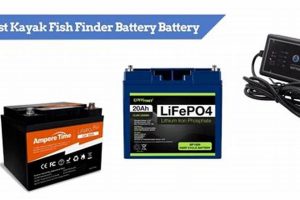
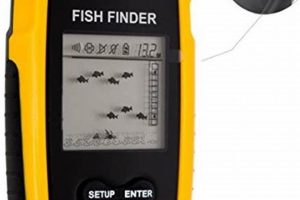
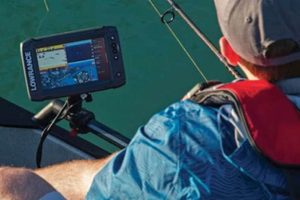
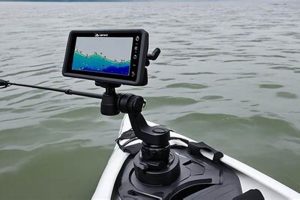
A dedicated power source is essential for operating electronic fish finders on kayaks. These specialized batteries provide the necessary electrical current to power sonar transducers, displays, and other components of these devices, enabling anglers to locate fish and underwater structures effectively. For example, a 12-volt deep-cycle marine battery can provide hours of continuous power for a fish finder during a fishing trip.
Reliable power delivery is crucial for successful kayak fishing. Without a suitable power source, a fish finder becomes useless, hindering an angler’s ability to navigate and find productive fishing spots. Historically, anglers relied on basic depth finders or their own knowledge of waterways. Advances in sonar technology coupled with portable power solutions have revolutionized the sport, providing anglers with detailed underwater mapping and significantly improving catch rates. This technology empowers kayak anglers to explore further and fish more effectively.
This article will further explore critical aspects of selecting and using a suitable power supply for kayak fish finders, covering topics such as battery types, capacity requirements, charging methods, and safety considerations.
Tips for Choosing and Using Kayak Fish Finder Batteries
Selecting and maintaining an appropriate power source is essential for optimal fish finder performance. The following tips offer guidance for ensuring reliable operation and maximizing time on the water.
Tip 1: Consider Battery Type. Deep-cycle marine batteries are specifically designed for sustained power delivery and are ideal for fish finders. Lithium-ion batteries offer lighter weight and longer lifespans but come at a higher cost.
Tip 2: Match Battery Capacity to Power Requirements. Fish finder power consumption varies. Consult the manufacturer’s specifications to determine the appropriate Amp-hour (Ah) rating to ensure sufficient runtime.
Tip 3: Prioritize Safe Mounting and Connection. Secure the battery in a stable, waterproof compartment and utilize marine-grade connectors and wiring to prevent corrosion and ensure reliable connections.
Tip 4: Employ Proper Charging Techniques. Use a charger specifically designed for the chosen battery chemistry (e.g., lead-acid or lithium-ion) to maximize battery lifespan and prevent damage.
Tip 5: Regularly Inspect and Maintain the Battery. Check terminals for corrosion, ensure proper ventilation, and store the battery according to the manufacturer’s recommendations.
Tip 6: Factor in Environmental Conditions. Cold temperatures can reduce battery performance. Account for this by selecting a slightly larger capacity or utilizing insulation for the battery compartment.
Tip 7: Consider a Battery Box. A dedicated battery box provides protection from the elements, secure storage, and integrated terminals for easy connection.
Following these tips will ensure reliable power for a fish finder, enabling uninterrupted operation and maximizing fishing success. Proper battery selection and maintenance are crucial investments for any serious kayak angler.
By understanding the factors influencing battery performance and adhering to recommended practices, anglers can confidently rely on their fish finders to enhance their on-the-water experience.
1. Battery Type
Battery type selection significantly impacts the performance and longevity of a kayak fish finder setup. Different battery chemistries offer varying characteristics regarding weight, capacity, lifespan, and cost. Lead-acid batteries, a common and affordable option, provide reliable performance but are heavier and have shorter lifespans compared to lithium-ion alternatives. Lithium-ion batteries, while more expensive, offer significant weight savings, longer lifespans, and faster charging times, making them ideal for longer trips or kayaks with weight limitations. Choosing the correct battery type requires careful consideration of individual needs and priorities.
For instance, a kayak angler prioritizing affordability and occasional fishing trips might opt for a sealed lead-acid battery. Conversely, an angler frequently embarking on multi-day expeditions or prioritizing lightweight gear would benefit from the advantages of a lithium-ion battery, despite the higher initial cost. This choice directly impacts the overall weight of the kayak, the duration of fish finder operation, and the long-term cost of ownership. Understanding these trade-offs empowers anglers to make informed decisions tailored to their specific fishing styles and kayak configurations.
Ultimately, selecting the appropriate battery type for a kayak fish finder involves balancing performance requirements, budget constraints, and logistical considerations. While lead-acid batteries offer a cost-effective solution, lithium-ion batteries provide superior performance and longevity. A comprehensive understanding of these battery types is essential for optimizing fish finder operation and ensuring a positive on-the-water experience.
2. Capacity (Amp-hours)

Battery capacity, measured in Amp-hours (Ah), directly determines the operational duration of a kayak fish finder. Understanding this crucial metric is essential for selecting a battery that meets specific fishing needs. Insufficient capacity results in premature power depletion, while excessive capacity adds unnecessary weight and cost. Selecting the correct Ah rating ensures uninterrupted fish finder operation throughout the fishing trip.
- Fish Finder Power Consumption
Fish finders consume power at varying rates depending on factors such as screen size, sonar frequency, and additional features. Consulting the manufacturer’s specifications reveals the device’s power draw, typically measured in amps. For example, a fish finder drawing 0.5 amps requires a 10 Ah battery for 20 hours of theoretical operation. Accurately assessing power consumption is crucial for determining the minimum required battery capacity.
- Fishing Trip Duration
The anticipated length of fishing trips directly influences the required battery capacity. Longer trips necessitate higher Ah ratings to ensure continuous fish finder operation. For instance, a weekend fishing excursion demands a significantly larger capacity compared to a short afternoon trip. Matching battery capacity to trip duration avoids power depletion and maximizes time on the water.
- Environmental Factors
Environmental conditions, particularly temperature, influence battery performance. Cold temperatures can reduce effective capacity. Therefore, anglers fishing in colder climates may require a higher Ah rating to compensate for this performance reduction. Factoring in environmental conditions ensures reliable fish finder operation regardless of the weather.
- Battery Chemistry
Different battery chemistries exhibit varying discharge characteristics. Deep-cycle marine batteries are designed for sustained discharge, making them well-suited for fish finders. Lithium-ion batteries, while offering higher energy density, may require more complex charging systems. Understanding the discharge characteristics of the chosen battery type ensures accurate capacity estimation and optimal performance.
By carefully considering these interconnected factorsfish finder power consumption, trip duration, environmental conditions, and battery chemistryanglers can confidently select a battery with the appropriate Amp-hour rating. Choosing the correct capacity ensures uninterrupted fish finder operation, enabling anglers to focus on locating fish and enjoying their time on the water.
3. Mounting Location

Secure and appropriate battery placement is crucial for the safe and effective operation of kayak fish finders. The mounting location affects battery accessibility, weight distribution, and protection from the elements. Improper mounting can lead to instability, battery damage, and potential safety hazards. Careful consideration of mounting location ensures reliable power delivery and contributes to a stable and enjoyable kayaking experience.
- Accessibility
Convenient access to the battery is essential for routine maintenance, charging, and connection to the fish finder. Mounting locations that allow easy access simplify these tasks without requiring significant disassembly or rearrangement of gear. For example, a readily accessible battery compartment near the kayak’s seating area allows for quick checks and connections. Difficult-to-reach locations can hinder routine maintenance and create frustration.
- Weight Distribution
Proper weight distribution is paramount for kayak stability and maneuverability. The battery’s weight, often substantial, should be positioned to maintain balance and prevent tipping. Positioning the battery near the center of the kayak, low and close to the centerline, generally provides optimal stability. Uneven weight distribution negatively impacts tracking and increases the risk of capsizing, especially in challenging conditions.
- Protection from the Elements
Protecting the battery from water, sun, and impact is essential for longevity and reliable operation. Mounting locations should offer shielding from these elements. A dedicated, waterproof battery box provides optimal protection, ensuring the battery remains dry and functional even in wet conditions. Exposure to the elements can lead to corrosion, reduced performance, and premature battery failure.
- Secure Mounting
The battery must be securely fastened to prevent movement during paddling and transportation. Movement can lead to damage, connection issues, and potential safety hazards. Utilizing straps, brackets, or dedicated battery holders ensures the battery remains firmly in place, even in rough water. Inadequate securing mechanisms can result in battery damage, loose connections, and potential short circuits.
Strategic battery placement contributes significantly to the overall functionality and safety of a kayak fishing setup. By considering accessibility, weight distribution, protection from the elements, and secure mounting, anglers can optimize their kayak’s performance and ensure reliable power delivery to their fish finders. A well-mounted battery enhances safety, simplifies operation, and allows anglers to focus on the task at hand catching fish.
4. Power Connections

Reliable power connections are fundamental to the consistent operation of kayak fish finders. A robust and well-maintained electrical pathway between the battery and the fish finder ensures uninterrupted power delivery, maximizing device performance and preventing disruptions during critical moments. Understanding the key components and best practices for power connections contributes significantly to a positive and productive fishing experience.
- Wiring Gauge and Type
Selecting the appropriate wiring gauge is crucial for preventing voltage drop and ensuring efficient power delivery to the fish finder. Undersized wiring can lead to overheating, reduced fish finder performance, and potential fire hazards. Marine-grade tinned copper wire is recommended for its corrosion resistance and durability in harsh marine environments. For example, a 12 AWG wire is generally suitable for shorter runs, while longer cable lengths may necessitate a thicker 10 AWG wire to minimize voltage drop.
- Connectors
Durable and weatherproof connectors are essential for maintaining a secure electrical connection and preventing corrosion. Marine-grade connectors, designed to withstand moisture and vibration, provide a reliable interface between the battery, wiring, and fish finder. Utilizing appropriately sized connectors and ensuring proper crimping techniques prevent power interruptions and maintain signal integrity. Examples include Anderson Powerpole connectors, known for their robust construction and ease of use, and butt connectors with heat shrink tubing for a waterproof seal.
- Fusing and Circuit Protection
Incorporating a fuse or circuit breaker into the power system protects the fish finder and other electrical components from damage in the event of a short circuit or overload. Properly sized fuses prevent excessive current flow, minimizing the risk of fire and equipment damage. The fuse rating should be slightly higher than the fish finder’s maximum current draw to allow for normal operation while still providing protection. Inline fuse holders placed near the battery provide convenient access for replacement.
- Cable Management
Organized cable management prevents tangles, reduces the risk of damage, and maintains a clean and functional kayak setup. Securing cables with zip ties or clips keeps them away from moving parts and minimizes the risk of snags or interference. Proper cable routing also contributes to a more aesthetically pleasing and efficient workspace. For example, routing cables along the gunwales or under deck rigging keeps them organized and protected.
Employing best practices for power connections ensures reliable fish finder operation and contributes to a safe and enjoyable kayaking experience. Proper wiring, connectors, fusing, and cable management safeguard the electrical system, prevent disruptions, and maximize the performance of the fish finder. These interconnected elements contribute significantly to a successful and trouble-free fishing trip. Neglecting these aspects can compromise fish finder functionality, leading to frustration and potentially hazardous situations.
5. Charging Method
Appropriate charging methodology is essential for maintaining the performance and longevity of kayak fish finder batteries. Incorrect charging practices can lead to reduced battery lifespan, diminished capacity, and potential safety hazards. Understanding the appropriate charging method for the specific battery chemistry employed is crucial for ensuring reliable power and maximizing the battery’s useful life. This involves selecting the correct charger type, adhering to recommended charging procedures, and monitoring the charging process.
- Charger Compatibility
Different battery chemistries require specific charging profiles. Using an incompatible charger can lead to overcharging, undercharging, or even battery damage. Lead-acid batteries, for example, require a different charging algorithm than lithium-ion batteries. Matching the charger to the battery’s chemistry is fundamental for safe and effective charging. Attempting to charge a lithium-ion battery with a lead-acid charger can result in irreversible damage and potentially dangerous thermal runaway.
- Charging Rate
The charging rate, measured in amps, determines how quickly the battery replenishes its charge. While faster charging may seem desirable, excessively high rates can generate excessive heat and shorten battery lifespan. Manufacturers typically specify recommended charging rates for their batteries. Adhering to these recommendations optimizes battery health and longevity. For example, charging a deep-cycle marine battery at a rate higher than its recommended C-rating can lead to internal damage and reduce its overall capacity over time.
- Charging Cycle Completion
Understanding the charging cycle characteristics of the chosen battery type is crucial for proper charging. Some battery types benefit from full charging cycles, while others, like lithium-ion, do not require full discharge before recharging. Following the manufacturer’s guidelines for charging cycle completion ensures optimal battery performance and extends its service life. For instance, regularly interrupting the charge cycle of a lead-acid battery before it reaches full capacity can lead to a phenomenon known as sulfation, which reduces the battery’s overall capacity and lifespan.
- Safety Precautions
Charging batteries always presents potential safety hazards. Adequate ventilation is essential to prevent the buildup of flammable gases, particularly with lead-acid batteries. Monitoring the battery temperature during charging can help identify potential issues. Overcharging can lead to excessive heat generation, potentially causing battery damage or fire. Employing proper safety precautions, such as using a dedicated charging area and having a fire extinguisher nearby, mitigates these risks. Furthermore, always disconnect the charger from both the battery and the power source once the charging cycle is complete.
Proper charging techniques are essential for maintaining the health and extending the lifespan of kayak fish finder batteries. Selecting the appropriate charger, adhering to recommended charging rates, and following safety precautions ensures reliable power delivery and contributes to a positive and safe kayaking experience. Neglecting these aspects can compromise battery performance, reduce its lifespan, and potentially create hazardous situations. By understanding and implementing these key aspects of charging methodology, anglers can maximize their investment in battery technology and ensure uninterrupted operation of their fish finders on the water.
Frequently Asked Questions
This section addresses common inquiries regarding power solutions for kayak fish finders, providing concise and informative responses to facilitate informed decision-making.
Question 1: What type of battery is best suited for powering a fish finder on a kayak?
Deep-cycle marine batteries and lithium-ion batteries are commonly recommended. Deep-cycle marine batteries offer a balance of cost and performance, while lithium-ion batteries provide superior energy density and longer lifespans but come at a premium. The optimal choice depends on individual needs, budget, and kayak configuration.
Question 2: How long will a fully charged battery power a fish finder?
Runtime depends on several factors, including battery capacity (Ah), fish finder power consumption, and environmental conditions. Consulting the fish finder’s specifications and the battery’s Ah rating provides an estimated runtime. Calculating anticipated usage helps determine the necessary battery capacity.
Question 3: Can a car battery be used to power a kayak fish finder?
While possible, automotive starting batteries are not designed for deep discharge cycles and may experience reduced lifespan or damage if used repeatedly for this purpose. Deep-cycle marine batteries are specifically designed for sustained power delivery and are better suited for fish finders.
Question 4: How should a kayak fish finder battery be charged?
A charger compatible with the specific battery chemistry (lead-acid or lithium-ion) is essential. Employing the correct charging profile and adhering to manufacturer recommendations ensures optimal battery health, prevents damage, and maximizes lifespan. Incorrect charging practices can lead to premature battery failure.
Question 5: Where should the battery be mounted on a kayak?
The ideal mounting location prioritizes weight distribution, accessibility, and protection from the elements. Secure mounting prevents battery movement during operation, while convenient placement simplifies maintenance and connection. A dedicated battery box offers enhanced protection from water and impact.
Question 6: What safety precautions should be taken when using a kayak fish finder battery?
Proper ventilation during charging is crucial, especially for lead-acid batteries. Secure mounting and appropriate wiring prevent accidental short circuits and minimize fire hazards. Regular inspection of terminals and connections prevents corrosion and maintains reliable performance.
Understanding these key aspects of kayak fish finder battery selection, usage, and maintenance ensures reliable power delivery, prolongs battery lifespan, and contributes to a safer and more enjoyable fishing experience. Careful consideration of these elements allows anglers to optimize their setup and focus on what matters most fishing.
For further information and specific product recommendations, consult reputable retailers specializing in kayak fishing equipment.
Kayak Battery for Fish Finder
Optimal fish finder performance relies heavily on selecting and maintaining an appropriate kayak battery. This article explored key aspects of this critical component, encompassing battery types, capacity requirements, mounting considerations, power connection best practices, and charging methodologies. Careful consideration of these interconnected elements ensures reliable power delivery, maximizing fish finder effectiveness and enhancing the overall kayaking experience. Understanding the nuances of each aspect empowers anglers to make informed decisions tailored to individual needs and fishing styles.
Effective power management is paramount for successful kayak fishing. Investing in a suitable kayak battery and adhering to recommended practices ensures uninterrupted fish finder operation, contributing significantly to increased angling success and a safer, more enjoyable time on the water. Continued exploration of evolving battery technologies and power management strategies promises further enhancements to kayak fishing experiences in the future.