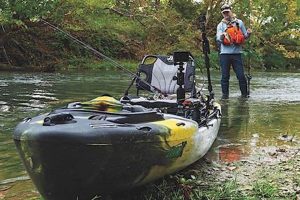
This fishing kayak, a larger model from a renowned manufacturer, is designed for stability and ample storage. It typically features a wide beam, multiple rod holders, and dedicated compartments for tackle and gear. Such a watercraft offers anglers a platform for extended trips on various bodies of water, from lakes and rivers to coastal areas.
The increased stability and storage capacity of this type of kayak allow anglers to bring more equipment and fish comfortably for longer durations. This enhances the fishing experience by providing access to more remote locations and allowing for diverse fishing techniques. The design prioritizes practicality and functionality, catering to serious anglers who require a robust and well-equipped vessel. Its popularity reflects a growing trend in kayak fishing toward specialized craft designed for specific needs and environments.
The subsequent sections will delve into specific features, performance characteristics, and user experiences related to this prominent fishing kayak model, offering a comprehensive understanding of its capabilities and suitability for various fishing styles.
Tips for Utilizing Large Fishing Kayaks
Optimizing the use of a large fishing kayak involves careful consideration of various factors, from pre-trip planning to on-the-water techniques. These tips aim to enhance safety, efficiency, and overall fishing success.
Tip 1: Pre-Trip Planning: Thoroughly research the intended fishing location, including water conditions, weather forecasts, and potential hazards. Charting a course and identifying potential landing or resting spots beforehand is crucial.
Tip 2: Weight Distribution: Evenly distribute gear and equipment within the kayak to maintain stability and prevent tipping. Heavier items should be placed low and centrally.
Tip 3: Paddle Selection: Choose a paddle appropriate for the kayak’s width and the angler’s physique. A properly sized paddle improves efficiency and reduces fatigue.
Tip 4: Safety Gear: Always wear a personal flotation device (PFD) and carry essential safety equipment, including a whistle, signaling device, and first-aid kit.
Tip 5: Anchor Positioning: Utilize appropriate anchoring techniques to maintain position in desired fishing areas, considering water depth and current flow.
Tip 6: Efficient Paddling Technique: Employ proper paddling techniques to maximize efficiency and minimize energy expenditure, especially during longer trips.
Tip 7: Fish Handling & Storage: Implement safe and efficient fish handling practices, including proper use of landing nets and appropriate storage methods within the kayak’s designated compartments.
Adhering to these guidelines will contribute significantly to a safer, more productive, and enjoyable fishing experience on the water. Careful preparation and informed decision-making are key to maximizing the advantages offered by these specialized vessels.
By following these tips and adapting them to specific circumstances, anglers can fully leverage the capabilities of their large fishing kayak and enhance their on-the-water success.
1. Stability

Stability forms a cornerstone of the Jackson Kayak Big Rig’s design, directly influencing its performance as a fishing platform. The kayak’s wide beam and flat-bottomed hull contribute significantly to its inherent stability, minimizing rocking or tipping, even when anglers shift their weight or encounter choppy water. This stability proves crucial for various fishing activities, from casting and reeling to landing fish, enabling anglers to maintain balance and control in dynamic on-the-water situations. Consider, for instance, an angler standing to cast in a Big Rig; the kayak’s inherent stability minimizes wobble, allowing for accurate and controlled casts, even in challenging conditions.
Enhanced stability translates to improved angler confidence and safety. A stable platform reduces the likelihood of capsizing or accidental entry into the water, particularly important when navigating challenging conditions or handling large fish. This stability promotes extended fishing sessions with reduced fatigue and allows for more active fishing techniques. The ability to stand comfortably and securely provides a significant advantage for sight fishing and casting, further enhancing the overall fishing experience. For example, anglers can confidently fight strong fish without compromising balance, increasing their chances of a successful landing.
While stability remains a paramount feature of the Jackson Kayak Big Rig, it’s essential to recognize the interplay between stability and other performance characteristics. The wider beam, contributing to stability, can sometimes impact maneuverability in tight spaces or swift currents. Understanding this trade-off is crucial for anglers considering the Big Rig, enabling them to select the most suitable vessel for their intended fishing environments and techniques. The inherent stability of the Big Rig makes it a reliable choice for anglers prioritizing a secure and balanced fishing platform, even at the expense of some maneuverability in specific situations.
2. Storage Capacity

Storage capacity represents a defining feature of the Jackson Kayak Big Rig, directly influencing its suitability for extended fishing trips and diverse angling styles. The kayak’s design prioritizes ample storage space, incorporating various compartments and integrated features to accommodate essential gear, tackle, and even captured fish. This generous capacity allows anglers to carry a wider array of equipment, from rods and reels to tackle boxes and safety gear, enhancing versatility and preparedness on the water. For example, anglers targeting multiple species can bring a selection of rods and lures, maximizing their chances of success without returning to shore for resupply. Furthermore, dedicated storage for personal items, such as food, water, and extra clothing, contributes to comfort and self-sufficiency during longer excursions.
The strategic placement and organization of storage compartments within the Big Rig maximize accessibility and efficiency. readily accessible compartments allow for quick retrieval of essential items without disrupting fishing activities. Dry storage areas protect sensitive gear from water damage, ensuring reliable performance in various conditions. Bungee cords and tie-down points provide secure storage for larger items, preventing loss or damage during transit or rough water. This thoughtful design enhances the overall fishing experience by minimizing clutter and maximizing efficiency on the water. Consider an angler needing a specific lure; well-organized storage allows for quick retrieval without disrupting fishing flow.
The ample storage capacity of the Jackson Kayak Big Rig significantly contributes to its appeal among anglers seeking extended trips and diverse fishing experiences. This feature allows for greater self-sufficiency, enhanced versatility, and improved organization on the water. While storage capacity influences the kayak’s overall weight and potentially its maneuverability, its benefits for serious anglers outweigh these considerations. The ability to carry ample gear and supplies enhances preparedness and comfort, ultimately contributing to a more productive and enjoyable fishing experience. The Big Rig’s focus on storage capacity directly aligns with the demands of modern kayak angling, where versatility and preparedness are paramount.
3. Fishing Features

Specialized fishing features distinguish the Jackson Kayak Big Rig from recreational kayaks, underscoring its purpose-built design for angling. Integrated rod holders, strategically positioned throughout the kayak, offer secure rod storage and hands-free fishing opportunities. Multiple mounting tracks accommodate fish finders, GPS units, and other accessories, enhancing angling efficiency and situational awareness. These features contribute directly to a more streamlined and productive fishing experience. For example, an angler trolling can secure rods in holders while simultaneously monitoring a fish finder, maximizing coverage and responsiveness to underwater activity.
The design and placement of fishing features reflect a deep understanding of angler needs and workflows. Recessed tackle storage compartments keep essential gear organized and within easy reach, minimizing clutter and maximizing efficiency. A spacious tank well accommodates live bait or captured fish, preserving freshness and facilitating catch-and-release practices. These features work in concert to create an optimized fishing platform, enabling anglers to focus on the task at hand. Consider an angler needing a quick lure change; readily accessible tackle storage streamlines the process, minimizing disruption and maximizing fishing time. Furthermore, the ability to keep fish alive in a dedicated well allows for selective harvesting and promotes conservation-minded angling.
The thoughtful integration of fishing features significantly contributes to the Jackson Kayak Big Rig’s reputation as a high-performance fishing platform. These features streamline workflows, enhance angling efficiency, and promote a more focused and productive on-the-water experience. While the inclusion of specialized features might add to the kayak’s overall cost and complexity, the practical benefits for serious anglers outweigh these considerations. The Big Rig’s dedication to fishing functionality positions it as a premier choice for anglers seeking a specialized and well-equipped vessel for pursuing their passion.
4. Durability

Durability is a critical factor for fishing kayaks, particularly those designed for demanding environments and extended use. In the case of the Jackson Kayak Big Rig, durability directly impacts the kayak’s longevity, performance, and overall value. A durable kayak withstands the rigors of regular use, including impacts, abrasion, and exposure to various weather conditions, ensuring reliable performance and extending its lifespan. This examination of durability will explore its multifaceted nature and its significance for the Big Rig.
- Construction Materials
The choice of materials significantly influences a kayak’s durability. The Jackson Kayak Big Rig typically utilizes high-density polyethylene (HDPE), known for its impact resistance, UV stability, and overall robustness. HDPE can withstand impacts from rocks, submerged obstacles, and general wear and tear, ensuring the kayak remains functional even after extended use in challenging environments. For instance, the ability to withstand minor collisions with rocks or logs in a river environment is crucial for maintaining the kayak’s structural integrity. This material selection contributes significantly to the Big Rig’s long-term durability and reliability.
- Hull Design
The hull design plays a crucial role in a kayak’s ability to withstand impacts and abrasion. The Big Rig’s relatively thick hull and reinforced keel provide additional protection against damage from underwater obstacles and rough landings. This robust design allows the kayak to handle challenging environments and contributes to its overall longevity. Consider, for example, dragging the kayak across a rocky shoreline; a reinforced hull minimizes potential damage, preserving its structural integrity.
- Hardware and Fittings
High-quality hardware and fittings are essential for maintaining a kayak’s long-term durability. The Big Rig incorporates robust hardware designed to resist corrosion and withstand the stresses of regular use. Durable fittings ensure that critical components, such as handles, rod holders, and seat mounts, remain secure and functional over time. For example, stainless steel or marine-grade aluminum hardware resists corrosion from saltwater exposure, ensuring long-term functionality and preventing premature failure.
- Manufacturing Processes
Advanced manufacturing processes contribute to a kayak’s overall durability. Jackson Kayak employs rotational molding techniques known for producing consistent, high-quality hulls with uniform wall thickness. This process minimizes weak points and ensures structural integrity throughout the kayak, enhancing its resistance to damage and extending its lifespan. Consistent manufacturing processes contribute to the overall reliability and long-term performance of the Big Rig.
The durability of the Jackson Kayak Big Rig is a product of multiple factors, including material selection, hull design, hardware quality, and manufacturing processes. These elements work together to create a robust and reliable fishing platform capable of withstanding the demands of regular use in various environments. The emphasis on durability contributes significantly to the Big Rig’s long-term value and its ability to provide anglers with years of reliable performance on the water.
5. Maneuverability

Maneuverability, while often overlooked, plays a crucial role in the overall performance and usability of fishing kayaks, especially larger models like the Jackson Kayak Big Rig. While stability and storage capacity are paramount, the ability to effectively navigate various water conditions and access desired fishing spots remains essential. This examination of maneuverability will explore its multifaceted nature and its significance for the Big Rig.
- Hull Design and Length
The Big Rig’s hull design, characterized by a longer waterline and a relatively wide beam, influences its maneuverability. The longer length contributes to tracking performance in open water but can reduce turning responsiveness in tight spaces or swift currents. The wider beam enhances stability but can increase drag, requiring more effort to turn. Consider navigating narrow, winding creeks; the Big Rig’s length might require more deliberate paddling and maneuvering compared to shorter, more agile kayaks. Conversely, in open lakes or rivers, the longer hull provides excellent tracking, allowing anglers to maintain course efficiently.
- Weight and Load Capacity
The Big Rig’s substantial weight capacity, while advantageous for carrying gear and heavier anglers, can influence maneuverability. A fully loaded kayak will displace more water and require more effort to turn or accelerate. Understanding the impact of weight distribution is crucial for optimizing maneuverability. For example, distributing weight evenly throughout the kayak can improve responsiveness, while concentrating weight at the stern can enhance tracking but reduce turning agility. Careful consideration of weight distribution and load management is essential for maximizing the Big Rig’s maneuverability on the water.
- Paddling Technique and Efficiency
Efficient paddling technique plays a crucial role in maximizing the Big Rig’s maneuverability. Proper paddle strokes, including sweep strokes and draws, are essential for turning effectively. Utilizing rudder or skeg systems, if equipped, can significantly enhance tracking and directional control, particularly in windy conditions or currents. Consider paddling in a strong crosswind; effective use of a rudder can maintain the kayak’s course, minimizing drift and improving tracking performance. Developing proficient paddling skills is crucial for maximizing the Big Rig’s maneuverability and responsiveness.
- Water Conditions and Environment
Maneuverability is often influenced by external factors such as wind, current, and water depth. Strong winds or currents can significantly impact tracking and require more effort to maintain course. Shallow water or submerged obstacles can restrict movement and necessitate careful navigation. Consider fishing in a shallow, weedy area; the Big Rig’s longer hull might require more caution to avoid entanglement or grounding, emphasizing the importance of adapting paddling techniques and navigation strategies to the prevailing conditions.
The maneuverability of the Jackson Kayak Big Rig represents a balance between stability, storage capacity, and responsiveness. While its longer length and wider beam might necessitate more deliberate paddling in certain situations, proper weight distribution, efficient paddling techniques, and consideration of environmental factors can significantly enhance its maneuverability. Understanding these factors empowers anglers to maximize the Big Rig’s performance and effectively navigate diverse water conditions, ultimately contributing to a more productive and enjoyable fishing experience.
Frequently Asked Questions
This section addresses common inquiries regarding the Jackson Kayak Big Rig, providing concise and informative responses to assist potential buyers and current owners.
Question 1: What is the maximum weight capacity of the Big Rig?
The maximum weight capacity varies depending on the specific model year but generally falls within the range of 450-500 lbs., including the angler, gear, and any other onboard items.
Question 2: Is the Big Rig suitable for ocean fishing?
While designed primarily for lakes and rivers, the Big Rig’s stability and size make it suitable for nearshore ocean fishing in calmer conditions. However, careful consideration of weather and water conditions is crucial.
Question 3: How does the Big Rig perform in windy conditions?
Due to its higher profile and larger surface area, the Big Rig can be susceptible to wind drift. Utilizing a rudder or skeg and employing proper paddling techniques can mitigate this effect.
Question 4: What is the warranty coverage for the Big Rig?
Warranty coverage details vary depending on the specific model and purchase location. Consulting the manufacturer’s official documentation or contacting an authorized dealer is recommended for precise information.
Question 5: What are the transportation and storage considerations for the Big Rig?
Due to its size and weight, transporting the Big Rig requires a suitable vehicle and potentially specialized roof racks or trailers. Storage options include garages, sheds, or specialized kayak storage racks.
Question 6: What maintenance is required for the Big Rig?
Regular maintenance includes rinsing the kayak after each use, particularly in saltwater environments, and inspecting hardware and fittings for wear or damage. Periodic cleaning and UV protectant application can prolong the lifespan of the hull.
Addressing these common inquiries provides valuable insights into the capabilities and practicalities of owning and operating a Jackson Kayak Big Rig. Thorough research and consideration of individual needs and intended usage are essential for making informed purchasing decisions.
The following sections will delve into user reviews and experiences, providing real-world perspectives on the Big Rig’s performance in various fishing scenarios.
Conclusion
This exploration of the Jackson Kayak Big Rig encompassed key aspects of its design, features, and performance characteristics. Emphasis was placed on stability, storage capacity, specialized fishing features, durability, and maneuverability. The interplay of these factors contributes significantly to the kayak’s suitability for various fishing styles and environments. Understanding these elements provides prospective buyers with valuable insights for informed decision-making.
The Jackson Kayak Big Rig represents a significant advancement in fishing kayak design, catering to anglers seeking a stable, well-equipped, and durable platform for pursuing their passion. Its features and performance characteristics position it as a prominent choice for serious anglers seeking to maximize their on-the-water effectiveness and enjoyment. Continued innovation in kayak design and technology promises further advancements in fishing kayak capabilities, enhancing the angling experience for years to come.