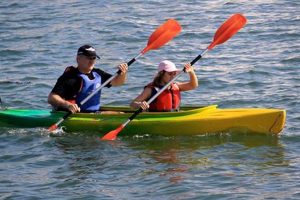
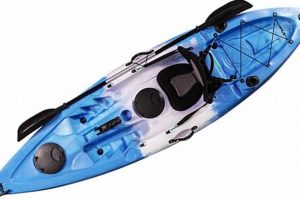
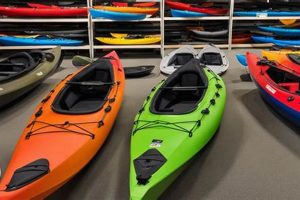
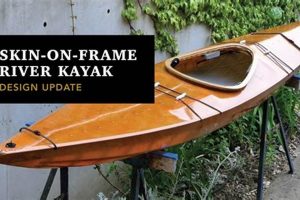
A suitable vessel for angling combines stability, comfort, and specialized features. Such kayaks prioritize a stable hull design for casting and reeling, ample storage for tackle and equipment, and often include features like rod holders, anchor trolleys, and even livewells. A well-equipped angler might choose a pedal-driven kayak for hands-free fishing or a sit-on-top model for enhanced stability and ease of entry and exit.
Choosing the right watercraft dramatically enhances the fishing experience. Enhanced stability allows anglers to focus on their technique rather than balance, while integrated features streamline the process and maximize fishing time. Historically, anglers relied on traditional boats or shore fishing; purpose-built kayaks offer a modern approach, granting access to shallower waters and a closer connection with the environment. This evolution has revolutionized angling, making it more accessible and enjoyable.
This article will explore the key characteristics of suitable fishing kayaks, delve into various types and features available, and provide guidance for selecting the ideal vessel based on individual needs and fishing styles.
Tips for Selecting a Fishing Kayak
Choosing a suitable fishing kayak requires careful consideration of several factors. These tips offer guidance for selecting a vessel that aligns with individual angling needs and preferences.
Tip 1: Consider Stability: Prioritize stability, especially for stand-up fishing. Wider hulls and flatter bottoms generally offer greater stability than narrower, V-shaped hulls.
Tip 2: Evaluate Propulsion: Paddle kayaks are versatile and affordable, while pedal-drive systems offer hands-free fishing and greater speed. Consider fishing locations and personal preferences.
Tip 3: Assess Storage Capacity: Ample storage is crucial for tackle, gear, and catches. Evaluate storage compartments, tank wells, and bungee systems.
Tip 4: Examine Comfort and Ergonomics: A comfortable seat and adjustable features enhance endurance during long fishing trips. Pay attention to seat design, footrests, and backrest adjustability.
Tip 5: Factor in Weight Capacity: Ensure the kayak’s weight capacity accommodates the angler’s weight, gear, and potential catches.
Tip 6: Research Specific Features: Consider specialized features such as rod holders, anchor trolleys, livewells, and fish finders based on fishing style and target species.
Tip 7: Think About Portability and Transportation: Evaluate the kayak’s weight and size in relation to transportation capabilities. Consider lighter kayaks or roof racks for easier transport.
By considering these factors, anglers can select a kayak that optimizes performance, comfort, and overall fishing experience. A well-chosen vessel enhances efficiency on the water and contributes to a more enjoyable and successful angling experience. This leads to a final consideration of the specific fishing environment and target species.
This comprehensive approach to kayak selection ensures anglers are well-equipped to make informed decisions, ultimately leading to a more rewarding experience on the water.
1. Stability

Stability forms the cornerstone of a successful fishing kayak. A stable platform is paramount for casting accuracy, fighting fish, and overall safety on the water. Without adequate stability, anglers risk capsizing, losing equipment, and compromising their fishing experience. This section explores the multifaceted nature of stability and its crucial role in defining a suitable fishing kayak.
- Primary Stability:
Primary stability refers to a kayak’s initial resistance to tipping. A wider, flatter hull exhibits higher primary stability, providing a secure feeling at rest. This is crucial for activities like casting and still-fishing, where maintaining balance is essential. A kayak with high primary stability feels secure and predictable, instilling confidence in anglers, especially in calm waters.
- Secondary Stability:
Secondary stability describes a kayak’s ability to resist capsizing when leaned or tilted. Kayaks with rounded or flared hulls typically offer greater secondary stability. This becomes critical when encountering waves, wakes, or when leaning to land a fish. High secondary stability provides a reassuring buffer against capsizing, allowing anglers to push the limits of balance without compromising safety.
- Hull Design and Stability:
Hull design significantly influences both primary and secondary stability. Wider, flatter hulls maximize primary stability, while rounded or flared hulls enhance secondary stability. Pontoon hulls offer exceptional primary stability, while catamaran hulls provide a balance of both. Understanding the relationship between hull design and stability is crucial for choosing a kayak suited to specific fishing conditions and angler preferences.
- Factors Affecting Stability:
Beyond hull design, factors like kayak length, weight distribution, and even wind and water conditions can influence stability. Longer kayaks generally track straighter but may be less maneuverable, while proper weight distribution optimizes balance. Anglers must consider these external factors to maintain stability and ensure a safe and productive fishing experience.
Ultimately, stability is a critical factor in determining a suitable fishing kayak. A thorough understanding of primary and secondary stability, hull design influences, and external factors empowers anglers to choose a kayak that provides the necessary platform for a successful and enjoyable fishing experience. The interplay of these elements dictates how well a kayak performs on the water and contributes directly to angler confidence and safety.
2. Propulsion

Propulsion is a critical aspect of fishing kayak selection, directly impacting an angler’s ability to cover water efficiently, position effectively, and conserve energy. The choice of propulsion system significantly influences the overall fishing experience, affecting maneuverability, speed, and hands-free fishing capabilities. Different propulsion methods cater to various fishing styles and environments, making a thorough understanding of available options essential for selecting a suitable vessel.
- Paddle Propulsion:
Traditional paddle propulsion offers versatility and affordability. Paddle kayaks provide excellent maneuverability in tight spaces and shallow water, making them ideal for navigating complex shorelines and exploring secluded fishing spots. While requiring physical effort, paddling allows for quiet and stealthy movement, crucial for approaching fish without disturbance. This method remains a popular choice for anglers prioritizing affordability and maneuverability over speed.
- Pedal Propulsion:
Pedal-powered kayaks utilize either propeller or fin systems, freeing the angler’s hands for fishing. These systems offer increased speed and efficiency compared to paddling, enabling anglers to cover greater distances with less effort. Pedal drives are particularly advantageous in open water or when trolling, allowing for continuous movement while maintaining fishing readiness. The hands-free aspect is also beneficial for techniques requiring constant rod manipulation.
- Motorized Propulsion:
Motorized kayaks integrate electric motors, providing effortless and rapid movement across the water. This option is ideal for covering long distances, navigating strong currents, or fishing vast bodies of water. Motors offer significant speed advantages, allowing anglers to reach distant fishing grounds quickly. However, motorized kayaks are typically heavier and require battery management, necessitating careful consideration of range and charging capabilities.
- Choosing the Right Propulsion:
Selecting the optimal propulsion system depends on individual fishing needs and preferences. Anglers fishing in confined areas or prioritizing stealth may prefer paddle kayaks. Those seeking speed and hands-free fishing might choose pedal drives. Motorized propulsion suits anglers covering vast distances or requiring assistance against currents. Evaluating fishing locations, target species, and desired fishing style informs the most appropriate propulsion choice.
The choice of propulsion system significantly influences the overall effectiveness and enjoyment of a fishing kayak. By carefully considering the advantages and disadvantages of each method, anglers can select the propulsion system that best aligns with their individual needs and fishing style. This ensures efficient movement on the water, maximizes fishing time, and ultimately contributes to a more successful and rewarding angling experience. The ideal propulsion method depends on a balance of desired speed, maneuverability, fishing environment, and personal preferences.
3. Storage
Ample and well-designed storage is integral to a productive and enjoyable fishing kayak experience. Efficient storage solutions allow anglers to organize tackle, carry essential gear, and transport catches safely and conveniently. Insufficient or poorly planned storage can lead to clutter, lost gear, and compromised fishing efficiency. This section explores the critical aspects of storage in defining a suitable fishing kayak.
- Types of Storage:
Fishing kayaks offer various storage options, including dedicated tackle compartments, open-deck bungee systems, sealed hatches, and integrated tank wells. Tackle compartments provide organized storage for lures, hooks, and other small items. Bungee systems secure larger items like coolers and dry bags. Sealed hatches protect sensitive gear from water damage. Tank wells accommodate live bait or catches. The variety of storage types caters to diverse angling needs and preferences.
- Storage Capacity and Accessibility:
Sufficient storage capacity is crucial for carrying all necessary gear for a fishing trip. Easy access to frequently used items is equally important for maintaining fishing efficiency. Well-designed kayaks prioritize accessibility, allowing anglers to retrieve tackle and equipment without disrupting their fishing flow. Adequate capacity and convenient access contribute significantly to a seamless and productive fishing experience.
- Storage Organization and Customization:
Effective organization within storage compartments enhances efficiency and reduces time spent searching for specific items. Many fishing kayaks offer customizable storage solutions, allowing anglers to tailor compartments and attachments to their specific needs. Modular systems and adjustable dividers enable personalized organization, optimizing tackle management and streamlining the fishing process.
- Storage and Kayak Design Integration:
Well-integrated storage solutions contribute to a kayak’s overall functionality and aesthetics. Recessed compartments and strategically placed hatches maximize deck space and minimize interference with paddling or fishing. Thoughtful integration ensures that storage enhances rather than hinders the kayak’s performance and user experience. Seamless integration is a hallmark of a well-designed fishing kayak.
Effective storage is paramount for a positive fishing kayak experience. Adequate capacity, convenient accessibility, thoughtful organization, and seamless integration with kayak design contribute significantly to angler efficiency and enjoyment. A well-designed storage system allows anglers to focus on fishing rather than managing gear, ultimately enhancing the overall experience on the water. Proper storage is a defining feature of a suitable fishing kayak, contributing to both practicality and enjoyment on the water.
4. Comfort

Comfort is a crucial factor influencing the overall enjoyment and success of kayak fishing. An uncomfortable kayak can lead to fatigue, reduced fishing time, and even physical discomfort, detracting significantly from the experience. Conversely, a comfortable and ergonomic design allows anglers to focus on fishing, maximizing their time on the water and enhancing overall enjoyment. This section explores the multifaceted nature of comfort and its crucial role in defining a suitable fishing kayak.
- Seat Design and Adjustability:
A well-designed seat provides crucial support and cushioning, reducing strain on the back, legs, and buttocks during long hours on the water. Adjustable features, such as backrest angle and seat height, allow anglers to customize the seating position for optimal comfort and support. Features like breathable mesh fabric and high-density foam padding enhance comfort and reduce pressure points. A comfortable and adjustable seat significantly contributes to an angler’s endurance and overall enjoyment.
- Footrests and Leg Support:
Proper leg support is essential for maintaining balance and paddling efficiency. Adjustable footrests accommodate varying leg lengths and provide a solid platform for bracing against the kayak. Secure and comfortable footrests contribute to overall stability and reduce leg fatigue, allowing for extended periods on the water without discomfort.
- Backrest Support and Posture:
Adequate back support promotes proper posture and reduces back strain, crucial for long fishing trips. Adjustable backrests cater to individual preferences and provide customized lumbar support. A supportive backrest allows anglers to maintain a comfortable and healthy posture, minimizing fatigue and maximizing fishing time.
- Deck Space and Layout:
A spacious and well-designed deck provides ample room for movement and gear storage, enhancing overall comfort and fishing efficiency. Uncluttered deck space allows anglers to move freely and access gear easily. Features like recessed compartments and strategically placed hatches maximize usable deck space and contribute to a more comfortable and organized fishing experience.
Comfort significantly impacts the overall fishing kayak experience. A comfortable and ergonomic design allows anglers to focus on fishing, maximizing their time on the water and increasing enjoyment. Prioritizing features like adjustable seating, footrests, back support, and spacious deck layouts contributes significantly to a positive and productive fishing experience. A truly suitable fishing kayak prioritizes comfort alongside functionality, recognizing the interconnectedness of these elements in achieving a rewarding experience on the water.
5. Capacity
Capacity, often overlooked, plays a crucial role in defining a suitable fishing kayak. This encompasses both weight capacity and the capacity to carry necessary gear. Insufficient weight capacity compromises stability and safety, potentially leading to capsizing or swamping. A kayak’s listed capacity must accommodate the angler’s weight, all fishing gear, and potential catches. Exceeding this limit drastically reduces freeboard, increasing the risk of taking on water, especially in rough conditions. For example, an angler weighing 180 pounds with 50 pounds of gear needs a kayak with a capacity exceeding 230 pounds. Furthermore, insufficient gear capacity limits the duration and effectiveness of fishing trips. Adequate storage for tackle boxes, rods, safety equipment, and potential catches is essential. Without sufficient space, anglers may be forced to leave behind essential gear or cut trips short, hindering their fishing success. Consider a multi-day fishing expedition: a larger capacity kayak allows for essential camping gear alongside fishing equipment, ensuring a successful and self-sufficient trip.
Understanding capacity requirements enables informed decisions, maximizing safety and fishing effectiveness. A kayak with ample capacity ensures safe handling, even with a full load of gear and a substantial catch. This is particularly important in challenging conditions such as rough water or strong currents, where stability is paramount. Additionally, ample gear capacity allows anglers to carry specialized equipment for different fishing techniques or target species, maximizing versatility. Imagine targeting large pelagic fish offshore: a higher capacity kayak accommodates heavier tackle, larger rods, and safety equipment like a VHF radio, essential for such demanding conditions.
Capacity directly influences both safety and fishing success. Selecting a kayak with appropriate weight and gear capacity is crucial for a positive experience. Ignoring this factor can compromise stability, limit fishing effectiveness, and potentially create hazardous situations. A clear understanding of capacity needs ensures informed decision-making, contributing to a safe, enjoyable, and productive fishing experience. This requires careful consideration of angler weight, gear requirements, target species, and anticipated fishing conditions. Ultimately, selecting a kayak with sufficient capacity lays the foundation for a safe and successful fishing endeavor.
6. Features

Specialized features distinguish a purpose-built fishing kayak from recreational models, directly impacting functionality and angling success. These features enhance on-the-water efficiency, improve organization, and cater to specific fishing techniques. Rod holders, for instance, secure rods while paddling or preparing tackle, freeing hands for other tasks. Flush-mounted rod holders minimize line entanglement and offer a streamlined profile. Adjustable rod holders cater to various fishing styles, from trolling to jigging. Similarly, integrated tackle storage systems keep essential gear organized and readily accessible. Dedicated compartments for lures, hooks, and tools prevent clutter and streamline tackle management. Waterproof hatches safeguard electronics and valuables from water damage, essential for maintaining functionality in demanding conditions.
Further enhancing functionality are features like anchor trolleys, which control anchor position and drift speed, crucial for precise boat control in currents or wind. Livewells maintain baitfish viability, enhancing fishing success, particularly for species preferring live presentations. Built-in fish finders provide real-time underwater information, aiding in locating fish and identifying underwater structures. These features, while optional, significantly enhance the fishing experience, improving efficiency and success rates. Consider a scenario where an angler needs to quickly adjust drift speed while simultaneously managing a hooked fish. An anchor trolley, combined with readily accessible tackle and secure rod storage, allows for seamless adjustments without compromising control or safety. This integration of features exemplifies the practical significance of specialized design in fishing kayaks.
Understanding the role of specialized features is crucial for selecting a kayak tailored to specific fishing needs. Features directly influence functionality, efficiency, and overall angling success. While core components like stability and propulsion form the foundation, specialized features elevate the kayak’s performance to meet the demands of serious anglers. Evaluating these features alongside core components ensures a comprehensive selection process, leading to a vessel optimized for individual fishing styles and target species. The strategic integration of these features defines a well-equipped fishing kayak, enhancing both practicality and overall angling success.
7. Portability
Portability significantly impacts the practicality and overall usability of a fishing kayak. Transporting a kayak from storage to launch site requires consideration of vehicle type, storage space, and individual physical capabilities. A heavier, bulkier kayak necessitates specialized roof racks, trailers, or assistance, potentially limiting access to remote fishing locations. Conversely, a lightweight, compact design allows for easier transport, expanding fishing opportunities. Consider an angler with limited storage space and a smaller vehicle. A lightweight, inflatable kayak offers a practical solution, enabling transport without specialized equipment. This accessibility expands fishing possibilities, allowing exploration of diverse waterways otherwise inaccessible with a larger, less portable vessel. Kayak weight, hull design, and material construction all contribute to portability. Lighter materials like polyethylene and inflatable designs enhance portability, while heavier materials like fiberglass or rotomolded plastic, though durable, reduce ease of transport.
The interplay between portability and fishing location accessibility underscores the practical implications of this factor. Remote fishing locations often require portaging or navigating challenging terrain. A highly portable kayak simplifies these logistical challenges, allowing anglers to reach otherwise inaccessible waters. Imagine accessing a secluded mountain lake: a lightweight, easily transportable kayak enables exploration of these pristine environments, expanding fishing possibilities beyond easily accessible locations. Conversely, a heavier, less portable kayak restricts access, limiting fishing opportunities. Choosing a kayak with appropriate portability features, therefore, expands angling horizons and maximizes access to diverse fishing environments. Understanding these considerations allows anglers to choose a vessel suited to their specific transportation needs and desired fishing locations.
Portability considerations influence overall fishing experience. Balancing portability with other essential features like stability and capacity is crucial. While lightweight designs enhance portability, they may compromise stability or storage capacity. The optimal balance depends on individual needs and fishing style. Choosing a kayak that aligns with transportation capabilities and desired fishing locations directly impacts the enjoyment and success of fishing trips. Overlooking portability can lead to logistical challenges and limit access to desired fishing spots, ultimately hindering the overall angling experience. A comprehensive evaluation of portability alongside other key factors ensures a suitable choice, maximizing fishing opportunities and enhancing enjoyment on the water.
Frequently Asked Questions
This section addresses common inquiries regarding suitable fishing kayak selection, offering concise and informative responses to guide informed decision-making.
Question 1: How does hull design influence stability and performance in a fishing kayak?
Hull design significantly impacts both stability and maneuverability. Wider, flatter hulls offer enhanced primary stability, ideal for calm waters and stand-up fishing. Narrower, V-shaped hulls prioritize speed and tracking but sacrifice some stability. Rounded or flared hulls offer greater secondary stability, advantageous in rougher conditions.
Question 2: What are the advantages and disadvantages of pedal-powered versus paddle kayaks for fishing?
Pedal kayaks offer hands-free fishing and increased speed, beneficial for trolling and covering larger distances. However, they are typically heavier and less maneuverable in tight spaces compared to paddle kayaks, which excel in maneuverability and affordability but require physical exertion.
Question 3: How much storage capacity is recommended for a fishing kayak?
Adequate storage depends on fishing style and trip duration. Day trips may require less storage than multi-day excursions. Prioritize sufficient space for tackle, safety gear, personal items, and potential catches. Consider specialized storage solutions like tackle compartments and dry hatches.
Question 4: What features should one prioritize in a fishing kayak for specific target species?
Target species influence feature selection. Angling for larger species necessitates higher weight capacity and robust rod holders. Fishing in shallow waters benefits from a shallow-draft hull design. Species-specific features like livewells or specialized rod holders further enhance fishing success.
Question 5: How does one determine the appropriate weight capacity for a fishing kayak?
Weight capacity must accommodate the combined weight of the angler, all gear, and potential catches. Exceeding the listed capacity compromises stability and safety. Calculate total weight accurately to ensure safe and optimal performance on the water.
Question 6: What factors influence the portability of a fishing kayak?
Kayak weight, length, and hull design influence portability. Lighter materials and shorter lengths enhance ease of transport. Inflatable kayaks offer exceptional portability but require inflation and deflation. Consider transportation methods and storage space when evaluating portability.
Careful consideration of these frequently asked questions enables informed decision-making, leading to a fishing kayak optimized for individual needs and fishing styles.
This comprehensive understanding of key factors contributes to a safe, enjoyable, and successful experience on the water.
Conclusion
Defining a suitable fishing kayak involves a comprehensive evaluation of various interconnected factors. Stability, propulsion, storage, comfort, capacity, specialized features, and portability all contribute significantly to on-water performance and overall angling success. A well-chosen vessel balances these elements to meet individual angler needs and fishing styles, maximizing efficiency, enjoyment, and safety on the water. Prioritizing stability ensures a secure platform for casting and reeling, while efficient propulsion systems enhance maneuverability and range. Ample, well-organized storage accommodates essential gear and facilitates efficient tackle management. Comfort features, including adjustable seating and footrests, contribute to endurance and reduce fatigue during long fishing trips. Adequate capacity ensures safe handling and sufficient space for gear and potential catches. Specialized features like rod holders, anchor trolleys, and fish finders further enhance functionality and cater to specific fishing techniques. Finally, portability considerations influence accessibility to diverse fishing locations and ease of transport.
Ultimately, a good fishing kayak represents a personalized choice reflecting individual priorities and fishing preferences. Careful consideration of these key factors empowers anglers to select a vessel that optimizes performance, enhances enjoyment, and contributes to a successful and rewarding experience on the water. This informed approach transforms kayak fishing from a simple pastime into a personalized pursuit of angling excellence. The journey towards finding the ideal fishing kayak begins with a comprehensive understanding of these essential elements, paving the way for countless successful fishing adventures.