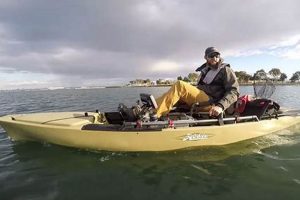
Larger-sized kayaks designed for angling offer increased stability and capacity, accommodating substantial gear and larger individuals comfortably. These watercraft often feature specialized storage, rod holders, and other amenities tailored to the needs of anglers. An example includes kayaks exceeding twelve feet in length and boasting a wider beam for enhanced balance.
The enhanced stability of these sizable vessels allows anglers to stand and cast with confidence, improving accuracy and visibility. Their generous storage capacity facilitates longer expeditions and the transport of more equipment, including coolers, tackle boxes, and even camping gear. Historically, fishing from kayaks has evolved from basic, smaller craft to the highly specialized designs available today, driven by the demand for comfort, stability, and enhanced fishing capabilities. This evolution reflects a growing appreciation for the unique advantages kayaks offer for accessing diverse fishing locations, including shallow waters and areas inaccessible to larger boats.
This article will further explore key factors in selecting an appropriately sized fishing kayak, including considerations of hull design, materials, and features that contribute to on-the-water performance. It will also delve into specific aspects of their utilization, covering topics like launching, paddling techniques, and essential safety precautions.
Tips for Selecting and Using Larger Fishing Kayaks
Careful consideration of several factors contributes significantly to a successful and enjoyable experience when using larger-sized kayaks designed for angling.
Tip 1: Prioritize Stability: A wider beam and flatter hull design generally provide greater stability, crucial for standing and casting or maneuvering in challenging conditions.
Tip 2: Assess Weight Capacity: Match the kayak’s weight capacity to the combined weight of the angler, gear, and potential catch to ensure safe and efficient operation.
Tip 3: Consider Storage Options: Evaluate built-in storage compartments, rod holders, and other features to ensure adequate space for all essential fishing equipment.
Tip 4: Choose Appropriate Materials: Select a durable material like high-density polyethylene or fiberglass, balancing weight, durability, and cost considerations.
Tip 5: Evaluate Propulsion Systems: Consider paddle propulsion, pedal drives, or even electric motors based on individual preferences, fishing style, and the target fishing environment.
Tip 6: Practice Launching and Landing: Master launching and landing techniques in various water conditions to minimize difficulties and ensure safety.
Tip 7: Prioritize Safety Gear: Always wear a personal flotation device and carry essential safety equipment, including a whistle, signaling device, and first-aid kit.
By carefully evaluating these elements, anglers can select a vessel optimized for their specific needs and enhance their overall fishing experience.
This information provides a foundational understanding of the key factors to consider when choosing and utilizing larger fishing kayaks. The following section will offer a concluding perspective on maximizing enjoyment and success on the water.
1. Stability

Stability is a critical factor in fishing kayak performance, particularly in larger models where anglers may stand to cast or navigate challenging waters. A stable platform allows for more effective fishing techniques, increased safety, and overall enhanced confidence on the water. The following facets contribute to kayak stability:
- Hull Design
Hull design significantly influences stability. Wider, flatter hulls provide primary stability, resisting initial tipping. A shallow-V hull offers good initial stability but can feel less stable in rougher conditions. A deeper-V hull, though less initially stable, performs better in chop and waves, providing secondary stability. Kayaks designed for fishing often incorporate a wider hull to facilitate standing and casting.
- Center of Gravity
A lower center of gravity improves stability. Keeping weight low and centered within the kayak minimizes the likelihood of capsizing. Anglers should distribute gear evenly and avoid placing heavy items high in the kayak. The angler’s body position also affects the center of gravity; sitting lower enhances stability.
- Water Conditions
Calm, flat water presents fewer stability challenges than rougher conditions with waves and currents. Wind also significantly impacts stability. Anglers should consider prevailing wind and water conditions when selecting a fishing location and adjust their techniques accordingly. Larger kayaks generally provide more stability in challenging conditions.
- Kayak Length and Width
Longer kayaks tend to track straighter, while shorter kayaks are more maneuverable but potentially less stable. Wider kayaks provide more initial stability, allowing anglers to move around more comfortably. The length-to-width ratio contributes to overall stability; wider, shorter kayaks are typically more stable than narrower, longer ones. This balance is crucial in larger fishing kayaks designed to accommodate both stability needs and reasonable maneuverability.
Understanding these interacting facets of stability is paramount for choosing and effectively operating a larger fishing kayak. A stable platform significantly enhances angling performance, improves safety margins, and allows for a more confident and enjoyable fishing experience. Considering the interplay of hull design, center of gravity, water conditions, and kayak dimensions empowers anglers to select and utilize their vessels effectively in diverse environments.
2. Capacity

Capacity, a crucial factor in fishing kayak selection, directly impacts functionality and the angler’s experience. In the context of larger fishing kayaks, increased capacity translates to greater load-bearing ability, facilitating extended trips, abundant gear storage, and potentially accommodating multiple passengers or larger individuals. Understanding the components of capacity is essential for informed decision-making.
- Weight Capacity
Weight capacity defines the maximum combined weight of the angler, gear, and any potential catch the kayak can safely support. Exceeding this limit compromises stability and safety, potentially leading to capsizing. Manufacturers specify weight capacity based on hull design and materials. Selecting a kayak with ample weight capacity is paramount, especially for larger anglers or those embarking on multi-day expeditions with substantial gear.
- Storage Capacity
Storage capacity encompasses the volume and configuration of storage compartments within the kayak. Larger fishing kayaks often feature dedicated storage for rods, tackle boxes, coolers, and other essential gear. Well-designed storage solutions maximize available space and ensure convenient access to equipment. Ample storage is crucial for longer trips and diverse fishing styles, allowing anglers to carry a wider range of equipment.
- Cockpit Size
Cockpit size refers to the dimensions of the seating area, impacting angler comfort and mobility. A larger cockpit provides greater freedom of movement and accommodates larger individuals more comfortably. Consideration of cockpit size is particularly important for extended fishing trips, where comfort and ergonomics play a significant role in overall enjoyment and performance.
- Deck Space
Deck space refers to the open area on the kayak’s deck, providing additional storage or mounting points for accessories. Larger kayaks often feature increased deck space, allowing for customization with rod holders, fish finders, or other specialized equipment. Ample deck space enhances versatility and adaptability to specific fishing techniques and preferences.
Capacity considerations are intrinsically linked to the selection of a larger fishing kayak. Balancing weight capacity, storage needs, cockpit size, and available deck space ensures optimal performance and angler comfort. A thoughtfully chosen kayak with ample capacity facilitates diverse fishing styles, extended expeditions, and the safe transport of all necessary gear, contributing significantly to a successful and enjoyable on-the-water experience.
3. Storage

Storage solutions are integral to the functionality and practicality of larger fishing kayaks. The capacity to transport and organize essential gear directly impacts fishing success and overall experience. A well-designed storage system facilitates efficient access to tackle, rods, safety equipment, and personal items, minimizing clutter and maximizing time spent fishing. For instance, integrated rod holders secure rods while paddling or maneuvering, preventing damage and freeing hands for other tasks. Dedicated compartments for tackle boxes keep lures and hooks organized and readily available. Larger storage wells accommodate coolers, dry bags, and even camping gear for extended expeditions. The relationship between storage and kayak size is directly proportional; larger kayaks generally offer more storage options.
Several storage configurations commonly feature in these kayaks. Recessed storage wells offer protection from water and secure larger items. Bungee cord systems on the deck provide quick access to frequently used gear. Dedicated hatches within the hull offer waterproof compartments for sensitive electronics or personal belongings. The choice of storage configuration depends on individual fishing style and preferences. A kayak angler targeting larger species might prioritize rod storage and a spacious fish finder mount, while someone focused on multi-day trips benefits from ample dry storage for clothing and camping gear. Understanding the available storage options and their practical applications is crucial for maximizing kayak functionality.
Effective storage management enhances safety and efficiency on the water. Keeping essential safety gear like a first-aid kit, signaling devices, and extra clothing readily accessible in designated compartments ensures rapid deployment in emergencies. Organizing tackle and equipment reduces clutter, minimizing the risk of entanglement or lost gear. This efficient organization contributes to a more streamlined and enjoyable fishing experience. Choosing a kayak with adequate and well-designed storage is an investment in both practicality and safety, significantly contributing to successful angling endeavors.
4. Maneuverability
Maneuverability in larger fishing kayaks presents unique challenges and considerations. While increased size offers advantages in stability and capacity, it can sometimes compromise agility and responsiveness on the water. Understanding the factors influencing maneuverability is crucial for selecting and effectively operating a larger fishing kayak, especially in confined waterways or dynamic fishing environments.
- Hull Design
Hull design significantly impacts maneuverability. Longer kayaks generally track straighter and glide more efficiently, but require more effort to turn. Shorter kayaks turn more quickly but may sacrifice tracking performance and straight-line speed. A wider, flatter hull enhances stability but can feel sluggish in turns. A more streamlined, V-shaped hull improves tracking and cutting through water but may compromise initial stability. The choice of hull design involves balancing stability and maneuverability based on intended use and water conditions. A kayak intended for open water requires different handling characteristics than one designed for maneuvering in tight rivers or mangrove tunnels.
- Length and Width
Length and width directly influence turning radius and responsiveness. Longer kayaks require more space and effort to turn, while shorter kayaks pivot more readily. Wider kayaks provide more initial stability but can feel less nimble in turns, requiring more paddle strokes or rudder input to change direction. The length-to-width ratio is a key determinant of maneuverability, with longer, narrower kayaks generally exhibiting better tracking and speed, while shorter, wider kayaks prioritize stability and turning ability. These dimensional factors become particularly relevant in larger fishing kayaks, where navigating tight spaces or quickly changing direction can be crucial for successful angling.
- Water Conditions
Water conditions, including current, wind, and waves, significantly impact maneuverability. Strong currents can make maneuvering challenging, particularly in larger kayaks. Wind can push the kayak off course, requiring constant correction, especially in designs with higher profiles. Waves can affect tracking and stability, further complicating maneuvering. Adapting paddling techniques and utilizing rudder systems, if available, becomes essential for maintaining control and effectively navigating varying water conditions. Larger kayaks, due to their size and weight, can be more susceptible to these external forces, requiring greater attention to environmental factors.
- Propulsion System
The propulsion system influences maneuverability. Traditional paddle propulsion provides direct control and allows for precise adjustments, beneficial in tight spaces. Pedal-driven systems offer hands-free operation but may limit maneuverability in complex environments. Motorized kayaks offer increased speed and range but can be less responsive in close-quarters maneuvering. The choice of propulsion system directly impacts how the angler interacts with the environment and navigates various water conditions. Larger kayaks often benefit from rudder systems, regardless of the primary propulsion method, to enhance steering control and maintain course in challenging situations.
Maneuverability in larger fishing kayaks represents a critical performance aspect, influencing the angler’s ability to navigate effectively and access desired fishing locations. Balancing size, hull design, and propulsion system with the anticipated water conditions is essential for optimizing maneuverability and maximizing fishing success. Selecting a kayak that aligns with the specific needs and intended fishing environment ensures a more productive and enjoyable experience on the water.
5. Propulsion
Propulsion systems are critical for larger fishing kayaks, impacting accessibility, range, and overall fishing effectiveness. These kayaks, due to their size and weight, present unique propulsion challenges and considerations. Effective propulsion enables anglers to cover greater distances, access remote fishing spots, and navigate varying water conditions efficiently. The choice of propulsion method directly influences the fishing experience, requiring careful evaluation based on individual needs and the target environment. For example, paddling a larger kayak against strong currents or wind can be strenuous, potentially limiting fishing time and effectiveness. In such scenarios, alternative propulsion systems become advantageous.
Several propulsion options exist for larger fishing kayaks, each with inherent advantages and disadvantages. Traditional paddle propulsion offers excellent control and maneuverability, especially in tight spaces. However, it can be physically demanding over long distances or in challenging conditions. Pedal-driven systems provide hands-free operation, allowing anglers to focus on fishing while maintaining steady movement. These systems are particularly beneficial for trolling or maintaining position in currents. However, they add complexity and weight to the kayak and may limit maneuverability in shallow water or dense vegetation. Electric motors offer the greatest power and range, enabling access to distant locations and effortless navigation against wind and current. However, they require battery management and can be a significant investment. The selection of a propulsion system depends on factors such as fishing style, physical capabilities, and target fishing environments. For example, a kayak angler fishing in calm lakes or ponds might prefer paddle propulsion for its simplicity and control, while someone fishing in large reservoirs or coastal areas might opt for a pedal drive or electric motor to cover greater distances and combat challenging conditions.
Optimizing propulsion efficiency in larger fishing kayaks requires consideration of hull design, weight distribution, and paddling technique or motor operation. A streamlined hull design minimizes drag and improves tracking, enhancing speed and efficiency regardless of the propulsion method. Proper weight distribution within the kayak ensures balanced performance and minimizes drag. Efficient paddling techniques or proper motor trimming maximize power output and conserve energy. Understanding these factors contributes significantly to overall performance and enjoyment on the water. Challenges related to propulsion in larger kayaks often center on balancing speed, range, and maneuverability within the constraints of size and weight. Addressing these challenges through careful selection and optimization of the propulsion system enhances fishing effectiveness and expands access to diverse fishing opportunities.
6. Transportation

Transporting larger fishing kayaks presents logistical considerations directly related to their size and weight. These kayaks often exceed the capacity of standard roof racks and require specialized trailers or alternative transportation methods. The increased length and beam of these vessels necessitate careful planning and potentially specialized equipment. For example, a 16-foot kayak with a wide beam may require a dedicated kayak trailer with adjustable cradles and tie-down points. Alternatively, some anglers utilize pickup truck beds with appropriate padding and securement straps. Failure to adequately secure the kayak during transport can result in damage to the vessel or pose a hazard to other drivers. Understanding the dimensions and weight of the kayak is crucial for selecting the appropriate transportation method and ensuring safe and secure transit.
Several factors influence transportation decisions, including distance to the launch site, available vehicle options, and storage considerations. Transporting a larger kayak over long distances necessitates a reliable trailer and appropriate towing capacity. Limited vehicle options may necessitate roof-top transport with specialized J-cradles or saddles designed for longer kayaks. Storage limitations at home or during travel require consideration of kayak disassembly options or off-site storage solutions. The practical implications of transportation directly influence the choice of fishing locations and the frequency of outings. For example, anglers with limited transportation options may be restricted to easily accessible launch sites or require assistance from fellow anglers for transport. Evaluating transportation logistics before purchasing a larger fishing kayak is crucial for avoiding unforeseen challenges and ensuring convenient access to desired fishing locations.
Addressing transportation challenges requires careful planning and investment in appropriate equipment. Researching local regulations regarding kayak transport, including permitting requirements for trailers, ensures compliance and avoids legal issues. Investing in high-quality tie-down straps, roof racks, or trailers minimizes the risk of damage during transit and safeguards other road users. Practicing loading and unloading techniques improves efficiency and reduces the risk of injury. Understanding and addressing transportation logistics is essential for maximizing the utility and enjoyment of a larger fishing kayak, ensuring safe and convenient access to diverse fishing destinations.
Frequently Asked Questions about Larger Fishing Kayaks
This section addresses common inquiries regarding larger fishing kayaks, providing concise and informative responses to facilitate informed decision-making and enhance understanding of these specialized vessels.
Question 1: What are the primary advantages of a larger fishing kayak?
Enhanced stability, increased carrying capacity for gear and larger individuals, and often more comfortable seating arrangements are key benefits. The added stability facilitates standing and casting, improving fishing effectiveness. Increased capacity allows for longer expeditions and the transport of more equipment.
Question 2: Are larger fishing kayaks more difficult to transport?
Generally, yes. Their increased length and weight necessitate specialized roof racks, trailers, or alternative transportation methods. Careful planning and appropriate equipment are essential for safe and convenient transport.
Question 3: How does size affect maneuverability?
Larger kayaks can be less maneuverable than smaller models, especially in tight spaces or rapidly changing currents. However, proper hull design and efficient paddling techniques can mitigate some of these challenges. Rudder systems can significantly enhance steering control.
Question 4: What propulsion options are available for larger fishing kayaks?
Traditional paddles, pedal-driven systems, and electric motors are common propulsion options. The choice depends on individual preferences, fishing style, and the specific demands of the fishing environment. Each method presents advantages and disadvantages regarding control, speed, and range.
Question 5: Are larger kayaks more stable than smaller ones?
Typically, larger kayaks, particularly those with wider beams and flatter hulls, offer increased stability. This enhanced stability is beneficial for standing, casting, and navigating challenging water conditions. However, stability is also influenced by weight distribution and the angler’s center of gravity.
Question 6: What factors should be considered when choosing a larger fishing kayak?
Key considerations include weight capacity, storage options, hull design, propulsion system, transportation logistics, and budget. Aligning these factors with individual needs and intended fishing environments ensures optimal performance and enjoyment.
Careful consideration of these frequently asked questions empowers prospective buyers to make informed decisions and select the most suitable larger fishing kayak for their individual needs and fishing style.
The subsequent section delves into specific models and manufacturers, providing detailed reviews and comparisons to aid in the selection process.
Huge Fishing Kayaks
This exploration of larger-sized fishing kayaks has highlighted key aspects of their design, functionality, and utilization. Considerations of stability, capacity, storage solutions, maneuverability, propulsion systems, and transportation logistics are crucial for maximizing performance and ensuring a safe and productive fishing experience. The interplay of these factors dictates the suitability of a particular kayak for specific fishing styles and environments. Selecting an appropriately sized and equipped vessel empowers anglers to access diverse locations, comfortably transport necessary gear, and confidently engage in various fishing techniques. Investing in a high-quality, larger fishing kayak represents a commitment to enhanced angling opportunities and a more immersive connection with the aquatic environment.
The evolution of fishing kayak design continues to advance, driven by technological innovations and the evolving needs of anglers. Future designs may incorporate enhanced materials, advanced propulsion systems, and integrated technology to further optimize performance and angler experience. As the popularity of kayak fishing grows, continued exploration of these specialized vessels remains essential for promoting safe and responsible enjoyment of this dynamic and rewarding pursuit.