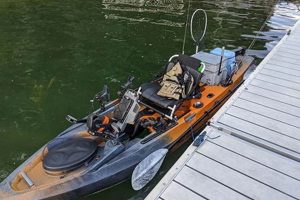
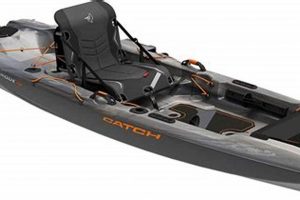
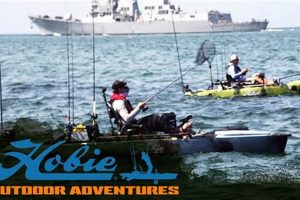
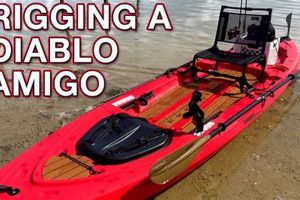
A kayak propelled by pedals offers hands-free fishing, allowing anglers to focus on casting and reeling. This human-powered vessel typically features a propeller or fin system driven by leg movements, leaving the upper body free for fishing activities. Imagine maintaining precise boat positioning while simultaneously working a lure this exemplifies the core functionality of such watercraft.
This method of propulsion offers distinct advantages over traditional paddle kayaks for fishing. Enhanced maneuverability, increased speed and the ability to cover greater distances with less physical exertion are key benefits. Furthermore, the hands-free operation allows anglers to focus on fishing techniques and react quickly to bites. This type of kayak has evolved from earlier pedal-powered boats, becoming increasingly specialized for fishing with features like rod holders, gear tracks, and live wells.
This article will explore the various aspects of these specialized fishing kayaks, including drive systems, hull designs, popular models, and essential accessories. It will also delve into the advantages and disadvantages of this propulsion system compared to paddle and motor-driven alternatives, and offer guidance on selecting the right vessel for specific fishing needs and environments.
Tips for Pedal-Powered Kayak Fishing
Maximizing the advantages of a pedal-driven fishing kayak requires understanding key operational and safety considerations. These tips offer guidance for improved efficiency and a more rewarding angling experience.
Tip 1: Practice Pedal Control: Before venturing onto open water, practice maneuvering the kayak in a controlled environment. Become familiar with the pedal drive system’s responsiveness and how it affects turning radius and speed.
Tip 2: Understand Wind and Current Effects: Wind and current significantly impact kayak control. Learn to anticipate and compensate for these forces, particularly when fishing in exposed areas.
Tip 3: Prioritize Safety Gear: Always wear a personal flotation device (PFD) and carry essential safety equipment, including a whistle, signaling device, and first-aid kit. A leash connecting the angler to the kayak is recommended in case of capsizing.
Tip 4: Plan Fishing Routes Strategically: Maximize fishing time by planning routes that account for wind, current, and desired fishing locations. Utilize mapping tools and nautical charts to identify productive areas.
Tip 5: Optimize Kayak Setup: Organize fishing gear for easy access and secure rods and tackle to prevent loss or entanglement. Consider installing rod holders, fish finders, and other accessories to enhance fishing efficiency.
Tip 6: Respect Wildlife and the Environment: Practice catch-and-release whenever possible and adhere to local fishing regulations. Minimize environmental impact by properly disposing of waste and avoiding disturbance of natural habitats.
Tip 7: Maintain the Drive System: Regular maintenance ensures optimal performance and longevity of the pedal drive. Rinse the system with fresh water after each use, especially in saltwater environments, and lubricate moving parts according to manufacturer recommendations.
By adhering to these guidelines, anglers can enhance safety, improve fishing success, and prolong the lifespan of their equipment, ensuring a more enjoyable and productive experience on the water.
This information provides a foundation for successful pedal-powered kayak fishing. The following sections will further explore specific equipment choices and advanced techniques.
1. Hands-Free Fishing

Hands-free fishing represents a significant advantage offered by foot-drive kayaks, fundamentally altering the angling experience. By freeing the hands from propulsion duties, these kayaks allow anglers to focus entirely on fishing techniques, resulting in increased efficiency and responsiveness.
- Enhanced Lure Control:
Maintaining precise lure presentation is crucial for attracting fish. Foot-driven propulsion allows for continuous, subtle adjustments to kayak position, enabling anglers to keep lures in the optimal strike zone, even in challenging conditions such as wind or current. This level of control is difficult to achieve with traditional paddle kayaks.
- Improved Hookset Ratio:
When a fish strikes, immediate reaction is essential for a successful hookset. With hands already on the rod, anglers can react instantly, significantly increasing the likelihood of landing the fish. This rapid response is a key advantage in situations where timing is critical, such as topwater fishing or fishing with live bait.
- Multitasking Capability:
Hands-free operation facilitates multitasking, allowing anglers to manage multiple rods, adjust tackle, operate fish finders, or net fish without interrupting boat control. This increased efficiency can be particularly valuable in tournament fishing or when targeting multiple species.
- Reduced Physical Strain:
Traditional paddling can lead to fatigue, particularly during long fishing trips. Foot-driven kayaks reduce upper body strain, allowing anglers to fish longer and cover more water without tiring. This is especially beneficial for anglers with physical limitations or those fishing in demanding environments.
These interconnected benefits of hands-free fishing contribute significantly to the growing popularity of foot-drive kayaks. By optimizing control, responsiveness, and efficiency, these vessels enhance the overall angling experience and allow anglers to focus on what matters most: catching fish.
2. Pedal-Powered Propulsion

Pedal-powered propulsion forms the defining characteristic of foot-drive fishing kayaks, differentiating them from traditional paddle-powered and motorized alternatives. This system employs a bicycle-like pedal drive connected to a propeller or fin system submerged beneath the kayak. Leg motion generates rotational force, propelling the vessel forward or backward. The hands-free nature of this propulsion method offers significant advantages for anglers.
The impact of pedal-powered propulsion extends beyond simple mobility. Consider a scenario where an angler spots a school of fish surfacing. In a traditional kayak, paddling towards the fish necessitates pausing fishing activities. However, a pedal-driven kayak allows simultaneous navigation and lure retrieval, maximizing fishing opportunities. This responsiveness is crucial for techniques like trolling or sight fishing, where maintaining precise boat positioning is paramount. Furthermore, pedal power allows anglers to cover greater distances with less physical exertion compared to paddling, enabling access to remote fishing grounds. The efficiency of this propulsion system also contributes to stealth, minimizing disturbance of fish in shallow or quiet waters.
The integration of pedal-powered propulsion within fishing kayaks presents a significant advancement in angling technology. This system enhances maneuverability, expands fishing range, and reduces physical strain, contributing to a more efficient and enjoyable fishing experience. The ability to navigate and fish concurrently offers a distinct advantage, particularly in dynamic fishing environments. While various drive systems exist, each with specific performance characteristics, the core principle of hands-free propulsion remains central to the foot-drive fishing kayak’s functionality and appeal.
3. Enhanced Maneuverability
Enhanced maneuverability is a defining advantage of foot-drive fishing kayaks, directly resulting from the hands-free nature of pedal propulsion. This characteristic allows anglers to execute precise boat positioning and navigate complex environments with greater ease and efficiency than traditional paddle kayaks. Consider navigating tight, shallow creeks or maintaining position near submerged structures scenarios where precise boat control is essential for successful fishing. Foot-driven kayaks excel in these situations, permitting intricate movements and adjustments without interrupting the fishing process. The ability to instantly change direction or hold position against current or wind provides a significant tactical advantage.
The practical significance of enhanced maneuverability extends to various fishing scenarios. When sight fishing, precise boat control is essential for approaching fish without spooking them. Similarly, in river fishing, navigating swift currents and maneuvering around obstacles requires deft control. Foot-drive kayaks empower anglers to exploit these situations effectively, maintaining optimal positioning and presentation for increased fishing success. The immediate responsiveness of the pedal drive system translates to greater control in dynamic environments, enabling quick adjustments to changing conditions or fish behavior.
In summary, enhanced maneuverability, facilitated by the hands-free operation of foot-drive kayaks, offers anglers a distinct advantage in various fishing environments. This characteristic translates to greater control, precision, and responsiveness, ultimately increasing fishing efficiency and success. While other factors contribute to kayak performance, maneuverability remains a key consideration, particularly for anglers targeting specific locations or navigating challenging waters. Understanding this connection emphasizes the value of foot-drive systems in specific fishing applications.
4. Increased Fishing Efficiency
Increased fishing efficiency is a central benefit of foot-drive fishing kayaks, directly linked to the hands-free operation afforded by pedal propulsion. This efficiency translates to more time spent actively fishing and less time managing the kayak’s movement, leading to a potentially higher catch rate and a more rewarding experience on the water.
- Continuous Lure Presentation:
Maintaining optimal lure presentation is crucial for attracting fish. Foot-drive kayaks allow for continuous adjustments to position and speed, ensuring the lure remains in the target strike zone, even in changing currents or wind conditions. This consistent presentation maximizes the lure’s effectiveness, increasing the chances of enticing a strike. For example, trolling becomes significantly more efficient as the angler can maintain a consistent speed and depth without the interruptions of paddling.
- Immediate Hooksets:
With hands constantly free, anglers can react instantly to a fish strike, resulting in more effective hooksets. This rapid response is crucial for converting bites into catches, particularly with fast-striking species or techniques requiring immediate reaction, such as topwater fishing. This eliminates the delay associated with switching from paddle to rod, a critical factor in successful angling.
- Multitasking Capabilities:
Foot-driven propulsion allows anglers to perform multiple tasks simultaneously. They can adjust fishing lines, operate electronics, change lures, or net fish without interrupting boat control. This multitasking capability streamlines the fishing process and maximizes active fishing time. Imagine scanning the water with a fish finder while simultaneously adjusting lure depth and trolling speed – this level of multitasking enhances fishing efficiency significantly.
- Extended Fishing Range:
Covering more water increases the likelihood of encountering fish. Pedal-powered kayaks allow anglers to travel greater distances with less effort compared to paddling, expanding the searchable area and accessing more remote fishing spots. This expanded range can be especially beneficial in larger bodies of water or when searching for specific fish habitats. The efficiency of pedal power allows anglers to spend more time fishing and less time traveling, maximizing the potential for success.
These interconnected facets contribute to the overall increased fishing efficiency offered by foot-drive kayaks. By streamlining boat control and maximizing active fishing time, these vessels enhance angling success. This focus on efficiency allows anglers to optimize their time on the water, leading to a more productive and satisfying fishing experience.
5. Stability and Control
Stability and control are paramount in fishing kayaks, especially those employing foot-driven propulsion. A stable platform is essential for various fishing activities, from casting and retrieving to fighting and landing fish. Foot-drive kayaks, by their nature, require a stable hull design to accommodate the angler’s leg movements while pedaling. This inherent need for stability influences hull design choices, often leading to wider and flatter hull shapes compared to traditional paddle kayaks. Consider the scenario of hooking a large fish; a stable kayak allows the angler to maintain balance and control during the fight, minimizing the risk of capsizing. Conversely, a less stable kayak could compromise the angler’s ability to manage the fish, potentially leading to line breakage or even a lost catch. The connection between stability and the effective use of a foot-drive system is fundamental to the kayak’s overall performance.
The practical implications of stability extend beyond simply staying afloat. A stable kayak provides a comfortable and secure platform for anglers to stand and fish, offering a higher vantage point for sight fishing and improved casting leverage. This ability to stand and fish is a significant advantage in shallow water or when targeting specific structures. Furthermore, stability contributes to angler confidence, allowing for more aggressive fishing techniques and reducing fatigue associated with constantly maintaining balance. For example, in windy conditions, a stable kayak minimizes the impact of gusts, allowing the angler to maintain course and focus on fishing rather than battling instability. This advantage translates directly to a more enjoyable and productive fishing experience.
In conclusion, stability and control are critical factors influencing the design and functionality of foot-drive fishing kayaks. A stable platform enhances angler safety, facilitates various fishing techniques, and contributes to overall fishing efficiency. While hull design plays a significant role in achieving stability, anglers should also consider factors such as weight distribution and water conditions when evaluating a kayak’s stability characteristics. Understanding the interplay of these elements contributes to informed decision-making and ensures a safe and productive experience on the water. This knowledge empowers anglers to select the right kayak for their specific needs and fishing style.
6. Specialized Fishing Features
Specialized fishing features distinguish foot-drive kayaks from recreational models, optimizing them for angling effectiveness and efficiency. These features cater specifically to the needs of anglers, enhancing convenience, organization, and overall fishing performance. Integration of these specialized components contributes significantly to the angler’s experience and success on the water.
- Rod Holders:
Multiple rod holders, strategically positioned throughout the kayak, allow anglers to carry various rod setups rigged for different fishing techniques. This readily accessible array of rods enables quick adaptation to changing fishing conditions or target species. Flush-mounted rod holders minimize line entanglement and optimize deck space. For instance, an angler might have one rod rigged for bottom fishing, another for trolling, and a third for topwater lures, all within easy reach.
- Tackle Storage:
Dedicated tackle storage compartments provide organized and readily accessible storage for lures, hooks, weights, and other essential fishing gear. Dry storage compartments protect sensitive electronics and personal items from water damage. Efficient tackle organization streamlines lure changes and minimizes time spent searching for specific items. For example, waterproof compartments safeguard electronic devices like fish finders and GPS units, while readily accessible tackle trays keep lures organized and at the angler’s fingertips.
- Fish Finders and Electronics:
Integrated mounts and wiring systems accommodate fish finders, GPS units, and other electronic devices. These technologies enhance situational awareness, enabling anglers to locate fish, identify underwater structures, and navigate efficiently. Transducers mounted beneath the hull provide real-time sonar data, assisting in fish identification and habitat analysis. The seamless integration of electronics enhances fishing strategy and improves overall success. A strategically placed fish finder screen provides constant feedback on water depth, bottom structure, and fish presence, directly influencing fishing decisions.
- Live Wells and Bait Tanks:
Built-in live wells or bait tanks keep live bait fresh and readily available, crucial for techniques requiring live offerings. Aerated systems maintain oxygen levels, ensuring bait viability throughout the fishing trip. These features cater specifically to anglers targeting species that respond best to live bait. For instance, a live well allows anglers to keep minnows or shrimp lively and readily available for targeting specific predatory fish.
These specialized fishing features contribute significantly to the effectiveness and enjoyment of foot-drive kayak fishing. They enhance organization, streamline fishing processes, and improve overall fishing success. The integration of these features reflects the dedicated design focus on optimizing the angling experience, making foot-drive kayaks a powerful tool for serious anglers. By considering these features, prospective buyers can select a kayak tailored to their specific fishing needs and preferences, maximizing their potential on the water.
7. Variable Hull Designs

Hull design significantly influences the performance characteristics of a foot-drive fishing kayak, impacting speed, stability, maneuverability, and tracking. Variable hull designs cater to specific fishing environments and angler preferences, optimizing performance in diverse water conditions, from calm lakes and slow-moving rivers to open ocean environments. Understanding the nuances of these designs empowers informed decisions aligned with individual fishing styles and target locations.
- Pontoon Hulls:
Pontoon hulls, characterized by two parallel floats, offer exceptional stability, making them ideal for stand-up fishing and navigating rough waters. This stability comes at the expense of speed and maneuverability, making them less suited for covering large distances or navigating tight spaces. Anglers prioritizing stability and a comfortable platform for stand-up fishing often favor pontoon designs, especially in environments where stability is paramount, such as choppy bays or large lakes.
- Tunnel Hulls:
Tunnel hulls feature a recessed channel running the length of the hull, enhancing tracking and speed in calm water conditions. This design improves efficiency by reducing water resistance but compromises stability, especially in rougher conditions or when turning sharply. Anglers prioritizing speed and straight-line tracking in calm environments, such as large lakes or slow-moving rivers, might prefer a tunnel hull design. However, this design is less suitable for navigating tight creeks or rough waters.
- Flat Bottom Hulls:
Flat bottom hulls provide excellent primary stability, making them ideal for shallow water fishing and navigating tight spaces. They offer maneuverability but sacrifice speed and tracking in open water. Anglers frequently entering shallow areas or navigating narrow waterways benefit from the maneuverability and stability of flat bottom hulls. However, these kayaks are less efficient for covering long distances in open water due to increased drag.
- V-Shaped Hulls:
V-shaped hulls efficiently cut through waves, offering superior tracking and speed in open water conditions. While they provide good secondary stability (stability when leaning), they sacrifice primary stability, making them less suitable for stand-up fishing. Anglers fishing in offshore environments or large bodies of water often favor V-shaped hulls for their ability to handle rougher conditions and maintain course in challenging waters. However, this design may feel less stable than flatter hull designs, particularly for less experienced kayakers.
The selection of a suitable hull design is a critical consideration when choosing a foot-drive fishing kayak. The optimal choice depends on the intended fishing environment, angler experience, and desired performance characteristics. Balancing speed, stability, maneuverability, and tracking requires careful consideration of the various hull designs available. Understanding these trade-offs allows anglers to select a kayak optimized for their specific needs, maximizing both comfort and fishing effectiveness.
Frequently Asked Questions about Foot-Drive Fishing Kayaks
This section addresses common inquiries regarding foot-drive fishing kayaks, offering concise and informative responses to clarify potential uncertainties and misconceptions. Understanding these key aspects is crucial for making informed purchasing decisions and maximizing on-the-water experiences.
Question 1: What are the primary advantages of a foot-drive system over traditional paddling?
Foot-drive systems offer hands-free operation, enabling anglers to fish continuously while maneuvering the kayak. This advantage translates to increased fishing efficiency, especially for techniques requiring precise boat control or immediate reaction to strikes. Additionally, pedal propulsion can cover greater distances with less physical exertion compared to paddling.
Question 2: Are foot-drive kayaks suitable for all water types?
While adaptable, foot-drive kayaks are best suited for calm to moderately choppy waters. Very shallow areas, dense vegetation, or extremely rough conditions can pose challenges for pedal-driven systems. Specific hull designs cater to different water types, so careful selection based on intended fishing environments is essential.
Question 3: How does the speed of a foot-drive kayak compare to a paddle kayak or a motorized boat?
Foot-drive kayaks generally offer higher speeds and greater range than paddle kayaks, particularly over longer distances. However, they are typically slower than motorized boats. The specific speed attainable depends on factors such as hull design, water conditions, and angler physical output.
Question 4: What maintenance is required for a foot-drive system?
Regular rinsing with fresh water, especially after use in saltwater, is crucial. Periodic lubrication of moving parts and inspection for damage or wear are also recommended. Adhering to manufacturer guidelines ensures optimal performance and longevity of the drive system.
Question 5: Are foot-drive kayaks more difficult to transport than traditional kayaks?
While slightly heavier and potentially bulkier than some paddle kayaks, many foot-drive models are designed for relatively easy transport. Roof racks or trailers designed for kayaks can accommodate most foot-drive kayaks. Checking the kayak’s dimensions and weight beforehand ensures compatibility with existing transportation equipment.
Question 6: What is the typical price range for a foot-drive fishing kayak?
Foot-drive kayaks generally represent a higher investment compared to traditional paddle kayaks. Prices vary depending on features, materials, and brand, typically ranging from the mid-thousands to several thousand dollars. Evaluating features and build quality against budget constraints ensures a sound investment aligned with individual needs and expectations.
Understanding these fundamental aspects of foot-drive fishing kayaks empowers informed decisions, ensuring alignment between angler needs, budget considerations, and intended fishing environments. Further research and consideration of specific models will refine this understanding and facilitate the selection of the ideal kayak for individual fishing pursuits.
For further exploration, the following section will delve into specific features and factors to consider when selecting a foot-drive fishing kayak.
Foot Drive Fishing Kayak
This exploration of foot-drive fishing kayaks has highlighted their transformative impact on angling. From enhanced maneuverability and increased fishing efficiency to specialized features and variable hull designs, these vessels offer distinct advantages for anglers seeking elevated performance and a more streamlined fishing experience. The evolution of pedal-powered propulsion has revolutionized kayak fishing, providing a hands-free approach that optimizes lure control, hookset ratios, and overall angling effectiveness. Understanding the interplay of hull design, propulsion systems, and specialized features empowers informed decision-making, ensuring alignment between angler needs and kayak capabilities. The analysis of stability considerations, alongside practical maintenance requirements, further equips prospective buyers with the knowledge necessary for long-term ownership satisfaction.
The future of foot-drive fishing kayaks promises continued innovation, with advancements in propulsion technology, hull design, and integrated features. As technology progresses, these specialized vessels will likely become even more refined and accessible, further solidifying their position as a powerful tool for anglers seeking to maximize their time and success on the water. The choice to adopt this technology represents an investment not just in equipment, but in a more efficient, engaging, and ultimately, more rewarding fishing experience. Careful consideration of individual needs and preferences, paired with a comprehensive understanding of available options, will guide anglers toward the optimal vessel for their unique fishing pursuits.