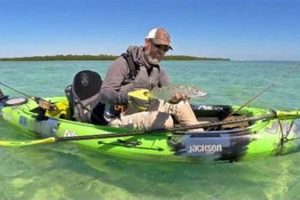
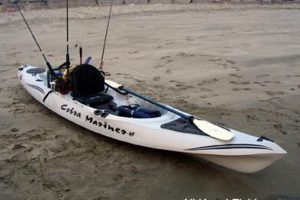
Angling from a small, human-powered vessel offers a unique blend of challenges and rewards. It allows access to shallow, secluded waters often unreachable by larger boats, providing opportunities to target diverse species. Consider, for example, a quiet morning paddle into a hidden cove where largemouth bass lurk beneath lily pads. This approach demands specialized techniques and equipment suited to the kayak’s compact platform and inherent instability.
This specialized approach has grown significantly in popularity due to its affordability and relative ease of access compared to motorized boating. Kayak fishing provides an intimate connection with nature and a physically engaging experience. Historically, kayaks were used by indigenous peoples for hunting and fishing, showcasing the enduring practicality and efficiency of this method. Modern advancements in kayak design and fishing gear have elevated this ancient practice to a sophisticated and widely accessible sport.
The following sections will explore key aspects of this pursuit, including essential gear selection, effective paddling and maneuvering techniques, strategies for maintaining stability and safety, and proven methods for targeting specific fish species.
Essential Kayak Fishing Advice
Successful kayak angling requires careful preparation and adherence to specific techniques. The following tips offer guidance for a safe and productive experience.
Tip 1: Prioritize Stability: Select a kayak designed for stability, especially for beginners. Wider hulls and sit-on-top models generally offer greater stability than narrower, sit-inside kayaks. Consider outriggers for added security.
Tip 2: Plan and Prepare: Research potential fishing locations, checking weather forecasts and water conditions. Pack essential safety gear, including a personal flotation device, a whistle, and a communication device. Inform someone of the planned fishing trip and estimated return time.
Tip 3: Organize and Secure Gear: Utilize specialized kayak fishing accessories like rod holders, tackle crates, and anchor trolleys. Secure all equipment to prevent loss in case of capsizing.
Tip 4: Master Basic Paddling Techniques: Efficient paddling and maneuvering are crucial for reaching desired fishing spots and maintaining position. Practice different paddle strokes for optimal control and minimal disturbance.
Tip 5: Choose Appropriate Tackle: Opt for shorter rods and reels suited for the confined space of a kayak. Consider using lighter lines and lures appropriate for target species.
Tip 6: Employ Effective Anchoring Strategies: Utilize a lightweight anchor and an anchor trolley system to maintain position in currents or wind. Practice deploying and retrieving the anchor efficiently.
Tip 7: Respect Wildlife and the Environment: Adhere to catch-and-release practices whenever possible. Pack out all trash and fishing line. Minimize disturbance to aquatic habitats and wildlife.
By adhering to these guidelines, anglers can enhance their safety, improve fishing success, and contribute to the preservation of natural resources.
Careful planning and mindful execution are the cornerstones of a rewarding kayak fishing experience.
1. Safety First
Safe practices are paramount in kayak fishing, where anglers interact with dynamic water environments and navigate often remote locations. Prioritizing safety mitigates potential risks and ensures a positive and sustainable experience. Neglecting safety protocols can lead to accidents, injuries, or even fatalities, underscoring the critical role of preparedness and responsible behavior.
- Personal Flotation Devices (PFDs)
A properly fitted PFD is non-negotiable. It provides essential buoyancy in the event of capsizing or accidental immersion, significantly increasing the chances of survival. Choosing a PFD specifically designed for kayaking, with unrestricted arm movement, is crucial for paddling and casting effectively. Examples include inflatable belt-pack PFDs and inherently buoyant vests. Neglecting to wear a PFD drastically increases the risk of drowning, especially in cold water or challenging conditions.
- Communication and Signaling Devices
Maintaining reliable communication is essential for summoning assistance in emergencies. A waterproof cell phone or a VHF radio allows contact with emergency services or shore-based contacts. Carrying visual signaling devices, such as a whistle, flares, or a signal mirror, provides additional means of attracting attention if needed. For instance, a whistle can signal distress in foggy conditions or over long distances where visual signals might be obscured.
- Weather Awareness and Trip Planning
Checking weather forecasts before embarking on a fishing trip is crucial for avoiding hazardous conditions. Strong winds, lightning storms, and sudden temperature drops can create life-threatening situations on the water. Planning a trip involves informing someone on shore of the intended fishing location and expected return time. This ensures that assistance can be mobilized if the angler does not return as planned. For example, informing a family member or friend of the fishing plan allows for timely intervention in case of an emergency.
- Navigation and Water Awareness
Understanding navigation principles and being aware of potential hazards in the water is critical for safe kayak fishing. This includes recognizing and avoiding strong currents, submerged obstacles, and areas with heavy boat traffic. Carrying a nautical chart or using a GPS device can assist with navigation, especially in unfamiliar waters. Knowledge of local regulations, such as speed limits and restricted areas, is also essential for safe and legal operation. Failing to account for these factors can lead to collisions, grounding, or other dangerous situations.
Integrating these safety practices into pre-trip planning and on-the-water execution is essential for responsible kayak angling. A proactive approach to safety not only mitigates risks but also enhances the overall enjoyment of the experience, allowing anglers to focus on the rewarding aspects of fishing from a kayak with peace of mind.
2. Gear Selection

Appropriate gear selection significantly impacts the success and safety of kayak fishing. Equipment choices must consider the kayak’s limited space, the dynamic nature of the water environment, and the specific target species. Effective gear enhances efficiency, improves comfort, and maximizes fishing potential. Conversely, ill-suited equipment can hinder maneuverability, compromise stability, and create safety hazards. For example, using a lengthy fishing rod designed for shore fishing can be cumbersome and dangerous in the confined space of a kayak, increasing the risk of entanglement or capsizing.
Several key gear categories warrant careful consideration. Rods and reels should be shorter and lighter than those used for traditional bank or boat fishing. Shorter rods offer better control and maneuverability within the kayak’s limited space. A lightweight, balanced setup reduces fatigue during long fishing sessions. Tackle choices, such as lures and lines, must align with the target species and the fishing environment. Using lures too large or lines too heavy can lead to tangles and lost fish. Similarly, neglecting essential safety gear, like a PFD or a signaling device, can have severe consequences in emergency situations. For instance, a brightly colored PFD enhances visibility in open water, aiding rescue efforts in the event of a capsize.
Selecting appropriate gear involves balancing functionality, safety, and personal preference. Specialized kayak fishing gear, such as rod holders, anchor trolleys, and tackle crates, optimizes organization and accessibility within the kayak’s limited space. Investing in high-quality gear built for durability and performance contributes to a positive and productive experience on the water. Furthermore, understanding the specific requirements of the chosen fishing technique, whether trolling, casting, or jigging, informs gear choices and maximizes fishing success. Prioritizing thoughtful gear selection contributes significantly to a safe, efficient, and rewarding kayak fishing experience.
3. Kayak Choice

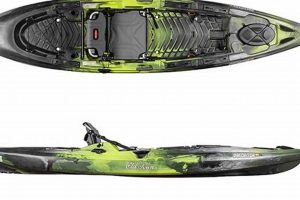
Kayak selection significantly influences the effectiveness and enjoyment of kayak angling. The vessel’s stability, maneuverability, and storage capacity directly impact an angler’s ability to navigate waters, access fishing spots, and manage equipment effectively. Consider the cause-and-effect relationship between kayak choice and fishing success. A stable kayak platform allows anglers to cast and reel comfortably, even when battling larger fish. Conversely, an unstable kayak limits casting range and increases the risk of capsizing, particularly in challenging conditions. Choosing a kayak appropriate for the intended fishing environment, target species, and angler experience is essential. A sit-on-top kayak, for instance, offers inherent stability and self-bailing capabilities, making it suitable for beginners or fishing in rough waters. A sit-inside kayak, while less stable, provides better protection from the elements and greater speed, making it preferable for experienced anglers in calmer conditions.
Practical examples illustrate the importance of informed kayak selection. Anglers targeting largemouth bass in shallow, weedy lakes might opt for a shorter, wider kayak with a shallow draft, allowing easy navigation through tight spaces and close proximity to fish. Those pursuing offshore species, like tuna or marlin, would require a longer, more stable kayak with ample storage for heavier tackle and longer fighting times. Choosing between a pedal-powered kayak and a paddle kayak also depends on individual preferences and fishing styles. Pedal kayaks allow hands-free fishing and faster travel, while paddle kayaks offer greater maneuverability in shallow water and tighter spaces. Failure to align kayak choice with specific fishing needs can negatively impact angling success, comfort, and even safety.
Understanding the nuanced relationship between kayak selection and effective angling techniques is paramount for a successful outing. A thoughtfully chosen kayak enhances stability, improves access to fishing grounds, and facilitates efficient gear management. These factors collectively contribute to a more productive and enjoyable fishing experience. Challenges such as limited storage space or decreased maneuverability can be addressed through careful planning and the selection of specialized kayak fishing accessories. Ultimately, aligning kayak choice with individual angling needs, target species, and the intended fishing environment maximizes the potential for a rewarding and memorable experience on the water.
4. Location Scouting
Effective location scouting is a cornerstone of successful kayak angling. The ability to identify productive fishing spots directly influences catch rates and overall angling success. Understanding fish behavior, habitat preferences, and the impact of environmental factors, such as water temperature and current flow, is crucial for pinpointing areas where fish are likely to congregate. Consider the cause-and-effect relationship: thorough scouting leads to increased encounters with target species, while inadequate scouting often results in fruitless fishing trips. This emphasizes the importance of pre-fishing research and on-the-water observation. For example, locating a drop-off or a submerged structure, like a fallen tree, can significantly improve the odds of finding fish, as these features provide shelter and attract prey.
Practical applications of location scouting in kayak fishing are diverse. Utilizing online resources, such as nautical charts, satellite imagery, and fishing forums, can reveal potential fishing hotspots before even launching the kayak. Once on the water, observing natural signs, like baitfish activity or bird behavior, can indicate the presence of larger predatory fish. Furthermore, understanding how weather patterns and tidal changes influence fish movement allows anglers to adjust their scouting strategies accordingly. For instance, fishing near river mouths during an incoming tide can be productive, as baitfish are often swept into these areas, attracting larger game fish. Conversely, fishing in shallow, sun-baked areas during the hottest part of the day might prove unproductive, as fish seek cooler, deeper water during these periods.
Successful kayak angling hinges on the ability to effectively locate fish. The intimate connection with the water environment afforded by a kayak allows anglers to closely observe subtle clues and access areas often unreachable by larger vessels. Challenges such as limited range and reliance on human-powered propulsion can be overcome by careful planning and efficient scouting techniques. Integrating pre-fishing research with on-the-water observation maximizes the potential for locating productive fishing spots and enhances the overall kayak angling experience. Ultimately, informed location scouting translates directly into increased fishing success and a deeper appreciation for the aquatic environment.
5. Fishing Techniques
Adapting fishing techniques to the unique constraints and advantages of a kayak platform is essential for angling success. The kayak’s limited space, inherent instability, and close proximity to the water require modifications to traditional fishing methods. Cause and effect play a significant role: employing appropriate techniques maximizes efficiency and catch rates, while utilizing unsuitable techniques can lead to tangles, lost fish, and even compromise stability. The importance of technique as a component of successful kayak angling cannot be overstated. For example, a shorter, lighter rod is generally preferred for kayak fishing, allowing for greater maneuverability and control in the confined space. Using a longer, heavier rod designed for shore fishing would be cumbersome and potentially hazardous.
Practical applications of adapted fishing techniques vary depending on the target species and the fishing environment. Trolling from a kayak, for instance, requires precise speed control and careful line management to avoid tangles and ensure proper lure presentation. Casting from a kayak demands a modified casting motion to account for the lower casting angle and the potential for instability. Similarly, fighting a fish from a kayak necessitates specialized techniques to avoid line breakage, maintain balance, and prevent the fish from pulling the kayak. For example, using a sea anchor or adjusting the kayak’s position relative to the fish can significantly improve control during the fight. Understanding these nuances allows anglers to effectively target different species and adapt to varying water conditions.
Mastering kayak-specific fishing techniques is crucial for maximizing angling success and ensuring a safe experience. Challenges such as limited space and the dynamic nature of the water environment can be overcome through practice and the adoption of appropriate methods. The angler’s understanding of fish behavior, water conditions, and the limitations of the kayak platform informs technique selection and execution. Ultimately, adapting fishing techniques to the unique demands of kayak angling enhances efficiency, improves catch rates, and contributes to a more rewarding experience on the water.
6. Environmental Awareness
Environmental awareness is integral to responsible kayak angling. The low-impact nature of kayak fishing offers a unique opportunity to interact with aquatic ecosystems with minimal disturbance. Understanding the fragility of these environments and adopting sustainable practices ensures the long-term health of fish populations and the preservation of natural resources. Cause and effect are directly linked: environmentally conscious angling contributes to healthy ecosystems, while irresponsible practices can lead to habitat degradation, pollution, and declining fish stocks. The importance of environmental awareness as a component of kayak fishing stems from the angler’s direct interaction with the water and its inhabitants. For example, improperly discarding fishing line can entangle wildlife, while disturbing nesting areas can disrupt breeding cycles and impact future fish populations.
Practical applications of environmental awareness in kayak fishing include adhering to catch-and-release principles whenever possible, minimizing the use of plastic lures and tackle, and properly disposing of all waste. Respecting local regulations, such as fishing seasons and size limits, contributes to sustainable fisheries management. Furthermore, avoiding sensitive areas, like spawning beds or seagrass meadows, helps protect critical habitats. For instance, using biodegradable fishing line minimizes the long-term impact of discarded line on the environment. Educating fellow anglers about responsible fishing practices also contributes to a broader culture of environmental stewardship within the kayak fishing community. Addressing challenges, such as the accumulation of plastic debris in waterways, requires collective action and individual responsibility. Kayak anglers, due to their close proximity to the water, are uniquely positioned to observe and report environmental issues, contributing valuable data to conservation efforts.
Sustainable kayak angling necessitates a deep understanding of the interconnectedness of aquatic ecosystems. The angler’s awareness of environmental impacts, coupled with responsible fishing practices, ensures the preservation of these valuable resources for future generations. Challenges such as habitat loss and pollution require ongoing vigilance and proactive conservation efforts. Ultimately, integrating environmental awareness into all aspects of kayak fishing fosters a deeper appreciation for the natural world and promotes a sustainable approach to this rewarding recreational pursuit.
Frequently Asked Questions
This section addresses common inquiries regarding angling from kayaks, offering concise and informative responses to facilitate informed decision-making and enhance on-the-water experiences.
Question 1: What type of kayak is best suited for fishing?
Kayak choice depends on individual needs and fishing styles. Sit-on-top kayaks offer stability and ease of use, while sit-inside kayaks provide better protection from the elements. Specialized fishing kayaks often feature built-in rod holders, storage compartments, and anchor systems.
Question 2: What essential safety gear should one carry while kayak fishing?
Essential safety equipment includes a personal flotation device (PFD), a whistle, a visual distress signal, a communication device (cell phone or VHF radio), and a first-aid kit. Navigation tools, such as a compass or GPS, are also recommended.
Question 3: How does one manage fishing gear effectively in a kayak’s limited space?
Utilizing specialized kayak fishing accessories, such as rod holders, tackle crates, and anchor trolleys, maximizes organization and accessibility. Securing all gear to prevent loss in case of capsizing is crucial.
Question 4: What are effective techniques for maintaining stability while fishing from a kayak?
Maintaining a low center of gravity and distributing weight evenly within the kayak enhances stability. Practicing basic paddling and maneuvering techniques improves balance and control. Using outriggers or stabilizers can provide additional support.
Question 5: How does one choose appropriate fishing tackle for kayak angling?
Shorter rods and reels are generally preferred for the confined space of a kayak. Lighter lines and lures, appropriate for the target species, are recommended. Specialized kayak fishing tackle, designed for compact storage and easy deployment, enhances efficiency.
Question 6: What environmental considerations are relevant to kayak fishing?
Adhering to catch-and-release practices, minimizing the use of plastic lures and tackle, and properly disposing of all waste are essential for minimizing environmental impact. Respecting local regulations and avoiding sensitive habitats contribute to sustainable fisheries management.
Careful consideration of these frequently asked questions enhances preparedness, promotes safety, and contributes to a more rewarding kayak fishing experience.
The subsequent sections will delve into advanced techniques and specialized strategies for maximizing angling success from a kayak.
Conclusion
Effective angling from a kayak necessitates a comprehensive understanding of specialized techniques and equipment. This exploration has highlighted the crucial interplay of safety practices, gear selection, kayak choice, location scouting, adapted fishing techniques, and environmental awareness. Each element contributes significantly to a successful and sustainable kayak fishing experience. Prioritizing stability and maneuverability through informed kayak selection, combined with efficient gear management and mastery of specialized fishing techniques, empowers anglers to maximize their potential on the water. Furthermore, embracing environmental stewardship ensures the preservation of these valuable aquatic resources.
The pursuit of angling from a kayak offers a unique blend of challenge and reward. Careful preparation and a commitment to responsible practices unlock the full potential of this dynamic and engaging fishing discipline. As kayak fishing continues to evolve, embracing innovation while prioritizing safety and sustainability will ensure the enduring appeal of this intimate connection with the aquatic world.